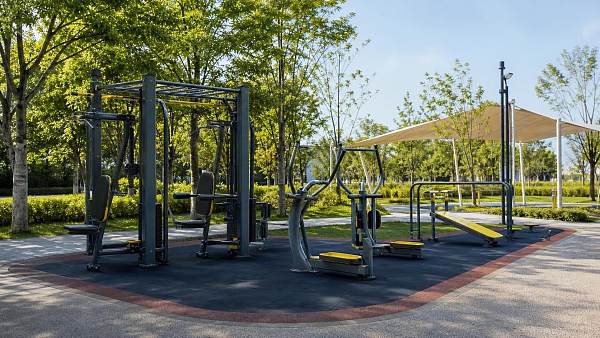
Outdoor fitness equipment park plans often fail at this step
Many outdoor fitness equipment park plans fail long before installation begins—not because of budget alone, but because one critical planning step gets overlooked. For project managers and engineering leaders, that mistake can trigger compliance delays, poor user flow, and costly rework. This article explains where outdoor fitness equipment park projects commonly go wrong and how to prevent setbacks with smarter, execution-focused planning.
What is the step most outdoor fitness equipment park projects miss?
In most failed or underperforming outdoor fitness equipment park projects, the weak point is not the equipment catalog and not the construction budget. It is the absence of a real use-case planning framework before procurement begins. Many teams select units too early, based on appearance, unit price, or available space, without first defining user profiles, circulation logic, safety zones, maintenance access, load expectations, and local compliance requirements.
For project managers, this is a practical risk, not a theoretical one. If an outdoor fitness equipment park is planned as a collection of products instead of an operating environment, problems appear fast: spacing conflicts, poor sequencing of exercise stations, drainage issues, accessibility gaps, and supplier mismatches. Once foundations, anchoring points, or utility routes are fixed, correcting those mistakes becomes expensive.
In commercial and public-space procurement, especially across leisure parks, hospitality campuses, mixed-use developments, schools, and community wellness zones, the planning step must translate business intent into an implementable site program. That is where experienced sourcing intelligence matters. GCT supports buyers by connecting design intent, compliance awareness, and supplier evaluation into one decision path rather than treating sourcing as a late-stage transaction.
- Define who will use the park: children, seniors, hotel guests, office workers, residents, or mixed public traffic.
- Map how users will move through the site rather than placing machines wherever space appears available.
- Confirm technical constraints early, including surfacing, drainage, anchoring, fall zones, and maintenance routes.
- Align procurement with intended duty cycle, weather exposure, and local standards before issuing RFQs.
Why this step gets skipped
The outdoor fitness equipment park often sits between departments. Operations wants user appeal. Procurement wants cost control. Designers want visual harmony. Engineering wants installability and safety clearance. Without a single planning owner or a disciplined briefing process, the project moves too quickly into product comparison. This creates a false sense of progress while the most important decisions remain unresolved.
Where project managers usually see failure first
The first signs of failure usually show up in site coordination meetings, not on opening day. The outdoor fitness equipment park may fit on paper, yet fail when circulation, structural anchoring, or supervision lines are tested against actual site conditions. A park that looks efficient in a product brochure can become unsafe or inconvenient in a real public environment.
Common breakdown points
- Incompatible layout density. Stations are placed too close together for safe movement, stretching range, wheelchair access, or maintenance activity.
- Wrong user mix. Equipment intended for athletic adults is installed in a community setting dominated by seniors, families, or casual users.
- Surface mismatch. The specified surfacing does not support drainage, slip resistance, or stable foundations in the local climate.
- Compliance gaps. Required clearances, warnings, accessibility paths, or material expectations are discovered too late.
- Vendor coordination issues. Lead times, hardware specifications, installation instructions, and as-built requirements are not aligned.
These issues are especially costly in experiential commercial spaces, where the outdoor fitness equipment park is expected to support brand image as well as functional use. A resort, education campus, residential club, or urban leisure park cannot afford a zone that looks appealing in renderings but underperforms in operation. That is why sourcing decisions should be integrated with design review and implementation sequencing from the start.
How to plan an outdoor fitness equipment park before comparing suppliers
Before requesting quotations, the project team should build a planning brief that converts strategy into measurable requirements. This is the point where many outdoor fitness equipment park projects either become executable or begin drifting toward rework. The brief should not be a vague concept note. It should function as the basis for design validation, supplier filtering, and budget accuracy.
The table below outlines a practical pre-procurement planning structure for an outdoor fitness equipment park. It helps engineering leaders identify what must be locked before equipment model selection begins.
This framework does two things. First, it makes supplier responses comparable because vendors answer the same operational brief. Second, it protects the project manager from hidden scope changes after the purchase order is issued. GCT often sees better sourcing outcomes when buyers standardize their planning inputs before asking for product recommendations.
A practical planning sequence
- Start with intended user experience and throughput, not product names.
- Create an adjacency map for warm-up, strength, cardio, balance, and rest zones.
- Validate site engineering constraints with drainage and anchoring assumptions.
- Screen suppliers based on outdoor materials, documentation quality, and installation support.
- Only then compare models, finishes, options, and final budgets.
Which outdoor fitness equipment park layout fits which scenario?
Not every outdoor fitness equipment park should be designed the same way. A hospitality project, municipal wellness zone, school campus, and residential development each require different circulation logic and durability assumptions. Project managers who force a single layout template across all sites often create mismatch between user expectation and operational performance.
The following comparison helps align outdoor fitness equipment park planning with common commercial scenarios.
This kind of scenario mapping is useful during early budgeting and design review. It keeps the outdoor fitness equipment park aligned with property positioning and user demand instead of becoming a generic amenity. GCT’s sector coverage across leisure parks, hospitality, and institutional spaces is especially valuable here because sourcing decisions rarely exist in isolation from broader commercial experience goals.
What technical and compliance checks matter before final approval?
Technical approval should go beyond visual design and product count. An outdoor fitness equipment park must work under real environmental stress and real user behavior. Project teams should ask for installation details, material specifications, finish guidance, maintenance instructions, and documentation that supports local review processes.
Key review points for engineering and procurement teams
- Foundation and anchoring details should match soil conditions, slab strategy, and drainage design.
- Material selection should reflect corrosion exposure, especially in coastal, humid, or high-rainfall regions.
- Clearance zones and movement ranges should be reviewed at full use, not only at rest position.
- Accessible routes, wayfinding, and user instructions should be considered from the beginning, not added later.
- Inspection access and replaceable parts should be verified to avoid long-term maintenance bottlenecks.
Standards and documentation
Requirements vary by market, but project managers commonly review general public-use fitness equipment guidance, accessibility expectations, material safety information, and site-specific civil or park regulations. It is wise to request installation manuals, maintenance schedules, parts lists, and any available testing or conformity documents early in the supplier review stage. Even when a regulation does not explicitly mandate a document, having complete technical records speeds up internal approval and handover.
How should you compare suppliers for an outdoor fitness equipment park?
Price comparison alone is risky because two outdoor fitness equipment park quotations can look similar while carrying very different implementation burdens. One supplier may include anchor templates, layout review, spare parts support, and finish options suited to harsh climates. Another may only provide basic equipment pricing. For a project manager, that difference affects schedule certainty as much as cost.
Use a supplier evaluation matrix that reflects both procurement and delivery realities.
For sourcing teams operating across regions, GCT adds value by reducing information fragmentation. Instead of comparing only sales claims, buyers can assess supplier fit against commercial project realities: documentation quality, market suitability, customization depth, and delivery readiness. That leads to stronger procurement decisions for the outdoor fitness equipment park from both technical and operational perspectives.
What budget mistakes create the most rework?
The most common budget mistake is treating the outdoor fitness equipment park as an equipment-only purchase. In practice, project cost is shaped by civil work, surface preparation, drainage, logistics, installation, signage, inspection, and future serviceability. A low unit-price package can become expensive if it triggers redesign, adaptation work, or accelerated wear.
Budget categories that should be separated early
- Equipment package cost, including station types, finish options, and accessories.
- Site preparation cost, including excavation, slab work, surfacing, and drainage improvement.
- Delivery and handling cost, especially for projects with difficult access or phased installation.
- Documentation and approval cost, where local review or consultant validation is required.
- Lifecycle cost, including maintenance tools, spare parts, refinishing, and replacement planning.
A well-scoped outdoor fitness equipment park usually performs better financially over time because the project team avoids hidden adaptation costs. In commercial environments, this matters even more, since downtime and visual deterioration can weaken guest perception, tenant value, or public satisfaction.
FAQ: practical questions project leaders ask before ordering
How early should outdoor fitness equipment park suppliers be involved?
Ideally, suppliers should be consulted after the project brief and preliminary site logic are defined, but before detailed layout is frozen. Too early, and the project may become product-driven. Too late, and the team risks selecting equipment that conflicts with site conditions or compliance expectations. The right timing allows technical feedback without surrendering planning control.
How many stations should an outdoor fitness equipment park include?
There is no universal number. The right count depends on user turnover, available area, intended workout duration, and whether the park serves targeted or mixed audiences. A smaller but well-zoned outdoor fitness equipment park often outperforms a dense layout because users can move comfortably and understand station order more easily.
What should project managers prioritize when schedules are tight?
Prioritize planning clarity and documentation completeness. Tight schedules do not reward rushed selection. They reward fewer surprises. Confirm anchor details, site readiness, shipping milestones, and maintenance documentation before commitment. If compromises are needed, reduce customization complexity rather than skipping technical review.
Are premium finishes always necessary for an outdoor fitness equipment park?
Not always. The finish strategy should reflect climate, property positioning, expected traffic, and maintenance capability. A hospitality or premium mixed-use site may justify higher-end visual treatment. A municipal site may prioritize impact resistance and simpler serviceability. The correct choice is contextual, not purely aesthetic.
Why choose us when planning and sourcing an outdoor fitness equipment park?
Global Commercial Trade supports project managers and engineering leaders who need more than a product list. We help connect concept intent, procurement logic, commercial space requirements, and supplier evaluation into a sourcing process that is easier to defend internally and easier to execute on site. For an outdoor fitness equipment park, that means fewer blind spots between design, compliance, and delivery.
You can contact us to discuss practical project needs such as station mix, layout planning direction, parameter confirmation, supplier shortlist review, delivery timing, customization options, sample coordination, certification-related documentation, and quotation alignment for multi-site or international projects. If your team is comparing several outdoor fitness equipment park solutions and needs a clearer procurement path, GCT can help structure the decision before cost and schedule risks start growing.
Search News
Hot Articles
- Stationery & UniformsHow Schools Can Cut Printing Costs When Buying Ink Cartridges in BulkSep 21, 2026
- Jewelry Packaging & DisplayHow to Evaluate a Luxury Retail Packaging Supplier for Premium Brand ConsistencySep 20, 2026
- Commercial KitchenHow to Select a Spiral Dough Mixer for Bakery Batch Size and Dough HydrationSep 19, 2026
Popular Tags
Need ExpertConsultation?
Connect with our specialized leisureengineering team for procurementstrategies.
Recommended News
 Sep 18, 2026What Drives Animatronic Dinosaur Manufacturer Prices for Theme Park Projects?Animatronic dinosaurs manufacturer price guide: compare motion, materials, controls, installation, and lifecycle costs to plan a durable theme park attraction.● Theme Park Strategist
 Sep 06, 2026Do Amusement Ride Safety Compliance Requirements Change Every Year?Do amusement safety compliance requirements change annually? Learn what really changes, from standards and inspections to permits, upgrades, and local approvals.● Theme Park Strategist
 Sep 02, 2026How Long Does It Take to Receive Full Safety Documents From an OEM?How long does it take to get full safety documentation from OEM partners? Discover realistic timelines, common delays, and practical steps to secure compliant files faster.● Theme Park Strategist
 Sep 03, 2026Designing Adventure Park Safety Systems for Zip Lines, Ropes Courses, and Daily InspectionsAdventure park safety systems: learn how to design safer zip lines and ropes courses with daily inspections, defect controls, rescue readiness, and staff training.● Theme Park Strategist
 Aug 22, 2026What to Look for When Choosing Three Seat Jet Skis for Rental or Resort UseThree seat jet skis for rental or resort use should balance stability, safety, maintenance, and guest comfort. Learn how to choose models that boost uptime and guest satisfaction.● Theme Park Strategist
 Aug 17, 2026What Parts Matter Most in a Roller Coaster and How Do They Affect Ride Safety?Roller coaster parts determine ride safety more than most riders realize. Explore how tracks, restraints, brakes, wheels, and control systems work together to protect every ride.● Theme Park Strategist
 Aug 15, 20262026 China Sports Expo Sees 45.74% More Overseas Pre-registered Buyers as POB Expands Procurement Matching2026 China Sports Expo boosts overseas pre-registered buyers by 45.74% as POB expands procurement matching for fitness, outdoor, and venue suppliers.● Theme Park Strategist
 Aug 14, 2026What Should Buyers Check Before Choosing a Flying Chair Ride Exporter?Flying chair ride exporter buyers should check safety, structure, export support, and spare parts before purchase to reduce risk and choose a reliable supplier.● Theme Park Strategist
 Aug 04, 2026EU Issues EN 1176-1:2026 for Playground SafetyEU Issues EN 1176-1:2026 for Playground Safety: learn how the new standard impacts Outdoor Rides, CE certification, inventory checks, and EU compliance before March 2027.● Theme Park Strategist
 Aug 03, 2026CPSC Adopts ASTM F1487-26 for Imported Outdoor RidesOutdoor Rides face a major U.S. compliance shift as CPSC adopts ASTM F1487-26. Learn the new certification, testing, and customs risks before November 1, 2026.● Theme Park Strategist
 Jul 26, 2026Revised EN 1176:2026 Triggers Re-Certification for Outdoor RidesOutdoor Rides face immediate EN 1176:2026 re-certification for new CE applications. Learn how testing, documentation, and EU market access rules now affect exports and delivery plans.● Theme Park Strategist
 Jul 21, 2026CPSC Recall Flags Structural Risk in Outdoor RidesCPSC recall flags structural risk in outdoor rides: learn how ASTM F1487-23 failures affect importers, distributors, and compliance teams across the U.S., Canada, and Australia.● Theme Park Strategist
 Jul 19, 2026How to Choose Outdoor Fitness Equipment for Parks Based on Users, Space, and BudgetOutdoor fitness equipment for parks: learn how to choose the right mix based on users, space, and budget to improve safety, usage, and long-term value.● Theme Park Strategist
 Jul 15, 2026Ocean Freight Spike Pressures Outdoor Rides ExportsOcean Freight Spike Pressures Outdoor Rides Exports as Shanghai-Rotterdam rates surge 42%. See how rising freight costs, delays, and rerouting risks could reshape Europe-bound delivery plans.● Theme Park Strategist
 Jul 14, 2026EN 1176 Revision Takes Effect for Outdoor Ride Weld TestingEN 1176 revision takes effect for outdoor ride weld testing from Sept 1, 2026. Learn ISO 5817 level B, third-party NDT report rules, and key EU compliance steps.● Theme Park Strategist
 Jul 12, 2026Vietnam Requires AI Anti-Collision Systems for Imported Outdoor RidesVietnam Requires AI Anti-Collision Systems for Imported Outdoor Rides from Sept. 15, 2026. Learn compliance rules, VAST certification needs, and how importers can avoid delays.● Theme Park Strategist
 Jul 11, 2026Vietnam Tightens Rules for Imported Outdoor RidesVietnam Tightens Rules for Imported Outdoor Rides: learn how Vietnam’s 2026 compliance update adds AI anti-collision, Vietnamese logs, and local maintenance duties for importers and manufacturers.● Theme Park Strategist
 Jul 09, 2026How to Evaluate a Lazy River Equipment Supplier for Safety, Flow Design, and MaintenanceLazy river equipment supplier selection affects safety, flow design, and maintenance costs. Learn what to compare, what to ask, and how to choose a reliable partner.● Theme Park Strategist
 Jul 08, 2026RCEP Update Cuts ASEAN Tariffs to Zero for Outdoor RidesRCEP update cuts ASEAN tariffs to zero for outdoor rides from China. Learn how FSC-CoC, PEFC traceability, and e-CO compliance affect exports, sourcing, and buyer decisions.● Theme Park Strategist
 Jul 07, 2026RCEP Guide Adds Dual Wood Traceability for Outdoor RidesOutdoor Rides exporters face a new RCEP traceability rule: dual FSC-CoC and PEFC-STS 2023 codes for wood components. See what changes before Oct. 1, 2026.● Theme Park Strategist
 Jul 06, 2026Vietnam Tightens RCEP Rules for Wooden Ride PartsVietnam Tightens RCEP Rules for Wooden Ride Parts: learn how FSC Chain-of-Custody and QR code requirements now affect outdoor rides, RCEP imports, and shipment compliance.● Theme Park Strategist
 Jul 06, 2026How to Evaluate a Bumper Cars on Ice Manufacturer for Safety, Capacity, and ROIBumper cars on ice manufacturer selection starts with safety, capacity, and ROI. Learn how to compare suppliers, reduce risk, and choose a partner built for long-term commercial success.● Theme Park Strategist
 Jul 04, 2026Electric Drift Bumper Cars vs Traditional Bumper Cars: Which Fits Your Venue Better?Electric drift bumper cars or traditional bumper cars? Compare installation, safety, maintenance, guest appeal, and ROI to choose the best fit for your venue.● Theme Park Strategist
 Jul 03, 2026EN 15330-2:2026 Takes Effect for Outdoor RidesEN 15330-2:2026 takes effect for Outdoor Rides in the EU on July 1, 2026. Learn how CE certification and ISO 13849-1 PLd impact market access, customs clearance, and export compliance.● Theme Park Strategist