EPDM rubber flooring playground options compared by fall safety
Selecting the right epdm rubber flooring playground system starts with one critical metric: fall safety. For technical evaluations, surface appearance alone is never enough. Impact attenuation, critical fall height, sub-base design, drainage behavior, slip resistance, weathering performance, and maintenance demands all affect whether a playground surface will continue protecting users over time. In commercial environments such as schools, hotels, public parks, mixed-use developments, and leisure destinations, comparing epdm rubber flooring playground options by fall safety helps clarify which solution offers the best balance of compliance, durability, installation practicality, and lifecycle value.
What does fall safety mean in an EPDM rubber flooring playground system?
Fall safety refers to a surface’s ability to reduce injury risk when a child falls from play equipment. In an epdm rubber flooring playground, this is usually measured through impact attenuation testing, often expressed as critical fall height or head injury criteria. A surface may look thick, soft, or premium, yet still perform poorly if its internal structure, binder quality, or base preparation is weak.
Most commercial projects compare fall safety using recognized standards such as ASTM F1292, EN 1177, or relevant local playground regulations. These standards do not simply test the top EPDM granules. They evaluate the entire surfacing system, including the wear layer, shock pad or base layer, adhesive system, and substrate. That is why two visually similar installations can produce very different safety results.
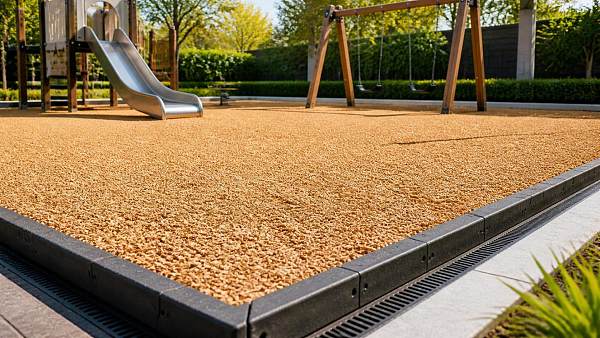
A high-performing epdm rubber flooring playground typically includes a durable EPDM top layer for UV stability and color retention, plus a resilient base layer made from recycled rubber or engineered shock-absorbing material. The top layer protects against wear and environmental exposure, while the lower layer delivers most of the impact attenuation. When comparing options, fall safety should therefore be treated as a system property, not a surface color choice.
Which EPDM rubber flooring playground options are commonly compared?
The most common commercial options fall into four categories: wet-pour EPDM surfacing, EPDM tiles, EPDM mats, and hybrid systems that combine EPDM with prefabricated shock pads. Each has a different relationship to fall safety, installation control, and long-term consistency.
1. Wet-pour EPDM
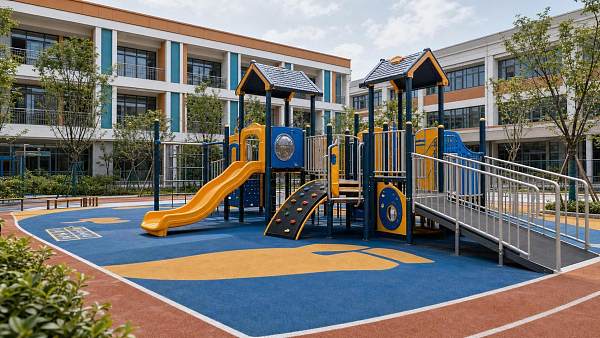
Wet-pour systems are widely used for custom playground layouts. They can be engineered for specific critical fall heights by adjusting base thickness. This makes wet-pour epdm rubber flooring playground installations highly adaptable for projects with varied play equipment heights. They also allow seamless design, wheelchair-friendly transitions, and strong drainage when installed over a porous sub-base.
2. EPDM tiles
Tiles offer factory-controlled thickness and predictable installation speed. They are easier to replace in sections, which can support lower maintenance disruption. However, tile joints may affect aesthetics and, in some lower-quality systems, edge movement can become a safety or durability issue. For moderate fall-height zones, they can be a reliable option if certified correctly.
3. EPDM mats
Mats are often used in targeted impact zones such as under swings or at slide exits. They can provide localized protection but are less suitable for premium, fully integrated playground designs. Surface migration, edge lifting, or inconsistent anchoring may reduce long-term safety performance if not managed carefully.
4. Hybrid systems
Some projects use a prefabricated shock pad with a seamless EPDM wear layer. This can improve quality consistency while preserving custom design freedom. Hybrid epdm rubber flooring playground systems are often attractive where strict compliance, rapid installation, and repeatable performance are all priorities.
How do thickness and critical fall height affect the comparison?
Thickness is one of the most misunderstood variables. A thicker surface generally improves shock absorption, but performance depends on material density, elasticity, and layer composition. Simply specifying “40 mm EPDM” is not enough, because the top EPDM layer is only one part of the system. The safety result depends on the total build-up and the quality of the cushioning layer below.
A practical comparison starts with equipment fall height. Low-level toddler play areas may need less thickness than tower play structures or climbing equipment. If the epdm rubber flooring playground is designed without matching surfacing thickness to the actual equipment risk, the installation may be attractive but non-compliant.
The best comparison method is to request tested performance data tied to exact thickness ranges and installation conditions. If a supplier provides fall height claims without naming the test standard, sample construction, and certification scope, the safety comparison remains incomplete.
What other factors influence fall safety beyond impact attenuation?
Impact attenuation is essential, but real-world fall safety also depends on surface traction, drainage, temperature behavior, and aging. An epdm rubber flooring playground that becomes slippery during rain, hardens under UV exposure, or develops uneven patches over time may no longer deliver the same level of protection as when first installed.
Drainage is especially important. Porous wet-pour systems can drain efficiently and reduce standing water, helping maintain traction and usability after rain. Poor drainage, by contrast, can accelerate binder breakdown, freeze-thaw damage, and microbial growth. In climates with heavy rainfall or seasonal freezing, drainage design should be reviewed together with fall safety data.
Surface temperature also matters for comfort and safe use. Dark colors can become very hot in direct sunlight, which may reduce user tolerance and increase maintenance complaints. Although this does not directly change critical fall height, it affects whether the epdm rubber flooring playground remains practical and welcoming in exposed outdoor settings.
- Check slip resistance in wet and dry conditions.
- Confirm UV stability of EPDM granules, not just binder claims.
- Review drainage layer design and permeability.
- Ask how the surface performs after years of compaction and wear.
- Verify accessibility and edge transition safety.
Which common mistakes weaken EPDM rubber flooring playground safety?
One common mistake is evaluating the top layer only. The visible EPDM finish often receives the most attention because it defines color and branding, but the hidden base system drives much of the safety outcome. Another mistake is assuming that all certified materials remain certified in every project configuration. Testing is valid for specific constructions, so changing base thickness, binder ratio, or substrate condition can alter the result.
A second major issue is poor installation control. Even a well-designed epdm rubber flooring playground can fail if thickness is inconsistent, moisture affects curing, or the sub-base is uneven. Low spots, weak seams, and variable density create both safety and maintenance problems. On-site workmanship should therefore be treated as part of the product decision, not an afterthought.
A third mistake is choosing only by initial price. Lower-cost systems may use lower-grade granules, insufficient UV protection, or reduced binder content. They can appear acceptable at handover but lose resilience faster, increasing replacement frequency and possibly reducing compliance over time. For public-facing commercial spaces, lifecycle cost is often more important than entry cost.
How should a project compare options for long-term value and compliance?
A strong evaluation framework combines safety data with operational realities. Start by matching each play zone to its required fall height. Then compare certified system build-ups, drainage design, maintenance expectations, repair methods, and warranty support. This turns the epdm rubber flooring playground decision from a basic material choice into a full asset-performance review.
In many commercial settings, wet-pour or hybrid systems provide the best all-around performance where customized fall protection, inclusive circulation, and long-term visual quality are required. EPDM tiles can be highly effective when installation speed, modular replacement, or rooftop load control are priorities. Mats remain useful for targeted zones but rarely represent the best whole-site answer for a demanding epdm rubber flooring playground.
The most reliable next step is to compare certified system designs side by side, not just sample chips or color charts. Review impact test reports, requested thickness by equipment zone, sub-base details, drainage strategy, and maintenance implications before finalizing a specification. A well-chosen epdm rubber flooring playground surface should protect consistently, age predictably, and support the long-term quality expectations of modern commercial play environments.
Search News
Hot Articles
- Stationery & UniformsHow Schools Can Cut Printing Costs When Buying Ink Cartridges in BulkSep 21, 2026
- Jewelry Packaging & DisplayHow to Evaluate a Luxury Retail Packaging Supplier for Premium Brand ConsistencySep 20, 2026
- Commercial KitchenHow to Select a Spiral Dough Mixer for Bakery Batch Size and Dough HydrationSep 19, 2026
Popular Tags
Need ExpertConsultation?
Connect with our specialized leisureengineering team for procurementstrategies.
Recommended News
 Aug 30, 2026Entertainment Venue Master Planning: How to Balance Capacity, Flow, and RevenueEntertainment venue development master planning: balance capacity, guest flow, and revenue with practical strategies for resilient, high-performing venues.● Theme Park Strategist
 Sep 07, 2026What Should Buyers Do When a Supplier Delivers Non-Compliant Products?What to do if a supplier delivers non-compliant commercial products: contain risks, document evidence, protect your project, and secure the right remedy.● Theme Park Strategist
 Sep 02, 2026Waterpark Capacity Management: Balancing Queue Times, Safety, and Guest ThroughputWaterpark capacity management strategies to reduce queue times, protect safety, optimize guest throughput, and build a smoother, more profitable park operation.● Theme Park Strategist
 Sep 01, 2026ASTM F2075 Explained: Testing Engineered Wood Fiber for Playground Impact SafetyASTM F2075 explained: learn how engineered wood fiber supports playground impact safety, smarter sourcing, compliance documentation, and reliable maintenance planning.● Theme Park Strategist
 Aug 24, 2026How to Evaluate an Indoor Ninja Warrior Course Supplier in Europe?indoor ninja warrior course Europe supplier guide: learn how to assess safety, EN compliance, engineering, installation, and maintenance support before you choose.● Theme Park Strategist
 Aug 20, 2026How to Choose Modular Indoor Play Equipment for Different Venue Sizes and Age GroupsModular indoor play equipment buying guide: learn how to match venue size, ceiling height, traffic flow, and age groups to create safer, smarter, and more profitable play spaces.● Theme Park Strategist
 Aug 14, 2026POB Push Lifts Overseas Pre-Registrations 45.74%POB boosts overseas pre-registrations for the 2026 China Sport Show by 45.74%, signaling stronger global buyer interest and smarter sourcing opportunities in sports manufacturing.● Theme Park Strategist
 Aug 02, 2026What to Check Before Buying Thick Gymnastic Mats Wholesale for Schools and GymsThick gymnastic mats wholesale buying guide for schools and gyms: learn how to check foam, cover durability, safety documents, samples, and true long-term value before placing a bulk order.● Theme Park Strategist
 Jul 28, 2026How to Design Inclusive Sensory Play Areas for Different Age Groups and NeedsInclusive sensory play starts with smart zoning, age planning, accessibility, and acoustics. Discover practical design tips to create safer, engaging spaces that truly work.● Theme Park Strategist
 Jul 26, 2026How to Evaluate a Bowling Alley Equipment Factory Before Requesting a QuoteBowling alley equipment factory evaluation starts before price. Learn how to check manufacturing scope, engineering, compliance, spare parts, and installation support to avoid costly sourcing mistakes.● Theme Park Strategist
 Jul 16, 2026EN 1176:2026 Takes Effect for Indoor PlaygroundsEN 1176:2026 takes effect for indoor playgrounds in the EU, making conformity assessment mandatory. Learn how this impacts certification, customs clearance, suppliers, and market access.● Theme Park Strategist
 Jul 15, 2026CPSC Sets New ASTM Impact Test for Indoor Playground Metal PartsCPSC sets new ASTM impact test rules for indoor playground metal parts effective Oct. 1, 2026. Learn how the 15kN requirement may affect compliance, testing timelines, and U.S. export delivery.● Theme Park Strategist
 Jul 14, 2026CPSC Tightens Phthalate Limit for Indoor Playground Soft MaterialsCPSC tightens phthalate limits for indoor playground soft materials from Aug 15, 2026. Learn how DIBP control, CBP detention risk, and testing changes impact sourcing, exports, and compliance.● Theme Park Strategist
 Jul 13, 2026Vietnam Tightens IoT Rule for Indoor Playground ImportsVietnam Tightens IoT Rule for Indoor Playground Imports: learn how VNSS-2025 gateway requirements affect exporters, buyers, installers, and delivery timelines before the 2026 deadline.● Theme Park Strategist
 Jul 13, 2026How a Recreational Facility Planning Company Helps Reduce Layout MistakesRecreational facility planning company insights: learn how early layout strategy reduces costly mistakes, improves flow, compliance, and buildability for smoother project delivery.● Theme Park Strategist
 Jul 12, 2026CPSC Halts Imports of Indoor Playground Soft PartsCPSC halts imports of indoor playground soft parts from China under ASTM F3432-26. Learn the compliance risks, testing requirements, and urgent steps importers must take now.● Theme Park Strategist
 Jul 11, 2026CPSC Import Alert Tightens Fire Test Rule for Indoor Playground PaddingCPSC import alert updates indoor playground padding rules to ASTM F3432-26. See how the new fire test affects foam mats, shipments, and U.S. market access.● Theme Park Strategist
 Jul 11, 2026Ice Bumper Cars Bulk Order Checklist for Indoor Parks: Space, Power, and Safety PointsIce bumper cars bulk order guide for indoor parks: learn how to assess space, power, safety, and throughput before buying, so you can avoid costly mistakes and choose the right fleet with confidence.● Theme Park Strategist
 Jul 10, 2026Commercial Playground Equipment for Campuses: Key Safety Standards and Planning TipsCommercial playground equipment for campuses: explore key safety standards, inclusive layout planning, durable materials, and smart procurement tips to avoid costly mistakes.● Theme Park Strategist
 Jul 09, 2026CPSC Recall Escalates Over Phthalates in Indoor Playground PadsCPSC recall escalates over phthalates in indoor playground pads as affected batches exceed CPSIA limits. Learn the risks, supply chain impact, and what buyers should monitor now.● Theme Park Strategist
 Jul 07, 2026How to Choose Ice Skating Rink Equipment in Europe: Key Systems, Standards, and Budget Factorsice skating rink equipment Europe guide: compare refrigeration, rink floors, boards, EU compliance, and total budget factors to choose a safer, more efficient commercial rink solution.● Theme Park Strategist
 Jul 06, 2026CPSC Flags New Flame Test for Indoor Playground PaddingCPSC flags a new flame test for indoor playground padding under ASTM F1487-23b. Learn how this urgent compliance alert affects materials, testing, imports, and U.S. market access.● Theme Park Strategist
 Jul 05, 2026Vietnam Sets VCA Registration Deadline for Indoor Playground ImportsVietnam Sets VCA Registration Deadline for Indoor Playground Imports: learn the August 15, 2026 VCA registration rule, batch EN 14960 test report requirements, and how to avoid import license delays in Vietnam.● Theme Park Strategist
 Jul 04, 2026EU Rule Tightens Fire Tests for Indoor Playground PaddingIndoor Playground suppliers and buyers must act now as the EU enforces stricter fire and smoke tests under EN 14960:2026+A1:2026. Learn the compliance risks, customs impact, and sourcing priorities.● Theme Park Strategist