Commercial outdoor playground layouts that age better over time
Commercial outdoor playground layouts that age better over time
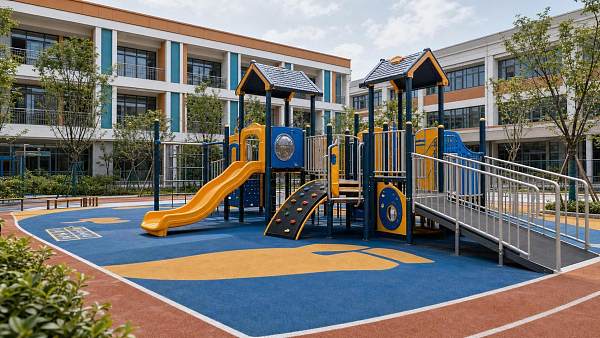
Planning commercial outdoor playground layouts that remain safe, engaging, and cost-efficient over the long term requires more than selecting popular equipment. For project managers and construction leaders, the real challenge is designing a commercial outdoor playground that adapts to changing user needs, site conditions, maintenance demands, and budget pressures—without losing visual appeal or operational value over time.
A layout that ages well supports changing traffic patterns, evolving safety standards, phased upgrades, and seasonal wear. In commercial environments such as resorts, schools, mixed-use developments, public parks, hospitality venues, and leisure destinations, the commercial outdoor playground must perform as a durable asset rather than a one-time installation. That means every path, zone, surfacing decision, and visibility line should contribute to long-term usability.
This guide focuses on practical layout decisions that help a commercial outdoor playground stay relevant over time. The emphasis is on flexibility, accessibility, maintenance efficiency, compliance readiness, and user experience—five areas that often determine whether a site still works well after five, ten, or even fifteen years.
Why layout planning needs a structured review
Many outdoor play projects underperform not because the equipment is poor, but because the layout fails under real operating conditions. A visually impressive plan may still create congestion, blind spots, drainage issues, inaccessible routes, or expensive maintenance bottlenecks. These problems rarely appear in early renderings, but they become obvious after daily use begins.
A structured review helps prevent short-term thinking. It forces the planning process to consider how the commercial outdoor playground will function during peak occupancy, heavy weather exposure, gradual component replacement, and future expansion. It also helps align design intent with sourcing quality, safety compliance, and total lifecycle value, which is especially important in global commercial projects.
Core layout checks for a commercial outdoor playground
- Define age-based play zones early so toddlers, younger children, and older users have distinct activity areas with safe spacing and appropriate challenge levels.
- Plan circulation loops instead of dead-end paths to reduce congestion, improve supervision, and keep movement fluid during busy periods.
- Protect sightlines from entrances, seating areas, and service points so supervision remains easy even after landscaping matures.
- Reserve flexible open space for future upgrades, seasonal programming, or replacement equipment without disrupting the full commercial outdoor playground.
- Separate high-energy motion zones from quiet play, sensory areas, and rest spaces to reduce user conflict and improve comfort.
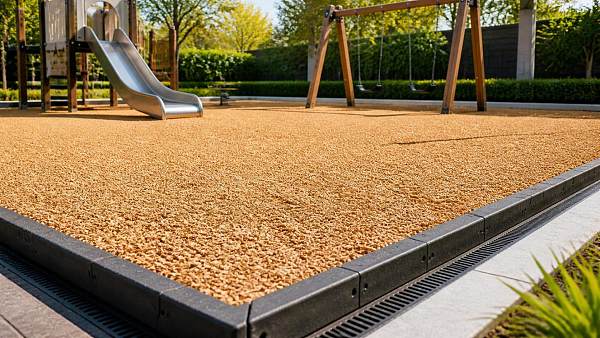
- Match surfacing types to impact needs, drainage conditions, climate exposure, and maintenance capacity rather than choosing one material for every zone.
- Use shade planning as a layout function, combining trees, canopies, and orientation to reduce heat load on equipment and surfacing.
- Confirm accessible routes connect entry points, play features, seating, restrooms, and emergency access without awkward detours or steep gradients.
- Create maintenance access paths wide enough for cleaning, inspection, surfacing repair, and equipment replacement over the playground lifecycle.
- Position drainage infrastructure away from play concentrations so runoff does not degrade surfacing performance or create slip hazards.
- Select anchor zones and utility corridors with future expansion in mind, especially for hospitality, education, and municipal phased developments.
- Balance iconic visual features with modular components so the commercial outdoor playground can evolve without losing brand identity.
Design choices that improve long-term performance
Prioritize zoning before equipment selection
One of the strongest indicators of whether a commercial outdoor playground will age well is the order of planning decisions. Projects that begin with a clear spatial framework usually outperform those built around a few signature structures. Zoning first allows the site to absorb future changes, whether that means replacing a climbing unit, adding inclusive equipment, or shifting user flow after neighboring development changes.
Think in maintenance cycles, not installation day
Durability is not only about material strength. It is also about how easily teams can inspect, clean, repair, and replace parts without shutting down large portions of the site. A commercial outdoor playground that includes service access, modular surfacing sections, and practical clearance zones will often cost less over time than a more decorative but harder-to-maintain layout.
Design for visual longevity
Layouts age visually as much as physically. Overly trend-driven color blocking, crowded feature placement, or decorative forms that dominate circulation may feel dated quickly. By contrast, timeless compositions use balanced spacing, durable neutral base tones, and a few high-impact accents. This helps the commercial outdoor playground remain attractive even as individual components are updated in later phases.
How layout priorities change by project setting
Hospitality and resort environments
In hotels and resorts, the commercial outdoor playground must support guest experience, photo appeal, and operational control. Layouts work best when they are visible from family seating zones, food service points, or pool-adjacent circulation while still maintaining clear safety separation. Shade, soft acoustics, and premium finishes matter more here because the play area contributes directly to the property’s perceived value.
It is also wise to leave expansion room for future water play, sensory features, or branded theming. Hospitality properties often refresh guest-facing amenities, so a flexible commercial outdoor playground layout protects long-term investment.
Schools and educational campuses
School settings require strong supervision lines, rapid movement control, and reliable accessibility. The commercial outdoor playground should support group transitions, age separation, and wear resistance under repeated daily use. Circulation routes should connect naturally to classrooms, assembly areas, and emergency egress paths.
Open areas for unstructured activity are especially valuable on campuses because they allow schedule changes, physical education overlap, and multi-use programming without immediate redesign.
Municipal parks and public recreation sites
Public sites usually face the broadest user range and the most variable traffic. Here, the commercial outdoor playground should prioritize resilient surfacing, easy maintenance access, universal design, and clear wayfinding from parking, sidewalks, and restrooms. Distributed seating and visible rest points improve comfort for caregivers and multigenerational users.
Because public projects often expand in phases, leaving utility corridors and equipment replacement clearances is a smart long-term decision.
Mixed-use commercial developments
In retail-led or residential-commercial developments, the commercial outdoor playground often shares space with dining terraces, pedestrian streets, and event zones. Noise control, perimeter definition, and brand consistency become critical. The layout should draw users in without blocking retail circulation or creating unmanaged crossover with delivery routes.
These projects benefit from modular layouts because tenant changes, seasonal activations, and public events may reshape adjacent traffic patterns over time.
Often overlooked issues that shorten layout lifespan
Underestimating drainage behavior
Even a high-quality commercial outdoor playground can age poorly if water pools under surfacing, near footings, or across access routes. Drainage should be reviewed with topography, soil behavior, and local rainfall in mind, not treated as a minor engineering add-on.
Ignoring edge conditions
The perimeter of the commercial outdoor playground often determines real safety performance. Nearby roads, parking aisles, landscape berms, fencing transitions, and service zones all affect how secure and intuitive the site feels. Poor edge design can make an otherwise good layout difficult to manage.
Overfilling the site
A crowded plan may appear to deliver more value, but it often reduces circulation quality, increases wear concentration, and limits future upgrades. Leaving usable open space is not wasted area; it is what allows a commercial outdoor playground to remain adaptable and attractive for longer.
Treating compliance as a final review step
Safety compliance, accessibility guidance, fall zones, and material performance standards should influence the earliest layout sketches. When compliance is delayed, redesign costs rise and layout quality usually suffers. Early alignment with applicable international and local standards supports smoother delivery and better lifecycle outcomes.
Execution steps that keep the project practical
- Map user groups, expected occupancy peaks, and supervision patterns before finalizing feature locations.
- Run a drainage and shade review at concept stage, not after equipment placement.
- Test maintenance routes for tools, replacement parts, and emergency access across all zones.
- Reserve at least one future-ready area for expansion, reprogramming, or inclusive feature upgrades.
- Compare lifecycle cost, not just capital cost, when evaluating surfacing and structure options.
- Review sightlines with mature landscaping assumptions rather than day-one planting sizes.
- Document which layout elements are fixed and which can be modular in future phases.
FAQ about a commercial outdoor playground layout
What makes a commercial outdoor playground age better than others?
The strongest factors are flexible zoning, durable and maintainable surfacing, clear circulation, accessible routes, good drainage, and room for phased change. Long-term success depends as much on layout logic as on equipment quality.
How much open space should be left in the layout?
There is no universal percentage, but every commercial outdoor playground should preserve enough open area for circulation, informal play, queue relief, and future modifications. If every square meter is already programmed, the site will be harder to adapt.
Is modular equipment better for long-term projects?
In many cases, yes. Modular systems often simplify repairs, phased additions, and component replacement. They also help the commercial outdoor playground evolve without requiring a full site rebuild.
Final planning direction
A commercial outdoor playground that ages well is usually the result of disciplined early planning rather than expensive late corrections. The most reliable layouts are built around movement, visibility, maintenance practicality, climate response, and future flexibility. When these factors are addressed together, the playground remains safer, more attractive, and more cost-effective over time.
The next step is to review any concept plan against the checks above before equipment specifications are locked. That simple sequence shift can improve lifecycle value, reduce redesign risk, and produce a commercial outdoor playground that continues to perform long after the opening day impact fades.
Search News
Hot Articles
- Stationery & UniformsHow Schools Can Cut Printing Costs When Buying Ink Cartridges in BulkSep 21, 2026
- Jewelry Packaging & DisplayHow to Evaluate a Luxury Retail Packaging Supplier for Premium Brand ConsistencySep 20, 2026
- Commercial KitchenHow to Select a Spiral Dough Mixer for Bakery Batch Size and Dough HydrationSep 19, 2026
Popular Tags
Need ExpertConsultation?
Connect with our specialized leisureengineering team for procurementstrategies.
Recommended News
 Aug 30, 2026Entertainment Venue Master Planning: How to Balance Capacity, Flow, and RevenueEntertainment venue development master planning: balance capacity, guest flow, and revenue with practical strategies for resilient, high-performing venues.● Theme Park Strategist
 Sep 07, 2026What Should Buyers Do When a Supplier Delivers Non-Compliant Products?What to do if a supplier delivers non-compliant commercial products: contain risks, document evidence, protect your project, and secure the right remedy.● Theme Park Strategist
 Sep 02, 2026Waterpark Capacity Management: Balancing Queue Times, Safety, and Guest ThroughputWaterpark capacity management strategies to reduce queue times, protect safety, optimize guest throughput, and build a smoother, more profitable park operation.● Theme Park Strategist
 Sep 01, 2026ASTM F2075 Explained: Testing Engineered Wood Fiber for Playground Impact SafetyASTM F2075 explained: learn how engineered wood fiber supports playground impact safety, smarter sourcing, compliance documentation, and reliable maintenance planning.● Theme Park Strategist
 Aug 24, 2026How to Evaluate an Indoor Ninja Warrior Course Supplier in Europe?indoor ninja warrior course Europe supplier guide: learn how to assess safety, EN compliance, engineering, installation, and maintenance support before you choose.● Theme Park Strategist
 Aug 20, 2026How to Choose Modular Indoor Play Equipment for Different Venue Sizes and Age GroupsModular indoor play equipment buying guide: learn how to match venue size, ceiling height, traffic flow, and age groups to create safer, smarter, and more profitable play spaces.● Theme Park Strategist
 Aug 14, 2026POB Push Lifts Overseas Pre-Registrations 45.74%POB boosts overseas pre-registrations for the 2026 China Sport Show by 45.74%, signaling stronger global buyer interest and smarter sourcing opportunities in sports manufacturing.● Theme Park Strategist
 Aug 02, 2026What to Check Before Buying Thick Gymnastic Mats Wholesale for Schools and GymsThick gymnastic mats wholesale buying guide for schools and gyms: learn how to check foam, cover durability, safety documents, samples, and true long-term value before placing a bulk order.● Theme Park Strategist
 Jul 28, 2026How to Design Inclusive Sensory Play Areas for Different Age Groups and NeedsInclusive sensory play starts with smart zoning, age planning, accessibility, and acoustics. Discover practical design tips to create safer, engaging spaces that truly work.● Theme Park Strategist
 Jul 26, 2026How to Evaluate a Bowling Alley Equipment Factory Before Requesting a QuoteBowling alley equipment factory evaluation starts before price. Learn how to check manufacturing scope, engineering, compliance, spare parts, and installation support to avoid costly sourcing mistakes.● Theme Park Strategist
 Jul 16, 2026EN 1176:2026 Takes Effect for Indoor PlaygroundsEN 1176:2026 takes effect for indoor playgrounds in the EU, making conformity assessment mandatory. Learn how this impacts certification, customs clearance, suppliers, and market access.● Theme Park Strategist
 Jul 15, 2026CPSC Sets New ASTM Impact Test for Indoor Playground Metal PartsCPSC sets new ASTM impact test rules for indoor playground metal parts effective Oct. 1, 2026. Learn how the 15kN requirement may affect compliance, testing timelines, and U.S. export delivery.● Theme Park Strategist
 Jul 14, 2026CPSC Tightens Phthalate Limit for Indoor Playground Soft MaterialsCPSC tightens phthalate limits for indoor playground soft materials from Aug 15, 2026. Learn how DIBP control, CBP detention risk, and testing changes impact sourcing, exports, and compliance.● Theme Park Strategist
 Jul 13, 2026Vietnam Tightens IoT Rule for Indoor Playground ImportsVietnam Tightens IoT Rule for Indoor Playground Imports: learn how VNSS-2025 gateway requirements affect exporters, buyers, installers, and delivery timelines before the 2026 deadline.● Theme Park Strategist
 Jul 13, 2026How a Recreational Facility Planning Company Helps Reduce Layout MistakesRecreational facility planning company insights: learn how early layout strategy reduces costly mistakes, improves flow, compliance, and buildability for smoother project delivery.● Theme Park Strategist
 Jul 12, 2026CPSC Halts Imports of Indoor Playground Soft PartsCPSC halts imports of indoor playground soft parts from China under ASTM F3432-26. Learn the compliance risks, testing requirements, and urgent steps importers must take now.● Theme Park Strategist
 Jul 11, 2026CPSC Import Alert Tightens Fire Test Rule for Indoor Playground PaddingCPSC import alert updates indoor playground padding rules to ASTM F3432-26. See how the new fire test affects foam mats, shipments, and U.S. market access.● Theme Park Strategist
 Jul 11, 2026Ice Bumper Cars Bulk Order Checklist for Indoor Parks: Space, Power, and Safety PointsIce bumper cars bulk order guide for indoor parks: learn how to assess space, power, safety, and throughput before buying, so you can avoid costly mistakes and choose the right fleet with confidence.● Theme Park Strategist
 Jul 10, 2026Commercial Playground Equipment for Campuses: Key Safety Standards and Planning TipsCommercial playground equipment for campuses: explore key safety standards, inclusive layout planning, durable materials, and smart procurement tips to avoid costly mistakes.● Theme Park Strategist
 Jul 09, 2026CPSC Recall Escalates Over Phthalates in Indoor Playground PadsCPSC recall escalates over phthalates in indoor playground pads as affected batches exceed CPSIA limits. Learn the risks, supply chain impact, and what buyers should monitor now.● Theme Park Strategist
 Jul 07, 2026How to Choose Ice Skating Rink Equipment in Europe: Key Systems, Standards, and Budget Factorsice skating rink equipment Europe guide: compare refrigeration, rink floors, boards, EU compliance, and total budget factors to choose a safer, more efficient commercial rink solution.● Theme Park Strategist
 Jul 06, 2026CPSC Flags New Flame Test for Indoor Playground PaddingCPSC flags a new flame test for indoor playground padding under ASTM F1487-23b. Learn how this urgent compliance alert affects materials, testing, imports, and U.S. market access.● Theme Park Strategist
 Jul 05, 2026Vietnam Sets VCA Registration Deadline for Indoor Playground ImportsVietnam Sets VCA Registration Deadline for Indoor Playground Imports: learn the August 15, 2026 VCA registration rule, batch EN 14960 test report requirements, and how to avoid import license delays in Vietnam.● Theme Park Strategist
 Jul 04, 2026EU Rule Tightens Fire Tests for Indoor Playground PaddingIndoor Playground suppliers and buyers must act now as the EU enforces stricter fire and smoke tests under EN 14960:2026+A1:2026. Learn the compliance risks, customs impact, and sourcing priorities.● Theme Park Strategist