Commercial Rock Climbing Walls: Indoor Design Mistakes to Avoid
Designing commercial rock climbing walls for indoor venues is far more complex than installing panels and holds. For project managers and engineering leads, early mistakes in layout, safety planning, user flow, and maintenance access can drive up costs and compromise long-term performance. This guide outlines the most common indoor design errors to avoid, helping you deliver a safer, more efficient, and commercially successful climbing facility.
Why indoor climbing wall mistakes vary by business scenario
Not every indoor venue uses commercial rock climbing walls in the same way. A family entertainment center needs fast turnover, high visibility, and intuitive supervision. A dedicated climbing gym needs route density, training flexibility, and long-term hold replacement planning. A hotel, school, or mixed-use leisure venue may prioritize aesthetics, noise control, and compliance simplicity over elite performance climbing. Because the commercial objective changes by scenario, the design mistakes that matter most also change.
For project managers, this is where many costly errors begin. Teams often approve a wall concept based on visual appeal or available floor area, then discover too late that circulation is blocked, belay zones overlap with spectator paths, structural loads were underestimated, or maintenance requires shutting down profitable areas. In commercial rock climbing walls, poor early-stage judgment creates downstream problems in procurement, construction coordination, operations, and liability management.
A successful indoor climbing project therefore starts with a scenario-based approach: who will use the wall, how traffic will move, what level of supervision is realistic, and how the asset must perform over five to ten years. That perspective helps decision-makers avoid generic design choices that look acceptable on paper but fail in real commercial use.
Where commercial rock climbing walls are commonly installed
Indoor commercial rock climbing walls appear in several business settings, and each setting changes the design brief. Understanding those differences helps engineering leads choose the right wall system, fall protection strategy, and maintenance model before final drawings are issued.
Common indoor design mistakes across all scenarios
1. Starting with wall height before defining user mix
A frequent mistake in commercial rock climbing walls is treating height as the main value driver. In reality, user mix matters more. Beginner-heavy venues may gain more from approachable angles, clear route color separation, and easy harnessing zones than from extreme vertical scale. If the wall is too intimidating or too technical for the target audience, utilization drops despite high capital spend.
2. Misjudging fall zones and circulation overlap
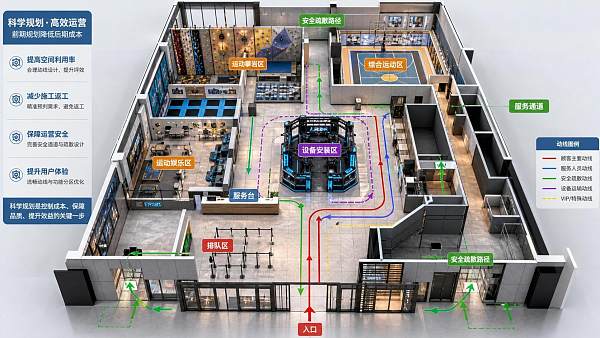
Indoor climbing zones must not compete with check-in desks, café seating, birthday party rooms, spectator lines, or emergency egress routes. One of the most expensive corrections occurs when the operating team realizes that climbers, staff, and guests are crossing the same floor area. This increases risk and slows throughput. Fall zones, belay waiting areas, and gear staging must be protected from unrelated pedestrian traffic.
3. Ignoring maintenance access during concept design
Commercial rock climbing walls require regular inspection, route resetting, cleaning, hardware checks, and sometimes panel repairs. If scissor lift access, ladder clearance, anchor reach, or hold storage zones are not planned early, maintenance becomes slow and disruptive. In premium commercial settings, lost operating hours can cost more over time than the initial design savings.
4. Designing for visual impact but not supervision
Feature walls, sculptural overhangs, and immersive thematic environments can support branding, especially in hospitality and leisure projects. But if staff cannot clearly supervise attachment points, belay preparation, and landing zones, the design creates operational blind spots. Good indoor wall design balances aesthetics with sightlines.
5. Treating standards compliance as a late-stage checklist
Safety compliance, structural coordination, fire strategy, flooring compatibility, and equipment certification should shape the design from the beginning. If these are addressed after fabrication drawings are advanced, redesign costs rise quickly. Project leads should align local building codes, climbing-specific standards, and insurer expectations before tendering.
Scenario-by-scenario mistakes to avoid
Dedicated climbing gyms: over-optimizing for experts
In dedicated gyms, a common assumption is that advanced climbers define the entire design. That often leads to steep terrain concentration, limited beginner progression, and inefficient use of warm-up or training space. For commercial rock climbing walls in this scenario, the better approach is layered use: beginner access, intermediate route variety, coaching zones, and advanced terrain balanced within the same footprint. Another mistake is failing to provide enough route reset logistics, including hold washing, back-of-house storage, and safe staff access to upper sections.
Family entertainment centers: underestimating queue behavior
In this scenario, the wall is part of a broader attraction mix. The most common design error is focusing only on the climbing envelope while ignoring waiting guests, parents taking photos, staff briefing, and harness fitting. If these activities spill into circulation routes, the attraction feels chaotic and staff workload rises. Commercial rock climbing walls in entertainment settings benefit from highly legible entry and exit points, short instruction paths, and clear separation between active climbers and non-participants.
Hotels and resorts: forgetting that the wall is part of a premium guest environment
Hospitality venues often want signature leisure features, but climbing installations cannot behave like isolated sports equipment. Noise transmission, visual integration, adjacent food-and-beverage areas, and child safeguarding all matter. A major mistake is placing commercial rock climbing walls where guest circulation is elegant in theory but exposed in practice, such as near lounge seating, premium retail corners, or narrow pool transitions. In hotels and resorts, the wall must support brand experience without creating clutter, perceived danger, or maintenance disruption.
Schools and campuses: assuming occasional use means simple design
Educational facilities may use walls for PE programs, clubs, team building, or supervised recreation. The design mistake here is assuming that lower frequency reduces complexity. In fact, multi-user environments often need stronger access control, easier instruction flow, and durable finishes because users vary widely in skill level. Anchor systems, flooring, and storage should be selected for predictable supervision, not just low upfront cost.
How demand differences change the right design decision
When project teams evaluate commercial rock climbing walls, they should compare not only dimensions and budget, but also how the installation will perform against business metrics. The right wall for one venue can be the wrong wall for another.
Practical design checks before procurement and fabrication
Before approving a supplier or issuing fabrication release, project managers should confirm several high-impact items. First, validate the structural interface between the climbing wall and the host building. Second, map operational flows from arrival to exit, including harnessing, briefing, climbing, waiting, and supervision. Third, confirm who will maintain the wall, how often routes will change, and what equipment access is needed.
It is also wise to review acoustic performance, dust and cleaning implications, lighting angles, and CCTV visibility. These details are often ignored when commercial rock climbing walls are specified mainly as attractions, yet they influence guest perception and staff efficiency every day. If the venue is part of a broader commercial development, integration with fire egress, neighboring tenants, loading access, and after-hours servicing should be checked early.
Common scenario misjudgments that delay projects
- Assuming an indoor climbing wall can be inserted late into an already fixed architectural layout.
- Choosing a vendor based only on renderings instead of documented commercial project experience.
- Confusing public attraction use with club-style self-managed use.
- Not matching flooring, anchors, and belay systems to the real supervision model.
- Overlooking future route reset frequency, spare parts planning, and cleaning access.
- Failing to separate brand-driven design ambitions from operational safety realities.
FAQ for project managers evaluating indoor climbing installations
How early should commercial rock climbing walls be considered in a project?
Ideally during concept design. Early coordination helps align structure, floor loading, ceiling clearances, traffic flow, and compliance requirements before costly redesign appears.
Are auto-belays always the best choice for indoor venues?
Not always. They work well in many leisure and supervised commercial scenarios, but they must match user demographics, staffing model, inspection routines, and throughput goals.
What is the biggest hidden cost in commercial rock climbing walls?
Operational inefficiency. A wall that is hard to supervise, reset, clean, or access for maintenance can erode revenue and increase labor costs long after installation.
Final planning guidance
The best commercial rock climbing walls are not defined by size alone, but by fit. Fit with the venue, fit with user behavior, fit with staffing reality, and fit with long-term commercial objectives. For project managers and engineering leads, avoiding indoor design mistakes means moving beyond attraction thinking and into scenario-based planning. When layout, supervision, maintenance, and brand goals are aligned from the start, indoor climbing facilities become safer, easier to operate, and more valuable as commercial assets.
If you are comparing suppliers or developing a new indoor leisure concept, begin by documenting your real use case: target users, expected traffic, staffing model, service level, compliance obligations, and maintenance capacity. That business-first checklist will do more to improve your commercial rock climbing walls project than any visual concept alone.
Search News
Hot Articles
- Stationery & UniformsHow Schools Can Cut Printing Costs When Buying Ink Cartridges in BulkSep 21, 2026
- Jewelry Packaging & DisplayHow to Evaluate a Luxury Retail Packaging Supplier for Premium Brand ConsistencySep 20, 2026
- Commercial KitchenHow to Select a Spiral Dough Mixer for Bakery Batch Size and Dough HydrationSep 19, 2026
Popular Tags
Need ExpertConsultation?
Connect with our specialized leisureengineering team for procurementstrategies.
Recommended News
 Aug 30, 2026Entertainment Venue Master Planning: How to Balance Capacity, Flow, and RevenueEntertainment venue development master planning: balance capacity, guest flow, and revenue with practical strategies for resilient, high-performing venues.● Theme Park Strategist
 Sep 07, 2026What Should Buyers Do When a Supplier Delivers Non-Compliant Products?What to do if a supplier delivers non-compliant commercial products: contain risks, document evidence, protect your project, and secure the right remedy.● Theme Park Strategist
 Sep 02, 2026Waterpark Capacity Management: Balancing Queue Times, Safety, and Guest ThroughputWaterpark capacity management strategies to reduce queue times, protect safety, optimize guest throughput, and build a smoother, more profitable park operation.● Theme Park Strategist
 Sep 01, 2026ASTM F2075 Explained: Testing Engineered Wood Fiber for Playground Impact SafetyASTM F2075 explained: learn how engineered wood fiber supports playground impact safety, smarter sourcing, compliance documentation, and reliable maintenance planning.● Theme Park Strategist
 Aug 24, 2026How to Evaluate an Indoor Ninja Warrior Course Supplier in Europe?indoor ninja warrior course Europe supplier guide: learn how to assess safety, EN compliance, engineering, installation, and maintenance support before you choose.● Theme Park Strategist
 Aug 20, 2026How to Choose Modular Indoor Play Equipment for Different Venue Sizes and Age GroupsModular indoor play equipment buying guide: learn how to match venue size, ceiling height, traffic flow, and age groups to create safer, smarter, and more profitable play spaces.● Theme Park Strategist
 Aug 14, 2026POB Push Lifts Overseas Pre-Registrations 45.74%POB boosts overseas pre-registrations for the 2026 China Sport Show by 45.74%, signaling stronger global buyer interest and smarter sourcing opportunities in sports manufacturing.● Theme Park Strategist
 Aug 02, 2026What to Check Before Buying Thick Gymnastic Mats Wholesale for Schools and GymsThick gymnastic mats wholesale buying guide for schools and gyms: learn how to check foam, cover durability, safety documents, samples, and true long-term value before placing a bulk order.● Theme Park Strategist
 Jul 28, 2026How to Design Inclusive Sensory Play Areas for Different Age Groups and NeedsInclusive sensory play starts with smart zoning, age planning, accessibility, and acoustics. Discover practical design tips to create safer, engaging spaces that truly work.● Theme Park Strategist
 Jul 26, 2026How to Evaluate a Bowling Alley Equipment Factory Before Requesting a QuoteBowling alley equipment factory evaluation starts before price. Learn how to check manufacturing scope, engineering, compliance, spare parts, and installation support to avoid costly sourcing mistakes.● Theme Park Strategist
 Jul 16, 2026EN 1176:2026 Takes Effect for Indoor PlaygroundsEN 1176:2026 takes effect for indoor playgrounds in the EU, making conformity assessment mandatory. Learn how this impacts certification, customs clearance, suppliers, and market access.● Theme Park Strategist
 Jul 15, 2026CPSC Sets New ASTM Impact Test for Indoor Playground Metal PartsCPSC sets new ASTM impact test rules for indoor playground metal parts effective Oct. 1, 2026. Learn how the 15kN requirement may affect compliance, testing timelines, and U.S. export delivery.● Theme Park Strategist
 Jul 14, 2026CPSC Tightens Phthalate Limit for Indoor Playground Soft MaterialsCPSC tightens phthalate limits for indoor playground soft materials from Aug 15, 2026. Learn how DIBP control, CBP detention risk, and testing changes impact sourcing, exports, and compliance.● Theme Park Strategist
 Jul 13, 2026Vietnam Tightens IoT Rule for Indoor Playground ImportsVietnam Tightens IoT Rule for Indoor Playground Imports: learn how VNSS-2025 gateway requirements affect exporters, buyers, installers, and delivery timelines before the 2026 deadline.● Theme Park Strategist
 Jul 13, 2026How a Recreational Facility Planning Company Helps Reduce Layout MistakesRecreational facility planning company insights: learn how early layout strategy reduces costly mistakes, improves flow, compliance, and buildability for smoother project delivery.● Theme Park Strategist
 Jul 12, 2026CPSC Halts Imports of Indoor Playground Soft PartsCPSC halts imports of indoor playground soft parts from China under ASTM F3432-26. Learn the compliance risks, testing requirements, and urgent steps importers must take now.● Theme Park Strategist
 Jul 11, 2026CPSC Import Alert Tightens Fire Test Rule for Indoor Playground PaddingCPSC import alert updates indoor playground padding rules to ASTM F3432-26. See how the new fire test affects foam mats, shipments, and U.S. market access.● Theme Park Strategist
 Jul 11, 2026Ice Bumper Cars Bulk Order Checklist for Indoor Parks: Space, Power, and Safety PointsIce bumper cars bulk order guide for indoor parks: learn how to assess space, power, safety, and throughput before buying, so you can avoid costly mistakes and choose the right fleet with confidence.● Theme Park Strategist
 Jul 10, 2026Commercial Playground Equipment for Campuses: Key Safety Standards and Planning TipsCommercial playground equipment for campuses: explore key safety standards, inclusive layout planning, durable materials, and smart procurement tips to avoid costly mistakes.● Theme Park Strategist
 Jul 09, 2026CPSC Recall Escalates Over Phthalates in Indoor Playground PadsCPSC recall escalates over phthalates in indoor playground pads as affected batches exceed CPSIA limits. Learn the risks, supply chain impact, and what buyers should monitor now.● Theme Park Strategist
 Jul 07, 2026How to Choose Ice Skating Rink Equipment in Europe: Key Systems, Standards, and Budget Factorsice skating rink equipment Europe guide: compare refrigeration, rink floors, boards, EU compliance, and total budget factors to choose a safer, more efficient commercial rink solution.● Theme Park Strategist
 Jul 06, 2026CPSC Flags New Flame Test for Indoor Playground PaddingCPSC flags a new flame test for indoor playground padding under ASTM F1487-23b. Learn how this urgent compliance alert affects materials, testing, imports, and U.S. market access.● Theme Park Strategist
 Jul 05, 2026Vietnam Sets VCA Registration Deadline for Indoor Playground ImportsVietnam Sets VCA Registration Deadline for Indoor Playground Imports: learn the August 15, 2026 VCA registration rule, batch EN 14960 test report requirements, and how to avoid import license delays in Vietnam.● Theme Park Strategist
 Jul 04, 2026EU Rule Tightens Fire Tests for Indoor Playground PaddingIndoor Playground suppliers and buyers must act now as the EU enforces stricter fire and smoke tests under EN 14960:2026+A1:2026. Learn the compliance risks, customs impact, and sourcing priorities.● Theme Park Strategist