NBA Adopts New LED Interactive Court Floors for 2026–27 Season
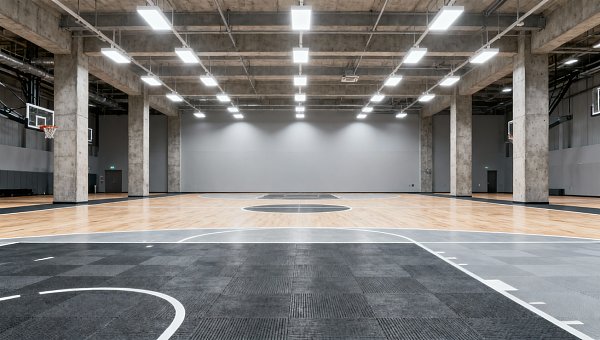
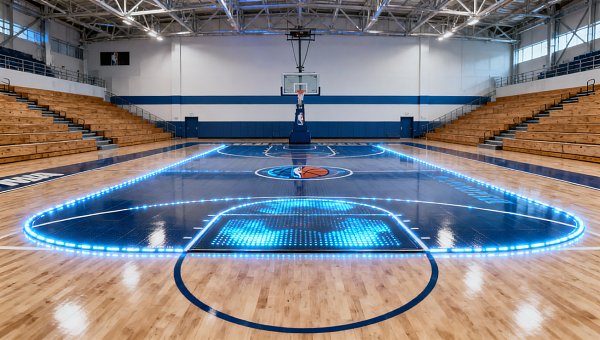
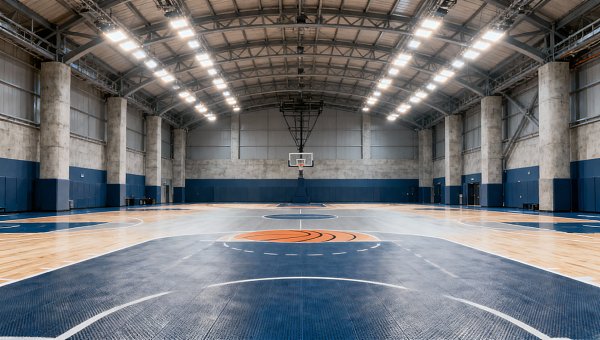
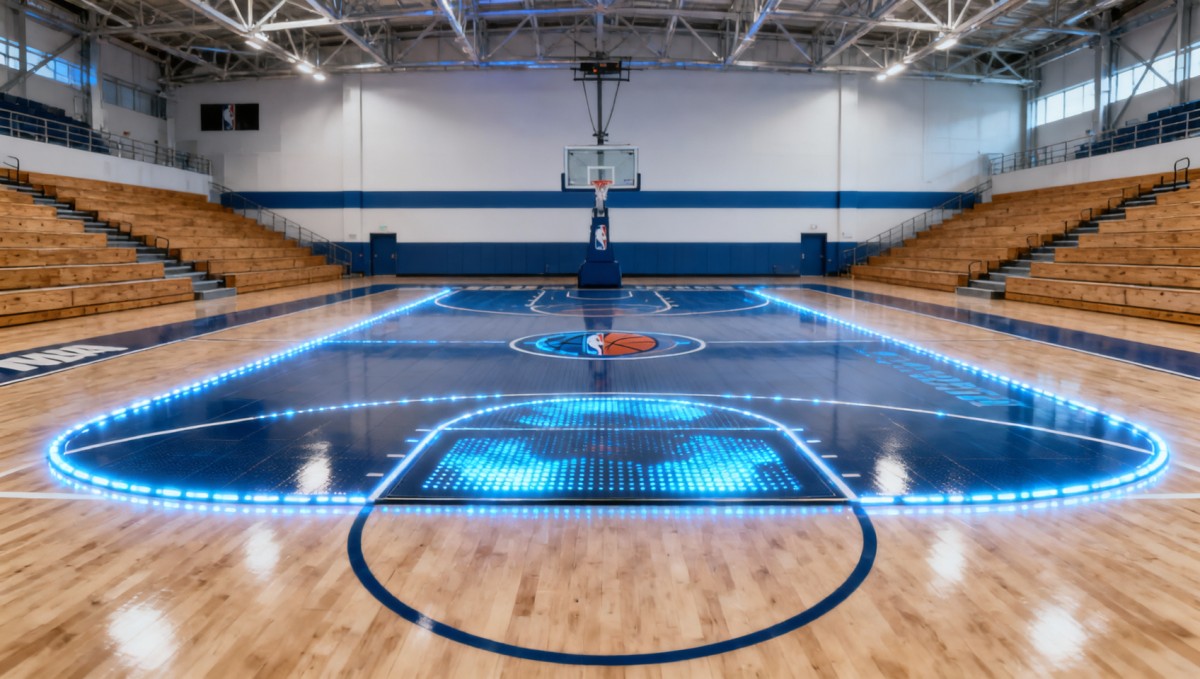
NBA officially mandated LED-integrated interactive basketball court flooring for all home arenas starting with the 2026–27 season, effective May 7, 2026. This development signals material and technical shifts for global suppliers of sports flooring systems, smart venue infrastructure providers, and export-oriented manufacturers — particularly those engaged in high-specification LED-enabled athletic surfaces and certified interoperability solutions.
Event Overview
On May 7, 2026, the NBA announced its venue upgrade plan for the 2026–27 season, requiring all official home game courts to incorporate an LED interactive layer capable of real-time projection, pressure sensing, and Wi-Fi 6 connectivity. The league specified UL 879A and ANSI E1.41-2025 as the sole applicable safety and communication standards. Three Chinese LED sports flooring manufacturers have received the NBA’s first batch of official technical compatibility authorizations. These manufacturers now hold elevated delivery priority for North American arena projects.
Industries Affected by This Development
Direct Export Manufacturers
Manufacturers exporting LED-integrated sports flooring to North America are directly affected due to the NBA’s formal adoption of performance and compliance benchmarks. The requirement for UL 879A and ANSI E1.41-2025 certification introduces new product validation timelines and testing costs. Exporters without current alignment to these standards may face delayed project eligibility or disqualification from tender processes tied to NBA-affiliated venues.
Raw Material & Component Suppliers
Suppliers of LED modules, pressure-sensitive substrates, and Wi-Fi 6-certified embedded controllers may see revised demand profiles. The NBA’s specification mandates functional integration — not just illumination — meaning component-level compatibility (e.g., latency thresholds, power management under dynamic load) becomes critical. Suppliers previously serving general lighting or non-interactive flooring markets may need to reposition offerings toward certified low-latency, high-durability subsystems.
Contract Flooring Installers & Venue Integrators
Installers and system integrators working on U.S. or Canadian sports facilities must now verify floor-level interoperability with venue-wide AV/IT infrastructure. The requirement for Wi-Fi 6 connectivity implies coordination with network architecture teams, while pressure-sensing functionality necessitates calibration protocols beyond standard installation workflows. Projects referencing NBA-compliant specs may require updated labor certifications or third-party verification documentation.
Supply Chain & Certification Service Providers
Third-party testing labs, certification consultants, and logistics partners specializing in North American regulatory compliance face increased inquiry volume around UL 879A and ANSI E1.41-2025. As these standards are newly designated as mandatory for this application, service providers will need to confirm lab capacity, test turnaround times, and interpretation guidance — especially given that ANSI E1.41-2025 is a recently published standard (2025 edition).
Key Considerations and Recommended Actions for Stakeholders
Monitor official NBA communications for implementation timelines and scope clarification
The May 7 announcement outlines technical requirements but does not specify phased rollout deadlines, retrofit allowances, or applicability to non-NBA venues (e.g., G League, college arenas). Stakeholders should track subsequent memos from NBA Facilities or league procurement channels for operational details before committing to capital expenditure or certification investment.
Prioritize verification of existing product compliance against UL 879A and ANSI E1.41-2025
Manufacturers and exporters should assess whether current LED flooring designs meet both standards’ mechanical durability, thermal management, electromagnetic compatibility, and data interface provisions. ANSI E1.41-2025 specifically addresses wireless control interoperability for entertainment technology — a domain not traditionally covered under general LED or flooring standards.
Distinguish between NBA authorization and broader market acceptance
The three authorized Chinese manufacturers received technical compatibility approval — not blanket endorsement for all applications. This authorization applies to NBA-specific use cases; it does not imply automatic qualification for other leagues, municipalities, or commercial fitness centers. Market expansion should be pursued incrementally, with separate validation where required.
Prepare documentation and testing readiness for accelerated project bidding
With elevated delivery priority granted to authorized suppliers, procurement cycles for upcoming North American arena upgrades may compress. Companies should pre-assemble test reports, compliance letters, and installation schematics aligned to the two referenced standards to reduce response time during RFP stages.
Editorial Perspective / Industry Observation
Observably, this announcement functions primarily as a technical signal rather than an immediate procurement mandate. While the 2026–27 season start date is fixed, full deployment across 30 arenas depends on renovation schedules, budget cycles, and vendor capacity — many of which extend beyond a single off-season. Analysis shows the NBA is leveraging its influence to consolidate interoperability expectations across a fragmented supply base, potentially accelerating standard adoption in adjacent sectors (e.g., esports arenas, multipurpose convention centers). From an industry perspective, the move reflects growing convergence between sports infrastructure and smart venue systems — where flooring transitions from passive surface to active data node. Current relevance lies less in immediate revenue impact and more in long-term qualification positioning and standards literacy.
Conclusion: This development marks a formal inflection point in the specification hierarchy for professional sports flooring — shifting emphasis from structural and aesthetic performance to embedded digital functionality and cross-system interoperability. It is best understood not as a near-term sales catalyst, but as a forward-looking benchmark that redefines technical entry requirements for high-value international projects. Stakeholders should treat it as a strategic calibration point for R&D roadmaps, certification planning, and supply chain resilience — not as an isolated compliance event.
Source: NBA official announcement, May 7, 2026. Note: Implementation details including retrofit timelines, vendor onboarding procedures, and applicability beyond NBA home arenas remain pending further official guidance and are subject to ongoing observation.
Search News
Hot Articles
- Stage Lighting & Truss2026 National Rhythmic Gymnastics Championships in Chengdu Feature Export-Ready Smart Flooring & LightingMay 09, 2026
- Outdoor Rides2026 Inner Mongolia Football Super League Kicks Off, Boosting LED Stadium Lighting Export InquiriesMay 09, 2026
- Indoor PlaygroundChinese Volleyball Team’s漳州 Training Spurs Global Demand for Smart Training GearMay 09, 2026
Popular Tags
Need ExpertConsultation?
Connect with our specialized leisureengineering team for procurementstrategies.
Recommended News
 May 09, 2026Chinese Volleyball Team’s漳州 Training Spurs Global Demand for Smart Training GearSmart training gear demand surges as Chinese volleyball team’s Zhangzhou camp adopts AI posture analysis & EMG vests—FIVB 2026 compliance drives global ODM orders.● Theme Park Strategist
 May 09, 2026Sweden Men's Team Beats China After 26 Years; European Clubs Order Chinese AI Ping-Pong MachinesSweden men's team beats China after 26 years—sparking EU demand for Chinese AI ping-pong machines. Discover how this win reshapes sports tech exports, certification, and firmware localization.● Theme Park Strategist
 May 09, 2026FIBA 2026 Venue Standards Mandate Acoustic Floors, Flicker-Free LEDFIBA 2026 Venue Standards mandate acoustic floors & flicker-free LED lighting—key for compliant basketball arenas. Discover requirements, certifications, and market impact.● Theme Park Strategist
 May 09, 2026Wu Yize’s Domestic Debut Spurs 37% Surge in Billiards Table Export InquiriesBilliards table export inquiries surge 37% after Wu Yize’s Chengdu debut—CE+UKCA & FIBA/BCA compliant models in high demand globally.● Theme Park Strategist
 May 09, 2026EPDM rubber flooring playground options compared by fall safetyEPDM rubber flooring playground options compared by fall safety—explore wet-pour, tiles, mats, and hybrid systems to find the safest, most durable choice.● Theme Park Strategist
 May 09, 2026Artificial grass for playground: better drainage, fewer closures?Artificial grass for playground projects can improve drainage, reduce puddles, and help cut closures after rain. Learn what affects performance, costs, and long-term usability.● Theme Park Strategist
 May 09, 2026Seesaws and spring riders: what gets damaged first outdoors?Seesaws and spring riders: discover what gets damaged first outdoors, how hidden wear affects safety and cost, and what to compare before you buy.● Theme Park Strategist
 May 09, 2026Commercial outdoor playground layouts that age better over timeCommercial outdoor playground layouts that age better over time: discover flexible, low-maintenance design strategies that improve safety, accessibility, and long-term ROI.● Theme Park Strategist
 May 09, 2026Swing sets wholesale: when lower prices mean weaker lifespanSwing sets wholesale is not just about the lowest quote. Learn how to compare durability, safety, compliance, and lifecycle cost to avoid hidden replacements and choose smarter commercial suppliers.● Theme Park Strategist
 May 09, 2026Inflatable bumper balls and the safety issues operators faceInflatable bumper balls raise fun—and operator risk. Explore key safety issues, compliance concerns, and smart sourcing tips to protect users, reputation, and revenue.● Theme Park Strategist
 May 09, 2026How durable are human hamster balls in high-turnover venues?Human hamster balls in high-turnover venues must resist seam stress, valve wear, and repeated impacts. Learn what specs matter most for safer, longer-lasting commercial use.● Theme Park Strategist
 May 08, 2026Indoor Ninja Warrior Course: Which Obstacles Keep Repeat Visits High?Indoor ninja warrior course design that drives repeat visits: discover the obstacles, layouts, and challenge features that boost engagement, competition, and long-term venue value.● Theme Park Strategist
 May 08, 2026Commercial Rock Climbing Walls: Indoor Design Mistakes to AvoidCommercial rock climbing walls require smart indoor planning. Discover the top design mistakes to avoid for safer operations, better flow, lower costs, and stronger venue performance.● Theme Park Strategist
 May 08, 2026Climbing Wall Holds Wholesale: When Cheap Sets Cost More LaterClimbing wall holds wholesale may look cheaper upfront, but poor quality can drive safety risks, faster wear, and higher replacement costs. Learn how to source smarter.● Theme Park Strategist
 May 08, 2026Soft Play Equipment Wholesale: What Impacts Long-Term ROI?Soft play equipment wholesale ROI depends on more than price. Learn how safety, durability, customization, and supplier support shape long-term value across commercial projects.● Theme Park Strategist
 May 08, 2026Snooker’s Shift to China: Industry Impact AnalysisSnooker’s Shift to China: Discover how the 60%+ relocation of pro venues and AI training tables reshapes cue sports equipment, exports, and smart hardware demand.● Theme Park Strategist
 May 08, 2026China Volleyball Team’s漳州 Training Spurs Demand for Smart Sports GearSmart sports gear demand surges as China Volleyball Team’s Zhangzhou training validates AI motion capture, EMG vests & load monitors—key for global exporters.● Theme Park Strategist
 May 08, 2026NBA Adopts New LED Interactive Court Floors for 2026–27 SeasonNBA adopts LED interactive court floors for 2026–27 season—transforming arenas with real-time projection, pressure sensing & Wi-Fi 6. Key for suppliers, installers & certifiers.● Theme Park Strategist
 May 08, 2026Sweden Men’s Team Beats China After 26 Years; AI Ball Machines Gain EU TractionAI ball machines gain EU traction after Sweden’s historic win over China—CE-certified smart training tech now in demand across European national programs.● Theme Park Strategist
 May 08, 2026Snooker World Championship Boosts Billiards Table ExportsSnooker World Championship drives global demand for premium automatic billiards tables—sensor-return, app-connected, FIBA/WSF-certified carbon-fiber models surge 37% in export inquiries.● Theme Park Strategist
 May 08, 2026FIBA 2026 Venue Standards: Acoustic Floors & LED Lighting Now MandatoryFIBA 2026 venue standards now mandate acoustic floors & LED lighting—key for exporters, contractors & suppliers targeting Middle East, LATAM & SEA projects.● Theme Park Strategist
 May 07, 2026CCTV5 Broadcasts Key Sports Events on May 7, 2026CCTV5 broadcasts WTT Finals, CBA playoffs & AFC U-17 Women’s qualifiers on May 7, 2026—boosting global demand for FIBA/AFC/ITTF-certified sports equipment.● Theme Park Strategist
 May 07, 2026Snooker World Championship Boosts Chinese Billiards Table ExportsSnooker World Championship boosts Chinese billiards table exports — CE+UKCA-certified slate tables see 37% surge in UK, Germany & Saudi demand.● Theme Park Strategist
 May 07, 2026CPSC Recalls 3 Chinese-Made Kids' Climbing FramesCPSC recalls 3 Chinese-made kids' climbing frames—47,000 units over ASTM F1487-23 failures & pinch hazards. Act now to protect your supply chain.● Theme Park Strategist