High Ropes Course Equipment and the Safety Details Often Missed
Selecting high ropes course equipment is only the visible part of a successful project. For project managers and engineering leads, the real challenge often lies in the safety details that are overlooked during design, sourcing, installation, and inspection. This article highlights the critical risk points that can affect compliance, long-term durability, and user confidence in commercial adventure environments.
Why the market is changing around high ropes course equipment
Across commercial leisure, hospitality, school recreation, and mixed-use destination projects, expectations for high ropes course equipment have shifted. Buyers are no longer evaluating equipment only by visual impact, throughput, or initial capital cost. They are increasingly judging whether a ropes course can pass stricter safety scrutiny, deliver reliable uptime, and protect brand reputation over many years. That change matters because adventure installations now sit inside more complex commercial environments: rooftop parks, family entertainment centers, resort activity zones, educational campuses, and indoor experiential retail spaces.
This broader deployment has raised the stakes. A course that performs well in one climate or operating model may fail faster in another if specification decisions were too generic. Project teams are also facing a more demanding approval landscape. Investors want predictable lifecycle cost. Operators want simple inspection routines. Insurers and legal teams want traceable documentation. End users expect visible safety and smooth operation. As a result, high ropes course equipment is now being assessed as part of a risk-managed system rather than as a standalone attraction.
The most important market signal is not that equipment is becoming more advanced. It is that overlooked details are becoming more expensive. A missed corrosion allowance, unclear rescue planning assumption, or incompatible connection point can delay openings, trigger remedial work, reduce user confidence, and create long-term compliance pressure. For project managers, this shift changes how specifications should be written and how suppliers should be compared.
The safety details most often missed are moving from minor issues to project-level risks
In earlier procurement cycles, many buyers treated safety details as matters to confirm late in design development or during installation. That approach is becoming less workable. Today, many of the hidden risks start much earlier, especially when concept design, structural design, and operations planning are handled by separate parties. The gap between these functions is where avoidable safety issues often emerge.
One commonly missed detail is the difference between product compliance and system compliance. A supplier may provide certified components, but the assembled course still needs to perform safely as a complete operating environment. Anchor spacing, user flow, rescue access, fall zones, environmental exposure, and maintenance access all affect the real-world safety outcome. For engineering leads, this means component-level assurances should never replace site-specific system review.
Another weak point is environmental mismatch. High ropes course equipment specified for moderate weather may be installed in coastal, high-UV, humid, or freeze-thaw conditions without adequate material adaptation. Over time, this can lead to cable degradation, timber instability, coating failure, hardware corrosion, or accelerated wear in moving interfaces. These are not only maintenance concerns; they influence structural reliability, inspection frequency, and operating restrictions.
A third issue is operational realism. Some designs look compliant on paper but assume staffing levels, training standards, inspection discipline, or user behavior that the eventual operator cannot sustain. In practice, this creates a gap between designed safety and delivered safety. In commercial settings, this gap is one of the most important signals for future claims, closures, or negative user feedback.
Key trend signals project teams should pay attention to
Several industry signals explain why the conversation around high ropes course equipment is becoming more detailed and more strategic. These signals are relevant not only to amusement and leisure parks, but also to hotels, institutional campuses, and developers integrating premium activity experiences into broader commercial offerings.
These changes are pushing project teams to treat high ropes course equipment as a long-duration operational asset. The buyer who only compares unit pricing or obstacle variety is likely to miss the actual cost drivers and risk triggers.
What is driving these changes behind the scenes
The first driver is commercial premiumization. As leisure spaces compete through experience quality, buyers are integrating adventure elements into high-visibility brand environments. This increases exposure to customer reviews, legal scrutiny, and stakeholder expectations. A visible safety lapse in high ropes course equipment no longer affects only a single attraction; it can affect the entire destination brand.
The second driver is technical complexity. Courses increasingly include continuous belay systems, modular steel structures, custom theming interfaces, integrated lighting, and smart monitoring features. These additions can improve user experience, but they also create more interfaces where tolerances, loads, maintenance responsibilities, and compatibility must be checked carefully.
The third driver is procurement globalization. Commercial buyers often source high ropes course equipment across borders to access specialized manufacturing, pricing advantages, or design capacity. While that can be beneficial, it also introduces potential variation in interpretation of standards, documentation quality, packaging protection, installation supervision, and after-sales support. For sourcing teams, supplier capability must be reviewed in the context of the full project chain, not only factory output.
The fourth driver is operating efficiency. Owners want attractions that can open quickly, train staff efficiently, and remain available during peak seasons. This creates pressure to simplify systems, but oversimplification can hide future weaknesses. The right response is not less safety detail; it is earlier alignment between design intent and operating reality.
Where project managers and engineering leads are feeling the impact most
For project managers, the main impact is schedule and coordination risk. If high ropes course equipment safety assumptions are not frozen early, structural revisions, site adaptations, and rescue planning changes can ripple across procurement and commissioning. Delays often come not from major design failure, but from unresolved detail interfaces: foundation tolerances, clearance zones, transfer platforms, or inspection access pathways.
For engineering leads, the impact is technical accountability. They must validate not only static calculations and material selections, but also how the equipment behaves under actual usage patterns, environmental stress, and maintenance conditions. In many projects, the hidden question is whether the design remains safe when real operators, not ideal operators, manage the course every day.
The overlooked safety details that deserve earlier attention
When evaluating high ropes course equipment, several details deserve more attention at the concept and tender stage than they often receive.
Rescue logic, not just user progression
Many layouts are optimized for excitement and capacity, but rescue routes are left generic. Project teams should ask how an immobilized participant is reached, stabilized, and removed under real operating constraints. Rescue assumptions influence platform spacing, ladder placement, access hardware, staffing, and local emergency coordination.
Inspection access and replacement practicality
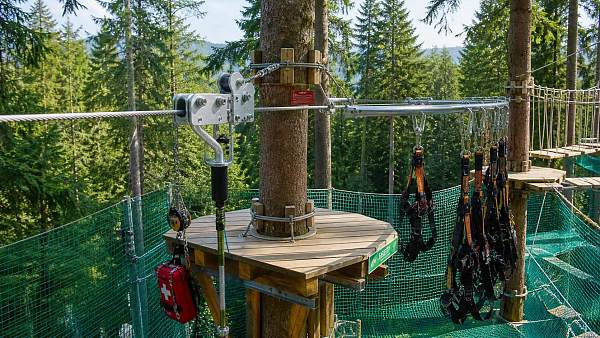
If critical parts are difficult to inspect or replace, maintenance may drift from the intended standard. High ropes course equipment should be judged partly by how realistically technicians can access wear points, connectors, belay interfaces, nets, and anchors without excessive disruption.
Drainage, moisture, and hidden corrosion paths
Water retention in joints, concealed cavities, or poorly drained footing zones is a classic long-term risk. On paper, the material specification may appear adequate. In service, trapped moisture can accelerate degradation and undermine inspection confidence.
Human factors and behavior variance
Users do not always move through a course as intended. Equipment spacing, instruction visibility, clipping sequence clarity, and waiting-point behavior all affect safety outcomes. Courses serving children, families, tourists, or mixed-skill groups require especially careful behavioral assumptions.
How sourcing decisions should evolve in response
The sourcing process for high ropes course equipment is moving away from simple product comparison toward capability validation. Buyers should review not only price, appearance, and lead time, but also engineering transparency, adaptation to local conditions, installation governance, spare parts planning, and document completeness. A supplier that can explain why a detail matters is often more valuable than one that simply confirms compliance.
For international sourcing platforms and B2B intelligence environments such as Global Commercial Trade, this is where real decision support becomes important. Project teams need sharper supplier differentiation: who can handle custom commercial requirements, who understands premium-use environments, and who can support post-handover safety performance rather than only shipment completion. In this market, trust signals come from technical depth, verified project experience, and the ability to align manufacturing with commercial operating realities.
A practical judgment framework for the next project cycle
For teams planning a new installation or upgrade, the best response is to convert broad safety concern into a structured review framework. The following questions are useful before finalizing any high ropes course equipment package:
- Are the material and coating choices matched to the exact environmental exposure of the site?
- Does the rescue strategy reflect real staffing levels, not ideal assumptions?
- Can every critical wear point be inspected and replaced without impractical shutdown requirements?
- Are structural, operational, and supplier documents fully aligned on loads, user limits, and maintenance responsibilities?
- Has the operator validated daily-use practicality, including training, throughput, and seasonal maintenance?
These questions do more than reduce risk. They improve budgeting accuracy, supplier comparison quality, and long-term asset performance. In a market where high ropes course equipment is increasingly used to strengthen destination value and guest engagement, better judgment at the detail level is becoming a commercial advantage.
What to watch next
Looking ahead, the direction is clear: buyers will keep demanding high ropes course equipment that is safer to operate, easier to document, and more predictable to maintain. Expect stronger emphasis on lifecycle transparency, better integration between supplier engineering and site operations, and more scrutiny of the details that sit between compliance on paper and safety in practice. The projects that perform best will likely be those where design, sourcing, and operations are aligned from the start.
If your organization is assessing how these trends affect an upcoming project, focus first on the hidden assumptions. Which safety details are currently being treated as later-stage items? Which supplier claims still need system-level validation? Which operating realities have not yet been designed into the equipment package? Those questions are often the difference between a smooth commercial launch and a costly lesson discovered too late.
Search News
Hot Articles
- Stationery & UniformsHow Schools Can Cut Printing Costs When Buying Ink Cartridges in BulkSep 21, 2026
- Jewelry Packaging & DisplayHow to Evaluate a Luxury Retail Packaging Supplier for Premium Brand ConsistencySep 20, 2026
- Commercial KitchenHow to Select a Spiral Dough Mixer for Bakery Batch Size and Dough HydrationSep 19, 2026
Popular Tags
Need ExpertConsultation?
Connect with our specialized leisureengineering team for procurementstrategies.
Recommended News
 Sep 18, 2026What Drives Animatronic Dinosaur Manufacturer Prices for Theme Park Projects?Animatronic dinosaurs manufacturer price guide: compare motion, materials, controls, installation, and lifecycle costs to plan a durable theme park attraction.● Theme Park Strategist
 Sep 06, 2026Do Amusement Ride Safety Compliance Requirements Change Every Year?Do amusement safety compliance requirements change annually? Learn what really changes, from standards and inspections to permits, upgrades, and local approvals.● Theme Park Strategist
 Sep 02, 2026How Long Does It Take to Receive Full Safety Documents From an OEM?How long does it take to get full safety documentation from OEM partners? Discover realistic timelines, common delays, and practical steps to secure compliant files faster.● Theme Park Strategist
 Sep 03, 2026Designing Adventure Park Safety Systems for Zip Lines, Ropes Courses, and Daily InspectionsAdventure park safety systems: learn how to design safer zip lines and ropes courses with daily inspections, defect controls, rescue readiness, and staff training.● Theme Park Strategist
 Aug 22, 2026What to Look for When Choosing Three Seat Jet Skis for Rental or Resort UseThree seat jet skis for rental or resort use should balance stability, safety, maintenance, and guest comfort. Learn how to choose models that boost uptime and guest satisfaction.● Theme Park Strategist
 Aug 17, 2026What Parts Matter Most in a Roller Coaster and How Do They Affect Ride Safety?Roller coaster parts determine ride safety more than most riders realize. Explore how tracks, restraints, brakes, wheels, and control systems work together to protect every ride.● Theme Park Strategist
 Aug 15, 20262026 China Sports Expo Sees 45.74% More Overseas Pre-registered Buyers as POB Expands Procurement Matching2026 China Sports Expo boosts overseas pre-registered buyers by 45.74% as POB expands procurement matching for fitness, outdoor, and venue suppliers.● Theme Park Strategist
 Aug 14, 2026What Should Buyers Check Before Choosing a Flying Chair Ride Exporter?Flying chair ride exporter buyers should check safety, structure, export support, and spare parts before purchase to reduce risk and choose a reliable supplier.● Theme Park Strategist
 Aug 04, 2026EU Issues EN 1176-1:2026 for Playground SafetyEU Issues EN 1176-1:2026 for Playground Safety: learn how the new standard impacts Outdoor Rides, CE certification, inventory checks, and EU compliance before March 2027.● Theme Park Strategist
 Aug 03, 2026CPSC Adopts ASTM F1487-26 for Imported Outdoor RidesOutdoor Rides face a major U.S. compliance shift as CPSC adopts ASTM F1487-26. Learn the new certification, testing, and customs risks before November 1, 2026.● Theme Park Strategist
 Jul 26, 2026Revised EN 1176:2026 Triggers Re-Certification for Outdoor RidesOutdoor Rides face immediate EN 1176:2026 re-certification for new CE applications. Learn how testing, documentation, and EU market access rules now affect exports and delivery plans.● Theme Park Strategist
 Jul 21, 2026CPSC Recall Flags Structural Risk in Outdoor RidesCPSC recall flags structural risk in outdoor rides: learn how ASTM F1487-23 failures affect importers, distributors, and compliance teams across the U.S., Canada, and Australia.● Theme Park Strategist
 Jul 19, 2026How to Choose Outdoor Fitness Equipment for Parks Based on Users, Space, and BudgetOutdoor fitness equipment for parks: learn how to choose the right mix based on users, space, and budget to improve safety, usage, and long-term value.● Theme Park Strategist
 Jul 15, 2026Ocean Freight Spike Pressures Outdoor Rides ExportsOcean Freight Spike Pressures Outdoor Rides Exports as Shanghai-Rotterdam rates surge 42%. See how rising freight costs, delays, and rerouting risks could reshape Europe-bound delivery plans.● Theme Park Strategist
 Jul 14, 2026EN 1176 Revision Takes Effect for Outdoor Ride Weld TestingEN 1176 revision takes effect for outdoor ride weld testing from Sept 1, 2026. Learn ISO 5817 level B, third-party NDT report rules, and key EU compliance steps.● Theme Park Strategist
 Jul 12, 2026Vietnam Requires AI Anti-Collision Systems for Imported Outdoor RidesVietnam Requires AI Anti-Collision Systems for Imported Outdoor Rides from Sept. 15, 2026. Learn compliance rules, VAST certification needs, and how importers can avoid delays.● Theme Park Strategist
 Jul 11, 2026Vietnam Tightens Rules for Imported Outdoor RidesVietnam Tightens Rules for Imported Outdoor Rides: learn how Vietnam’s 2026 compliance update adds AI anti-collision, Vietnamese logs, and local maintenance duties for importers and manufacturers.● Theme Park Strategist
 Jul 09, 2026How to Evaluate a Lazy River Equipment Supplier for Safety, Flow Design, and MaintenanceLazy river equipment supplier selection affects safety, flow design, and maintenance costs. Learn what to compare, what to ask, and how to choose a reliable partner.● Theme Park Strategist
 Jul 08, 2026RCEP Update Cuts ASEAN Tariffs to Zero for Outdoor RidesRCEP update cuts ASEAN tariffs to zero for outdoor rides from China. Learn how FSC-CoC, PEFC traceability, and e-CO compliance affect exports, sourcing, and buyer decisions.● Theme Park Strategist
 Jul 07, 2026RCEP Guide Adds Dual Wood Traceability for Outdoor RidesOutdoor Rides exporters face a new RCEP traceability rule: dual FSC-CoC and PEFC-STS 2023 codes for wood components. See what changes before Oct. 1, 2026.● Theme Park Strategist
 Jul 06, 2026Vietnam Tightens RCEP Rules for Wooden Ride PartsVietnam Tightens RCEP Rules for Wooden Ride Parts: learn how FSC Chain-of-Custody and QR code requirements now affect outdoor rides, RCEP imports, and shipment compliance.● Theme Park Strategist
 Jul 06, 2026How to Evaluate a Bumper Cars on Ice Manufacturer for Safety, Capacity, and ROIBumper cars on ice manufacturer selection starts with safety, capacity, and ROI. Learn how to compare suppliers, reduce risk, and choose a partner built for long-term commercial success.● Theme Park Strategist
 Jul 04, 2026Electric Drift Bumper Cars vs Traditional Bumper Cars: Which Fits Your Venue Better?Electric drift bumper cars or traditional bumper cars? Compare installation, safety, maintenance, guest appeal, and ROI to choose the best fit for your venue.● Theme Park Strategist
 Jul 03, 2026EN 15330-2:2026 Takes Effect for Outdoor RidesEN 15330-2:2026 takes effect for Outdoor Rides in the EU on July 1, 2026. Learn how CE certification and ISO 13849-1 PLd impact market access, customs clearance, and export compliance.● Theme Park Strategist