Self Service Photo Booths: Indoor Mall or Event Venue Setup?
Choosing between indoor mall placement and an event venue setup can significantly impact the performance, ROI, and user engagement of self service photo booths. For project managers and commercial decision-makers, the right deployment model depends on foot traffic, space planning, power access, maintenance needs, and brand experience goals. This guide explores both scenarios to help you evaluate which setup delivers stronger operational value and long-term commercial results.
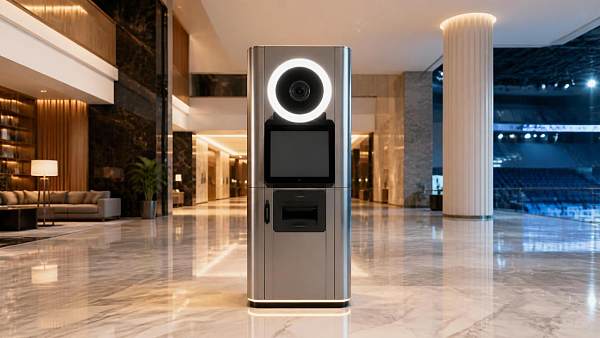
In commercial environments shaped by experiential retail, guest engagement, and branded interaction, self service photo booths are no longer simple entertainment add-ons. They function as traffic magnets, data capture points, sponsored activation tools, and revenue-generating assets. For project leaders responsible for site planning, vendor coordination, and performance accountability, the setup model matters as much as the hardware itself.
An indoor mall installation usually targets consistent daily exposure, stable utilities, and long-term customer circulation. An event venue setup, by contrast, is built around temporary peaks, fast deployment, and strong audience participation over a shorter time frame. The best choice depends on whether your priority is recurring usage over 12 months, high-impact campaigns over 1 to 3 days, or a hybrid strategy that supports both.
Why Deployment Context Changes the Business Case
The same self service photo booths can deliver very different commercial outcomes depending on location type. In a mall, success is often measured by monthly sessions, repeat engagement, dwell time, and conversion into tenant traffic. In an event venue, the key metrics may shift toward hourly throughput, sponsor visibility, queue management, and social sharing volume within a limited 4-hour to 12-hour activation window.
From a project management perspective, deployment context affects at least 6 planning areas: spatial allocation, power and network readiness, installation schedule, compliance review, staffing support, and maintenance response. Missing any one of these can reduce booth uptime, create congestion, or weaken the expected return from the commercial program.
Core operational differences
Mall installations generally favor fixed footprints of 2 to 6 square meters, with access to permanent power, controlled lighting, and predictable visitor patterns across 7 days a week. Event venue deployments often need modular designs that can be transported, assembled, tested, and removed within 24 to 48 hours, sometimes under strict venue loading rules and limited backstage access.
- Indoor mall model: stable operation, long-term branding, lower relocation frequency
- Event venue model: campaign-driven use, fast setup, higher intensity per hour
- Hybrid model: reusable booth package with configurable branding and software templates
Commercial goals usually define the preferred setup
If your objective is to build a semi-permanent interactive feature inside a retail ecosystem, indoor deployment usually supports stronger lifecycle economics. If your objective is to activate a launch, exhibition, wedding venue, conference, music event, or hospitality campaign, the event venue model may produce faster visibility and higher short-term participation rates.
The comparison below helps project teams match self service photo booths to commercial intent, technical conditions, and operating constraints before procurement or rollout begins.
The key takeaway is that self service photo booths should not be selected on appearance alone. Their real value depends on how well the booth format, installation method, and software workflow align with the commercial environment. A booth designed for daily public access may underperform at a high-volume gala, while a portable event-focused unit may lack the durability expected in a mall corridor.
Indoor Mall Setup: Strengths, Limits, and Planning Priorities
Indoor malls provide one of the most favorable environments for self service photo booths when the business goal is long-term public interaction. The setting usually offers climate stability, dependable power, and consistent shopper circulation across retail, dining, and family entertainment zones. For project managers, this reduces uncertainty in environmental control and makes preventive maintenance easier to schedule every 2 to 4 weeks.
When mall placement performs well
The mall model works best in 4 common scenarios: family-oriented centers, mixed-use retail complexes, tourism-driven shopping districts, and lifestyle malls with food, cinema, or amusement anchors. In these settings, self service photo booths can support impulse participation, seasonal campaigns, loyalty programs, and branded tenant collaborations without requiring heavy staffing.
A well-positioned booth near escalators, atriums, cinema entrances, or children’s zones often gains stronger visibility than one placed in a low-energy corridor. In practical terms, even a 15 to 20 meter difference in placement can change line-of-sight exposure and reduce usage frequency if pedestrian flow breaks too early.
Advantages for fixed commercial deployment
- Stable utility access, often with fewer power interruptions and easier cable concealment
- Lower setup frequency, reducing recurring transport and installation labor
- Better integration with mall marketing calendars, tenant promotions, and festive décor cycles
- Higher potential for recurring user behavior over 3, 6, or 12 months
Design and engineering considerations
For mall projects, the booth enclosure should be durable enough for extended public use, with impact-resistant surfaces, easy-clean finishes, and a service-access design that allows component replacement without shutting down the area for hours. Typical planning should cover a power range suitable for lighting, display, printer, and payment system, plus safe routing for power and data lines.
Project teams should also define queue space of at least 1.5 to 2 meters where feasible, especially during weekends or holiday periods. This avoids obstructing adjacent storefronts and reduces complaints from tenants. If printing is included, paper replacement and waste handling should be built into a daily or shift-based service plan.
Before approving a mall installation, decision-makers should compare location, infrastructure, and operating assumptions in a structured way. The following matrix is useful during pre-bid review, landlord discussion, and internal CAPEX planning.
This table shows why mall deployment rewards thorough pre-engineering. A booth can look visually attractive on a site plan but still underperform if the queue path, service access, and network reliability are not built into the operating model. Long-term success depends on maintenance discipline and location strategy as much as on the user interface.
Common mall-specific mistakes
One common error is treating self service photo booths as static décor rather than interactive equipment. If replenishment, software updates, and seasonal content changes are ignored, engagement often declines after the first 30 to 60 days. Another mistake is selecting a site solely on rental cost instead of visibility, dwell potential, and compatibility with nearby tenant categories.
Event Venue Setup: Flexibility, Speed, and Throughput Demands
Event venues create a very different performance environment for self service photo booths. Instead of gradual, repeated interaction, the goal is usually fast engagement and memorable branded participation within a compressed program schedule. This can include trade shows, weddings, corporate launches, hospitality receptions, festivals, campus events, or amusement-linked activations.
For project managers, the main challenge is not only whether the booth works, but whether it can be deployed on time, tested quickly, and sustained during traffic peaks that may last 60 to 180 minutes without interruption. In many venues, there is little tolerance for troubleshooting once the audience arrives.
What makes venue setups attractive
The event model suits campaigns where visual impact, sponsor customization, and audience sharing matter more than long-term placement. Portable self service photo booths can be wrapped, re-skinned, or software-customized for each activation. This makes them useful for multi-city roadshows, short-run exhibitions, and premium hospitality events where each deployment must match a different theme.
- Fast branding changes between clients or campaigns
- Strong social media value through event-specific templates and overlays
- High visibility during concentrated attendance windows
- Scalable deployment with 1, 2, or more units depending on expected crowd size
Technical and logistical pressure points
Unlike mall installations, venue setups often face limited assembly time, inconsistent flooring, changing light conditions, temporary power distribution, and shared backstage loading docks. Booth structures should therefore be transportable, stable, and quick to level. Protective cases, cable covers, spare consumables, and a pre-event test checklist are essential, especially if load-in is limited to a 2-hour or 4-hour slot.
Throughput planning is also critical. If each session takes 45 to 90 seconds and expected attendance is high, one unit may become a bottleneck. In these cases, project teams should estimate peak demand and consider parallel stations, digital-only output, or simplified user flows to maintain queue movement.
A practical 5-step venue rollout process
- Confirm venue rules, access hours, and power source at least 7 to 14 days before event day.
- Finalize branding files, user flow, and output format 3 to 5 days before installation.
- Conduct hardware inspection, software test, and consumable count before dispatch.
- Arrive early for on-site leveling, lighting check, and connectivity validation.
- Keep backup media, spare cables, and one contingency workflow ready during operation.
The table below compares event venue priorities that often influence procurement and deployment decisions for self service photo booths.
The strongest lesson from venue projects is that speed and reliability usually matter more than complex features. A simpler self service photo booth with a stable workflow can outperform a more advanced unit if the latter slows down queues, needs excessive calibration, or depends on unstable on-site connectivity.
How Project Managers Should Decide Between the Two
For procurement and rollout teams, the decision should be made through a structured scoring model rather than intuition. A useful framework is to evaluate 5 dimensions: traffic quality, installation duration, infrastructure readiness, branding frequency, and service model. Each factor can be scored from 1 to 5 to create a deployment recommendation that aligns with operational reality.
Decision checkpoints before sourcing
- How long will the booth remain on site: 1 day, 1 month, or 1 year?
- Is the expected traffic spread evenly or concentrated in short spikes?
- Will the booth need printing, payment, lead capture, or digital-only output?
- Can the site support reliable power, internet, and maintenance access?
- Is visual branding likely to remain fixed or change every campaign cycle?
Budget and lifecycle thinking
Mall deployments often justify higher initial fit-out costs because the booth stays in place longer and can generate recurring value over a broader operating cycle. Event venue setups may require lower permanent installation cost, but they can accumulate repeated logistics, transport, labor, and customization expenses over multiple activations. The lower-cost option at purchase is not always the lower-cost option over 12 months.
A sourcing partner should therefore be assessed not only on unit price, but also on packaging, replacement part availability, service response time, documentation quality, and customization turnaround. For international commercial buyers, lead time clarity and cross-border support are especially important when self service photo booths are part of a larger retail or hospitality rollout.
Risk control recommendations
For mall projects, prioritize durability, safe public placement, and serviceability. For venue projects, prioritize portability, fast commissioning, and operational backup. In both cases, insist on a clear acceptance checklist covering physical condition, software function, image output, power safety, and basic troubleshooting steps. Even a 20-minute pre-opening check can prevent a lost trading period or a failed branded activation.
Final Recommendation for Commercial Buyers
Indoor malls are generally the stronger choice when self service photo booths are expected to operate as stable, long-term commercial assets with repeat public use, predictable support routines, and ongoing brand presence. Event venues are typically the better fit when flexibility, rapid deployment, and high-impact audience engagement matter most within a short program window.
For project managers, the best results come from matching the booth format to the operating environment, rather than forcing one model into every location. If your organization is planning a retail experience zone, hospitality activation, leisure venue, or multi-site commercial rollout, a sourcing strategy built around site conditions, maintenance reality, and branding objectives will produce stronger long-term value.
Global Commercial Trade supports commercial buyers with sourcing insight across experience-driven sectors where equipment selection, design compatibility, and supply chain confidence directly affect project outcomes. To compare booth formats, evaluate deployment requirements, or discuss a tailored commercial setup, contact us today to get a customized solution and explore more sourcing options.
Search News
Hot Articles
- Stationery & UniformsHow Schools Can Cut Printing Costs When Buying Ink Cartridges in BulkSep 21, 2026
- Jewelry Packaging & DisplayHow to Evaluate a Luxury Retail Packaging Supplier for Premium Brand ConsistencySep 20, 2026
- Commercial KitchenHow to Select a Spiral Dough Mixer for Bakery Batch Size and Dough HydrationSep 19, 2026
Popular Tags
Need ExpertConsultation?
Connect with our specialized leisureengineering team for procurementstrategies.
Recommended News
 Sep 15, 2026How to Choose Coin-Operated Pool Tables for Bars, Hotels, and Arcade VenuesCoin operated pool tables for bars, hotels, and arcades: compare sizes, payment systems, durability, service access, and revenue potential.● Theme Park Strategist
 Sep 08, 2026What to Look for in a Flight Simulator Chair Manufacturer for Commercial VR CentersChoose a flight simulator chair manufacturer that delivers durable, safe, customizable seating for commercial VR centers. Explore key sourcing criteria now.● Theme Park Strategist
 Aug 25, 2026What to Evaluate Before Buying Commercial Self Service Photo Booths for VenuesCommercial self service photo booths for venues: learn how to evaluate durability, software stability, branding flexibility, support, and total ROI before you buy.● Theme Park Strategist
 Aug 23, 2026How to Evaluate Wholesale Vending Machines for Multi-Location Business DeploymentWholesale vending machines for multi-location deployment require more than low unit cost. Learn how to compare reliability, payments, telemetry, and supplier support to scale smarter.● Theme Park Strategist
 Aug 17, 2026U.S. CPSC Urges Bilingual Warnings for Arcade and VR MachinesU.S. CPSC urges bilingual safety warnings for Arcade & VR Machines—learn what exporters, importers, and distributors must do now to avoid delays and returns.● Theme Park Strategist
 Aug 16, 2026EU Enforces EN IEC 62368-1:2026 Certification for Arcade and VR MachinesEU Enforces EN IEC 62368-1:2026 certification for arcade and VR machines, reshaping EU market access, customs clearance, and compliance planning for exporters and distributors.● Theme Park Strategist
 Aug 13, 2026UFLPA’s new guidelines take effect: Exports of Arcade and VR equipment face full-link labor compliance requirementsUFLPA’s new guide takes effect: Arcade and VR machine exports to the U.S. now face full-chain labor compliance checks. Discover key risks and action steps.● Theme Park Strategist
 Aug 12, 2026EU PPWR takes effect, Arcade and VR packaging incorporate heavy metal and PFAS restrictionsEU PPWR now applies to Arcade and VR packaging, tightening heavy metal and PFAS compliance. Learn how exporters can avoid delays, fines, and customs risks.● Theme Park Strategist
 Aug 11, 2026CPSC Sets Bilingual Labels for Arcade and VR ImportsCPSC bilingual labels for arcade and VR imports become mandatory on October 1, 2026. Learn the new English-Spanish warning rules, customs risks, and key compliance steps now.● Theme Park Strategist
 Aug 10, 2026EU Rule Takes Effect for Arcade & VR Machine ClearanceArcade & VR Machine clearance in the EU now depends on EN IEC 62368-1:2026+A11:2026 compliance. Learn what changed, who is affected, and how to avoid customs delays.● Theme Park Strategist
 Aug 09, 2026CPSC Requires New Labels for Arcade and VR ImportsCPSC requires new labels for Arcade and VR imports starting Oct 1, 2026. Learn the multilingual warning rules, compliance risks, and key steps exporters and buyers must take now.● Theme Park Strategist
 Aug 08, 2026EU Entry Rule Tightens for Arcade & VR MachinesArcade & VR Machines entering the EU now face stricter CE compliance under EN IEC 62368-1:2026+A11:2026. Learn the new rule, risks, and what exporters must do now.● Theme Park Strategist
 Aug 07, 2026CPSC Notice Tightens U.S. Entry Rules for Arcade and VR MachinesCPSC Notice Tightens U.S. Entry Rules for Arcade and VR Machines: learn the new labeling, FCC, UN38.3, and compliance document requirements before October 1, 2026.● Theme Park Strategist
 Aug 06, 2026EU Rule Takes Effect for CE-UKCA Labels on Arcade & VR MachinesArcade & VR Machines face new CE-UKCA label and ECPD filing rules in the EU and UK. Learn what manufacturers, importers, and distributors must do now to avoid delays.● Theme Park Strategist
 Aug 05, 2026CPSC Recalls Arcade and VR Machines Over UL 62368-1CPSC recalls arcade and VR machines over UL 62368-1 non-compliance. Learn how this 2026 safety action may affect imports, distribution, customs clearance, and market access.● Theme Park Strategist
 Aug 02, 2026EU Sets New Certification Rule for Arcade and VR MachinesArcade and VR Machines face a new EU certification rule from Oct 1, 2026. Learn how EN IEC 62368-1:2026+A11:2026 affects CE marking, customs clearance, and market access.● Theme Park Strategist
 Aug 01, 2026CPSC Moves to Require Bilingual Warnings on Arcade and VR MachinesCPSC bilingual warnings for Arcade and VR Machines may reshape U.S. import compliance. Learn how English-Spanish labels affect packaging, customs risk, and shipment readiness.● Theme Park Strategist
 Jul 31, 2026EU Sets EN IEC 62368-1:2025 Rule for Arcade and VR MachinesEU Sets EN IEC 62368-1:2025 Rule for Arcade and VR Machines. Learn the new EU compliance deadlines, safety updates, and key actions for manufacturers, OEMs, and distributors.● Theme Park Strategist
 Jul 30, 2026CPSC Sets New Warning Label Rule for Arcade & VR MachinesCPSC sets a new warning label rule for Arcade & VR Machines effective August 15, 2026. Learn key compliance risks, multilingual label requirements, and shipment actions now.● Theme Park Strategist
 Jul 29, 2026EU Enforces New Safety Standard for Arcade and VR MachinesEU Enforces New Safety Standard for Arcade and VR Machines: learn how EN IEC 62368-1 affects CE compliance, customs clearance, and EU market access for exporters and buyers.● Theme Park Strategist
 Jul 28, 2026CPSC Sets ASTM F3472-26 Rule for Arcade & VR ImportsCPSC ASTM F3472-26 rule reshapes Arcade & VR imports to the U.S. Learn key compliance deadlines, certification risks, and what exporters, OEM/ODM suppliers, and buyers should do now.● Theme Park Strategist
 Jul 27, 2026EU Rule Takes Effect for Arcade & VR Machine CybersecurityEU Rule Takes Effect for Arcade & VR Machine Cybersecurity: learn how EN IEC 62443-3-3:2025 affects compliance, customs clearance, sales continuity, and supplier planning in the EU market.● Theme Park Strategist
 Jul 25, 2026CPSC Sets Bilingual Warning Rule for Arcade and VR ImportsCPSC bilingual warning rule for arcade and VR imports takes effect August 1, 2026. Learn how OEM/ODM exporters can avoid CBP delays, relabel shipments, and protect U.S. delivery timelines.● Theme Park Strategist
 Jul 24, 2026EU Enforces New Safety Standard for Arcade and VR MachinesEU Enforces New Safety Standard for Arcade and VR Machines: learn how EN IEC 62368-1:2026+A11:2026 reshapes EU compliance, CE documentation, testing timelines, and export readiness.● Theme Park Strategist