EU CE New Rule on Phthalates in VR Fitness Wear Takes Effect June 2026
On 10 May 2026, the European Commission confirmed that Regulation (EU) 2026/892 — amending Annex XVII of REACH — will enter into mandatory force on 1 June 2026. This rule imposes a 0.1% w/w limit on the combined concentration of DEHP, BBP, and DBP in VR-enabled haptic fitness wearables. Affected products must be tested per EN 14372:2023 Annex B. Non-compliant items will be prohibited from placement on the EU market. Exporters, manufacturers, and suppliers of wearable fitness technology targeting the EU should treat this as a near-term compliance milestone.
Event Overview
The European Commission formally confirmed on 10 May 2026 that Regulation (EU) 2026/892 — an amendment to Annex XVII of the REACH Regulation — becomes legally binding on 1 June 2026. The amendment introduces a restriction on three phthalates — DEHP, BBP, and DBP — limiting their total concentration to ≤0.1% (w/w) in VR-based haptic fitness wearables. Testing must follow EN 14372:2023 Annex B. Products failing to meet this requirement will be barred from being placed on the EU market as of the effective date.
Industries Impacted by Segment
Direct Exporters to the EU
Exporters placing VR fitness wearables on the EU market are directly subject to the restriction. Non-compliance may result in customs rejection, market withdrawal, or enforcement action by national authorities. Impact manifests primarily in pre-market conformity assessment, documentation readiness, and potential delays in shipment clearance.
Material and Component Suppliers
Suppliers providing plastics, elastomers, coatings, or haptic feedback modules used in VR fitness wearables may face increased demand for certified material declarations and test reports. Since the limit applies to the final product’s total phthalate content, upstream suppliers must verify that their inputs — especially flexible PVC compounds or polymer blends — do not contribute disproportionately to the aggregate.
Contract Manufacturers and Assemblers
Manufacturers performing final assembly or integration of sensors, actuators, and textiles into VR fitness garments must ensure traceability across subcomponents. The requirement for EN 14372:2023 Annex B testing applies to the finished article; therefore, process controls, batch-level testing protocols, and supplier audit records become critical for demonstrating due diligence.
Distribution and E-commerce Platforms
Platforms facilitating cross-border sales of VR fitness wearables into the EU may face heightened obligations under the EU Market Surveillance Regulation (EU) 2019/1020. While not liable for initial compliance, platforms must verify that economic operators (e.g., importers, authorised representatives) have fulfilled registration and documentation duties — including updated Declarations of Conformity referencing Regulation (EU) 2026/892.
Key Focus Areas and Immediate Actions for Stakeholders
Monitor official implementation guidance from EU national authorities
Although the regulation enters force on 1 June 2026, national market surveillance bodies may issue technical notices or interpretation memos regarding scope clarification (e.g., whether ‘VR body suits’ include non-electronic textile layers), enforcement timelines, or transitional provisions. Stakeholders should subscribe to updates from key authorities such as Germany’s BAuA or France’s DGCCRF.
Verify applicability to specific product categories and bill-of-materials
Not all wearable fitness devices fall under the scope. The restriction targets VR-enabled haptic wearables — meaning products incorporating motion tracking, tactile feedback, or immersive simulation functions. Companies should map each SKU against functional definitions in the regulation’s recitals and confirm whether internal components (e.g., wiring insulation, sensor housings) contain restricted phthalates at levels requiring reformulation or substitution.
Align procurement and testing timelines with EN 14372:2023 Annex B requirements
EN 14372:2023 Annex B specifies extraction and quantification methods distinct from generic RoHS or REACH screening tests. Laboratories accredited to ISO/IEC 17025 for this specific method remain limited in number. Stakeholders should secure testing capacity now, particularly for pilot batches, and update procurement contracts to require supplier-provided test reports compliant with this standard.
Update technical documentation and EU declarations ahead of 1 June 2026
Revised Declarations of Conformity must reference Regulation (EU) 2026/892 explicitly. Technical files should include full test reports, material declarations, and risk assessments covering phthalate migration pathways. Importers and authorised representatives must ensure these documents are available upon request by EU market surveillance authorities.
Editorial Perspective / Industry Observation
Observably, this measure signals a tightening of chemical safety expectations for next-generation consumer wearables — moving beyond traditional children’s products or toys into performance-oriented adult fitness equipment. Analysis shows it reflects the EU’s broader regulatory trend of applying substance restrictions based on exposure scenarios rather than product category alone. From an industry perspective, this is less a standalone deadline and more a marker of accelerating convergence between digital hardware regulation and chemical safety governance. Current monitoring should focus less on whether the rule will apply — it will — and more on how national enforcement priorities evolve post-implementation, especially regarding sampling frequency and penalties for borderline non-compliance.
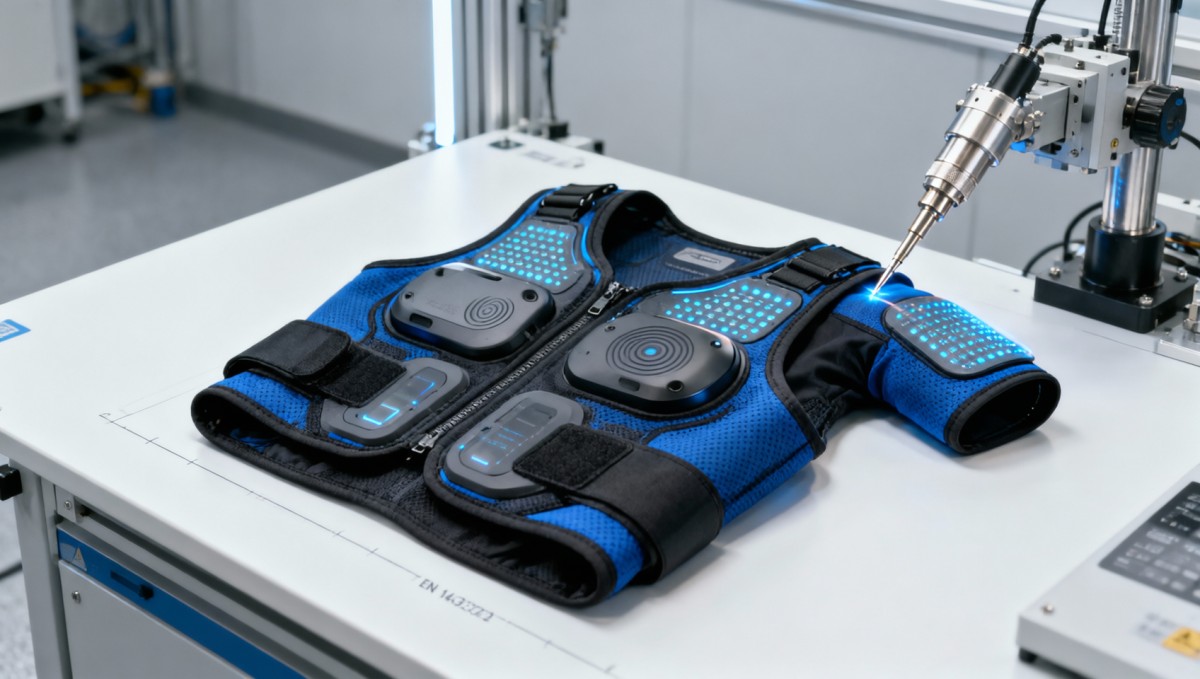
Conclusion: This regulation does not introduce novel hazard classifications but enforces a long-standing REACH restriction on a newly scoped product type. Its significance lies not in technical novelty, but in its operational impact on supply chain transparency, testing infrastructure readiness, and cross-functional coordination among hardware developers, material engineers, and regulatory affairs teams. It is best understood not as an isolated compliance checkpoint, but as an early indicator of how emerging human-interface technologies will be regulated under EU chemical and product safety frameworks going forward.
Source: European Commission Regulation (EU) 2026/892, published in the Official Journal of the European Union; REACH Annex XVII amendment notice dated 10 May 2026. Note: Ongoing observation is recommended for national enforcement guidance, which has not yet been issued as of publication date.
Search News
Hot Articles
- Restaurant FurnitureFast-Casual Restaurant Interiors: Design Choices That Improve Speed and Guest FlowOct 04, 2026
- Outdoor RidesHow to Select Leisure Park Equipment for Safe, High-Throughput Visitor AreasOct 03, 2026
- Fashion & Gem JewelryDiamond Tester Wholesale: How to Vet Accuracy, Calibration, and MOQ Before OrderingOct 02, 2026
Popular Tags
Need ExpertConsultation?
Connect with our specialized leisureengineering team for procurementstrategies.
Recommended News
 Sep 15, 2026How to Choose Coin-Operated Pool Tables for Bars, Hotels, and Arcade VenuesCoin operated pool tables for bars, hotels, and arcades: compare sizes, payment systems, durability, service access, and revenue potential.● Theme Park Strategist
 Sep 08, 2026What to Look for in a Flight Simulator Chair Manufacturer for Commercial VR CentersChoose a flight simulator chair manufacturer that delivers durable, safe, customizable seating for commercial VR centers. Explore key sourcing criteria now.● Theme Park Strategist
 Aug 25, 2026What to Evaluate Before Buying Commercial Self Service Photo Booths for VenuesCommercial self service photo booths for venues: learn how to evaluate durability, software stability, branding flexibility, support, and total ROI before you buy.● Theme Park Strategist
 Aug 23, 2026How to Evaluate Wholesale Vending Machines for Multi-Location Business DeploymentWholesale vending machines for multi-location deployment require more than low unit cost. Learn how to compare reliability, payments, telemetry, and supplier support to scale smarter.● Theme Park Strategist
 Aug 17, 2026U.S. CPSC Urges Bilingual Warnings for Arcade and VR MachinesU.S. CPSC urges bilingual safety warnings for Arcade & VR Machines—learn what exporters, importers, and distributors must do now to avoid delays and returns.● Theme Park Strategist
 Aug 16, 2026EU Enforces EN IEC 62368-1:2026 Certification for Arcade and VR MachinesEU Enforces EN IEC 62368-1:2026 certification for arcade and VR machines, reshaping EU market access, customs clearance, and compliance planning for exporters and distributors.● Theme Park Strategist
 Aug 13, 2026UFLPA’s new guidelines take effect: Exports of Arcade and VR equipment face full-link labor compliance requirementsUFLPA’s new guide takes effect: Arcade and VR machine exports to the U.S. now face full-chain labor compliance checks. Discover key risks and action steps.● Theme Park Strategist
 Aug 12, 2026EU PPWR takes effect, Arcade and VR packaging incorporate heavy metal and PFAS restrictionsEU PPWR now applies to Arcade and VR packaging, tightening heavy metal and PFAS compliance. Learn how exporters can avoid delays, fines, and customs risks.● Theme Park Strategist
 Aug 11, 2026CPSC Sets Bilingual Labels for Arcade and VR ImportsCPSC bilingual labels for arcade and VR imports become mandatory on October 1, 2026. Learn the new English-Spanish warning rules, customs risks, and key compliance steps now.● Theme Park Strategist
 Aug 10, 2026EU Rule Takes Effect for Arcade & VR Machine ClearanceArcade & VR Machine clearance in the EU now depends on EN IEC 62368-1:2026+A11:2026 compliance. Learn what changed, who is affected, and how to avoid customs delays.● Theme Park Strategist
 Aug 09, 2026CPSC Requires New Labels for Arcade and VR ImportsCPSC requires new labels for Arcade and VR imports starting Oct 1, 2026. Learn the multilingual warning rules, compliance risks, and key steps exporters and buyers must take now.● Theme Park Strategist
 Aug 08, 2026EU Entry Rule Tightens for Arcade & VR MachinesArcade & VR Machines entering the EU now face stricter CE compliance under EN IEC 62368-1:2026+A11:2026. Learn the new rule, risks, and what exporters must do now.● Theme Park Strategist
 Aug 07, 2026CPSC Notice Tightens U.S. Entry Rules for Arcade and VR MachinesCPSC Notice Tightens U.S. Entry Rules for Arcade and VR Machines: learn the new labeling, FCC, UN38.3, and compliance document requirements before October 1, 2026.● Theme Park Strategist
 Aug 06, 2026EU Rule Takes Effect for CE-UKCA Labels on Arcade & VR MachinesArcade & VR Machines face new CE-UKCA label and ECPD filing rules in the EU and UK. Learn what manufacturers, importers, and distributors must do now to avoid delays.● Theme Park Strategist
 Aug 05, 2026CPSC Recalls Arcade and VR Machines Over UL 62368-1CPSC recalls arcade and VR machines over UL 62368-1 non-compliance. Learn how this 2026 safety action may affect imports, distribution, customs clearance, and market access.● Theme Park Strategist
 Aug 02, 2026EU Sets New Certification Rule for Arcade and VR MachinesArcade and VR Machines face a new EU certification rule from Oct 1, 2026. Learn how EN IEC 62368-1:2026+A11:2026 affects CE marking, customs clearance, and market access.● Theme Park Strategist
 Aug 01, 2026CPSC Moves to Require Bilingual Warnings on Arcade and VR MachinesCPSC bilingual warnings for Arcade and VR Machines may reshape U.S. import compliance. Learn how English-Spanish labels affect packaging, customs risk, and shipment readiness.● Theme Park Strategist
 Jul 31, 2026EU Sets EN IEC 62368-1:2025 Rule for Arcade and VR MachinesEU Sets EN IEC 62368-1:2025 Rule for Arcade and VR Machines. Learn the new EU compliance deadlines, safety updates, and key actions for manufacturers, OEMs, and distributors.● Theme Park Strategist
 Jul 30, 2026CPSC Sets New Warning Label Rule for Arcade & VR MachinesCPSC sets a new warning label rule for Arcade & VR Machines effective August 15, 2026. Learn key compliance risks, multilingual label requirements, and shipment actions now.● Theme Park Strategist
 Jul 29, 2026EU Enforces New Safety Standard for Arcade and VR MachinesEU Enforces New Safety Standard for Arcade and VR Machines: learn how EN IEC 62368-1 affects CE compliance, customs clearance, and EU market access for exporters and buyers.● Theme Park Strategist
 Jul 28, 2026CPSC Sets ASTM F3472-26 Rule for Arcade & VR ImportsCPSC ASTM F3472-26 rule reshapes Arcade & VR imports to the U.S. Learn key compliance deadlines, certification risks, and what exporters, OEM/ODM suppliers, and buyers should do now.● Theme Park Strategist
 Jul 27, 2026EU Rule Takes Effect for Arcade & VR Machine CybersecurityEU Rule Takes Effect for Arcade & VR Machine Cybersecurity: learn how EN IEC 62443-3-3:2025 affects compliance, customs clearance, sales continuity, and supplier planning in the EU market.● Theme Park Strategist
 Jul 25, 2026CPSC Sets Bilingual Warning Rule for Arcade and VR ImportsCPSC bilingual warning rule for arcade and VR imports takes effect August 1, 2026. Learn how OEM/ODM exporters can avoid CBP delays, relabel shipments, and protect U.S. delivery timelines.● Theme Park Strategist
 Jul 24, 2026EU Enforces New Safety Standard for Arcade and VR MachinesEU Enforces New Safety Standard for Arcade and VR Machines: learn how EN IEC 62368-1:2026+A11:2026 reshapes EU compliance, CE documentation, testing timelines, and export readiness.● Theme Park Strategist