2026 Inner Mongolia Football Super League Kicks Off May 15; LED Stadium Lighting Export Inquiries Up 28%
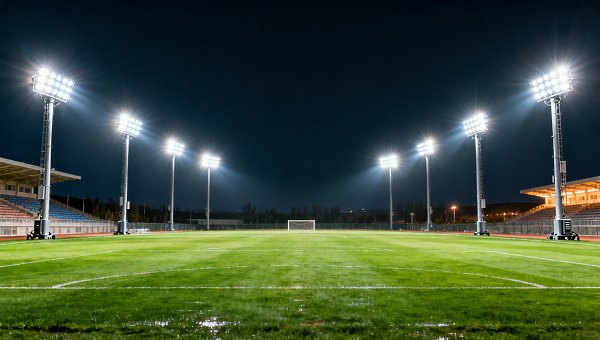
On May 15, 2026, the Inner Mongolia Football Super League will commence its season — a milestone event triggering measurable demand shifts for Chinese-made LED stadium lighting systems. With all eight participating clubs deploying domestically produced LED fixtures meeting Ra ≥ 90 and UGR ≤ 19 specifications, the event signals renewed traction for high-performance sports lighting exports — particularly in the Middle East and Latin America, where Alibaba.com export inquiry volumes rose 28% week-on-week. This development warrants attention from lighting manufacturers, export traders, and supply chain service providers engaged in outdoor sports infrastructure projects.
Event Overview
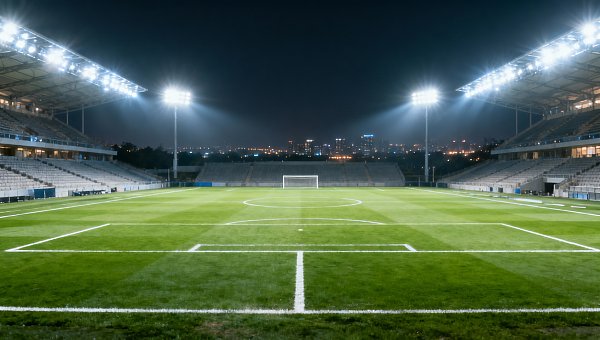
The 2026 Inner Mongolia Football Super League officially begins on May 15, 2026. All eight teams’ home venues are equipped with Chinese-manufactured LED stadium lighting systems, certified to a color rendering index (Ra) of at least 90 and a unified glare rating (UGR) no higher than 19. According to publicly available data from Alibaba.com, export-related inquiries for comparable LED stadium lighting products increased by 28% over the past seven days, with buyers from the Middle East and Latin America showing heightened interest in IP66 ingress protection, stable 5000K color temperature maintenance, and on-site warranty coverage for three years.
Which Sub-Sectors Are Affected
Direct Export Trading Enterprises
These enterprises face immediate implications due to shifting buyer priorities. The 28% surge in inquiries reflects not just volume growth but a tightening of technical and contractual expectations — especially around IP66 compliance, thermal stability at 5000K, and enforceable on-site warranty terms. Their quoting, documentation, and after-sales coordination processes must now align with these specific regional requirements.
LED Luminaire Manufacturing Enterprises
Manufacturers supplying stadium-grade fixtures are under growing pressure to validate and document performance claims — notably Ra ≥ 90 and UGR ≤ 19 — using internationally recognized test reports (e.g., IES LM-79/80). The emphasis on 5000K color temperature stability suggests demand for enhanced thermal management design and binning control, rather than generic product listings.
Supply Chain & Logistics Service Providers
Providers supporting cross-border delivery of large-format lighting systems must account for new handling and certification requirements. IP66-rated fixtures often require specialized packaging and moisture-resistant transport protocols; meanwhile, the expectation of 3-year on-site warranty implies need for localized service partner networks or pre-vetted third-party maintenance arrangements in target markets.
What Relevant Enterprises or Practitioners Should Focus On Now
Monitor official procurement updates from regional football associations
While the Inner Mongolia league serves as a domestic reference case, similar tenders are emerging across Asia, the Middle East, and Latin America. Tracking tender notices — especially those referencing Ra, UGR, IP66, and warranty duration — helps prioritize RFP responses and resource allocation.
Prioritize verification of key technical parameters for export-ready listings
Buyers are no longer accepting manufacturer-declared specs. Enterprises should ensure third-party test reports for Ra, UGR, IP66, and color temperature drift (under sustained operation at 5000K) are readily available and aligned with IEC/CIE standards — not internal lab results alone.
Distinguish between inquiry momentum and actual order conversion
The 28% increase reflects short-term search behavior, not confirmed contracts. Analysis shows such spikes often precede seasonal procurement cycles but do not guarantee follow-through. Companies should treat this as a signal to refine targeting — not scale production prematurely.
Prepare localized warranty execution frameworks for priority markets
The recurring emphasis on 3-year on-site warranty indicates buyers are evaluating service readiness, not just product specs. Current more suitable preparation includes mapping local service partners, defining SLA thresholds (e.g., response time, spare parts lead time), and drafting bilingual warranty annexes — before receiving formal POs.
Editorial Perspective / Industry Observation
Observably, this is less a standalone event and more a visible data point in a broader trend: professionalized sports infrastructure upgrades in emerging markets are increasingly specifying performance benchmarks previously seen only in UEFA or FIFA-tier venues. From an industry angle, the Inner Mongolia league’s lighting standard adoption functions primarily as a validation signal — not yet a commercial inflection point. It confirms that technical rigor (Ra, UGR, IP66) and service assurance (on-site warranty) are becoming non-negotiable entry criteria for competitive bidding. However, widespread replication depends on financing mechanisms, local regulatory alignment, and long-term maintenance capacity — factors not yet reflected in current inquiry patterns.
Conclusion
This development underscores a maturing export dynamic for Chinese LED sports lighting: demand is shifting from price-led transactions toward specification-driven procurement. Yet it remains an early-stage indicator — better understood as a reinforcement of existing technical and service trends than as evidence of sudden market expansion. Enterprises are advised to treat it as a calibration opportunity: validating current capabilities against rising global benchmarks, rather than assuming immediate scaling is warranted.
Source Attribution
- Main source: Publicly reported data from Alibaba.com (7-day inquiry trend, regional breakdown, and buyer specification focus)
- Secondary source: Official announcement of 2026 Inner Mongolia Football Super League start date and venue equipment details
- Note: Ongoing monitoring is recommended for tender announcements from football associations in Saudi Arabia, UAE, Mexico, and Brazil — as potential indicators of broader adoption.
Search News
Hot Articles
- Indoor PlaygroundHe Xinining Scores 23, Smith Records Triple-Double as Shenzhen Sweeps ZhejiangMay 12, 2026
- Outdoor Rides2026 Inner Mongolia Football Super League Kicks Off May 15; LED Stadium Lighting Export Inquiries Up 28%May 12, 2026
- Indoor PlaygroundChinese Volleyball Team Adopts AI Training System Amid FIVB Rule UpdateMay 12, 2026
Popular Tags
Need ExpertConsultation?
Connect with our specialized leisureengineering team for procurementstrategies.
Recommended News
 May 12, 20262026 Inner Mongolia Football Super League Kicks Off May 15; LED Stadium Lighting Export Inquiries Up 28%LED stadium lighting export inquiries surge 28% amid 2026 Inner Mongolia Football Super League kickoff — high Ra≥90, UGR≤19, IP66 systems in demand across Middle East & LATAM.● Theme Park Strategist
 May 12, 2026US CPSC Recalls 3 Chinese-Made Kids' Outdoor Climbing FramesUS CPSC recalls 3 Chinese-made kids' outdoor climbing frames over structural & finger-trap hazards—urgent compliance action for importers, manufacturers & labs.● Theme Park Strategist
 May 12, 2026China Customs Launches Smart Classification System for Outdoor RidesOutdoor Rides exporters: China Customs' new Smart Classification System boosts HS code accuracy to 99.2% and cuts clearance by 1.8 days—act now to optimize compliance & speed.● Theme Park Strategist
 May 10, 2026US CPSC Recalls 3 Chinese-Made Outdoor Climbing SetsUS CPSC recalls 3 Chinese-made outdoor climbing sets over structural & pinch-point hazards—key implications for exporters, importers, and labs.● Theme Park Strategist
 May 09, 20262026 Inner Mongolia Football Super League Kicks Off, Boosting LED Stadium Lighting Export InquiriesLED stadium lighting export inquiries surge 28% after 2026 Inner Mongolia Football Super League launch — key specs: IP66, −30°C cold-start, CISPR 15.● Theme Park Strategist
 May 09, 2026US CPSC Recalls 3 Chinese-Made Kids' Outdoor Climbing FramesUS CPSC recalls 124,000 Chinese-made kids' outdoor climbing frames over ASTM F1487-23 compliance failures—act now to avoid liability & supply chain disruption.● Theme Park Strategist
 May 09, 2026Outdoor fitness equipment park plans often fail at this stepOutdoor fitness equipment park plans often fail before installation due to one missed planning step. Learn how to avoid compliance delays, layout errors, and costly rework.● Theme Park Strategist
 May 09, 2026Zorb balls wholesale: which material choices really matter?Zorb balls wholesale starts with smarter material choices. Compare TPU, PVC, and hybrid options to improve safety, durability, clarity, and long-term ROI.● Theme Park Strategist
 May 09, 2026Why water tricycles are showing up in more resort projectsWater tricycles are becoming a smart resort amenity for family-friendly, low-noise waterfront experiences. Discover why developers value them for guest appeal, branding, and practical ROI.● Theme Park Strategist
 May 09, 2026Commercial pedal boats or water tricycles for rental lakes?Commercial pedal boats or water tricycles for rental lakes? Compare stability, capacity, maintenance, safety, and ROI to choose the best fleet for resorts, parks, and leisure venues.● Theme Park Strategist
 May 09, 2026What makes floating water parks expensive to maintain?Floating water parks cost more to maintain due to anchoring, UV damage, inspections, repairs, and weather exposure. Learn the key cost drivers and how to reduce downtime.● Theme Park Strategist
 May 09, 2026Bumper cars on ice: fun attraction or maintenance headache?Bumper cars on ice: exciting family attraction or costly upkeep? Discover safety, maintenance, venue fit, and ROI factors before you invest.● Theme Park Strategist
 May 08, 2026Choosing an Animatronic Dinosaurs Manufacturer for Outdoor ParksAnimatronic dinosaurs manufacturer selection for outdoor parks: learn how to compare durability, customization, safety, and after-sales support to avoid costly mistakes.● Theme Park Strategist
 May 08, 2026Drift Bumper Cars: What Separates Smooth Ride From High Repairs?Drift bumper cars buyers: discover what truly separates a smooth, low-downtime ride from repair-heavy models, from drivetrain and battery design to chassis durability.● Theme Park Strategist
 May 08, 2026High Ropes Course Equipment and the Safety Details Often MissedHigh ropes course equipment decisions go beyond appearance—discover the often-missed safety details that shape compliance, durability, uptime, and user trust.● Theme Park Strategist
 May 08, 2026Electric Go Karts Wholesale and the Battery Cost TrapElectric go karts wholesale buyers: avoid hidden battery cost traps. Learn how lifespan, charging speed, replacement pricing, and warranty support impact long-term ROI.● Theme Park Strategist
 May 08, 2026Zip Line Equipment: What Usually Delays Installation?Zip line equipment installation delays often stem from permits, terrain, design changes, and supplier gaps. Learn the key risks early to keep your project on time and avoid costly setbacks.● Theme Park Strategist
 May 08, 2026How to Compare a Go Kart Manufacturer Beyond PriceGo kart manufacturer comparison starts beyond price. Learn how to assess safety, quality control, customization, compliance, and after-sales support for smarter sourcing.● Theme Park Strategist
 May 08, 2026CPSC Recalls 3 Chinese Outdoor Climbing Sets for Structural & Pinch HazardsCPSC recalls 3 Chinese outdoor climbing sets for structural & pinch hazards—urgent compliance alert for exporters, certifiers & importers under ASTM F1487-23.● Theme Park Strategist
 May 07, 2026Shen Jing on Trade Rumors: Implications for Basketball Equipment ManufacturingBasketball equipment manufacturing gains strategic clarity as Shen Jing’s trade rumor response boosts OEM confidence—Dongguan & Suzhou suppliers see strengthened NBA facility credibility and smart gear demand.● Theme Park Strategist
 May 07, 2026Ferris Wheel Manufacturer Shortlists Often Miss This RiskFerris wheel manufacturer shortlists often miss lifecycle compliance risk. Learn how to avoid costly delays, safety gaps, and weak after-sales support before you buy.● Theme Park Strategist
 May 07, 2026Lazy River Equipment: Where Energy Use Adds Up FastLazy river equipment can drive energy costs higher than expected. Learn what technical evaluators should check before sourcing or upgrading for better efficiency and lifecycle value.● Theme Park Strategist
 May 07, 2026Water Playground Structures: Design Choices That Reduce Queue TimeWater playground structures that cut queue time: discover layout, capacity, and feature strategies that improve guest flow, safety, and ROI for commercial aquatic projects.● Theme Park Strategist
 May 07, 2026Bumper Cars Wholesale: Battery Options That Change Operating CostsBumper cars wholesale decisions depend heavily on battery choice. Compare lead-acid vs. lithium to cut downtime, lower operating costs, and improve long-term ROI.● Theme Park Strategist