US CPSC Recalls 3 Chinese-Made Outdoor Climbing Sets
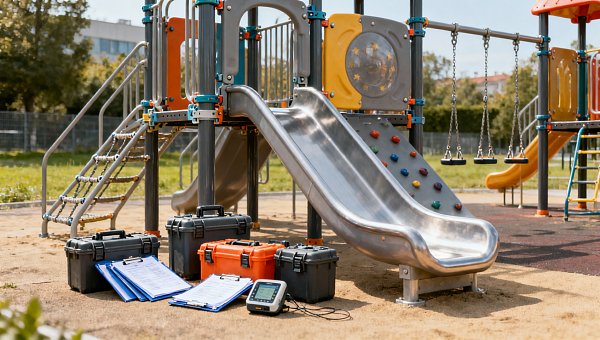
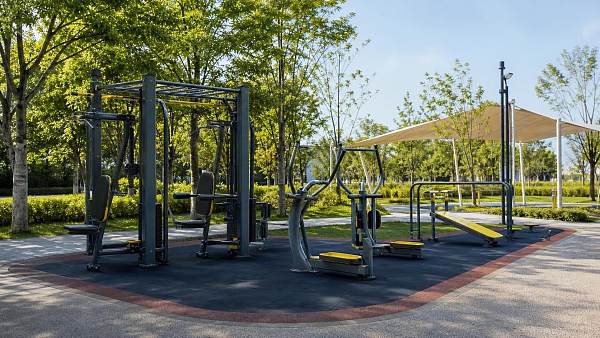
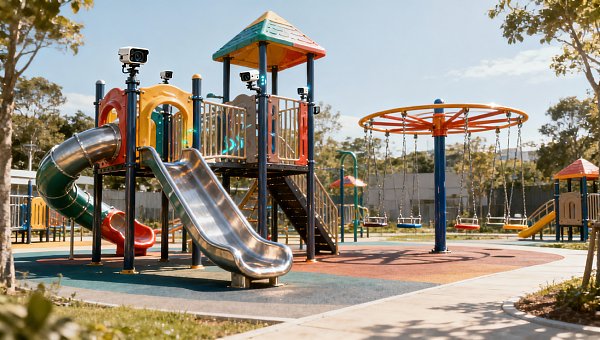
On May 8, 2026, the U.S. Consumer Product Safety Commission (CPSC) issued Recall #2026-112 for three models of outdoor climbing structures manufactured in China — affecting 127,000 units. The recall centers on structural integrity and pinch-point hazards, triggering new compliance expectations across North American import channels for outdoor play equipment. Exporters, importers, and third-party testing providers serving the children’s outdoor recreation sector should treat this as a material signal for near-term operational adjustments.
Event Overview
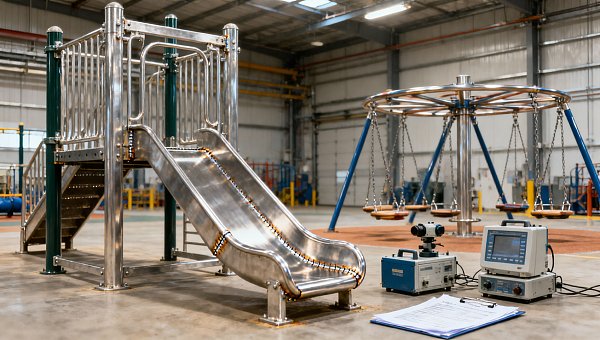
The U.S. Consumer Product Safety Commission (CPSC) announced Recall #2026-112 on May 8, 2026. It involves 127,000 outdoor climbing sets produced by three Chinese manufacturers. The cited defects are noncompliance with ASTM F1487-23: insufficient column bending stiffness and excessive gap dimensions at joint areas, posing risks of structural failure and finger entrapment. No injuries have been reported to date. The recall mandates corrective actions including refunds or replacements, coordinated through North American importers.
Industries Affected by This Recall
Direct Trading Enterprises (Exporters/Importers)
These entities face immediate pressure to verify conformity of existing inventory and future shipments. The recall explicitly references obligations under CPSIA Section 102 and requires ISO/IEC 17025-accredited lab reports covering full-unit ASTM F1487-23 testing — not component-level or partial evaluations. Noncompliant stock may be detained at U.S. ports or subject to post-entry enforcement.
Manufacturing Enterprises (OEM/ODM Producers)
Factories supplying outdoor climbing equipment to North America must now accommodate stricter structural validation requirements. The defect root cause — column rigidity and joint clearance — falls squarely within mechanical design and assembly control. Manufacturers will likely experience increased pre-shipment verification requests, extended lead times for certified testing, and potential redesign cycles for legacy models.
Supply Chain Service Providers (Testing Labs, Certification Bodies, Logistics Operators)
Demand is rising for full-unit ASTM F1487-23 assessments conducted by ISO/IEC 17025-accredited laboratories. Third-party labs with CPSC-recognized scope for ASTM F1487-23 testing may see accelerated inquiry volume. Logistics partners handling outdoor play equipment may begin requesting advance submission of CPSIA Section 102 declarations and test reports prior to customs clearance.
Key Focus Areas and Recommended Actions for Stakeholders
Monitor CPSC’s official guidance updates and importer-level implementation timelines
The recall notice states that importers are initiating corrective action. However, CPSC has not yet published formal guidance on whether this triggers mandatory retesting of all previously imported units, or applies retroactively to older ASTM editions (e.g., F1487-17). Stakeholders should track CPSC’s public docket and importer communications for clarification before adjusting internal protocols.
Prioritize documentation readiness for new orders targeting North America
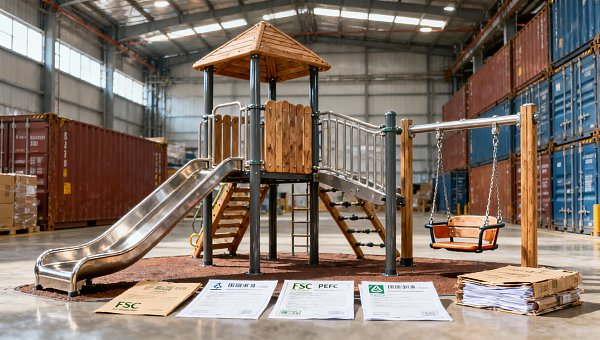
For any new purchase order placed after May 8, 2026, exporters should prepare two documents prior to shipment: (1) a signed CPSIA Section 102 Children’s Product Certificate, and (2) a complete ASTM F1487-23 test report issued by an ISO/IEC 17025-accredited laboratory — covering static load, dynamic impact, and pinch-point measurements on assembled units. Component-only reports are insufficient per the recall’s stated rationale.
Distinguish between regulatory signal and enforceable requirement
The recall itself applies only to the three identified models. However, the CPSC’s statement that it “will trigger third-party structural safety retesting requirements for all Chinese-made Outdoor Rides category products” functions as a policy signal — not an enforceable rule change. Enforcement remains case-specific unless formally codified via Federal Register notice or updated 16 CFR Part 1112 guidance. Companies should treat it as anticipatory, not definitive.
Initiate internal gap assessment for ASTM F1487-23 structural parameters
Manufacturers should audit current designs against ASTM F1487-23 clauses related to column lateral stiffness (Section 8.3.2), joint gap limits (Section 7.4), and anchoring system performance (Annex A3). Gaps identified during this review should inform both immediate shipment decisions and mid-cycle engineering reviews — particularly where legacy tooling or material substitutions affect rigidity or tolerance control.
Editorial Perspective / Industry Observation
Analysis shows this recall reflects a tightening of enforcement focus on *assembled-system performance*, rather than just material compliance or labeling accuracy. While past recalls often centered on lead content or small parts, this one emphasizes structural behavior under real-world loading — a higher bar for engineering validation. Observably, CPSC is treating ASTM F1487-23 not merely as a benchmark, but as a minimum threshold for market access in outdoor play equipment. From an industry perspective, this is less a one-off incident and more a directional indicator: structural safety verification is shifting from voluntary best practice to expected baseline for North American entry. Current more appropriate interpretation is that this represents an emerging enforcement priority — not yet a codified regulation, but increasingly treated as de facto gatekeeping criteria by importers and customs brokers.
Conclusion
This recall signals a concrete escalation in structural safety expectations for children’s outdoor climbing equipment entering the U.S. market. It does not introduce new law, but reinforces how existing standards — particularly ASTM F1487-23 — are being applied operationally to assess design adequacy and manufacturing consistency. For stakeholders, the most rational approach is to treat the CPSC’s statement as a forward-looking compliance benchmark: align documentation, testing scope, and engineering controls with full-unit ASTM F1487-23 requirements for new orders, while awaiting formal regulatory updates before overextending changes to legacy inventory or non-U.S. markets.
Information Sources
Main source: U.S. Consumer Product Safety Commission (CPSC) Recall Notice #2026-112, published May 8, 2026.
Note: CPSC’s statement regarding broader retesting requirements for the ‘Outdoor Rides’ category remains a policy indication; no formal rulemaking or regulatory amendment has been published as of the recall date. Continued observation is warranted for Federal Register notices or updated CPSC compliance guides referencing ASTM F1487-23 enforcement scope.
Search News
Hot Articles
- Commercial KitchenHow Restaurant Buyers Can Source Hospitality Supplies Without OverorderingSep 23, 2026
- Commercial KitchenCommercial Kitchen Design Price: Budgeting by Layout, Equipment, and MEP ScopeSep 22, 2026
- Stationery & UniformsHow Schools Can Cut Printing Costs When Buying Ink Cartridges in BulkSep 21, 2026
Popular Tags
Need ExpertConsultation?
Connect with our specialized leisureengineering team for procurementstrategies.
Recommended News
 Sep 18, 2026What Drives Animatronic Dinosaur Manufacturer Prices for Theme Park Projects?Animatronic dinosaurs manufacturer price guide: compare motion, materials, controls, installation, and lifecycle costs to plan a durable theme park attraction.● Theme Park Strategist
 Sep 06, 2026Do Amusement Ride Safety Compliance Requirements Change Every Year?Do amusement safety compliance requirements change annually? Learn what really changes, from standards and inspections to permits, upgrades, and local approvals.● Theme Park Strategist
 Sep 02, 2026How Long Does It Take to Receive Full Safety Documents From an OEM?How long does it take to get full safety documentation from OEM partners? Discover realistic timelines, common delays, and practical steps to secure compliant files faster.● Theme Park Strategist
 Sep 03, 2026Designing Adventure Park Safety Systems for Zip Lines, Ropes Courses, and Daily InspectionsAdventure park safety systems: learn how to design safer zip lines and ropes courses with daily inspections, defect controls, rescue readiness, and staff training.● Theme Park Strategist
 Aug 22, 2026What to Look for When Choosing Three Seat Jet Skis for Rental or Resort UseThree seat jet skis for rental or resort use should balance stability, safety, maintenance, and guest comfort. Learn how to choose models that boost uptime and guest satisfaction.● Theme Park Strategist
 Aug 17, 2026What Parts Matter Most in a Roller Coaster and How Do They Affect Ride Safety?Roller coaster parts determine ride safety more than most riders realize. Explore how tracks, restraints, brakes, wheels, and control systems work together to protect every ride.● Theme Park Strategist
 Aug 15, 20262026 China Sports Expo Sees 45.74% More Overseas Pre-registered Buyers as POB Expands Procurement Matching2026 China Sports Expo boosts overseas pre-registered buyers by 45.74% as POB expands procurement matching for fitness, outdoor, and venue suppliers.● Theme Park Strategist
 Aug 14, 2026What Should Buyers Check Before Choosing a Flying Chair Ride Exporter?Flying chair ride exporter buyers should check safety, structure, export support, and spare parts before purchase to reduce risk and choose a reliable supplier.● Theme Park Strategist
 Aug 04, 2026EU Issues EN 1176-1:2026 for Playground SafetyEU Issues EN 1176-1:2026 for Playground Safety: learn how the new standard impacts Outdoor Rides, CE certification, inventory checks, and EU compliance before March 2027.● Theme Park Strategist
 Aug 03, 2026CPSC Adopts ASTM F1487-26 for Imported Outdoor RidesOutdoor Rides face a major U.S. compliance shift as CPSC adopts ASTM F1487-26. Learn the new certification, testing, and customs risks before November 1, 2026.● Theme Park Strategist
 Jul 26, 2026Revised EN 1176:2026 Triggers Re-Certification for Outdoor RidesOutdoor Rides face immediate EN 1176:2026 re-certification for new CE applications. Learn how testing, documentation, and EU market access rules now affect exports and delivery plans.● Theme Park Strategist
 Jul 21, 2026CPSC Recall Flags Structural Risk in Outdoor RidesCPSC recall flags structural risk in outdoor rides: learn how ASTM F1487-23 failures affect importers, distributors, and compliance teams across the U.S., Canada, and Australia.● Theme Park Strategist
 Jul 19, 2026How to Choose Outdoor Fitness Equipment for Parks Based on Users, Space, and BudgetOutdoor fitness equipment for parks: learn how to choose the right mix based on users, space, and budget to improve safety, usage, and long-term value.● Theme Park Strategist
 Jul 15, 2026Ocean Freight Spike Pressures Outdoor Rides ExportsOcean Freight Spike Pressures Outdoor Rides Exports as Shanghai-Rotterdam rates surge 42%. See how rising freight costs, delays, and rerouting risks could reshape Europe-bound delivery plans.● Theme Park Strategist
 Jul 14, 2026EN 1176 Revision Takes Effect for Outdoor Ride Weld TestingEN 1176 revision takes effect for outdoor ride weld testing from Sept 1, 2026. Learn ISO 5817 level B, third-party NDT report rules, and key EU compliance steps.● Theme Park Strategist
 Jul 12, 2026Vietnam Requires AI Anti-Collision Systems for Imported Outdoor RidesVietnam Requires AI Anti-Collision Systems for Imported Outdoor Rides from Sept. 15, 2026. Learn compliance rules, VAST certification needs, and how importers can avoid delays.● Theme Park Strategist
 Jul 11, 2026Vietnam Tightens Rules for Imported Outdoor RidesVietnam Tightens Rules for Imported Outdoor Rides: learn how Vietnam’s 2026 compliance update adds AI anti-collision, Vietnamese logs, and local maintenance duties for importers and manufacturers.● Theme Park Strategist
 Jul 09, 2026How to Evaluate a Lazy River Equipment Supplier for Safety, Flow Design, and MaintenanceLazy river equipment supplier selection affects safety, flow design, and maintenance costs. Learn what to compare, what to ask, and how to choose a reliable partner.● Theme Park Strategist
 Jul 08, 2026RCEP Update Cuts ASEAN Tariffs to Zero for Outdoor RidesRCEP update cuts ASEAN tariffs to zero for outdoor rides from China. Learn how FSC-CoC, PEFC traceability, and e-CO compliance affect exports, sourcing, and buyer decisions.● Theme Park Strategist
 Jul 07, 2026RCEP Guide Adds Dual Wood Traceability for Outdoor RidesOutdoor Rides exporters face a new RCEP traceability rule: dual FSC-CoC and PEFC-STS 2023 codes for wood components. See what changes before Oct. 1, 2026.● Theme Park Strategist
 Jul 06, 2026Vietnam Tightens RCEP Rules for Wooden Ride PartsVietnam Tightens RCEP Rules for Wooden Ride Parts: learn how FSC Chain-of-Custody and QR code requirements now affect outdoor rides, RCEP imports, and shipment compliance.● Theme Park Strategist
 Jul 06, 2026How to Evaluate a Bumper Cars on Ice Manufacturer for Safety, Capacity, and ROIBumper cars on ice manufacturer selection starts with safety, capacity, and ROI. Learn how to compare suppliers, reduce risk, and choose a partner built for long-term commercial success.● Theme Park Strategist
 Jul 04, 2026Electric Drift Bumper Cars vs Traditional Bumper Cars: Which Fits Your Venue Better?Electric drift bumper cars or traditional bumper cars? Compare installation, safety, maintenance, guest appeal, and ROI to choose the best fit for your venue.● Theme Park Strategist
 Jul 03, 2026EN 15330-2:2026 Takes Effect for Outdoor RidesEN 15330-2:2026 takes effect for Outdoor Rides in the EU on July 1, 2026. Learn how CE certification and ISO 13849-1 PLd impact market access, customs clearance, and export compliance.● Theme Park Strategist