EU CE Draft Regulation: Phthalates Limit for VR Haptic Sportswear Effective June 2026
On 8 May 2026, the European Commission updated the REACH Annex XVII draft, setting a mandatory 0.1% (w/w) combined limit for DEHP, BBP, and DBP in VR haptic sportswear imported into the EU — including fitness gloves, pressure-sensing vests, and interactive sports protectors — effective 1 June 2026. Exporters, OEM manufacturers, and importers serving the EU market — particularly those in sporttech hardware, wearable electronics, and compliance-driven apparel supply chains — should treat this as an immediate operational signal, not just a regulatory footnote.
Event Overview
The European Commission published an updated draft of REACH Annex XVII on 8 May 2026. It specifies that, from 1 June 2026, all VR haptic sportswear placed on the EU market must comply with a maximum total concentration of 0.1% (w/w) for the three restricted phthalates: DEHP, BBP, and DBP. The scope explicitly covers fitness gloves, pressure-sensing vests, and interactive sports protectors. No transitional period is indicated in the publicly released draft text.
Which Subsectors Are Affected
Direct Trading Enterprises (EU Importers & Distributors)
These entities bear legal responsibility for product conformity under EU market surveillance rules. Non-compliant shipments risk customs rejection, post-import testing penalties, or withdrawal from sale. Impact manifests in increased pre-shipment verification requirements and potential liability for upstream non-conformance.
OEM/ODM Manufacturing Firms (Especially China-Based)
As noted in the event summary, major Chinese OEMs have already initiated urgent retesting. Their exposure lies in production-line material sourcing, subcontractor oversight, and documentation traceability. A single batch failure may trigger full-line requalification or contract suspension, especially where brand partners enforce stricter internal thresholds.
Raw Material & Component Suppliers
Suppliers of elastomers, TPU films, conductive inks, and sensor-integrated textiles used in haptic garments face heightened demand for certified material declarations and batch-specific test reports. Absence of valid SGS or ITS reports referencing the three phthalates — with expiry dates extending beyond 1 June 2026 — may disqualify materials from EU-bound assemblies.
Supply Chain Compliance Service Providers
Laboratories (e.g., SGS, ITS), technical documentation consultants, and CE marking support firms will see accelerated demand for targeted phthalate screening and Annex XVII gap assessments. However, service scope must now explicitly cover VR haptic sportswear as a defined product category — not subsumed under generic ‘textiles’ or ‘electronics’ classifications.
What Relevant Enterprises or Practitioners Should Focus On Now
Verify active test report validity against the 1 June 2026 deadline
Importers and OEMs must retrieve and audit existing SGS/ITS reports for current orders — confirming both report number and expiry date. Reports issued before Q1 2026 may lack updated methodology alignment with the new Annex XVII wording; retesting is advisable if expiry falls before 1 June 2026 or if sampling did not include all three listed phthalates.
Map material-level compliance across multi-tier suppliers
VR haptic sportswear often integrates textile substrates, polymer coatings, and embedded electronics. Compliance cannot be assumed at the finished-garment level alone. Firms should request substance declarations and CoCs from Tier 2–3 material suppliers — especially for flexible printed circuits, thermoplastic binders, and pressure-sensitive adhesives — and cross-check against the DEHP/BBP/DBP restriction.
Confirm classification alignment with the regulatory scope
The regulation names specific products: fitness gloves, pressure-sensing vests, interactive sports protectors. Products with similar functionality but different naming (e.g., ‘motion-tracking base layers’, ‘biofeedback sleeves’) may still fall under enforcement scrutiny if they perform equivalent haptic feedback functions. Legal classification — not marketing terminology — determines applicability.
Monitor official publication status, not just draft release
The 8 May 2026 update is a draft amendment to Annex XVII. Final adoption requires formal publication in the Official Journal of the European Union. Until then, the exact enforcement date and any minor scope adjustments remain subject to change. Stakeholders should track the ECHA website and Official Journal notifications for the final text.
Editorial Perspective / Industry Observation
Observably, this update functions less as a surprise policy shift and more as a targeted extension of existing REACH phthalate restrictions — now explicitly mapped onto an emerging product class. Analysis shows the inclusion of ‘VR haptic sportswear’ reflects growing regulatory attention on hybrid devices straddling textile, electronics, and PPE domains. From an industry perspective, it signals increasing granularity in chemical compliance expectations for smart wearables — where functional integration no longer dilutes material-level obligations. Current enforcement focus remains on importers and producers placing goods on the EU market; however, downstream brand owners are increasingly embedding these requirements into supplier codes of conduct, effectively extending accountability upstream.
It is more accurate to interpret this development as a near-term compliance inflection point than a long-term strategic pivot. The threshold (0.1%) matches prior REACH limits for toys and childcare articles — indicating consistency in risk assessment logic rather than novel toxicological evaluation. What makes it operationally significant is its timing: implementation occurs just one month after draft publication, leaving minimal runway for supply chain recalibration.
Consequently, industry attention should prioritize execution readiness over conceptual interpretation. This is not a signal to reassess product architecture broadly, but a directive to validate and document chemical composition for three named substances — within a narrowly defined product set — by a fixed, imminent date.
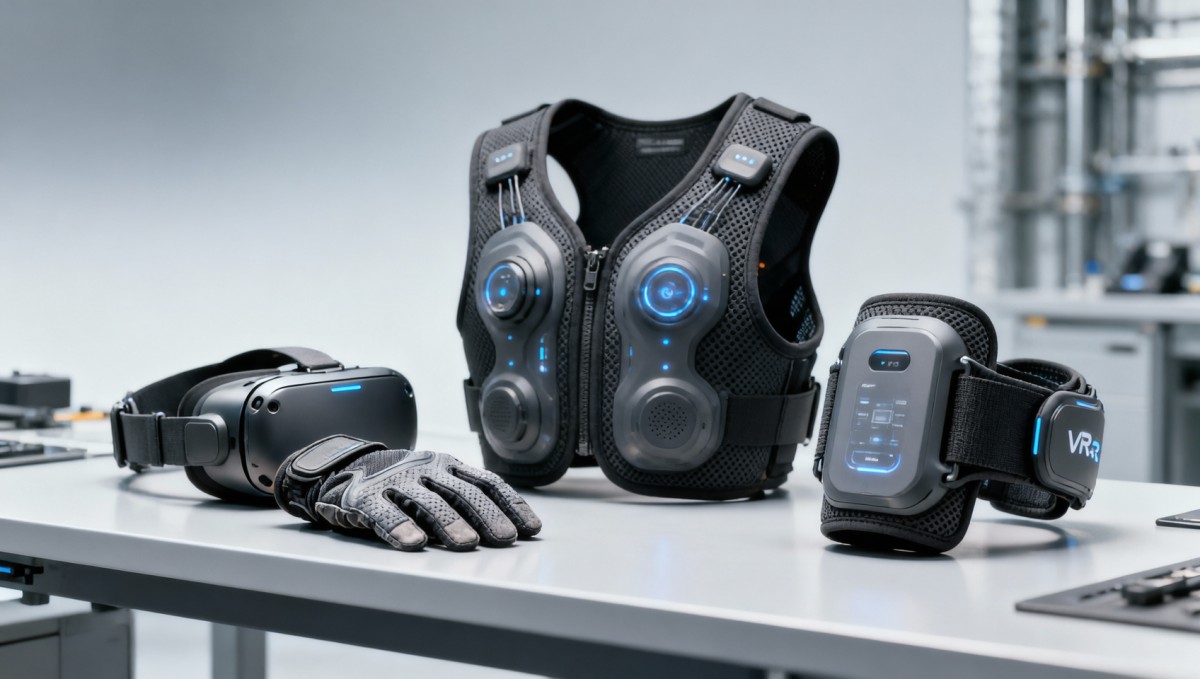
Conclusion: This regulatory update formalizes a binding chemical limit for a high-growth segment of smart sportswear. Its significance lies not in novelty of substance restriction, but in the explicit linkage of that restriction to functionally defined VR haptic garments. For affected stakeholders, the appropriate stance is pragmatic verification — not strategic repositioning. The timeline leaves little margin for delay; action should center on documentation audit, material traceability, and official text monitoring — not speculation about broader regulatory intent.
Source: European Commission REACH Annex XVII draft update (published 8 May 2026); public statements from major Chinese OEMs regarding retesting initiatives (as cited in event summary). Note: Final adoption status and Official Journal publication remain pending and require ongoing observation.
Search News
Hot Articles
- Commercial KitchenHow Restaurant Buyers Can Source Hospitality Supplies Without OverorderingSep 23, 2026
- Commercial KitchenCommercial Kitchen Design Price: Budgeting by Layout, Equipment, and MEP ScopeSep 22, 2026
- Stationery & UniformsHow Schools Can Cut Printing Costs When Buying Ink Cartridges in BulkSep 21, 2026
Popular Tags
Need ExpertConsultation?
Connect with our specialized leisureengineering team for procurementstrategies.
Recommended News
 Sep 15, 2026How to Choose Coin-Operated Pool Tables for Bars, Hotels, and Arcade VenuesCoin operated pool tables for bars, hotels, and arcades: compare sizes, payment systems, durability, service access, and revenue potential.● Theme Park Strategist
 Sep 08, 2026What to Look for in a Flight Simulator Chair Manufacturer for Commercial VR CentersChoose a flight simulator chair manufacturer that delivers durable, safe, customizable seating for commercial VR centers. Explore key sourcing criteria now.● Theme Park Strategist
 Aug 25, 2026What to Evaluate Before Buying Commercial Self Service Photo Booths for VenuesCommercial self service photo booths for venues: learn how to evaluate durability, software stability, branding flexibility, support, and total ROI before you buy.● Theme Park Strategist
 Aug 23, 2026How to Evaluate Wholesale Vending Machines for Multi-Location Business DeploymentWholesale vending machines for multi-location deployment require more than low unit cost. Learn how to compare reliability, payments, telemetry, and supplier support to scale smarter.● Theme Park Strategist
 Aug 17, 2026U.S. CPSC Urges Bilingual Warnings for Arcade and VR MachinesU.S. CPSC urges bilingual safety warnings for Arcade & VR Machines—learn what exporters, importers, and distributors must do now to avoid delays and returns.● Theme Park Strategist
 Aug 16, 2026EU Enforces EN IEC 62368-1:2026 Certification for Arcade and VR MachinesEU Enforces EN IEC 62368-1:2026 certification for arcade and VR machines, reshaping EU market access, customs clearance, and compliance planning for exporters and distributors.● Theme Park Strategist
 Aug 13, 2026UFLPA’s new guidelines take effect: Exports of Arcade and VR equipment face full-link labor compliance requirementsUFLPA’s new guide takes effect: Arcade and VR machine exports to the U.S. now face full-chain labor compliance checks. Discover key risks and action steps.● Theme Park Strategist
 Aug 12, 2026EU PPWR takes effect, Arcade and VR packaging incorporate heavy metal and PFAS restrictionsEU PPWR now applies to Arcade and VR packaging, tightening heavy metal and PFAS compliance. Learn how exporters can avoid delays, fines, and customs risks.● Theme Park Strategist
 Aug 11, 2026CPSC Sets Bilingual Labels for Arcade and VR ImportsCPSC bilingual labels for arcade and VR imports become mandatory on October 1, 2026. Learn the new English-Spanish warning rules, customs risks, and key compliance steps now.● Theme Park Strategist
 Aug 10, 2026EU Rule Takes Effect for Arcade & VR Machine ClearanceArcade & VR Machine clearance in the EU now depends on EN IEC 62368-1:2026+A11:2026 compliance. Learn what changed, who is affected, and how to avoid customs delays.● Theme Park Strategist
 Aug 09, 2026CPSC Requires New Labels for Arcade and VR ImportsCPSC requires new labels for Arcade and VR imports starting Oct 1, 2026. Learn the multilingual warning rules, compliance risks, and key steps exporters and buyers must take now.● Theme Park Strategist
 Aug 08, 2026EU Entry Rule Tightens for Arcade & VR MachinesArcade & VR Machines entering the EU now face stricter CE compliance under EN IEC 62368-1:2026+A11:2026. Learn the new rule, risks, and what exporters must do now.● Theme Park Strategist
 Aug 07, 2026CPSC Notice Tightens U.S. Entry Rules for Arcade and VR MachinesCPSC Notice Tightens U.S. Entry Rules for Arcade and VR Machines: learn the new labeling, FCC, UN38.3, and compliance document requirements before October 1, 2026.● Theme Park Strategist
 Aug 06, 2026EU Rule Takes Effect for CE-UKCA Labels on Arcade & VR MachinesArcade & VR Machines face new CE-UKCA label and ECPD filing rules in the EU and UK. Learn what manufacturers, importers, and distributors must do now to avoid delays.● Theme Park Strategist
 Aug 05, 2026CPSC Recalls Arcade and VR Machines Over UL 62368-1CPSC recalls arcade and VR machines over UL 62368-1 non-compliance. Learn how this 2026 safety action may affect imports, distribution, customs clearance, and market access.● Theme Park Strategist
 Aug 02, 2026EU Sets New Certification Rule for Arcade and VR MachinesArcade and VR Machines face a new EU certification rule from Oct 1, 2026. Learn how EN IEC 62368-1:2026+A11:2026 affects CE marking, customs clearance, and market access.● Theme Park Strategist
 Aug 01, 2026CPSC Moves to Require Bilingual Warnings on Arcade and VR MachinesCPSC bilingual warnings for Arcade and VR Machines may reshape U.S. import compliance. Learn how English-Spanish labels affect packaging, customs risk, and shipment readiness.● Theme Park Strategist
 Jul 31, 2026EU Sets EN IEC 62368-1:2025 Rule for Arcade and VR MachinesEU Sets EN IEC 62368-1:2025 Rule for Arcade and VR Machines. Learn the new EU compliance deadlines, safety updates, and key actions for manufacturers, OEMs, and distributors.● Theme Park Strategist
 Jul 30, 2026CPSC Sets New Warning Label Rule for Arcade & VR MachinesCPSC sets a new warning label rule for Arcade & VR Machines effective August 15, 2026. Learn key compliance risks, multilingual label requirements, and shipment actions now.● Theme Park Strategist
 Jul 29, 2026EU Enforces New Safety Standard for Arcade and VR MachinesEU Enforces New Safety Standard for Arcade and VR Machines: learn how EN IEC 62368-1 affects CE compliance, customs clearance, and EU market access for exporters and buyers.● Theme Park Strategist
 Jul 28, 2026CPSC Sets ASTM F3472-26 Rule for Arcade & VR ImportsCPSC ASTM F3472-26 rule reshapes Arcade & VR imports to the U.S. Learn key compliance deadlines, certification risks, and what exporters, OEM/ODM suppliers, and buyers should do now.● Theme Park Strategist
 Jul 27, 2026EU Rule Takes Effect for Arcade & VR Machine CybersecurityEU Rule Takes Effect for Arcade & VR Machine Cybersecurity: learn how EN IEC 62443-3-3:2025 affects compliance, customs clearance, sales continuity, and supplier planning in the EU market.● Theme Park Strategist
 Jul 25, 2026CPSC Sets Bilingual Warning Rule for Arcade and VR ImportsCPSC bilingual warning rule for arcade and VR imports takes effect August 1, 2026. Learn how OEM/ODM exporters can avoid CBP delays, relabel shipments, and protect U.S. delivery timelines.● Theme Park Strategist
 Jul 24, 2026EU Enforces New Safety Standard for Arcade and VR MachinesEU Enforces New Safety Standard for Arcade and VR Machines: learn how EN IEC 62368-1:2026+A11:2026 reshapes EU compliance, CE documentation, testing timelines, and export readiness.● Theme Park Strategist