FIFA Awards 2026 FIFA World Cup Broadcast Rights for Hong Kong to Now TV and Viu TV
On May 9, 2026, FIFA officially confirmed that Now TV and Viu TV — both operated by PCCW Media in Hong Kong — have secured exclusive broadcast rights for the 2026 FIFA World Cup co-hosted by the United States, Canada, and Mexico. This development is expected to drive procurement demand across several adjacent hardware and software supply chain segments in the Asia-Pacific region, including LED stadium displays manufactured in China, live signal distribution equipment, multilingual subtitle embedding systems, and commercial broadcast terminals (e.g., hotel- and bar-specific decoding boxes). Industry stakeholders in these areas should monitor compliance timelines for FIFA+ API v3.2 integration ahead of Q3 2026.
Event Overview
On May 9, 2026, FIFA announced that Now TV and Viu TV jointly hold the exclusive broadcast rights for the 2026 FIFA World Cup in Hong Kong. The agreement covers live coverage of all 104 matches. Key matches will be made available free-to-air via Viu TV, while Now TV will provide full-event streaming and premium viewing options. No further details regarding sub-licensing, regional redistribution, or technical implementation deadlines have been publicly disclosed as of this announcement.
Industries Affected
Direct Exporters and Trading Firms
This licensing decision triggers downstream demand for export-oriented hardware suppliers serving the broadcast infrastructure market. Since the Hong Kong rights holders will require certified equipment to deliver compliant streams — particularly for venues and public viewing sites — trading firms distributing Chinese-made LED stadium screens, signal encoders, and commercial-grade decoding boxes may see increased order inquiries from APAC-based integrators and venue operators.
Manufacturers of Broadcast Hardware and Embedded Systems
Manufacturers producing stadium LED displays, signal distribution units, and multilingual subtitle embedding systems face a near-term technical requirement: compatibility with FIFA+ API v3.2. As the official streaming protocol for the tournament, this API governs content authentication, metadata handling, and real-time subtitle synchronization. Non-compliant devices may not be approved for use in licensed broadcast environments, limiting deployment opportunities in hotels, bars, and public venues across Hong Kong and neighboring markets.
Distribution and Channel Partners
Regional distributors and channel partners servicing hospitality, retail, and out-of-home entertainment sectors are likely to experience heightened demand for turnkey broadcast solutions. With Viu TV’s free-to-air model and Now TV’s premium access tier, venue operators will seek plug-and-play systems that support both linear and authenticated streaming — including hardware capable of rendering FIFA-mandated multilingual subtitles without third-party overlays.
What Stakeholders Should Monitor and Act On
Track FIFA+ API v3.2 certification timelines and regional rollout guidance
FIFA has not yet published a public certification roadmap for third-party hardware or software vendors. Exporters and manufacturers should proactively engage with FIFA’s broadcast technology partners or authorized testing labs to verify whether their current firmware or SDK versions meet v3.2 requirements — especially for subtitle timing accuracy, DRM handshake protocols, and stream failover behavior.
Confirm compatibility requirements with Now TV and Viu TV’s technical onboarding teams
While FIFA sets the baseline protocol, local broadcasters define implementation specifics — including preferred encoding profiles, subtitle format (e.g., IMSC1 vs. EBU-TT-D), and network latency thresholds. Suppliers should initiate technical alignment discussions before Q3 2026 to avoid delays in qualification and listing on vendor-approved equipment registers.
Distinguish between policy signals and operational readiness
The announcement confirms rights allocation but does not indicate immediate deployment schedules for venue-facing equipment. Stakeholders should treat this as a procurement planning signal — not evidence of imminent bulk orders. Actual purchasing cycles typically begin only after broadcasters finalize venue partner programs and publish technical onboarding documentation.
Prepare for localized compliance documentation and regional logistics coordination
Hardware intended for Hong Kong deployment must meet local regulatory standards (e.g., OFCA approval for RF-emitting devices, power safety certifications). Distributors should pre-validate documentation workflows and coordinate with freight forwarders experienced in cross-border electronics clearance to avoid shipment bottlenecks during peak pre-tournament months.
Editorial Perspective / Industry Observation
Observably, this announcement functions primarily as a market-readiness signal rather than an immediate procurement trigger. It confirms a defined broadcast ecosystem in Hong Kong — one anchored by two established platforms with complementary reach (free-to-air + pay-TV) — but leaves technical execution details to be finalized over the coming months. Analysis shows that the main value lies in its predictability: it allows upstream suppliers to align product roadmaps and compliance efforts around a known API version and timeline. From an industry perspective, this is less about sudden demand spikes and more about structured preparation for standardized, multi-market broadcast deployments across Asia-Pacific.
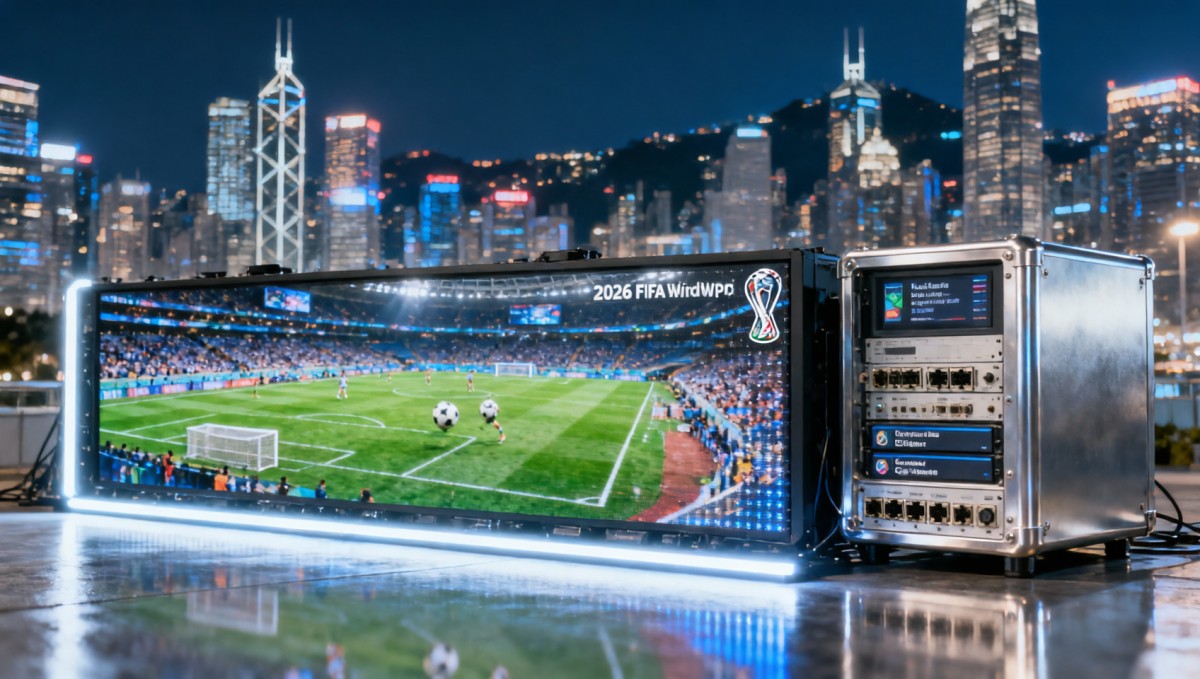
Conclusion: This rights award does not represent an isolated commercial transaction but a coordinated inflection point for broadcast-enabling hardware and software supply chains targeting regulated media markets. Its significance lies not in volume alone, but in the enforceable technical standardization it introduces — namely, mandatory adherence to FIFA+ API v3.2 — which will shape interoperability expectations beyond Hong Kong. For now, it is best understood as a planning milestone: one that validates demand directionally while requiring concrete, protocol-level action before tangible business impact materializes.
Source: Official FIFA announcement (May 9, 2026); PCCW Media press release (same date). Note: Certification procedures for FIFA+ API v3.2 compliance among third-party vendors remain unannounced and are subject to ongoing monitoring.
Search News
Hot Articles
- Commercial KitchenHow Restaurant Buyers Can Source Hospitality Supplies Without OverorderingSep 23, 2026
- Commercial KitchenCommercial Kitchen Design Price: Budgeting by Layout, Equipment, and MEP ScopeSep 22, 2026
- Stationery & UniformsHow Schools Can Cut Printing Costs When Buying Ink Cartridges in BulkSep 21, 2026
Popular Tags
Need ExpertConsultation?
Connect with our specialized leisureengineering team for procurementstrategies.
Recommended News
 Sep 07, 2026How to Choose Wall Mount Speakers for Clear Audio in Commercial SpacesWall mount speakers for commercial spaces: learn how to optimize coverage, SPL, directivity, installation, and system design for clear, reliable audio.● Pro Audio Engineer
 Sep 03, 2026How to Choose Locking Speakon Speaker Cables for Reliable Live Sound ConnectionsLocking Speakon speaker cables: learn how to select the right gauge, connector pinout, strain relief, and durable construction for reliable live sound connections.● Pro Audio Engineer
 Sep 08, 2026Is It Worth Upgrading a Stage Sound System Mid-Project?Is it worth upgrading stage sound systems mid-project? Discover how to assess performance gaps, costs, compatibility, and long-term venue value.● Pro Audio Engineer
 Sep 04, 2026Can AV Systems Be Retrofitted Into Older Commercial Buildings?Can AV integration be retrofitted into older commercial buildings? Discover practical strategies for reliable, code-aware AV upgrades with minimal disruption.● Pro Audio Engineer
 Jul 17, 2026How to Choose a Crossover Networks Supplier: Key Specs, Quality Checks, and OEM FactorsFind the right crossover networks supplier with this practical guide to key specs, quality checks, OEM factors, and supply chain risks for better audio performance and sourcing confidence.● Pro Audio Engineer
 Jul 16, 2026How to Evaluate ODM Services for Pro Audio: Design, Certification, and Production CapabilitiesODM services for pro audio: learn how to assess design depth, certification readiness, and production strength to choose a reliable partner and launch better audio products with less risk.● Pro Audio Engineer
 Jul 15, 2026JETRO Flags Modular, Low-Power Shift in Pro Stage AudioPro Stage Audio buyers in Japan are shifting fast: JETRO flags modular amplifiers, IP65 line arrays, low standby power, and JIS compliance as key to channel entry.● Pro Audio Engineer
 Jul 15, 2026Paper Speaker Cones Explained: How Cone Weight and Stiffness Affect SoundPaper speaker cones explained: discover how cone weight and stiffness shape sensitivity, clarity, breakup control, and real-world speaker performance for smarter audio sourcing.● Pro Audio Engineer
 Jul 15, 2026Performance Venues Compliance Checklist: Fire Safety, Accessibility, and Crowd RulesPerformance venues compliance checklist covering fire safety, accessibility, and crowd rules. Learn how to reduce delays, improve approvals, and open safer, more resilient venues.● Pro Audio Engineer
 Jul 14, 2026Japan Adds EMC Immunity Test for Stage AmplifiersJapan Adds EMC Immunity Test for Stage Amplifiers: learn how Japan’s 2026 JIS update affects EMC testing, JIS marking, certification timing, and market access for exporters.● Pro Audio Engineer
 Jul 13, 2026CISCE 2026 Adds Pro Stage Audio ZoneCISCE 2026 Adds Pro Stage Audio Zone as free overseas pre-registration opens. Explore key updates for pro audio suppliers, distributors, and system integrators before the Shanghai expo.● Pro Audio Engineer
 Jul 12, 2026Japan Tightens Pro Stage Audio Efficiency Limits Under JIS C 8105-2026Japan Tightens Pro Stage Audio Efficiency Limits Under JIS C 8105-2026: learn how new PSE compliance rules reshape market access, product eligibility, and shipment planning in Japan.● Pro Audio Engineer
 Jul 12, 2026How to Choose Low Profile Ceiling Speakers for Hotels, Offices, and Retrofit ProjectsLow profile ceiling speakers for hotels, offices, and retrofit projects: learn how to compare depth, coverage, compliance, and installation factors to choose the right fit.● Pro Audio Engineer
 Jul 11, 2026Japan Tightens JIS C 8105-2026 for Pro AudioJapan Tightens JIS C 8105-2026 for Pro Audio: learn how stricter standby power, PSE diamond mark rules, and the 2026 deadline impact exports, compliance, and market access.● Pro Audio Engineer
 Jul 10, 2026JETRO Q2 Outlook Signals Higher Stage Audio DemandJETRO Q2 Outlook signals higher stage audio demand in Japan, with 37% procurement growth and stricter PSE Annex D compliance. See what importers, manufacturers, and rental channels must act on now.● Pro Audio Engineer
 Jul 10, 2026How to Choose Wall Mount Speakers for Restaurants by Layout, Coverage, and SPLWall mount speakers for restaurants should match layout, coverage, and SPL. Learn how to choose the right setup for even sound, guest comfort, and reliable performance.● Pro Audio Engineer
 Jul 09, 2026JIS T 9001:2026 Adds Mandatory AI Noise LabelsJIS T 9001:2026 adds mandatory AI noise labels for pro audio gear from October 2026. Learn how it impacts compliance, testing, exports, and product launches.● Pro Audio Engineer
 Jul 06, 2026Improving Sound Reinforcement Speech Clarity: Key Causes of Muddiness and How to Fix ThemSound reinforcement speech clarity starts with identifying reverberation, coverage, noise, and timing issues. Discover practical fixes that make announcements clearer and commercial spaces perform better.● Pro Audio Engineer
 Jul 05, 2026Saudi Rule Adds Arabic UI Requirement for Pro Audio ImportsSaudi Rule Adds Arabic UI Requirement for Pro Audio Imports: learn how SASO’s new Arabic UI mandate affects digital amplifiers, DSP processors, and network audio interfaces before Sept. 1, 2026.● Pro Audio Engineer
 Jul 02, 2026How to Choose Audio Mixing Consoles for Live Venues: Channels, Buses, and I/O ExplainedAudio mixing consoles explained for live venues: learn how to choose the right channels, buses, and I/O to improve workflow, support growth, and avoid costly mistakes.● Pro Audio Engineer
 Jul 01, 2026UL 62368-3:2026 Adds EMC Rules for Pro Stage AudioUL 62368-3:2026 adds EMC rules for Pro Stage Audio, requiring Level 4 immunity and manual labeling by Oct 1, 2026. See what exporters, makers, and buyers must do now.● Pro Audio Engineer
 Jun 30, 2026Sound Reinforcement Design Basics: How to Plan Coverage, SPL, and Speaker PlacementSound reinforcement design starts with smarter coverage, target SPL, and speaker placement. Learn how to plan clearer, more reliable audio performance for commercial spaces.● Pro Audio Engineer
 Jun 28, 2026TUV Rheinland Adds 5G Immunity Test for Pro AudioTUV Rheinland adds 5G immunity test for pro audio, reshaping EU EMC certification for mixing consoles, amplifiers, and audio-lighting control systems. See who is affected and how to prepare.● Pro Audio Engineer
 Jun 27, 2026TUV Rheinland Adds 5G EMC Test for Stage AudioTUV Rheinland adds 5G EMC test for stage audio from Sept. 1, 2026. Learn how CE-EMC changes may impact smart mixers, DMX/WiFi/Bluetooth systems, certification, and delivery plans.● Pro Audio Engineer