EU EPR Rules Take Effect: Arcade & VR Machines Importers Must Register by July 2026
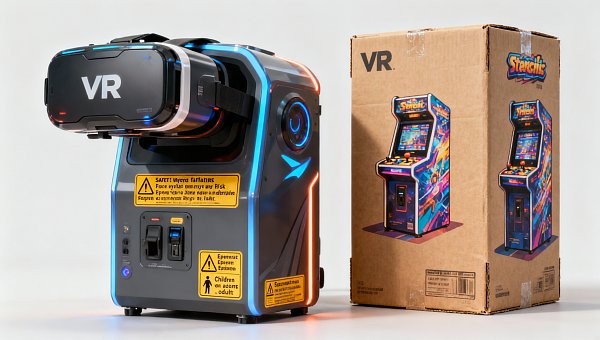
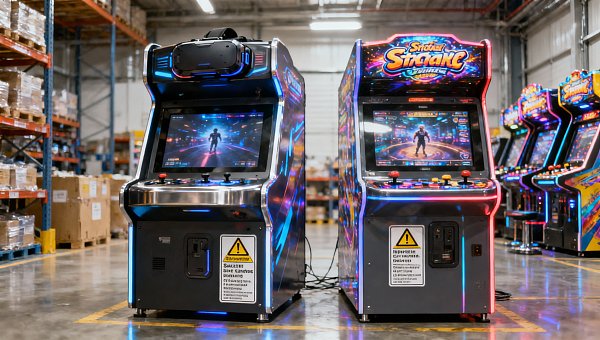
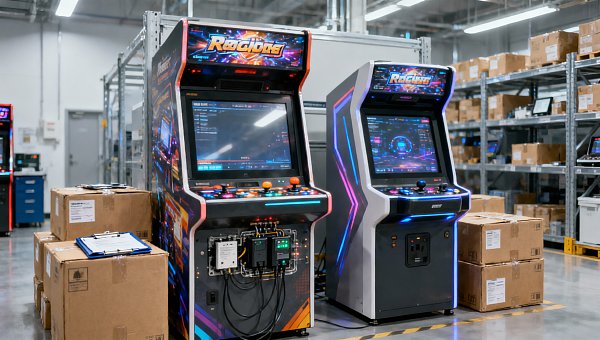
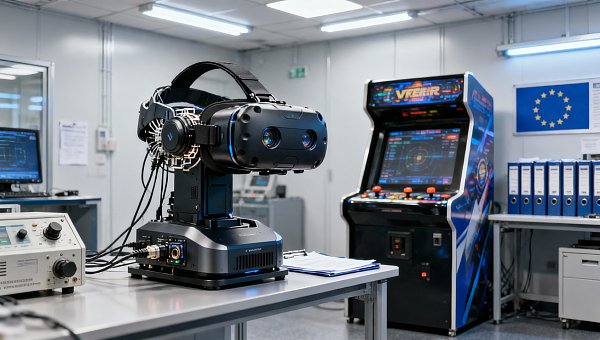
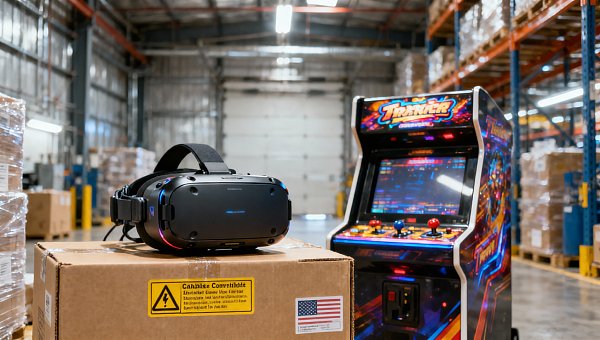
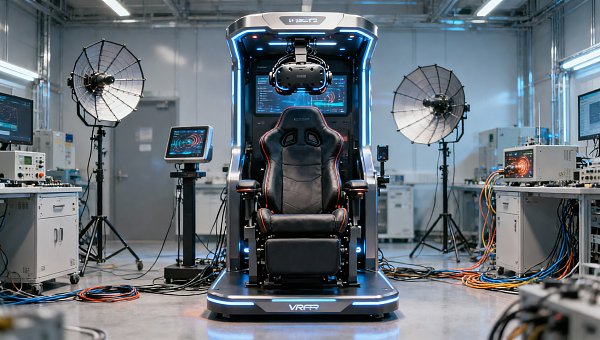
On May 10, 2026, the European Union updated its Guidance on Extended Producer Responsibility (EPR) for Packaging and Electrical and Electronic Equipment, formally including arcade machines and VR/immersive gaming devices under mandatory EPR registration. This development directly affects importers, ODM manufacturers, and supply chain actors engaged in the EU consumer electronics and interactive entertainment hardware sectors — particularly those handling physical distribution, compliance, or co-branded product launches.
Event Overview
The EU’s updated EPR Guidance, published on May 10, 2026, explicitly adds arcade machines and VR body-sensing devices to the list of product categories subject to mandatory Extended Producer Responsibility. Under the rule, importers must complete national EPR registrations — such as with Germany’s EAR system or France’s ADEME — prior to placing these products on the EU market. They are also required to pay annual recycling fees. The guidance further states that Chinese ODM manufacturers failing to sign joint responsibility agreements with their EU-based importers may lose priority access to orders.
Industries Affected
Direct Trading Enterprises (EU Importers)
Importers of arcade and VR machines are now legally obligated to register with national EPR authorities before market entry. Non-compliance risks customs delays, product detention, or penalties under national enforcement frameworks. Registration must be completed per member state — not just at the EU level — meaning parallel submissions may be required for multi-country distribution.
Contract Manufacturing & ODM Firms (Primarily Based in China)
Chinese ODM suppliers producing arcade or VR hardware for EU brands face new contractual exposure. Absence of a formal shared responsibility agreement with the EU importer — covering fee allocation, reporting duties, and documentation ownership — may result in de-prioritization in procurement decisions, as noted in the guidance. This shifts part of the compliance burden upstream, even though legal liability remains with the importer.
Supply Chain & Compliance Service Providers
Firms offering EPR registration support, fee management, or take-back logistics now face increased demand for multi-jurisdictional coverage — especially for niche hardware categories previously outside EPR scope. However, no new accreditation schemes or service mandates have been introduced; current service offerings remain valid but require category-specific validation for arcade/VR equipment classification.
Key Considerations and Recommended Actions
Monitor official national implementation timelines and classification details
While the EU guidance was published on May 10, 2026, individual member states retain discretion over registration deadlines, fee structures, and product definitions (e.g., whether standalone VR controllers or modular arcade cabinets qualify). Businesses should track updates from EAR (Germany), ADEME (France), and other national bodies — especially ahead of the July 2026 effective date.
Verify product categorization and importer-ODM contractual alignment
Companies must confirm whether their specific arcade or VR hardware models fall under the newly listed category — particularly hybrid or software-defined devices. Concurrently, ODMs and importers should review or draft joint responsibility agreements specifying roles in data reporting, fee payment, and audit readiness — not merely as commercial preference, but as a documented prerequisite for order continuity.
Distinguish between regulatory signal and enforceable obligation
The May 10 update is a binding guidance document issued under existing EU EPR directives (2008/98/EC and 2012/19/EU), not a new regulation. Its legal weight derives from interpretation and enforcement practice — meaning consequences depend on national authority action. As such, early registration is prudent, but immediate penalties are not automatic upon publication.
Prepare documentation and fee budgeting ahead of Q3 2026
Registration typically requires product weight data, material composition, annual volume forecasts, and proof of authorized representation. Given lead times for national authority processing — especially for first-time registrants — businesses should initiate internal data collection and budget planning by June 2026 to meet the July 2026 market-entry deadline.
Editorial Perspective / Industry Observation
Observably, this update reflects an ongoing expansion of EPR scope beyond traditional electronics into experiential and location-based hardware — a trend consistent with EU policy emphasis on circularity for high-value, low-turnover equipment. Analysis shows it functions less as an isolated compliance milestone and more as a signal of tightening upstream accountability, especially for non-EU manufacturers embedded in branded supply chains. From an industry perspective, the requirement does not yet constitute a market barrier — but it does introduce a new contractual and operational checkpoint that will shape sourcing relationships in the medium term. Continued monitoring is warranted, as enforcement rigor and cross-border harmonization remain variable across member states.
Conclusion
This EPR extension marks a procedural escalation rather than a structural shift: it formalizes obligations already implied under broader WEEE and packaging directives, but applies them explicitly to arcade and VR hardware for the first time. For affected stakeholders, the most rational interpretation is that compliance readiness — not regulatory novelty — is now the decisive factor in market access. Prioritizing documentation accuracy, inter-company alignment, and jurisdiction-specific preparation better reflects the current state of implementation than anticipating broad legislative change.
Source Attribution
Main source: European Commission’s updated Guidance on Extended Producer Responsibility for Packaging and Electrical and Electronic Equipment, published May 10, 2026.
Noted for ongoing observation: National implementation approaches by Germany (EAR), France (ADEME), and other EU member states — including potential variations in product definition, fee calculation, and enforcement timelines.
Search News
Hot Articles
- Restaurant FurnitureFast-Casual Restaurant Interiors: Design Choices That Improve Speed and Guest FlowOct 04, 2026
- Outdoor RidesHow to Select Leisure Park Equipment for Safe, High-Throughput Visitor AreasOct 03, 2026
- Fashion & Gem JewelryDiamond Tester Wholesale: How to Vet Accuracy, Calibration, and MOQ Before OrderingOct 02, 2026
Popular Tags
Need ExpertConsultation?
Connect with our specialized leisureengineering team for procurementstrategies.
Recommended News
 Sep 15, 2026How to Choose Coin-Operated Pool Tables for Bars, Hotels, and Arcade VenuesCoin operated pool tables for bars, hotels, and arcades: compare sizes, payment systems, durability, service access, and revenue potential.● Theme Park Strategist
 Sep 08, 2026What to Look for in a Flight Simulator Chair Manufacturer for Commercial VR CentersChoose a flight simulator chair manufacturer that delivers durable, safe, customizable seating for commercial VR centers. Explore key sourcing criteria now.● Theme Park Strategist
 Aug 25, 2026What to Evaluate Before Buying Commercial Self Service Photo Booths for VenuesCommercial self service photo booths for venues: learn how to evaluate durability, software stability, branding flexibility, support, and total ROI before you buy.● Theme Park Strategist
 Aug 23, 2026How to Evaluate Wholesale Vending Machines for Multi-Location Business DeploymentWholesale vending machines for multi-location deployment require more than low unit cost. Learn how to compare reliability, payments, telemetry, and supplier support to scale smarter.● Theme Park Strategist
 Aug 17, 2026U.S. CPSC Urges Bilingual Warnings for Arcade and VR MachinesU.S. CPSC urges bilingual safety warnings for Arcade & VR Machines—learn what exporters, importers, and distributors must do now to avoid delays and returns.● Theme Park Strategist
 Aug 16, 2026EU Enforces EN IEC 62368-1:2026 Certification for Arcade and VR MachinesEU Enforces EN IEC 62368-1:2026 certification for arcade and VR machines, reshaping EU market access, customs clearance, and compliance planning for exporters and distributors.● Theme Park Strategist
 Aug 13, 2026UFLPA’s new guidelines take effect: Exports of Arcade and VR equipment face full-link labor compliance requirementsUFLPA’s new guide takes effect: Arcade and VR machine exports to the U.S. now face full-chain labor compliance checks. Discover key risks and action steps.● Theme Park Strategist
 Aug 12, 2026EU PPWR takes effect, Arcade and VR packaging incorporate heavy metal and PFAS restrictionsEU PPWR now applies to Arcade and VR packaging, tightening heavy metal and PFAS compliance. Learn how exporters can avoid delays, fines, and customs risks.● Theme Park Strategist
 Aug 11, 2026CPSC Sets Bilingual Labels for Arcade and VR ImportsCPSC bilingual labels for arcade and VR imports become mandatory on October 1, 2026. Learn the new English-Spanish warning rules, customs risks, and key compliance steps now.● Theme Park Strategist
 Aug 10, 2026EU Rule Takes Effect for Arcade & VR Machine ClearanceArcade & VR Machine clearance in the EU now depends on EN IEC 62368-1:2026+A11:2026 compliance. Learn what changed, who is affected, and how to avoid customs delays.● Theme Park Strategist
 Aug 09, 2026CPSC Requires New Labels for Arcade and VR ImportsCPSC requires new labels for Arcade and VR imports starting Oct 1, 2026. Learn the multilingual warning rules, compliance risks, and key steps exporters and buyers must take now.● Theme Park Strategist
 Aug 08, 2026EU Entry Rule Tightens for Arcade & VR MachinesArcade & VR Machines entering the EU now face stricter CE compliance under EN IEC 62368-1:2026+A11:2026. Learn the new rule, risks, and what exporters must do now.● Theme Park Strategist
 Aug 07, 2026CPSC Notice Tightens U.S. Entry Rules for Arcade and VR MachinesCPSC Notice Tightens U.S. Entry Rules for Arcade and VR Machines: learn the new labeling, FCC, UN38.3, and compliance document requirements before October 1, 2026.● Theme Park Strategist
 Aug 06, 2026EU Rule Takes Effect for CE-UKCA Labels on Arcade & VR MachinesArcade & VR Machines face new CE-UKCA label and ECPD filing rules in the EU and UK. Learn what manufacturers, importers, and distributors must do now to avoid delays.● Theme Park Strategist
 Aug 05, 2026CPSC Recalls Arcade and VR Machines Over UL 62368-1CPSC recalls arcade and VR machines over UL 62368-1 non-compliance. Learn how this 2026 safety action may affect imports, distribution, customs clearance, and market access.● Theme Park Strategist
 Aug 02, 2026EU Sets New Certification Rule for Arcade and VR MachinesArcade and VR Machines face a new EU certification rule from Oct 1, 2026. Learn how EN IEC 62368-1:2026+A11:2026 affects CE marking, customs clearance, and market access.● Theme Park Strategist
 Aug 01, 2026CPSC Moves to Require Bilingual Warnings on Arcade and VR MachinesCPSC bilingual warnings for Arcade and VR Machines may reshape U.S. import compliance. Learn how English-Spanish labels affect packaging, customs risk, and shipment readiness.● Theme Park Strategist
 Jul 31, 2026EU Sets EN IEC 62368-1:2025 Rule for Arcade and VR MachinesEU Sets EN IEC 62368-1:2025 Rule for Arcade and VR Machines. Learn the new EU compliance deadlines, safety updates, and key actions for manufacturers, OEMs, and distributors.● Theme Park Strategist
 Jul 30, 2026CPSC Sets New Warning Label Rule for Arcade & VR MachinesCPSC sets a new warning label rule for Arcade & VR Machines effective August 15, 2026. Learn key compliance risks, multilingual label requirements, and shipment actions now.● Theme Park Strategist
 Jul 29, 2026EU Enforces New Safety Standard for Arcade and VR MachinesEU Enforces New Safety Standard for Arcade and VR Machines: learn how EN IEC 62368-1 affects CE compliance, customs clearance, and EU market access for exporters and buyers.● Theme Park Strategist
 Jul 28, 2026CPSC Sets ASTM F3472-26 Rule for Arcade & VR ImportsCPSC ASTM F3472-26 rule reshapes Arcade & VR imports to the U.S. Learn key compliance deadlines, certification risks, and what exporters, OEM/ODM suppliers, and buyers should do now.● Theme Park Strategist
 Jul 27, 2026EU Rule Takes Effect for Arcade & VR Machine CybersecurityEU Rule Takes Effect for Arcade & VR Machine Cybersecurity: learn how EN IEC 62443-3-3:2025 affects compliance, customs clearance, sales continuity, and supplier planning in the EU market.● Theme Park Strategist
 Jul 25, 2026CPSC Sets Bilingual Warning Rule for Arcade and VR ImportsCPSC bilingual warning rule for arcade and VR imports takes effect August 1, 2026. Learn how OEM/ODM exporters can avoid CBP delays, relabel shipments, and protect U.S. delivery timelines.● Theme Park Strategist
 Jul 24, 2026EU Enforces New Safety Standard for Arcade and VR MachinesEU Enforces New Safety Standard for Arcade and VR Machines: learn how EN IEC 62368-1:2026+A11:2026 reshapes EU compliance, CE documentation, testing timelines, and export readiness.● Theme Park Strategist