Southeast Asia Raises Tariffs on Stage Lighting Imports
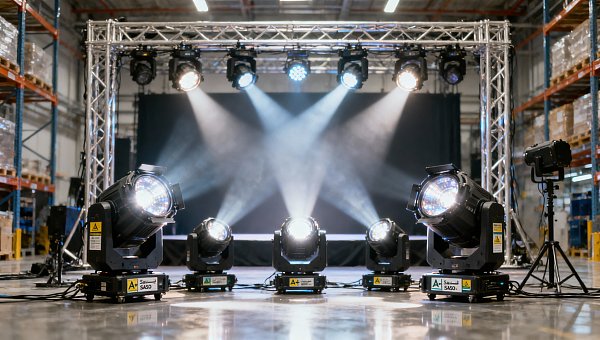
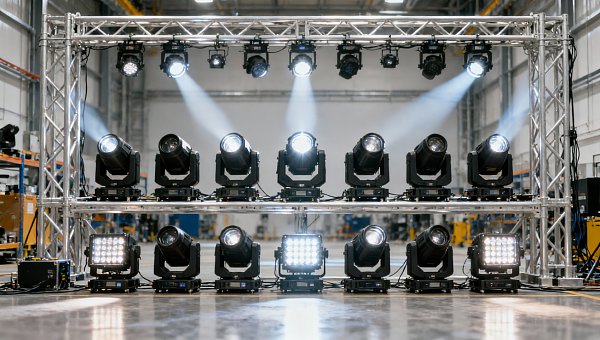
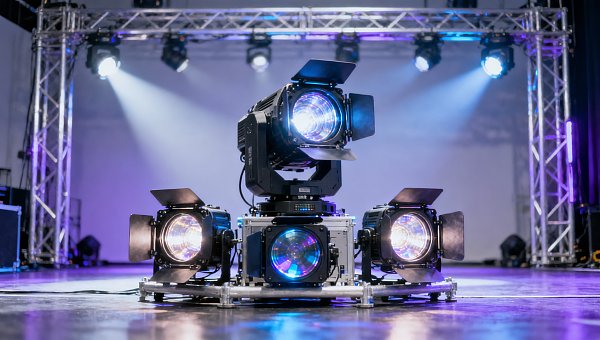
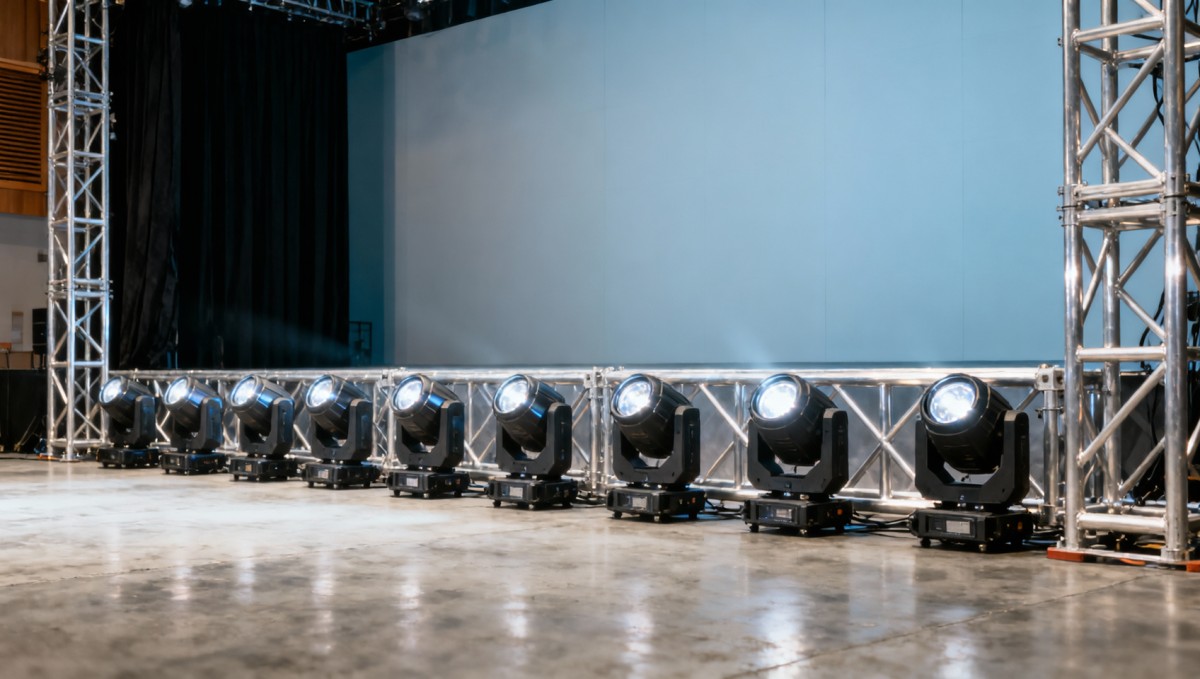
Effective May 8, 2026, Thailand (+8%), Vietnam (+10%), and Indonesia (+12%) have imposed temporary import tariffs on LED moving-head lights, truss systems, and related stage lighting equipment. Citing ‘safeguarding local live entertainment infrastructure supply chain security’ as the official rationale, the measures directly impact China’s export-oriented stage lighting and structural support industry — a sector that accounts for over 65% of global stage truss production and nearly 40% of professional LED fixture exports.
Event Overview
On May 8, 2026, Thailand, Vietnam, and Indonesia implemented temporary additional import duties on LED moving-head lights and aluminum truss systems. The tariff hikes are 8%, 10%, and 12%, respectively. According to official customs notices published by each country’s Ministry of Finance or Directorate General of Customs, the measures are framed as provisional safeguards under WTO Article XIX, pending domestic industry injury investigations. Chinese exporters report receiving formal re-negotiation requests from Southeast Asian distributors — particularly for FOB pricing terms — and note a growing shift among time-sensitive project buyers toward hybrid models combining imported core components with local final assembly.
Industries Affected
Direct Export Trading Enterprises: These firms face immediate margin compression due to the 8–12% landed cost increase. Since most contracts are priced in USD on FOB or CIF terms, the tariff burden falls on downstream importers — yet many now demand price concessions or revised Incoterms, triggering renegotiations. Cash flow pressure is especially acute for SMEs operating on thin working capital buffers.
Raw Material Procurement Enterprises: Suppliers of extruded aluminum profiles, die-cast housings, and high-CRI LED modules — often serving both domestic OEMs and export-focused assemblers — are seeing order volumes soften in Q2 2026. Demand uncertainty has led several upstream vendors to delay planned capacity expansions originally scheduled for mid-2026.
Contract Manufacturing & Assembly Enterprises: Factories specializing in ODM/OEM production of lighting fixtures and modular trusses report mixed signals: while some clients are accelerating offshore pilot lines in Malaysia or Thailand, others are pausing new model launches pending clarity on tariff duration and potential exemptions (e.g., for R&D-grade units or certified energy-efficient models). Labor cost arbitrage advantages are partially offset by rising logistics complexity and certification overhead.
Supply Chain Service Providers: Freight forwarders, customs brokers, and compliance consultants report surging inquiries on ASEAN-specific HS code classification (especially for hybrid truss-lighting kits), origin documentation requirements (e.g., Form D vs. self-certified COO), and parallel strategies such as transshipment via Cambodia or Laos — though recent ASEAN-wide anti-circumvention audits make such routes higher-risk.
Key Considerations and Response Measures
Review and Adjust Pricing Frameworks with Clear Tariff Allocation Clauses
Exporters should revise standard sales contracts to explicitly define who bears newly imposed duties — especially where previous agreements used ambiguous terms like ‘delivered duty unpaid’ without specifying post-import levy responsibilities. Legal counsel familiar with ASEAN trade defense mechanisms is recommended before signing renewed distributor agreements.
Evaluate Localized Assembly Partnerships in ASEAN Countries
Rather than full relocation, short-term joint ventures or toll manufacturing arrangements with certified local partners may help retain market access while meeting ‘substantial transformation’ thresholds for preferential tariff treatment under ACFTA. Pilot projects in Vietnam’s Bac Ninh or Thailand’s Eastern Economic Corridor show feasibility for light-assembly operations requiring minimal CAPEX.
Accelerate Product Certification for ASEAN-Specific Standards
Compliance with TISI (Thailand), TCVN (Vietnam), and SNI (Indonesia) standards — particularly for electrical safety (IEC 60598-2-17), EMC, and aluminum alloy traceability — is no longer optional. Early engagement with accredited labs (e.g., SGS Vietnam, Bureau Veritas Indonesia) can reduce time-to-market by 4–6 weeks versus reactive certification.
Editorial Perspective / Industry Observation
Analysis shows this is not an isolated protectionist move but part of a broader regional recalibration: ASEAN nations are increasingly treating cultural infrastructure — including touring-grade lighting, rigging, and audio systems — as strategic assets tied to tourism resilience and domestic content policies. Observably, the timing coincides with national digital performance hub initiatives in all three countries, suggesting the tariffs may serve dual purposes: revenue generation and incentivizing localized integration of control software, IoT-enabled fixtures, and power management subsystems. From an industry perspective, this is less about trade friction and more about shifting value capture — from hardware export to embedded services and interoperable ecosystems.
Conclusion
The tariff adjustments mark a structural inflection point — not merely a cost headwind, but a catalyst for deeper localization, product differentiation, and service-layer innovation. For Chinese stage lighting exporters, sustained competitiveness will hinge less on scale-driven cost leadership and more on agility in regulatory navigation, ecosystem collaboration, and value-added technical support. A purely transactional export model is becoming operationally and strategically untenable.
Sources and Monitoring Notes
Official notifications: Thailand Royal Gazette Vol. 143, Sec. 127 (May 3, 2026); Vietnam Ministry of Finance Circular No. 18/2026/TT-BTC; Indonesia Ministry of Finance Regulation PMK-54/PMK.010/2026. All documents cite WTO-consistent safeguard investigation timelines (max. 200 days). Monitoring focus: Final determination deadlines (expected November 2026), potential exclusions for energy-efficient products, and ASEAN-wide harmonization talks on ‘cultural tech’ classification currently underway under the ASEAN Digital Ministers Meeting framework.
Search News
Hot Articles
- Restaurant FurnitureFast-Casual Restaurant Interiors: Design Choices That Improve Speed and Guest FlowOct 04, 2026
- Outdoor RidesHow to Select Leisure Park Equipment for Safe, High-Throughput Visitor AreasOct 03, 2026
- Fashion & Gem JewelryDiamond Tester Wholesale: How to Vet Accuracy, Calibration, and MOQ Before OrderingOct 02, 2026
Popular Tags
Need ExpertConsultation?
Connect with our specialized leisureengineering team for procurementstrategies.
Recommended News
 Jul 13, 2026Stage Riser Platforms Explained: Types, Load Ratings, and Best-Fit Event UsesStage riser platforms explained clearly: compare types, load ratings, safety factors, and best-fit event uses to choose smarter, safer solutions for conferences, schools, hotels, and live shows.● Pro Audio Engineer
 Jul 09, 2026SASO Fast Track Cuts Stage Lighting Export Lead TimeSASO Fast Track cuts stage lighting export lead time from 45 days to 12 working days. Learn how Saudi certification changes affect truss suppliers, OEMs, buyers, and shipment planning.● Pro Audio Engineer
 Jul 08, 2026SASO Updates Stage Lighting Label Rules for LED Moving HeadsSASO updates stage lighting label rules for LED moving heads, requiring three-level energy efficiency values and bilingual labels. See what exporters and buyers must do before October 2026.● Pro Audio Engineer
 Jul 07, 2026SASO Adds Energy Label Rules for Stage Lighting ImportsSASO Adds Energy Label Rules for Stage Lighting Imports: learn which stage lighting products now need Arabic energy labels and SASO-recognized test reports before Sept. 1, 2026.● Pro Audio Engineer
 Jul 06, 2026Saudi SASO Sets A+ Rule for Stage LED LightingSaudi SASO sets A+ rule for stage LED lighting from Oct 1, 2026. Learn how the new SASO label and IEC 62722-2-1:2026 standard impact compliance, shipping, and market access.● Pro Audio Engineer
 Jul 04, 2026SASO Tightens RF Test Rules for Wireless Stage ControlsSASO tightens RF test rules for wireless stage controls in Saudi Arabia. Learn how the new IEC 62368-3 requirement impacts stage lighting exports, compliance, and delivery.● Pro Audio Engineer
 Jul 03, 2026Saudi SASO Adds RF Approval Rule for Stage LightingSaudi SASO adds RF approval rule for stage lighting. Learn how the new SASO RoHS+RF certification affects wireless lighting, truss control exports, retail access, and project delivery in Saudi Arabia.● Pro Audio Engineer
 Jul 02, 2026SASO Starts EMC Pilot for Smart Stage Lighting in SaudiSASO starts an EMC pilot for smart stage lighting in Saudi Arabia, impacting dimming controllers, cloud access, and project compliance. See what suppliers and integrators must do now.● Pro Audio Engineer
 Jul 01, 2026Saudi SASO Tightens UV-C Limits for Stage LightingSaudi SASO tightens UV-C limits for stage lighting and truss products. Learn the 2026 SASO IEC 62471 update, retesting deadline, customs risks, and how to protect Saudi shipments.● Pro Audio Engineer
 Jun 30, 2026EN 62471:2026 Adds UV-C Limit for Stage LightingEN 62471:2026 adds a UV-C limit for stage lighting, impacting LED moving heads, laser fixtures, and truss lighting. Learn what changes before Dec 1, 2026.● Pro Audio Engineer
 Jun 29, 2026TUV Adds Wi-Fi 7 EMC Test for Stage LightingTUV Adds Wi-Fi 7 EMC Test for Stage Lighting sold into the EU. Learn the Oct 1, 2026 deadline, retesting rules, and how EN 55032:2024 impacts certificates, shipments, and compliance planning.● Pro Audio Engineer
 Jun 25, 2026LED PAR Cans Wholesale: What to Compare in Wattage, Beam Angle, and DMX ControlLED par cans wholesale buyers should compare wattage, beam angle, and DMX control before requesting quotes. Learn how to avoid costly mismatches and choose fixtures that fit each venue.● Pro Audio Engineer
 Jun 16, 2026Stage Lighting Equipment List for Small Venues: What You Need and How to Plan ItStage lighting equipment for small venues: discover a practical equipment list, planning tips, and smart setup ideas to improve performance, flexibility, and long-term value.● Pro Audio Engineer
 Jun 12, 2026Vietnam Tightens EMC Rules for Stage Lighting LEDsVietnam Tightens EMC Rules for Stage Lighting LEDs: learn how QCVN 139:2026 impacts imports, testing, sourcing, and delivery planning for stage lighting businesses.● Pro Audio Engineer
 Jun 11, 2026LPGA Shanghai Debut Lifts Stage Lighting OrdersStage lighting and truss demand is rising as LPGA Shanghai debuts in 2026. Learn how tighter delivery windows, compliance, and project execution are reshaping global orders.● Pro Audio Engineer
 Jun 04, 2026UK EPR Rules Expand to Stage Lighting and TrussUK EPR rules for stage lighting and truss expand in Q3 2026. Learn how UKCA-linked registration, reporting, recycling fees, and material documentation will affect compliance and market access.● Pro Audio Engineer
 Jun 03, 2026UK EPR Fee Hits Stage Truss Textiles in Q3 2026UK EPR Fee for stage truss textiles starts in Q3 2026. Learn what new recycling charges and UKCA-Flame rules mean for lighting and truss suppliers.● Pro Audio Engineer
 Jun 02, 2026UK EPR Fee Hits Stage Lighting & TrussUK EPR Fee Hits Stage Lighting & Truss products with textile components in 2026. Learn compliance risks, BOM updates, and cost impacts for UK exporters.● Pro Audio Engineer
 May 25, 2026China's Carbon Fiber Truss Strength Up 32% at 2026 Sports ExpoCarbon fiber truss strength up 32% at 2026 Sports Expo—UL 1598 certified, CE+UL ready. Discover how China’s stage infrastructure is winning European music festivals & global tenders.● Pro Audio Engineer
 May 23, 2026Vietnam Mandates Bilingual MSDS for Stage Lighting & Truss ImportsVietnam mandates bilingual MSDS (Vietnamese & Chinese) for stage lighting and truss imports — ensure compliance by July 1, 2026 to avoid shipment rejection.● Pro Audio Engineer
 May 20, 20263 Chinese Stage Lighting Firms Join LA28 Olympic Supplier List3 Chinese stage lighting firms join LA28 Olympic supplier list — showcasing ISO 20121 & UL 1574 compliance, sustainability leadership, and global credibility in live-event infrastructure.● Pro Audio Engineer
 May 20, 2026What matters most when choosing lighting stands crank up?Lighting stands crank up: learn what really matters beyond height—load capacity, crank safety, stability, compatibility, and serviceability—to choose the right stand with confidence.● Pro Audio Engineer
 May 19, 20263 Chinese Stage Lighting Firms Join IOC’s 2028 LA Olympics Supplier ListChinese stage lighting firms join IOC's 2028 LA Olympics supplier list — a major validation for OEM/ODM exporters and tech integrators in global sports & entertainment lighting.● Pro Audio Engineer
 May 19, 2026When are chain hoists for stage the better rigging choiceChain hoists for stage are the better rigging choice when you need precise lifting, compact headroom use, and reliable repeat performance. See key use cases and buyer tips.● Pro Audio Engineer