SteamVR Adds China OEM Device Certification
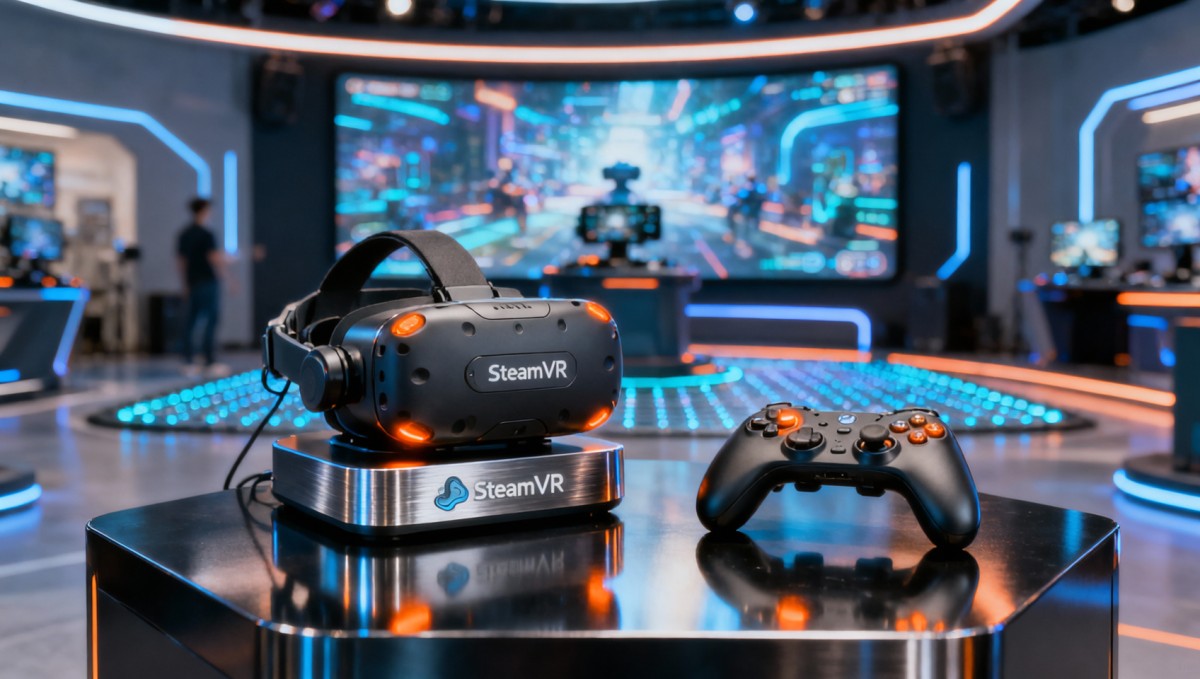
Valve announced on May 10, 2026, that SteamVR now supports direct certification for Chinese OEM VR hardware — including tracking base stations and motion controllers — significantly lowering integration barriers for VR arcade and commercial machine deployments in overseas markets. This move reflects a strategic shift in cross-border VR ecosystem interoperability, with implications for global supply chain efficiency, export competitiveness, and regional standard alignment.
Event Overview
On May 10, 2026, Valve released SteamVR SDK version 2.5, introducing the first official whitelist-based direct-connect certification pathway for VR hardware manufactured in China. Certified devices — specifically optical positioning base stations and haptic-enabled motion controllers — can operate on SteamVR without custom driver installation, enabling true plug-and-play functionality in commercial environments.
Industries Affected
Direct Export Enterprises: Companies exporting VR all-in-one headsets or turnkey arcade systems to North America, Europe, and APAC face reduced technical friction during customer integration. Previously, local integrators often required bespoke middleware or firmware patches; now, certified devices are recognized natively, shortening pilot-to-deployment cycles by an estimated 3–5 weeks per site.
Raw Material & Component Procurement Firms: Suppliers of high-precision infrared emitters, IMU modules, and low-latency wireless SoCs may see revised demand signals. As OEMs prioritize components compatible with SteamVR’s timing and calibration protocols (e.g., sub-15ms sync latency), procurement strategies must align with certified reference designs — not just cost or availability.
Contract Manufacturing & ODM Providers: Factories producing white-label VR peripherals for global brands now require updated QA workflows to validate SteamVR 2.5 compliance (e.g., pose estimation accuracy under multi-base-station occlusion). Certification readiness is becoming a contractual deliverable, not just a post-production option.
Supply Chain Enabling Services: Logistics and regulatory consultancies supporting VR hardware exports must expand service scope to include SteamVR certification documentation management — e.g., maintaining audit-ready test logs, firmware version traceability, and localization of UI strings compliant with Steam’s internationalization framework.
Key Considerations for Stakeholders
Verify Certification Eligibility Early
OEMs should confirm whether their current base station firmware and controller HID descriptors meet SteamVR 2.5’s minimum handshake requirements before initiating formal application. Pre-assessment reduces rework risk and accelerates time-to-listing on Steam’s public OEM compatibility registry.
Align Firmware Roadmaps with SDK Updates
Since SteamVR SDK updates introduce new calibration APIs and error-reporting conventions, firmware teams must treat SDK versioning as a dependency — not an afterthought. Delayed adoption risks falling off the active whitelist during periodic revocation sweeps.
Evaluate Commercial Licensing Implications
While certification itself is free, Valve’s terms require certified devices to support Steam’s telemetry opt-in framework for commercial deployments. Enterprises deploying >50 units must review data handling policies and end-user consent mechanisms accordingly.
Editorial Perspective / Industry Observation
Analysis shows this is less about technical openness and more about ecosystem gatekeeping recalibration: Valve is extending its platform leverage into hardware qualification — effectively outsourcing part of its peripheral compatibility assurance to Chinese manufacturers’ internal validation rigor. Observably, this mirrors similar moves by Microsoft (Windows Mixed Reality certification) and Meta (Quest Link partner program), suggesting a broader industry trend toward hybrid certification models where platform owners set functional benchmarks while OEMs own implementation fidelity. From a regional policy standpoint, it also signals growing recognition of China’s VR component maturity — though not yet full stack parity with proprietary tracking ecosystems like Lighthouse 2.0 or Inside-Out SLAM architectures.
Conclusion
This update marks a pragmatic step toward interoperability rather than full standardization. It does not eliminate fragmentation — competing tracking methods (laser-based vs. camera-based vs. ultrasonic) remain incompatible across platforms — but it does lower one major barrier for Chinese hardware entering Western commercial VR venues. The longer-term significance lies not in immediate sales uplift, but in how it reshapes vendor expectations: certification readiness is becoming a baseline requirement for serious B2B VR market participation.
Source Attribution
Official announcement: SteamVR Developer Blog, May 10, 2026. Certification criteria and application portal available via Steam Partner Portal. Note: Whitelist maintenance cadence, revocation thresholds, and regional rollout phases (e.g., EEA vs. US commercial zones) remain unannounced and subject to ongoing observation.
Search News
Hot Articles
- Restaurant FurnitureFast-Casual Restaurant Interiors: Design Choices That Improve Speed and Guest FlowOct 04, 2026
- Outdoor RidesHow to Select Leisure Park Equipment for Safe, High-Throughput Visitor AreasOct 03, 2026
- Fashion & Gem JewelryDiamond Tester Wholesale: How to Vet Accuracy, Calibration, and MOQ Before OrderingOct 02, 2026
Popular Tags
Need ExpertConsultation?
Connect with our specialized leisureengineering team for procurementstrategies.
Recommended News
 Sep 15, 2026How to Choose Coin-Operated Pool Tables for Bars, Hotels, and Arcade VenuesCoin operated pool tables for bars, hotels, and arcades: compare sizes, payment systems, durability, service access, and revenue potential.● Theme Park Strategist
 Sep 08, 2026What to Look for in a Flight Simulator Chair Manufacturer for Commercial VR CentersChoose a flight simulator chair manufacturer that delivers durable, safe, customizable seating for commercial VR centers. Explore key sourcing criteria now.● Theme Park Strategist
 Aug 25, 2026What to Evaluate Before Buying Commercial Self Service Photo Booths for VenuesCommercial self service photo booths for venues: learn how to evaluate durability, software stability, branding flexibility, support, and total ROI before you buy.● Theme Park Strategist
 Aug 23, 2026How to Evaluate Wholesale Vending Machines for Multi-Location Business DeploymentWholesale vending machines for multi-location deployment require more than low unit cost. Learn how to compare reliability, payments, telemetry, and supplier support to scale smarter.● Theme Park Strategist
 Aug 17, 2026U.S. CPSC Urges Bilingual Warnings for Arcade and VR MachinesU.S. CPSC urges bilingual safety warnings for Arcade & VR Machines—learn what exporters, importers, and distributors must do now to avoid delays and returns.● Theme Park Strategist
 Aug 16, 2026EU Enforces EN IEC 62368-1:2026 Certification for Arcade and VR MachinesEU Enforces EN IEC 62368-1:2026 certification for arcade and VR machines, reshaping EU market access, customs clearance, and compliance planning for exporters and distributors.● Theme Park Strategist
 Aug 13, 2026UFLPA’s new guidelines take effect: Exports of Arcade and VR equipment face full-link labor compliance requirementsUFLPA’s new guide takes effect: Arcade and VR machine exports to the U.S. now face full-chain labor compliance checks. Discover key risks and action steps.● Theme Park Strategist
 Aug 12, 2026EU PPWR takes effect, Arcade and VR packaging incorporate heavy metal and PFAS restrictionsEU PPWR now applies to Arcade and VR packaging, tightening heavy metal and PFAS compliance. Learn how exporters can avoid delays, fines, and customs risks.● Theme Park Strategist
 Aug 11, 2026CPSC Sets Bilingual Labels for Arcade and VR ImportsCPSC bilingual labels for arcade and VR imports become mandatory on October 1, 2026. Learn the new English-Spanish warning rules, customs risks, and key compliance steps now.● Theme Park Strategist
 Aug 10, 2026EU Rule Takes Effect for Arcade & VR Machine ClearanceArcade & VR Machine clearance in the EU now depends on EN IEC 62368-1:2026+A11:2026 compliance. Learn what changed, who is affected, and how to avoid customs delays.● Theme Park Strategist
 Aug 09, 2026CPSC Requires New Labels for Arcade and VR ImportsCPSC requires new labels for Arcade and VR imports starting Oct 1, 2026. Learn the multilingual warning rules, compliance risks, and key steps exporters and buyers must take now.● Theme Park Strategist
 Aug 08, 2026EU Entry Rule Tightens for Arcade & VR MachinesArcade & VR Machines entering the EU now face stricter CE compliance under EN IEC 62368-1:2026+A11:2026. Learn the new rule, risks, and what exporters must do now.● Theme Park Strategist
 Aug 07, 2026CPSC Notice Tightens U.S. Entry Rules for Arcade and VR MachinesCPSC Notice Tightens U.S. Entry Rules for Arcade and VR Machines: learn the new labeling, FCC, UN38.3, and compliance document requirements before October 1, 2026.● Theme Park Strategist
 Aug 06, 2026EU Rule Takes Effect for CE-UKCA Labels on Arcade & VR MachinesArcade & VR Machines face new CE-UKCA label and ECPD filing rules in the EU and UK. Learn what manufacturers, importers, and distributors must do now to avoid delays.● Theme Park Strategist
 Aug 05, 2026CPSC Recalls Arcade and VR Machines Over UL 62368-1CPSC recalls arcade and VR machines over UL 62368-1 non-compliance. Learn how this 2026 safety action may affect imports, distribution, customs clearance, and market access.● Theme Park Strategist
 Aug 02, 2026EU Sets New Certification Rule for Arcade and VR MachinesArcade and VR Machines face a new EU certification rule from Oct 1, 2026. Learn how EN IEC 62368-1:2026+A11:2026 affects CE marking, customs clearance, and market access.● Theme Park Strategist
 Aug 01, 2026CPSC Moves to Require Bilingual Warnings on Arcade and VR MachinesCPSC bilingual warnings for Arcade and VR Machines may reshape U.S. import compliance. Learn how English-Spanish labels affect packaging, customs risk, and shipment readiness.● Theme Park Strategist
 Jul 31, 2026EU Sets EN IEC 62368-1:2025 Rule for Arcade and VR MachinesEU Sets EN IEC 62368-1:2025 Rule for Arcade and VR Machines. Learn the new EU compliance deadlines, safety updates, and key actions for manufacturers, OEMs, and distributors.● Theme Park Strategist
 Jul 30, 2026CPSC Sets New Warning Label Rule for Arcade & VR MachinesCPSC sets a new warning label rule for Arcade & VR Machines effective August 15, 2026. Learn key compliance risks, multilingual label requirements, and shipment actions now.● Theme Park Strategist
 Jul 29, 2026EU Enforces New Safety Standard for Arcade and VR MachinesEU Enforces New Safety Standard for Arcade and VR Machines: learn how EN IEC 62368-1 affects CE compliance, customs clearance, and EU market access for exporters and buyers.● Theme Park Strategist
 Jul 28, 2026CPSC Sets ASTM F3472-26 Rule for Arcade & VR ImportsCPSC ASTM F3472-26 rule reshapes Arcade & VR imports to the U.S. Learn key compliance deadlines, certification risks, and what exporters, OEM/ODM suppliers, and buyers should do now.● Theme Park Strategist
 Jul 27, 2026EU Rule Takes Effect for Arcade & VR Machine CybersecurityEU Rule Takes Effect for Arcade & VR Machine Cybersecurity: learn how EN IEC 62443-3-3:2025 affects compliance, customs clearance, sales continuity, and supplier planning in the EU market.● Theme Park Strategist
 Jul 25, 2026CPSC Sets Bilingual Warning Rule for Arcade and VR ImportsCPSC bilingual warning rule for arcade and VR imports takes effect August 1, 2026. Learn how OEM/ODM exporters can avoid CBP delays, relabel shipments, and protect U.S. delivery timelines.● Theme Park Strategist
 Jul 24, 2026EU Enforces New Safety Standard for Arcade and VR MachinesEU Enforces New Safety Standard for Arcade and VR Machines: learn how EN IEC 62368-1:2026+A11:2026 reshapes EU compliance, CE documentation, testing timelines, and export readiness.● Theme Park Strategist