US CPSC Tightens Safety Rules for Arcade & VR Machines
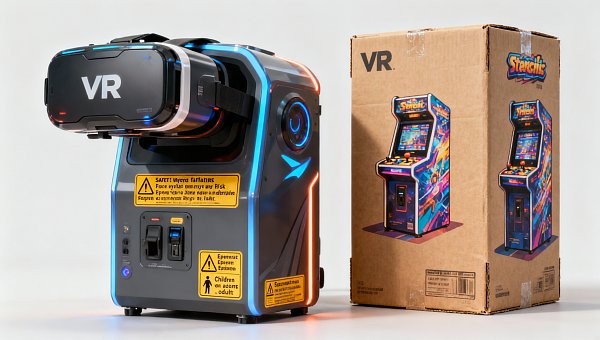
On May 12, 2026, the U.S. Consumer Product Safety Commission (CPSC) issued an emergency notice imposing immediate, stricter safety certification requirements for arcade and virtual reality machines intended for children under 14. The move reflects heightened regulatory scrutiny of interactive entertainment devices following recent incident reports involving mechanical failure and thermal hazards — triggering urgent compliance recalibration across global supply chains, particularly among manufacturers and exporters based in China.
Event Overview
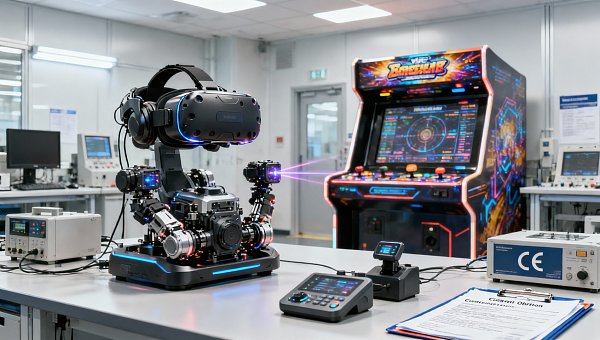
The CPSC announced on May 12, 2026, that all arcade and VR machines marketed to users aged 14 and younger must now pass two newly mandated tests: (1) physical durability testing (including impact, vibration, and latch integrity under repeated use), and (2) thermal runaway evaluation (assessing battery and power system behavior under sustained operation and fault conditions). Compliance requires third-party laboratory testing and a signed Declaration of Conformity. The rule takes effect immediately; non-compliant products will be denied entry at U.S. ports or removed from retail shelves upon detection.
Industries Affected
Direct Trading Enterprises: Exporters and brand owners handling U.S.-bound shipments face immediate customs clearance risks and potential shipment rejections. Impact manifests in delayed revenue recognition, increased pre-shipment verification costs, and contractual renegotiation pressure — especially where Incoterms place compliance responsibility on the seller (e.g., FOB or EXW).
Raw Material Procurement Enterprises: Suppliers of lithium-ion batteries, PCB substrates, enclosure plastics, and motion-sensing components must now provide traceable, test-ready material certifications. Some materials previously accepted under general UL/IEC standards may no longer satisfy CPSC’s new thermal and mechanical stress thresholds — prompting sourcing reassessment and longer lead times for qualified alternatives.
Contract Manufacturing Enterprises (OEM/ODM): Chinese OEMs and ODMs serving international clients are directly responsible for design validation, test execution, and documentation submission. The dual-test requirement increases time-to-certification by an estimated 3–5 weeks per model, compressing product launch windows and straining capacity at accredited labs — notably those with CPSC-recognized NVLAP accreditation for both mechanical and thermal testing.
Supply Chain Service Providers: Customs brokers, regulatory consultants, and lab coordination platforms report surging demand for CPSC-specific gap assessments and expedited test scheduling. Their role has shifted from advisory support to active compliance gatekeepers — especially for clients lacking in-house regulatory affairs teams.
Key Focus Areas and Recommended Actions
Verify model-level applicability immediately
Not all arcade or VR machines fall under the scope — only those “marketed, labeled, or reasonably foreseeable to be used by children aged 14 and under.” Companies must audit product positioning, user manuals, marketing assets, and age-rating logic (e.g., ESRB or PEGI labels) to determine if the new rule applies. Misclassification carries enforcement risk.
Engage CPSC-recognized laboratories early
Only laboratories accredited under the National Voluntary Laboratory Accreditation Program (NVLAP) for both mechanical durability and thermal safety testing can issue valid reports. A limited number of labs globally meet this dual criterion — notably in Shenzhen, Dongguan, and Taipei. Pre-booking slots is now critical to avoid 8–12-week backlogs.
Update technical documentation packages
The Declaration of Conformity must include specific test parameters (e.g., drop height, cycle count, maximum surface temperature during thermal soak), not just pass/fail statements. Manufacturers should revise internal technical files and train QA teams to align reporting formats with CPSC’s updated guidance (Notice CPSC-2026-0017).
Reassess warranty and liability clauses in OEM agreements
Many existing contracts assign safety compliance to the brand owner. With CPSC now holding importers and domestic representatives jointly liable, OEMs must clarify contractual language around test ownership, data rights, and recall cost allocation — especially for models co-branded or white-labeled.
Editorial Perspective / Industry Observation
Observably, this emergency action signals a structural shift in CPSC’s enforcement posture: away from reactive recalls and toward preemptive, hazard-specific certification gates. Unlike previous updates to ASTM F2050 (arcade equipment) or UL 62368-1 (audio/video), the dual-test mandate introduces cross-domain validation — linking mechanical integrity directly to thermal stability — suggesting regulators now view failure modes as interdependent rather than isolated. Analysis shows this is less about incremental tightening and more about establishing a new compliance paradigm for embedded interactive hardware targeting minors.
Conclusion
This development underscores that regulatory agility — not just technical compliance — is becoming a core operational capability for consumer electronics exporters. For the arcade and VR sector, the May 12 rule serves as a precedent: future U.S. requirements may increasingly combine functional, environmental, and usage-context criteria into single, non-negotiable benchmarks. A rational interpretation is that harmonized global standards (e.g., IEC, ISO) no longer suffice as de facto assurance — jurisdiction-specific, scenario-driven validation is now the baseline.
Source Attribution
Official source: U.S. Consumer Product Safety Commission, Emergency Notice CPSC-2026-0017, published May 12, 2026 (cp.scp.gov/Newsroom/Press-Releases/2026/CPSC-Issues-Emergency-Notice-on-Arcade-and-VR-Machines).
Note: CPSC has indicated it will publish formal rulemaking (16 CFR Part 1250) by Q4 2026; stakeholders should monitor for potential amendments to test protocols, exemptions, or transition periods. This remains under active observation.
Search News
Hot Articles
- Restaurant FurnitureFast-Casual Restaurant Interiors: Design Choices That Improve Speed and Guest FlowOct 04, 2026
- Outdoor RidesHow to Select Leisure Park Equipment for Safe, High-Throughput Visitor AreasOct 03, 2026
- Fashion & Gem JewelryDiamond Tester Wholesale: How to Vet Accuracy, Calibration, and MOQ Before OrderingOct 02, 2026
Popular Tags
Need ExpertConsultation?
Connect with our specialized leisureengineering team for procurementstrategies.
Recommended News
 Sep 15, 2026How to Choose Coin-Operated Pool Tables for Bars, Hotels, and Arcade VenuesCoin operated pool tables for bars, hotels, and arcades: compare sizes, payment systems, durability, service access, and revenue potential.● Theme Park Strategist
 Sep 08, 2026What to Look for in a Flight Simulator Chair Manufacturer for Commercial VR CentersChoose a flight simulator chair manufacturer that delivers durable, safe, customizable seating for commercial VR centers. Explore key sourcing criteria now.● Theme Park Strategist
 Aug 25, 2026What to Evaluate Before Buying Commercial Self Service Photo Booths for VenuesCommercial self service photo booths for venues: learn how to evaluate durability, software stability, branding flexibility, support, and total ROI before you buy.● Theme Park Strategist
 Aug 23, 2026How to Evaluate Wholesale Vending Machines for Multi-Location Business DeploymentWholesale vending machines for multi-location deployment require more than low unit cost. Learn how to compare reliability, payments, telemetry, and supplier support to scale smarter.● Theme Park Strategist
 Aug 17, 2026U.S. CPSC Urges Bilingual Warnings for Arcade and VR MachinesU.S. CPSC urges bilingual safety warnings for Arcade & VR Machines—learn what exporters, importers, and distributors must do now to avoid delays and returns.● Theme Park Strategist
 Aug 16, 2026EU Enforces EN IEC 62368-1:2026 Certification for Arcade and VR MachinesEU Enforces EN IEC 62368-1:2026 certification for arcade and VR machines, reshaping EU market access, customs clearance, and compliance planning for exporters and distributors.● Theme Park Strategist
 Aug 13, 2026UFLPA’s new guidelines take effect: Exports of Arcade and VR equipment face full-link labor compliance requirementsUFLPA’s new guide takes effect: Arcade and VR machine exports to the U.S. now face full-chain labor compliance checks. Discover key risks and action steps.● Theme Park Strategist
 Aug 12, 2026EU PPWR takes effect, Arcade and VR packaging incorporate heavy metal and PFAS restrictionsEU PPWR now applies to Arcade and VR packaging, tightening heavy metal and PFAS compliance. Learn how exporters can avoid delays, fines, and customs risks.● Theme Park Strategist
 Aug 11, 2026CPSC Sets Bilingual Labels for Arcade and VR ImportsCPSC bilingual labels for arcade and VR imports become mandatory on October 1, 2026. Learn the new English-Spanish warning rules, customs risks, and key compliance steps now.● Theme Park Strategist
 Aug 10, 2026EU Rule Takes Effect for Arcade & VR Machine ClearanceArcade & VR Machine clearance in the EU now depends on EN IEC 62368-1:2026+A11:2026 compliance. Learn what changed, who is affected, and how to avoid customs delays.● Theme Park Strategist
 Aug 09, 2026CPSC Requires New Labels for Arcade and VR ImportsCPSC requires new labels for Arcade and VR imports starting Oct 1, 2026. Learn the multilingual warning rules, compliance risks, and key steps exporters and buyers must take now.● Theme Park Strategist
 Aug 08, 2026EU Entry Rule Tightens for Arcade & VR MachinesArcade & VR Machines entering the EU now face stricter CE compliance under EN IEC 62368-1:2026+A11:2026. Learn the new rule, risks, and what exporters must do now.● Theme Park Strategist
 Aug 07, 2026CPSC Notice Tightens U.S. Entry Rules for Arcade and VR MachinesCPSC Notice Tightens U.S. Entry Rules for Arcade and VR Machines: learn the new labeling, FCC, UN38.3, and compliance document requirements before October 1, 2026.● Theme Park Strategist
 Aug 06, 2026EU Rule Takes Effect for CE-UKCA Labels on Arcade & VR MachinesArcade & VR Machines face new CE-UKCA label and ECPD filing rules in the EU and UK. Learn what manufacturers, importers, and distributors must do now to avoid delays.● Theme Park Strategist
 Aug 05, 2026CPSC Recalls Arcade and VR Machines Over UL 62368-1CPSC recalls arcade and VR machines over UL 62368-1 non-compliance. Learn how this 2026 safety action may affect imports, distribution, customs clearance, and market access.● Theme Park Strategist
 Aug 02, 2026EU Sets New Certification Rule for Arcade and VR MachinesArcade and VR Machines face a new EU certification rule from Oct 1, 2026. Learn how EN IEC 62368-1:2026+A11:2026 affects CE marking, customs clearance, and market access.● Theme Park Strategist
 Aug 01, 2026CPSC Moves to Require Bilingual Warnings on Arcade and VR MachinesCPSC bilingual warnings for Arcade and VR Machines may reshape U.S. import compliance. Learn how English-Spanish labels affect packaging, customs risk, and shipment readiness.● Theme Park Strategist
 Jul 31, 2026EU Sets EN IEC 62368-1:2025 Rule for Arcade and VR MachinesEU Sets EN IEC 62368-1:2025 Rule for Arcade and VR Machines. Learn the new EU compliance deadlines, safety updates, and key actions for manufacturers, OEMs, and distributors.● Theme Park Strategist
 Jul 30, 2026CPSC Sets New Warning Label Rule for Arcade & VR MachinesCPSC sets a new warning label rule for Arcade & VR Machines effective August 15, 2026. Learn key compliance risks, multilingual label requirements, and shipment actions now.● Theme Park Strategist
 Jul 29, 2026EU Enforces New Safety Standard for Arcade and VR MachinesEU Enforces New Safety Standard for Arcade and VR Machines: learn how EN IEC 62368-1 affects CE compliance, customs clearance, and EU market access for exporters and buyers.● Theme Park Strategist
 Jul 28, 2026CPSC Sets ASTM F3472-26 Rule for Arcade & VR ImportsCPSC ASTM F3472-26 rule reshapes Arcade & VR imports to the U.S. Learn key compliance deadlines, certification risks, and what exporters, OEM/ODM suppliers, and buyers should do now.● Theme Park Strategist
 Jul 27, 2026EU Rule Takes Effect for Arcade & VR Machine CybersecurityEU Rule Takes Effect for Arcade & VR Machine Cybersecurity: learn how EN IEC 62443-3-3:2025 affects compliance, customs clearance, sales continuity, and supplier planning in the EU market.● Theme Park Strategist
 Jul 25, 2026CPSC Sets Bilingual Warning Rule for Arcade and VR ImportsCPSC bilingual warning rule for arcade and VR imports takes effect August 1, 2026. Learn how OEM/ODM exporters can avoid CBP delays, relabel shipments, and protect U.S. delivery timelines.● Theme Park Strategist
 Jul 24, 2026EU Enforces New Safety Standard for Arcade and VR MachinesEU Enforces New Safety Standard for Arcade and VR Machines: learn how EN IEC 62368-1:2026+A11:2026 reshapes EU compliance, CE documentation, testing timelines, and export readiness.● Theme Park Strategist