Laser Incident at Cyndi Wang Concert Triggers Global IEC 62471 Reassessment
On May 9, 2026, a laser exposure incident occurred in the audience area during Cyndi Wang’s concert at Taipei Arena. This event has triggered immediate regulatory action under IEC 62471:2022 — prompting re-evaluation of photobiological safety requirements for stage lighting products worldwide. Exporters of professional stage lighting equipment, particularly those supplying markets under IECEE CB Scheme jurisdictions (including the EU, UK, Australia, and South Korea), must now prioritize compliance verification.
Event Overview
A laser illumination incident affecting audience members took place on May 9, 2026, at Taipei Arena during Cyndi Wang’s concert. In response, Taiwan’s Bureau of Standards, Metrology and Inspection (BSMI) initiated a targeted reassessment of stage lighting products against IEC 62471:2022. BSMI also notified IECEE CB Scheme member countries. Multiple importing countries have since suspended goods receipt and requested updated CB test reports — specifically including Class 1 or Class 1M photobiological safety assessments — from Chinese stage lighting manufacturers within 72 hours.
Industries Affected by Segment
Direct Export Trading Companies
These companies face immediate shipment holds and customs clearance delays in key destination markets. The requirement for new CB reports — especially with Class 1/1M classification — directly impacts delivery timelines and contractual obligations with overseas buyers.
Manufacturers of Stage Lighting Equipment
Factories producing laser-based or high-intensity discharge (HID)/LED stage fixtures are subject to urgent product retesting. Non-compliant models may be excluded from export unless verified under the updated IEC 62471:2022 framework, which includes revised exposure limit calculations and measurement conditions.
Supply Chain Service Providers (Testing Labs & Certification Bodies)
Demand for expedited IEC 62471:2022 testing — particularly for Class 1/1M evaluation — has surged. Lead times for photobiological safety assessments are tightening, and capacity constraints may arise in labs accredited for CB Scheme reporting.
Distributors & Importers in Target Markets
Overseas importers have paused receiving shipments pending valid CB reports. Their inventory planning, marketing timelines, and rental fleet readiness (e.g., for festivals or tours) are now contingent on upstream certification status.
Key Focus Areas and Immediate Actions for Stakeholders
Monitor official updates from BSMI and IECEE
BSMI’s formal notice and any follow-up guidance — including potential scope definitions (e.g., whether only laser projectors or all high-luminance stage lights are covered) — will shape implementation expectations. IECEE’s response via its National Certification Bodies (NCBs) should be tracked daily.
Prioritize verification for high-risk product categories
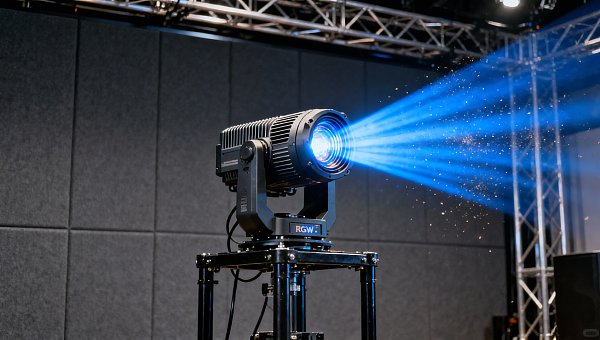
Products with laser modules, moving heads using high-power LEDs (>500 lm), or beam-shaping optics are most likely to require Class 1/1M re-evaluation. Manufacturers should identify these models first and initiate testing without waiting for full product-line review.
Distinguish between regulatory signal and enforceable requirement
The current 72-hour request reflects an urgent market-level reaction, not yet a legally binding amendment to national regulations outside Taiwan. However, it signals growing alignment among CB Scheme members on enforcement rigor — making proactive compliance more strategic than reactive remediation.
Prepare documentation and coordinate with accredited labs
Companies should compile existing technical files (optical schematics, LED/laser source datasheets, thermal management data) and engage CB-accredited laboratories immediately. Pre-submission consultation can help avoid delays caused by incomplete submissions or mismatched test configurations.
Editorial Perspective / Industry Observation
Analysis shows this incident functions primarily as a regulatory stress test — highlighting how localized safety events can rapidly activate global conformity mechanisms through the IECEE CB Scheme. Observably, it is not yet a formal revision of IEC 62471, but rather an accelerated enforcement emphasis driven by real-world risk exposure. From an industry perspective, the episode underscores that photobiological safety is shifting from a pre-market checkbox to an operational continuity factor — especially for vendors serving live entertainment supply chains. Current attention should focus less on whether standards will change, and more on whether verification capacity, documentation readiness, and cross-border communication protocols are aligned with emerging speed expectations.
This incident reaffirms that photobiological safety compliance is no longer a static certification step, but a dynamic element of supply chain resilience for stage lighting exporters. It does not indicate an imminent global ban or standard overhaul — rather, it signals heightened scrutiny at the point of market access, where documentation validity and test report currency now carry direct commercial weight. Current understanding should treat this as a procedural inflection point, not a technical paradigm shift.
Source: Official announcement by Taiwan’s Bureau of Standards, Metrology and Inspection (BSMI); IECEE CB Scheme notification records (publicly accessible via IECEE website); importer advisories circulated to Chinese manufacturers on May 9–10, 2026.
Note: Ongoing developments — including potential expansion of scope beyond laser-specific devices or issuance of harmonized guidance by IECEE — remain under observation.
Search News
Hot Articles
- Indoor PlaygroundHe Xinining Scores 23, Smith Records Triple-Double as Shenzhen Sweeps ZhejiangMay 12, 2026
- Outdoor Rides2026 Inner Mongolia Football Super League Kicks Off May 15; LED Stadium Lighting Export Inquiries Up 28%May 12, 2026
- Indoor PlaygroundChinese Volleyball Team Adopts AI Training System Amid FIVB Rule UpdateMay 12, 2026
Popular Tags
Need ExpertConsultation?
Connect with our specialized leisureengineering team for procurementstrategies.
Recommended News
 May 12, 2026Laser Incident at Cyndi Wang Concert Triggers Global IEC 62471 ReassessmentIEC 62471 compliance is now urgent for stage lighting exporters after the Cyndi Wang concert laser incident — act fast to avoid shipment holds & meet Class 1/1M CB report deadlines.● Pro Audio Engineer
 May 12, 2026Southeast Asia Raises Tariffs on Stage Lighting ImportsStage lighting imports hit by new ASEAN tariffs: Thailand +8%, Vietnam +10%, Indonesia +12%. Discover impact on LED moving-head lights, truss systems & smart response strategies.● Pro Audio Engineer
 May 10, 20262026 Inner Mongolia Football Super League Kicks Off May 15; LED Stadium Lighting Export Inquiries Up 28%LED stadium lighting export inquiries surge 28% amid 2026 Inner Mongolia Football Super League kickoff—cold-climate, IP66-rated solutions in high demand across Central Asia.● Pro Audio Engineer
 May 10, 2026Mandarin Laser Incident Triggers Global IEC 62471 ReassessmentIEC 62471:2023 Ed.3 reassessment triggered by Mandarin laser incident—urgent compliance guidance for stage lighting exporters, importers & labs.● Pro Audio Engineer
 May 09, 20262026 National Rhythmic Gymnastics Championships in Chengdu Feature Export-Ready Smart Flooring & Lighting2026 National Rhythmic Gymnastics Championships in Chengdu showcase export-ready smart flooring & lighting—FIG-provisionally certified, attracting global buyers from Brazil, Mexico, Egypt.● Pro Audio Engineer
 May 09, 2026Laser Incident at Cyndi Wang Concert Triggers Global IEC 62471 ReassessmentLaser incident at Cyndi Wang concert triggers urgent IEC 62471:2023 compliance actions for stage lighting exporters—act now to secure CE certification and Q3 shipments.● Pro Audio Engineer
 May 09, 2026NBA to Adopt New LED Interactive Court Flooring in 2026–27 SeasonNBA to adopt new LED interactive court flooring in 2026–27 — a game-changing upgrade for venues, manufacturers & global suppliers. Discover compliance insights & opportunities.● Pro Audio Engineer
 May 07, 2026FIBA 2026 Arena Guidelines: LED Lighting & Acoustic Flooring Now MandatoryFIBA 2026 Arena Guidelines now mandate LED lighting (U1 ≥ 0.8) and acoustic flooring (Ln,w ≤ 55 dB) for top-tier venues—key for global suppliers, contractors & certifiers.● Pro Audio Engineer
 May 07, 2026China PR Men's Team Invited to 2026 ASEAN Cup: Implications for Stadium Tech ExportStadium tech exporters: China PR’s 2026 ASEAN Cup entry triggers urgent demand for AFC 2025-compliant lighting, acoustics & accessibility solutions across Southeast Asia.● Pro Audio Engineer
 May 07, 2026NBA Adopts New LED Interactive Court Floors for 2026–27 SeasonNBA adopts LED interactive court floors for 2026–27 season — discover how IEEE 1901.2a compliance, sub-50ms response, and certified Chinese suppliers reshape smart sports infrastructure.● Pro Audio Engineer
 May 05, 2026NBA to Deploy LED Interactive Court System in 2026–27 SeasonNBA LED interactive court system launch in 2026–27: Real-time AR, player tracking & audience lighting—key opportunity for UL 8750/ANSI E1.17-compliant LED floor tile ODMs.● Pro Audio Engineer
 May 02, 20262026 Hangzhou Basketball Friendly Spurs LED Screen Demand2026 Hangzhou Basketball Friendly Spurs LED Screen Demand: Urgent global need for P2.5 smart-court displays & player-tracking modules—act now amid MBI5252E IC shortage.● Pro Audio Engineer
 May 02, 2026Iran’s 2026 World Cup Qualification Triggers FCC Part 15B Re-testing DemandFCC Part 15B re-testing demand surges for LED fan displays after Iran’s 2026 World Cup qualification — act now to avoid U.S./Mexico/Canada customs delays.● Pro Audio Engineer
 Apr 29, 2026China's LED Timing Screens Gain Traction After Thomas CupLED timing screens for sports venues—featuring BWF API integration, multilingual UI & PSE/SIRIM certification—are gaining export demand in Malaysia and Indonesia after Thomas Cup exposure.● Pro Audio Engineer
 Apr 28, 20262026 FIBA Women's World Cup Draw Sparks LED Timing Screen Upgrade DemandFIBA Women's World Cup 2026 draw fuels urgent demand for FIBA Level 3 LED timing screens in Australia—HDMI 2.1a, GenLock & HDR10+ ready.● Pro Audio Engineer
 Apr 28, 2026France to Host 2031 FIBA Basketball World Cup: LED Venue Screens & Timing Systems Export OpportunityLED venue screens & timing systems export opportunity: France to host 2031 FIBA Basketball World Cup—unlock EU procurement for certified sports AV suppliers.● Pro Audio Engineer
 Apr 27, 20262026 FIBA Women's World Cup Draw Sets LED Timing Screen Requirements2026 FIBA Women's World Cup LED timing screen requirements are live — bilingual display, biometric visualization & FIBA API integration now mandatory for official venues.● Pro Audio Engineer
 Apr 27, 2026France to Host 2031 FIBA Basketball World Cup: LED Arena Screens & Smart Timing Systems Export OpportunityLED arena screens & smart timing systems export opportunity: France’s 2031 FIBA Basketball World Cup mandates P2.5 LED displays and AI foul detection—act now to align with 2029 compliance deadlines.● Pro Audio Engineer
 Apr 26, 2026FIFA Adopts Chinese Mini-LED Displays for 2026 World Cup VAR SystemFIFA adopts Chinese Mini-LED displays for 2026 World Cup VAR — ultra-HD, HDR10+, -20°C–60°C rugged performance. Key insight for AV exporters & certifiers.● Pro Audio Engineer
 Apr 26, 20262026 FIBA Women's World Cup Draw Spurs LED Timing Screen Export DemandFIBA Women's World Cup 2026 draw fuels global demand for certified LED timing screens—explore export opportunities, compliance essentials & multilingual UI requirements now.● Pro Audio Engineer
 Apr 25, 2026FIFA Adopts Chinese MicroLED Displays for 2026 World Cup VAR SystemFIFA VAR system adopts Chinese MicroLED displays for 2026 World Cup — ultra-low-latency, 240Hz+ certified tech. Game-changing for sports display exporters & broadcast integrators.● Pro Audio Engineer
 Apr 25, 20262026 FIBA Women's World Cup Draw Sparks Demand for Certified Arena Lighting & Timing SystemsFIBA Women's World Cup 2026 draw fuels global demand for certified arena lighting & timing systems—get FIBA-compliant, multi-standard solutions now.● Pro Audio Engineer
 Apr 25, 2026CCTV5 Snooker Broadcast Drives 37% Surge in Stage Lighting Export InquiriesCCTV5 snooker broadcast drives 37% surge in stage lighting export inquiries—UK, Germany & Australia lead demand for DMX512 & broadcast-ready LED fixtures.● Pro Audio Engineer
 Apr 24, 2026CCTV5 Snooker Broadcast Drives 37% Surge in Global Lighting Export InquiriesCCTV5 snooker broadcast drives 37% global lighting export inquiries—UK, Germany & UAE lead demand for stage lighting, DMX512 & LED follow-spots.● Pro Audio Engineer