China's MCT Launches Travel Services Overseas Compliance Guide

On May 12, 2026, China’s Ministry of Culture and Tourism (MCT) initiated the development of a dedicated compliance guidance framework for Chinese travel service providers expanding into overseas markets—particularly targeting regulatory expectations in the European Union and the United States. The move reflects growing operational complexity for domestic firms as global data privacy regimes and ESG disclosure standards tighten, directly affecting digital platforms, hardware deployments, and content distribution systems used in cross-border tourism.
Event Overview
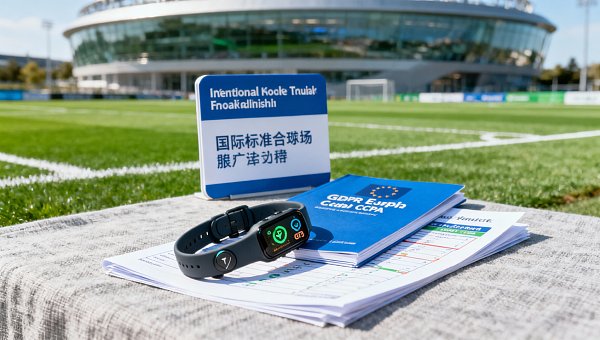
On May 12, 2026, the Ministry of Culture and Tourism published the Notice on Launching the Compilation of the Travel Services Overseas Compliance Guidance on its official website. The notice confirms that the guidance will systematically address requirements under the EU General Data Protection Regulation (GDPR), the California Consumer Privacy Act (CCPA), and ESG-related disclosure frameworks—including the EU Corporate Sustainability Reporting Directive (CSRD). The first edition is scheduled for release in Q3 2026 and will include a vetted list of compliant Chinese suppliers.
Industries Affected
Direct trade enterprises: Export-oriented online travel agencies (OTAs), B2B tour operators, and SaaS-based booking platforms face heightened legal exposure when handling EU/US user data or publishing sustainability claims. Compliance gaps may trigger fines, service suspension, or reputational damage—notably where personal data flows across jurisdictions without documented lawful mechanisms (e.g., SCCs or adequacy decisions).
Raw material procurement enterprises: Suppliers of components for smart tourism hardware (e.g., multilingual AR glasses, offline content storage modules) must now assess whether upstream materials—such as cloud-embedded chips or firmware—meet GDPR-compliant data minimization and purpose limitation principles. Procurement contracts may require new audit clauses and vendor attestations.
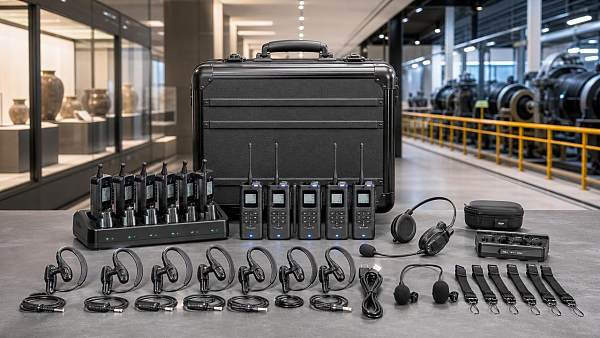
Manufacturing enterprises: Firms producing immersive hardware (e.g., VR headsets, interactive kiosks, beacon-enabled devices) must verify device-level data collection transparency, local storage options, and user consent architecture—especially where firmware transmits telemetry or biometric inputs to non-EU/US servers. Product certification pathways (e.g., CE marking with GDPR annexes) are likely to become mandatory prerequisites.
Supply chain service enterprises: Logistics providers, localization vendors, and regulatory consultants supporting outbound tourism tech deployments must adapt service scopes to include GDPR-aligned data transfer impact assessments, CSRD-aligned materiality assessments, and CCPA-specific ‘Do Not Sell’ infrastructure validation—shifting from generic compliance support to domain-specific technical advisory roles.
Key Focus Areas and Recommended Actions
Map data flows across all customer touchpoints
Operators should conduct granular mapping of personal data collection, storage, sharing, and deletion points—from mobile app sign-ups and voice-guided tours to backend analytics dashboards—identifying any transfers outside the EU/US and documenting lawful bases per jurisdiction.
Review ESG disclosure readiness for tourism tech assets
Companies deploying hardware or software in EU markets should assess whether their products contribute to measurable environmental or social outcomes (e.g., energy-efficient edge computing, accessibility features), as such attributes may soon be required inputs for CSRD-aligned reporting by downstream clients.
Validate supplier alignment before integration
Before embedding third-party SDKs, cloud APIs, or hardware modules, firms must confirm contractual commitments on data sovereignty, sub-processor transparency, and audit rights—especially where suppliers lack GDPR Article 28-compliant Data Processing Agreements.
Prepare for phased implementation timelines
Given the Q3 2026 release target, enterprises should treat the upcoming guidance not as a one-time checklist but as a living reference—anticipating iterative updates tied to enforcement trends (e.g., recent EDPB guidance on AI-assisted profiling) and national transposition laws (e.g., Germany’s CSRD implementation ordinance).
Editorial Perspective / Industry Observation
Analysis shows this initiative marks a structural shift: rather than reacting to enforcement actions post-entry, China’s cultural administration is proactively scaffolding export readiness around *process discipline*, not just product conformity. Observably, the emphasis on ‘supplier adaptation lists’ signals an intent to build trusted interoperability—not merely legal defensibility. From an industry perspective, the guide is better understood as a coordination mechanism among regulators, standard-setting bodies, and private-sector implementers, rather than a prescriptive rulebook. Current evidence suggests early adopters will gain advantage not through full compliance alone, but through demonstrable traceability of design choices—e.g., how consent interfaces were localized for German users versus Californian ones.
Conclusion
This guidance does not signal regulatory overreach; it reflects market reality. As EU and US authorities increasingly treat tourism technology as infrastructure—not just consumer-facing apps—the bar for responsible deployment rises. For Chinese firms, success hinges less on replicating Western templates and more on articulating context-aware governance models that align with both domestic innovation goals and foreign accountability expectations. A rational observation is that compliance capacity will soon function as a de facto trade credential in high-regulation markets.
Source Attribution
Official source: Ministry of Culture and Tourism of the People’s Republic of China, Notice on Launching the Compilation of the Travel Services Overseas Compliance Guidance, issued May 12, 2026 (available at www.mct.gov.cn).
Further monitoring recommended for: (1) Draft scope documents released during public consultation (expected June 2026); (2) Alignment status with China’s upcoming Regulations on Cross-Border Data Transfer for Cultural and Tourism Services (draft under inter-ministerial review); (3) Updates from EU Data Protection Board (EDPB) on tourism-sector-specific guidance (anticipated Q4 2026).
Search News
Hot Articles
Popular Tags
Need ExpertConsultation?
Connect with our specialized leisureengineering team for procurementstrategies.
Recommended News
 Jun 27, 2026Hotel Operations Management Basics: Key Departments, KPIs, and Daily WorkflowsHotel operations management made simple: explore key hotel departments, essential KPIs, and daily workflows that improve guest satisfaction, efficiency, and profitability.● Hospitality Sourcing Dir
 Jun 24, 2026Commercial Hospitality Procurement: What to Source First for Hotel OpeningsCommercial hospitality procurement starts with the right categories. Learn what hotels should source first to protect timelines, compliance, and opening readiness.● Hospitality Sourcing Dir
 Jun 05, 2026Safari Tents Wholesale: How to Compare Frame Materials, Sizes, and MOQSafari tents wholesale guide: compare frame materials, tent sizes, and MOQ to reduce sourcing risk, control costs, and choose a scalable supplier for profitable hospitality projects.● Hospitality Sourcing Dir
 May 25, 2026RCEP ASEAN Origin Rules Adjusted for Travel Services Outdoor GearRCEP ASEAN origin rules updated for travel services outdoor gear — zero tariffs from 1 Aug 2026 if 60%+ Chinese materials & RCEP traceability code applied.● Hospitality Sourcing Dir
 May 18, 2026How to judge simultaneous interpretation equipment qualitySimultaneous interpretation equipment quality affects clarity, stability, and event success. Learn the key checklist, testing points, and sourcing tips to choose with confidence.● Hospitality Sourcing Dir
 May 18, 2026What to check before choosing tour guide systems wholesaleTour guide systems wholesale: learn what to check before buying, from audio stability and certifications to battery life, customization, and supplier support.● Hospitality Sourcing Dir
 May 14, 2026China's MCT Launches Travel Services Overseas Compliance GuideChina's MCT Overseas Compliance Guide helps travel & entertainment firms navigate GDPR, CCPA & ESG rules—boost global trust and market access.● Hospitality Sourcing Dir
 May 13, 2026China's MCT Launches 'Travel Services' Overseas Compliance GuideChina's MCT Travel Services Compliance Guide: Essential for sports tourism, study-abroad & customized tour operators expanding to EU/US markets under GDPR, CCPA & CSDDD.● Hospitality Sourcing Dir
 May 09, 2026Inflatable clear bubble tents and the privacy trade-offInflatable clear bubble tents offer immersive appeal, but is the privacy trade-off worth it? Explore scenario-based insights for resorts, events, dining, and public spaces.● Hospitality Sourcing Dir
 May 09, 2026Camping glamping tents: what guests notice before anything elseCamping glamping tents guests love start with first impressions—space, privacy, materials, light, and comfort. Discover what buyers should prioritize to boost appeal and bookings.● Hospitality Sourcing Dir
 May 09, 2026Safari tents wholesale and the weatherproofing details that matterSafari tents wholesale buyers now prioritize weatherproofing. Learn which waterproof, windproof, ventilation, and corrosion details reduce risk, protect uptime, and improve long-term value.● Hospitality Sourcing Dir
 May 09, 2026Geodesic dome tents: are they practical for year-round stays?Geodesic dome tents can work for year-round stays—but only with the right insulation, ventilation, and structural planning. Discover what makes them practical, comfortable, and cost-effective.● Hospitality Sourcing Dir
 May 09, 2026Inflatable paddle boards commercial buyers often overlook thisInflatable paddle boards commercial buyers often miss the factors that drive long-term value—durability, safety, compliance, and supplier consistency. Learn what to check before you buy.● Hospitality Sourcing Dir
 May 09, 2026Wholesale jet skis: what determines long-term service costs?Wholesale jet skis buyers should look beyond unit price. Discover how durability, parts access, corrosion resistance, and warranty support shape long-term service costs and fleet profitability.● Hospitality Sourcing Dir
 May 09, 2026Inflatable docks: which designs hold up in busy marinas?Inflatable docks for busy marinas: discover which designs deliver superior rigidity, slip resistance, and durability for safer boarding and lower maintenance.● Hospitality Sourcing Dir
 May 09, 2026Ice skating rink equipment that causes the most downtimeIce skating rink equipment causing the most downtime starts with refrigeration, controls, HVAC, and power. Learn the highest-risk systems and smart ways to cut outages.● Hospitality Sourcing Dir
 May 09, 2026Synthetic ice panels wholesale: what affects glide quality?Synthetic ice panels wholesale: discover what really affects glide quality, from polymer formulation and seam precision to maintenance needs, so you can compare suppliers with confidence.● Hospitality Sourcing Dir
 May 09, 2026Why ski resort equipment budgets often miss hidden costsSki resort equipment budgets often miss freight, installation, compliance, and service costs. Learn the hidden drivers behind overruns and budget smarter for stronger ROI.● Hospitality Sourcing Dir
 May 09, 2026Artificial snow mats vs real snow for beginner ski zonesArtificial snow mats vs real snow: discover which option gives beginner ski zones safer training, longer seasons, lower operating risk, and stronger commercial value.● Hospitality Sourcing Dir
 May 09, 2026What changes first when ski lift parts start to wear out?Ski lift parts often show wear through vibration, noise, heat, and tracking changes first. Learn the key early warning signs to improve safety, reduce downtime, and plan smarter maintenance.● Hospitality Sourcing Dir
 May 09, 2026Are snow making machines worth it in low-snow winters?Snow making machines: are they worth the cost in low-snow winters? Explore ROI, energy use, seasonal reliability, and smart investment strategies to protect winter revenue.● Hospitality Sourcing Dir
 May 08, 2026Custom Fiberglass Statues That Hold Up OutdoorsFiberglass statues custom solutions for outdoor commercial spaces: discover durable, weather-ready designs that strengthen branding, reduce maintenance, and enhance long-term project value.● Hospitality Sourcing Dir
 May 03, 2026Zunyi Liquor League: Fengrongjiao Wins, AR+Digital Twin System Drives 130% Export Inquiry GrowthZunyi Liquor League sparks global interest: Fengrongjiao’s win + AR/digital twin system drives 130% export inquiry growth — key for liquor tourism, smart hardware & ASEAN compliance.● Hospitality Sourcing Dir
 Apr 25, 2026Discover the Best of the Silk Road: Top Xi'an Hot Tourism Routes for 2026● Hospitality Sourcing Dir