Inflatable clear bubble tents and the privacy trade-off
Inflatable clear bubble tents offer striking visual appeal and immersive outdoor experiences, but their transparent design also raises important questions about comfort, discretion, and user expectations. For commercial planners, destination operators, and market researchers, the privacy trade-off behind inflatable clear bubble tents is not a minor detail. It directly shapes occupancy value, customer satisfaction, operating costs, and long-term brand perception. In hospitality, leisure, event design, and premium experiential retail, the right decision depends less on novelty alone and more on whether transparency fits the scene, the audience, and the service promise.
Why privacy matters differently across commercial use cases
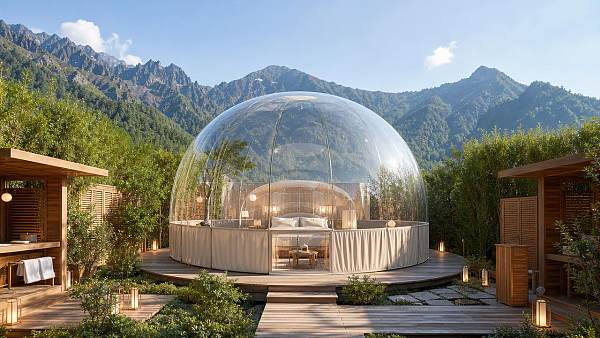
The core appeal of inflatable clear bubble tents is easy to understand: panoramic visibility, strong social media value, fast installation, and a memorable “inside nature” effect. Yet the same transparency that creates visual drama can also reduce the sense of security, exclusivity, and relaxation that many guests expect. A stargazing dome in a remote eco-resort may feel magical, while the same structure at a crowded event venue may feel exposed.
This is why privacy should be judged as a scenario-specific factor rather than a universal weakness. In some settings, limited privacy is acceptable because the experience is short, public-facing, or intentionally theatrical. In others, even a small mismatch between visibility and customer expectation can result in poor reviews, lower repeat bookings, and costly retrofits such as inner liners, partition systems, landscaping screens, or restricted placement zones.
For a sourcing or concept evaluation process, the better question is not simply whether inflatable clear bubble tents are private enough. The better question is: private enough for which application, at what time of day, under what density of foot traffic, and with what supporting design measures?
Scenario 1: Resort glamping works when seclusion is part of the site design
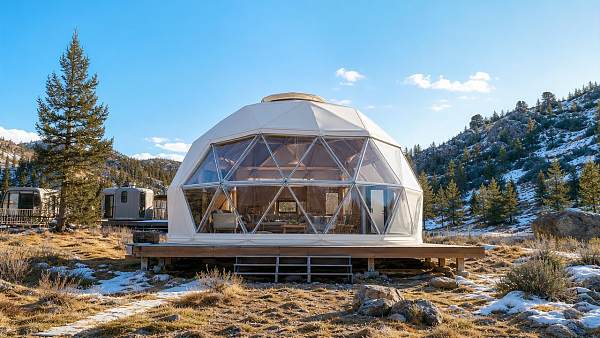
In remote hospitality and glamping environments, inflatable clear bubble tents often perform best because the landscape itself provides natural privacy. Forest edges, hillside spacing, controlled pathways, and low-density layouts reduce direct sightlines. In this context, guests may accept partial transparency because the value proposition centers on night sky viewing, sunrise scenery, and emotional immersion rather than complete enclosure.
The key judgment point is not the tent alone but the operational ecosystem around it. If sleeping, changing, bathing, and luggage storage are all expected inside one transparent structure, privacy concerns rise quickly. If the bubble tent is paired with a private washroom pod, shaded service zone, blackout sleeping module, or carefully screened deck, guest comfort improves substantially. For upscale outdoor stays, inflatable clear bubble tents are more suitable when transparency is balanced by layered privacy design.
What makes this scenario viable
- Large spacing between units and controlled visual corridors
- Dedicated shaded or opaque zones for sleeping and dressing
- Night-focused experience positioning rather than daytime occupancy
- Clear guest communication about visibility, lighting, and expectations
Scenario 2: Event installations benefit from visibility, not full privacy
At festivals, exhibitions, product launches, and branded activations, inflatable clear bubble tents are often chosen precisely because they are visible. They create a high-impact display volume that draws attention, supports lighting effects, and allows a product, art piece, or themed environment to be seen from outside. In these settings, transparency is usually a strength rather than a compromise.
Privacy becomes relevant only when the bubble tent is expected to function as a VIP lounge, consultation room, or premium hospitality suite. Once conversations, exclusive demonstrations, or private guest services enter the picture, acoustic leakage, external visibility, and crowd proximity can undermine the intended experience. For event use, the judgment point is simple: if the tent is a display asset, transparency works; if it is a confidential or restorative space, support measures are needed.
Practical support measures for event use
- Add printed panels, partial frosting, or interior drapery to selected zones
- Use directional lighting to reduce inward visibility at key times
- Separate public circulation from premium guest entry routes
- Treat it as a short-duration engagement space, not a private room by default
Scenario 3: Dining and hospitality concepts need tighter comfort control
Outdoor dining domes, winter terrace experiences, and themed hospitality pods have expanded interest in inflatable clear bubble tents. They can extend seasonal use and create premium private-booking packages. However, hospitality settings introduce more demanding privacy expectations because guests remain seated for longer periods, often during personal conversations, celebrations, or business meals.
In this scenario, privacy is not only visual. It includes sound control, thermal comfort, condensation management, and staff access patterns. A transparent bubble on a busy terrace may look elegant online but feel awkward in practice if guests are constantly observed by passersby or neighboring tables. Dining applications therefore require stronger zoning logic, often combining clear upper visibility with lower-level screening, strategic placement, and reservation-based use cases. Inflatable clear bubble tents can succeed here, but only when the service model supports a semi-private experience rather than promising complete isolation.
Scenario 4: Educational, promotional, and public leisure spaces need expectation clarity
In campuses, science exhibits, public attractions, family leisure parks, and temporary promotional spaces, inflatable clear bubble tents often serve as interactive enclosures, reading zones, mini galleries, or thematic rest areas. These are generally lower-risk applications from a privacy standpoint because users do not expect intimate seclusion. The structure acts more like a transparent experience chamber than a room.
Even so, expectation management remains essential. If the installation is promoted as a quiet retreat, meditation pod, or focused learning environment, external visibility and ambient noise may quickly become concerns. In public leisure settings, the best use of inflatable clear bubble tents is usually experiential, short-stay, and clearly framed as shared or observable space.
How scenario needs differ in real purchasing decisions
Scenario-based recommendations before selecting inflatable clear bubble tents
- Map visibility by hour: Daytime transparency and nighttime lighting create very different privacy conditions.
- Separate visual privacy from acoustic privacy: A tent may screen views but still allow conversations to be overheard.
- Review user dwell time: The longer people stay inside, the more important comfort and discretion become.
- Test circulation paths: Entrances, queue lines, and neighboring activities may create unplanned sightlines.
- Plan for layered enclosure: Curtains, liners, landscaping, partition walls, and furniture can improve usability.
- Check climate interaction: Condensation, glare, and temperature can affect whether people feel exposed or comfortable.
- Align marketing with reality: Describe the experience as panoramic, immersive, or semi-private if that is the true condition.
Common misjudgments when evaluating the privacy trade-off
One frequent mistake is assuming that beautiful renderings reflect operational reality. Promotional images of inflatable clear bubble tents often show isolated landscapes, low occupancy, and ideal lighting. Real commercial sites may include adjacent pathways, maintenance staff movement, neighboring guests, children, vehicles, or streetlights. These factors materially change the privacy experience.
Another common error is treating privacy as a yes-or-no issue. In practice, privacy is layered: visual opacity, spacing, noise, entry control, furniture orientation, and usage duration all matter. A final misjudgment is ignoring guest self-consciousness. Even when actual intrusion is limited, the feeling of being watched can reduce relaxation and perceived value. With inflatable clear bubble tents, perception often matters as much as physical enclosure.
A practical next step for better-fit commercial deployment
The strongest commercial outcomes come from matching inflatable clear bubble tents to the right scene rather than forcing them into every premium outdoor concept. Start by defining the intended user behavior: sleep, dine, display, relax, socialize, or showcase. Then audit visibility, surrounding traffic, service requirements, and guest expectations across day and night conditions. From there, determine whether the solution should remain fully transparent or include partial screening, auxiliary modules, or a different enclosure type altogether.
When evaluated through a scenario lens, inflatable clear bubble tents can be powerful commercial assets. They are most successful where immersive visibility adds value and where privacy needs are either naturally low or intelligently supported. That balance is what turns a visually interesting structure into a durable, revenue-generating experience.
Search News
Hot Articles
- Stationery & UniformsHow Schools Can Cut Printing Costs When Buying Ink Cartridges in BulkSep 21, 2026
- Jewelry Packaging & DisplayHow to Evaluate a Luxury Retail Packaging Supplier for Premium Brand ConsistencySep 20, 2026
- Commercial KitchenHow to Select a Spiral Dough Mixer for Bakery Batch Size and Dough HydrationSep 19, 2026
Popular Tags
Need ExpertConsultation?
Connect with our specialized leisureengineering team for procurementstrategies.
Recommended News
 Aug 19, 2026How to Choose Commercial Carpet Tiles for Hospitality Projects by Traffic and Maintenance NeedsCommercial carpet tiles hospitality buyers trust should match traffic, maintenance, and lifecycle cost. Learn how to specify durable, guest-ready flooring with confidence.● Hospitality Sourcing Dir
 Aug 15, 2026How to Evaluate Commercial Product Compliance for Hospitality Procurementcommercial product compliance hospitality guide to evaluating supplier documents, reducing risk, and choosing compliant products that protect guest safety and project timelines.● Hospitality Sourcing Dir
 Aug 10, 2026What Does Global Hospitality Procurement Cover and How to Reduce Sourcing Risk?Global hospitality procurement covers supplier screening, compliance, quality control, and logistics. Learn practical ways to reduce sourcing risk, avoid delays, and protect hotel project outcomes.● Hospitality Sourcing Dir
 Aug 07, 2026Hotel Operations Standards Explained: Key SOPs, Audits, and Compliance BasicsHotel operations standards explained clearly: learn the key SOPs, audit methods, and compliance basics that help hotels reduce risk, improve consistency, and strengthen guest experience.● Hospitality Sourcing Dir
 Jul 13, 2026Hotel Operations Metrics That Matter: Occupancy, ADR, RevPAR, and Labor CostHotel operations metrics explained: learn how occupancy, ADR, RevPAR, and labor cost shape revenue, staffing efficiency, and smarter hotel performance decisions.● Hospitality Sourcing Dir
 Jun 27, 2026Hotel Operations Management Basics: Key Departments, KPIs, and Daily WorkflowsHotel operations management made simple: explore key hotel departments, essential KPIs, and daily workflows that improve guest satisfaction, efficiency, and profitability.● Hospitality Sourcing Dir
 Jun 24, 2026Commercial Hospitality Procurement: What to Source First for Hotel OpeningsCommercial hospitality procurement starts with the right categories. Learn what hotels should source first to protect timelines, compliance, and opening readiness.● Hospitality Sourcing Dir
 Jun 05, 2026Safari Tents Wholesale: How to Compare Frame Materials, Sizes, and MOQSafari tents wholesale guide: compare frame materials, tent sizes, and MOQ to reduce sourcing risk, control costs, and choose a scalable supplier for profitable hospitality projects.● Hospitality Sourcing Dir
 May 18, 2026How to judge simultaneous interpretation equipment qualitySimultaneous interpretation equipment quality affects clarity, stability, and event success. Learn the key checklist, testing points, and sourcing tips to choose with confidence.● Hospitality Sourcing Dir
 May 18, 2026What to check before choosing tour guide systems wholesaleTour guide systems wholesale: learn what to check before buying, from audio stability and certifications to battery life, customization, and supplier support.● Hospitality Sourcing Dir
 May 13, 2026China's MCT Launches 'Travel Services' Overseas Compliance GuideChina's MCT Travel Services Compliance Guide: Essential for sports tourism, study-abroad & customized tour operators expanding to EU/US markets under GDPR, CCPA & CSDDD.● Hospitality Sourcing Dir
 May 09, 2026Inflatable clear bubble tents and the privacy trade-offInflatable clear bubble tents offer immersive appeal, but is the privacy trade-off worth it? Explore scenario-based insights for resorts, events, dining, and public spaces.● Hospitality Sourcing Dir
 May 09, 2026Camping glamping tents: what guests notice before anything elseCamping glamping tents guests love start with first impressions—space, privacy, materials, light, and comfort. Discover what buyers should prioritize to boost appeal and bookings.● Hospitality Sourcing Dir
 May 09, 2026Safari tents wholesale and the weatherproofing details that matterSafari tents wholesale buyers now prioritize weatherproofing. Learn which waterproof, windproof, ventilation, and corrosion details reduce risk, protect uptime, and improve long-term value.● Hospitality Sourcing Dir
 May 09, 2026Geodesic dome tents: are they practical for year-round stays?Geodesic dome tents can work for year-round stays—but only with the right insulation, ventilation, and structural planning. Discover what makes them practical, comfortable, and cost-effective.● Hospitality Sourcing Dir
 May 09, 2026Inflatable paddle boards commercial buyers often overlook thisInflatable paddle boards commercial buyers often miss the factors that drive long-term value—durability, safety, compliance, and supplier consistency. Learn what to check before you buy.● Hospitality Sourcing Dir
 May 09, 2026Why ski resort equipment budgets often miss hidden costsSki resort equipment budgets often miss freight, installation, compliance, and service costs. Learn the hidden drivers behind overruns and budget smarter for stronger ROI.● Hospitality Sourcing Dir
 May 09, 2026Artificial snow mats vs real snow for beginner ski zonesArtificial snow mats vs real snow: discover which option gives beginner ski zones safer training, longer seasons, lower operating risk, and stronger commercial value.● Hospitality Sourcing Dir
 Apr 25, 2026Discover the Best of the Silk Road: Top Xi'an Hot Tourism Routes for 2026● Hospitality Sourcing Dir
 Apr 22, 2026Peak of China: The Ultimate 7-Day Central Plains Heritage Odyssey 2026Plan a 7-day Henan heritage tour in 2026 with Luoyang, Shaolin Temple and Kaifeng highlights, plus visa-free transit and rail tips.● Hospitality Sourcing Dir