Why ski resort equipment budgets often miss hidden costs
Many ski resort equipment plans begin with a clean spreadsheet and a supplier quote that appears manageable. Yet budgets often drift far beyond the expected number once transport complexity, terrain adaptation, installation sequencing, weather exposure, compliance upgrades, training, and lifecycle service are added. In today’s commercial environment, where guest experience, safety standards, and operational uptime directly affect revenue, understanding the hidden costs behind ski resort equipment is no longer optional. It is a practical requirement for stronger sourcing decisions, tighter cost control, and better long-term asset performance.
Why ski resort equipment budgeting is becoming harder than the initial quote suggests
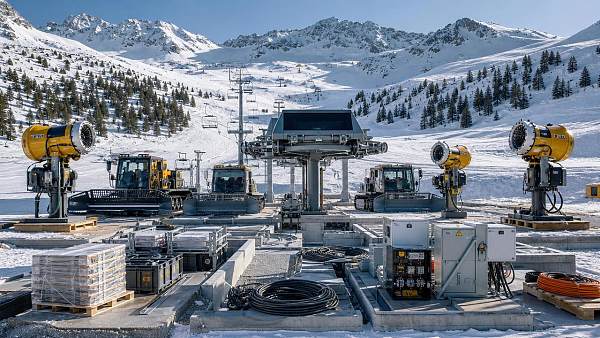
The budgeting challenge around ski resort equipment has intensified because resorts are no longer buying isolated machines. They are investing in interconnected operational systems: snowmaking, grooming, lift-adjacent infrastructure, rental fleet support, storage, signage, access control, foodservice support equipment, and guest-area safety hardware. Each component has its own cost logic, but the real budget pressure appears at the points where these systems overlap.
Another shift comes from rising expectations in hospitality and leisure. A ski destination now competes on reliability, visual presentation, queue management, sustainability claims, and all-season usability. That means ski resort equipment must often meet both technical and experiential goals. A lower upfront price may therefore trigger higher downstream expenses when the equipment requires aesthetic modification, utility upgrades, additional weatherproofing, or faster replacement cycles.
Global sourcing has also expanded options while increasing coordination risk. Lead times vary by region, standards differ across markets, and freight conditions for oversized or weather-sensitive ski resort equipment can change rapidly. What looks like a procurement saving at contract stage can become a budget overrun during customs clearance, site handling, commissioning, or post-install support.
The strongest trend signals point to hidden cost inflation across the ski resort equipment lifecycle
Several industry signals explain why hidden costs are becoming more common. Seasonal operating windows are tighter, infrastructure projects are more interdependent, and resorts are under pressure to improve both resilience and guest experience. As a result, ski resort equipment budgeting is shifting from simple capex estimation to full lifecycle planning.
This trend is especially visible in mountain environments where logistics and weather make every delay more expensive. A late delivery can affect installation crews, lift access, utility connections, safety inspections, and opening schedules. The original equipment quote may remain unchanged, but total project cost still rises because the timing risk was not priced early enough.
Where hidden cost pressure is coming from
The hidden costs most often missed in ski resort equipment planning
The biggest budget gaps tend to appear outside the catalog price. In many projects, the equipment itself is only one part of the commercial commitment. The following categories frequently explain why ski resort equipment budgets miss the mark.
- Freight, insurance, and inland transfer: Mountain deliveries often require special vehicles, route surveys, staged unloading, or temporary warehousing.
- Site preparation and civil adaptation: Foundations, drainage corrections, retaining work, utility trenching, and power upgrades may be treated as separate items until too late.
- Installation access: Cranes, snow vehicles, limited road access, and safety controls can significantly increase the deployed cost of ski resort equipment.
- Weather delay exposure: Wind, snow, freeze-thaw cycles, and reduced daylight can extend installation time and trigger contractor standby charges.
- Compliance and localization: Electrical standards, signage rules, accessibility requirements, and emergency equipment may differ by jurisdiction.
- Training and commissioning: Operators, maintenance teams, and guest-facing staff often need structured handover support that is excluded from the initial quote.
- Spare parts and service readiness: Without local service stock, small failures in ski resort equipment can lead to expensive downtime during peak season.
- Software, controls, and system integration: Sensors, remote monitoring, ticketing links, or building management connections can create unexpected technical costs.
These hidden costs matter because ski resort equipment operates in a revenue-sensitive context. If a delayed installation affects opening dates, or if poor service support reduces uptime during holidays, the financial impact extends beyond procurement. It affects brand reputation, staffing efficiency, and guest retention as well.
How these budget gaps affect broader commercial operations
The consequences of underestimating ski resort equipment costs reach across multiple business functions. Capital planning becomes less reliable when infrastructure and operational add-ons are discovered late. Maintenance planning suffers when spare parts, training, or service contracts were not costed from the start. Guest experience can decline if temporary workarounds replace fully integrated solutions.
The impact is also strategic. Resorts and mixed-use leisure properties increasingly position themselves as year-round destinations, meaning ski resort equipment may need to align with summer events, foodservice capacity, educational programming, rental operations, and digital access systems. When budgets focus only on purchase price, they fail to reflect the cross-functional role of the equipment within the wider commercial ecosystem.
Common operational effects of underbudgeted ski resort equipment
- Delayed project completion and missed peak-season revenue
- Emergency sourcing at higher cost for replacement parts or add-on systems
- Higher energy and maintenance expense due to low-spec or mismatched equipment
- Reduced safety margin when compliance items are deferred
- Lower return on investment from assets that cannot scale with future demand
What deserves closer attention before approving any ski resort equipment budget
A stronger approach starts by treating ski resort equipment as a lifecycle asset rather than a line-item purchase. Early budget discussions should test not only product suitability, but also deployment realities, service support, environmental exposure, and integration needs.
- Total landed cost: Include duties, inland transport, site handling, packaging disposal, and insurance.
- Terrain-specific installation: Validate slope access, weather windows, foundation readiness, and utility availability.
- Compliance mapping: Confirm local codes, third-party testing needs, and any certification gaps before shipment.
- Maintenance architecture: Review spare parts strategy, service response time, and technician training requirements.
- Energy and operating efficiency: Compare long-term consumption and upkeep, not only purchase price.
- Supplier coordination risk: Clarify who owns interfaces between civil works, controls, utilities, and equipment commissioning.
- Future adaptability: Assess whether the ski resort equipment can support upgrades, digital monitoring, or seasonal expansion.
A practical way to reduce hidden costs in ski resort equipment sourcing
The most effective response is structured pre-purchase validation. Instead of comparing quotes in isolation, build a cost model that follows ski resort equipment from factory release to on-site operation and first-year maintenance. This reveals where low upfront pricing may be offset by high deployment or service costs.
For organizations navigating complex global sourcing, this is where high-quality market intelligence adds real value. A reliable sourcing framework should connect supplier capability, compliance expectations, commercial design requirements, and operational reality. In sectors where hospitality, leisure, infrastructure, and specialty retail increasingly overlap, ski resort equipment decisions benefit from a broader commercial perspective rather than a narrow equipment-only comparison.
The next move is to budget ski resort equipment for performance, not just purchase
The reason ski resort equipment budgets often miss hidden costs is simple: the visible quote rarely captures the full commercial journey of the asset. Freight volatility, mountain installation realities, compliance gaps, maintenance exposure, and integration complexity all reshape the final number. The current trend is clear—buyers who rely on upfront price alone are more likely to face overruns, delays, and weaker returns.
A better path is to evaluate ski resort equipment through total cost, operational resilience, and long-term fit. Build budgets around delivered performance, not catalog pricing. Validate installation assumptions early, pressure-test support capacity, and compare suppliers on service readiness as seriously as on unit cost. That approach creates stronger ROI, more predictable execution, and commercial assets that support both guest experience and business continuity.
If the goal is to source ski resort equipment with fewer surprises, the next practical step is to create a structured review checklist covering landed cost, compliance, site readiness, service support, and first-year operating expense before any final commitment is made.
Search News
Hot Articles
- Stationery & UniformsHow Schools Can Cut Printing Costs When Buying Ink Cartridges in BulkSep 21, 2026
- Jewelry Packaging & DisplayHow to Evaluate a Luxury Retail Packaging Supplier for Premium Brand ConsistencySep 20, 2026
- Commercial KitchenHow to Select a Spiral Dough Mixer for Bakery Batch Size and Dough HydrationSep 19, 2026
Popular Tags
Need ExpertConsultation?
Connect with our specialized leisureengineering team for procurementstrategies.
Recommended News
 Aug 19, 2026How to Choose Commercial Carpet Tiles for Hospitality Projects by Traffic and Maintenance NeedsCommercial carpet tiles hospitality buyers trust should match traffic, maintenance, and lifecycle cost. Learn how to specify durable, guest-ready flooring with confidence.● Hospitality Sourcing Dir
 Aug 15, 2026How to Evaluate Commercial Product Compliance for Hospitality Procurementcommercial product compliance hospitality guide to evaluating supplier documents, reducing risk, and choosing compliant products that protect guest safety and project timelines.● Hospitality Sourcing Dir
 Aug 10, 2026What Does Global Hospitality Procurement Cover and How to Reduce Sourcing Risk?Global hospitality procurement covers supplier screening, compliance, quality control, and logistics. Learn practical ways to reduce sourcing risk, avoid delays, and protect hotel project outcomes.● Hospitality Sourcing Dir
 Aug 07, 2026Hotel Operations Standards Explained: Key SOPs, Audits, and Compliance BasicsHotel operations standards explained clearly: learn the key SOPs, audit methods, and compliance basics that help hotels reduce risk, improve consistency, and strengthen guest experience.● Hospitality Sourcing Dir
 Jul 13, 2026Hotel Operations Metrics That Matter: Occupancy, ADR, RevPAR, and Labor CostHotel operations metrics explained: learn how occupancy, ADR, RevPAR, and labor cost shape revenue, staffing efficiency, and smarter hotel performance decisions.● Hospitality Sourcing Dir
 Jun 27, 2026Hotel Operations Management Basics: Key Departments, KPIs, and Daily WorkflowsHotel operations management made simple: explore key hotel departments, essential KPIs, and daily workflows that improve guest satisfaction, efficiency, and profitability.● Hospitality Sourcing Dir
 Jun 24, 2026Commercial Hospitality Procurement: What to Source First for Hotel OpeningsCommercial hospitality procurement starts with the right categories. Learn what hotels should source first to protect timelines, compliance, and opening readiness.● Hospitality Sourcing Dir
 Jun 05, 2026Safari Tents Wholesale: How to Compare Frame Materials, Sizes, and MOQSafari tents wholesale guide: compare frame materials, tent sizes, and MOQ to reduce sourcing risk, control costs, and choose a scalable supplier for profitable hospitality projects.● Hospitality Sourcing Dir
 May 18, 2026How to judge simultaneous interpretation equipment qualitySimultaneous interpretation equipment quality affects clarity, stability, and event success. Learn the key checklist, testing points, and sourcing tips to choose with confidence.● Hospitality Sourcing Dir
 May 18, 2026What to check before choosing tour guide systems wholesaleTour guide systems wholesale: learn what to check before buying, from audio stability and certifications to battery life, customization, and supplier support.● Hospitality Sourcing Dir
 May 13, 2026China's MCT Launches 'Travel Services' Overseas Compliance GuideChina's MCT Travel Services Compliance Guide: Essential for sports tourism, study-abroad & customized tour operators expanding to EU/US markets under GDPR, CCPA & CSDDD.● Hospitality Sourcing Dir
 May 09, 2026Inflatable clear bubble tents and the privacy trade-offInflatable clear bubble tents offer immersive appeal, but is the privacy trade-off worth it? Explore scenario-based insights for resorts, events, dining, and public spaces.● Hospitality Sourcing Dir
 May 09, 2026Camping glamping tents: what guests notice before anything elseCamping glamping tents guests love start with first impressions—space, privacy, materials, light, and comfort. Discover what buyers should prioritize to boost appeal and bookings.● Hospitality Sourcing Dir
 May 09, 2026Safari tents wholesale and the weatherproofing details that matterSafari tents wholesale buyers now prioritize weatherproofing. Learn which waterproof, windproof, ventilation, and corrosion details reduce risk, protect uptime, and improve long-term value.● Hospitality Sourcing Dir
 May 09, 2026Geodesic dome tents: are they practical for year-round stays?Geodesic dome tents can work for year-round stays—but only with the right insulation, ventilation, and structural planning. Discover what makes them practical, comfortable, and cost-effective.● Hospitality Sourcing Dir
 May 09, 2026Inflatable paddle boards commercial buyers often overlook thisInflatable paddle boards commercial buyers often miss the factors that drive long-term value—durability, safety, compliance, and supplier consistency. Learn what to check before you buy.● Hospitality Sourcing Dir
 May 09, 2026Why ski resort equipment budgets often miss hidden costsSki resort equipment budgets often miss freight, installation, compliance, and service costs. Learn the hidden drivers behind overruns and budget smarter for stronger ROI.● Hospitality Sourcing Dir
 May 09, 2026Artificial snow mats vs real snow for beginner ski zonesArtificial snow mats vs real snow: discover which option gives beginner ski zones safer training, longer seasons, lower operating risk, and stronger commercial value.● Hospitality Sourcing Dir
 Apr 25, 2026Discover the Best of the Silk Road: Top Xi'an Hot Tourism Routes for 2026● Hospitality Sourcing Dir
 Apr 22, 2026Peak of China: The Ultimate 7-Day Central Plains Heritage Odyssey 2026Plan a 7-day Henan heritage tour in 2026 with Luoyang, Shaolin Temple and Kaifeng highlights, plus visa-free transit and rail tips.● Hospitality Sourcing Dir