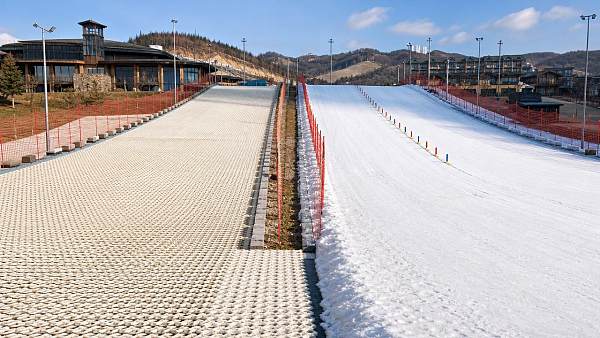
Artificial snow mats vs real snow for beginner ski zones
For beginner ski zones, choosing between artificial snow mats and real snow affects safety, operating costs, seasonal flexibility, and learner confidence. This article compares artificial snow mats with natural snow from a practical, commercial perspective, helping planners, operators, and sourcing researchers understand which solution better supports consistent training experiences, lower maintenance risks, and long-term value in entry-level ski environments.
For B2B buyers in leisure parks, training centers, resorts, mixed-use developments, and municipal recreation projects, the decision is rarely about surface appearance alone. It involves CAPEX versus OPEX, year-round utilization rates, weather dependency, instructor requirements, water and energy planning, and maintenance staffing. In entry-level ski environments, where users are often children, school groups, first-time adults, or tourism beginners, consistency and controllable risk usually matter more than alpine authenticity.
That is why artificial snow mats have become a serious option in commercial planning. They do not replace mountain snow in every use case, but they can solve several beginner-zone challenges: short winters, unstable snowfall, limited land, and the need to deliver repeatable training sessions across 8, 10, or even 12 months of operation. Real snow still offers advantages, especially in glide feel and emotional appeal, but it also introduces higher variability in weather, grooming, and seasonal cost exposure.
Why the surface decision matters more in beginner ski zones
A beginner ski zone is not judged by the same standards as an advanced slope. The main goals are learning stability, controlled speed, fall management, and fast reset between sessions. In a typical 30-minute to 90-minute lesson block, operators need a surface that supports repetition, low disruption, and predictable friction. Even small inconsistencies can affect learner confidence in the first 2 to 3 visits.
Operational priorities are different from destination skiing
Commercial beginner areas often run on a high-throughput model. A compact slope may host 4 to 8 lesson groups per day, or more during school holidays. In this setting, downtime caused by thawing, poor snow cover, drainage issues, or repeated grooming can have an immediate revenue impact. Artificial snow mats reduce weather dependency and make scheduling easier, especially for indoor venues, dry slope parks, rooftop recreation concepts, and training zones attached to amusement or hospitality assets.
Typical buyer concerns
- Can the surface operate across more than 200 days per year?
- Will beginners stop too abruptly or slide too fast?
- How often is daily maintenance required: once, twice, or every session?
- What water, snowmaking, drainage, and storage systems are needed?
- How fast can damaged sections be replaced without closing the entire lane?
These questions explain why artificial snow mats are frequently evaluated not just as a sports surface, but as an infrastructure solution. For many developers, the beginner zone is a gateway product: it must convert first-time visitors into repeat customers. If the first lesson feels chaotic or inconsistent, the broader leisure offering loses value.
The table below outlines the main commercial differences between artificial snow mats and real snow when the project focus is entry-level skiing rather than full mountain simulation.
The key takeaway is that real snow usually wins on natural feel, while artificial snow mats often win on control, planning efficiency, and operating continuity. For beginner zones, those commercial advantages can outweigh the emotional preference for natural snow, especially in urban or low-snow markets.
Artificial snow mats: strengths, limits, and where they fit best
Artificial snow mats are engineered sliding surfaces designed to simulate basic skiing or tubing movement without requiring a full snow base. Their commercial value comes from modularity, drainage compatibility, and predictable operation. In beginner areas, they are commonly used for short slopes, practice lanes, ski schools, children’s learning zones, and hybrid recreation parks where winter sports are one part of a broader visitor experience.
Key advantages for commercial beginner training
The first advantage is uptime. A mat-based slope can be scheduled for lessons, demos, school programs, and seasonal events with fewer weather cancellations. For operators targeting 5-day school use plus weekend public sessions, this scheduling confidence improves sales planning. It also supports staff utilization because instructors, attendants, and maintenance crews can work on a more stable calendar.
The second advantage is reduced dependence on snowmaking systems. Real snow installations often need water supply planning, temperature monitoring, snow production windows, storage strategy, and regular grooming equipment. Artificial snow mats still require cleaning, inspection, and occasional lubrication or wetting depending on the material system, but the maintenance pattern is generally more predictable and less climate-sensitive.
The third advantage is layout flexibility. Mats can often be installed on compact footprints, phased project zones, or retrofit sites where a full snow plant would be difficult to justify. This matters for mixed commercial developments that want a beginner ski product without building a full seasonal resort model.
Common limitations to evaluate early
- Sliding feel differs from real snow, so transition training may be needed before mountain use.
- Surface heat can rise in direct sun, especially in warmer climates, which affects user comfort and maintenance planning.
- Some systems require water spray or surface treatment to improve glide and reduce wear.
- Protective clothing, beginner equipment setup, and instructor guidance may need adjustment.
These limitations do not automatically make artificial snow mats unsuitable. They simply mean the product should be specified for the correct learning objective. If the goal is first-balance training, wedge practice, controlled stopping, and confidence-building, mats can perform well. If the goal is advanced carving simulation over long descents, real snow remains closer to the target experience.
The next table helps sourcing teams evaluate whether artificial snow mats align with their site conditions, operating model, and visitor profile.
In practice, artificial snow mats are strongest when the project needs predictable beginner throughput, medium-scale infrastructure, and long operating windows. They are less ideal when the venue’s core value proposition depends on premium snow authenticity or advanced downhill performance.
Real snow: where it still leads and what it costs operators
Real snow remains the benchmark for natural glide, edge response, and visitor perception. In destination resorts, winter tourism hubs, and high-elevation areas with dependable weather, it can create a stronger emotional connection and a more transferable learning feel. For some buyers, that authenticity supports higher ticket pricing, better photo appeal, and stronger winter branding.
Why real snow still attracts beginner programs
Beginners often expect skiing to happen on snow, not on a synthetic surface. That expectation can influence marketability. In a resort setting, the beginner zone is part of a complete snow environment, so real snow can improve continuity between lesson areas and the broader guest journey. It also reduces adaptation when learners move from training lanes to green runs.
However, real snow performs best when operators can maintain quality every day. Thin cover, slush, icy patches, or uneven grooming can create a poor first impression. For a beginner zone, this is especially risky because low-confidence users interpret surface inconsistency as personal failure, not environmental variation.
Operational burdens that buyers should cost carefully
- Snowmaking may require sub-zero temperature windows and substantial water access.
- Grooming is often daily and sometimes needed between peak lesson blocks.
- Snow loss from sun, rain, and wind can reduce usable area within 24–72 hours.
- Storage, drainage, and safety checks increase labor demands during variable weather.
For beginner ski zones in marginal climates, these burdens can narrow operating days significantly. A slope planned for 100 winter days may deliver far fewer if warm spells interrupt snow cover. That is not only a technical issue; it affects school contracts, group reservations, annual membership retention, and staffing efficiency.
This does not mean real snow is commercially weak. It means it needs the right context: dependable climate, sufficient support equipment, and a business model that can absorb seasonal variability. Where those conditions exist, real snow remains highly competitive.
Safety, maintenance, and learner confidence: the practical comparison
In beginner zones, safety is usually evaluated through 3 lenses: speed control, fall impact, and instructor supervision. Artificial snow mats and real snow perform differently in each area, and the safer choice depends on how the zone is designed, not only on the surface material.
Speed and stopping behavior
Artificial snow mats generally provide more consistent drag, which can help limit unexpected acceleration on short slopes. This is useful for first-time users practicing wedge stance and controlled stopping. Real snow may feel smoother, but its speed can vary widely between fresh powder, packed snow, wet slush, and refrozen sections. For a beginner, that variability can be harder to read.
Fall management and protective planning
Neither surface should be treated as self-safe. Artificial snow mats may need impact-aware perimeter design, smooth transition zones, and clear PPE guidance. Real snow may appear softer, but hard-packed or icy areas can raise fall severity. In both cases, buyers should review 4 core design items: slope gradient, run-out length, side protection, and supervised learner-to-instructor ratio.
Suggested safety review checklist
- Confirm slope angle is appropriate for beginner-only use.
- Check surface uniformity across the full teaching lane.
- Verify drainage and water management to prevent slip anomalies.
- Review daily inspection frequency, ideally before opening and after peak periods.
- Plan for rapid closure of small damaged sections without full-site shutdown.
Learner confidence often improves when the experience feels repeatable. That is one reason artificial snow mats are attractive for structured training products. A consistent lane condition over 6 lessons can produce better instructional continuity than a real-snow slope that changes every 1 or 2 days with weather shifts.
How buyers should choose: a sourcing framework for commercial projects
The best decision is usually made through a multi-factor sourcing review rather than a single product preference. For information researchers and procurement teams, a practical evaluation can be completed in 5 steps and should cover site constraints, operating model, learner profile, maintenance capability, and long-term revenue goals.
A 5-step evaluation process
- Define the primary use case: first exposure, school training, tourism attraction, or progression coaching.
- Map operating days: seasonal 60–100 days, extended 120–180 days, or near year-round 200+ days.
- Estimate infrastructure readiness: water, drainage, snowmaking, storage, staffing, and service access.
- Test user expectations: authentic snow appeal versus reliable training availability.
- Compare life-cycle maintenance, not just installation cost.
The table below offers a decision guide that B2B planners can use when screening suppliers, surface systems, and operating concepts.
For many commercial buyers, the decision is not binary forever. Some projects start with artificial snow mats to validate market demand, build a ski school audience, and refine staffing. Later, if visitor volume and climate justify expansion, operators may add real snow zones or hybrid concepts.
Questions to ask suppliers before purchase
- What is the recommended maintenance frequency under beginner-use traffic?
- How are damaged modules replaced, and what is the average service interruption time?
- What base preparation and drainage details are required for reliable installation?
- Which user groups is the surface optimized for: ski school, tubing, children, or mixed use?
- What consumables, water input, or seasonal treatments are needed?
- What training should staff complete before opening the lane to the public?
These questions help buyers move beyond brochure language. In the commercial recreation sector, a surface is only as good as its fit with throughput, maintenance discipline, and instructional design. Artificial snow mats can be a highly effective solution, but only when selected with realistic expectations about user profile and operating conditions.
Final recommendation for planners, operators, and sourcing researchers
If the project priority is dependable beginner training, longer seasonal availability, manageable maintenance planning, and easier integration into urban or mixed-use leisure sites, artificial snow mats are often the stronger commercial choice. If the priority is authentic winter branding, natural glide feel, and direct progression into broader resort skiing, real snow remains highly relevant where climate and infrastructure support it.
For information-driven buyers, the most useful approach is to compare the full operating model over 12 months rather than focusing only on the visible surface. Review lesson frequency, staffing, water and energy inputs, repair cycles, learner conversion goals, and weather risk. In many beginner ski zones, artificial snow mats deliver better control over those variables and therefore stronger long-term planning value.
If you are evaluating artificial snow mats for a ski school, leisure park, hospitality project, or commercial training concept, now is the right time to request a tailored sourcing review. Contact us to discuss surface options, project fit, maintenance considerations, and customized commercial solutions for your beginner ski zone.
Search News
Hot Articles
- Stationery & UniformsHow Schools Can Cut Printing Costs When Buying Ink Cartridges in BulkSep 21, 2026
- Jewelry Packaging & DisplayHow to Evaluate a Luxury Retail Packaging Supplier for Premium Brand ConsistencySep 20, 2026
- Commercial KitchenHow to Select a Spiral Dough Mixer for Bakery Batch Size and Dough HydrationSep 19, 2026
Popular Tags
Need ExpertConsultation?
Connect with our specialized leisureengineering team for procurementstrategies.
Recommended News
 Aug 19, 2026How to Choose Commercial Carpet Tiles for Hospitality Projects by Traffic and Maintenance NeedsCommercial carpet tiles hospitality buyers trust should match traffic, maintenance, and lifecycle cost. Learn how to specify durable, guest-ready flooring with confidence.● Hospitality Sourcing Dir
 Aug 15, 2026How to Evaluate Commercial Product Compliance for Hospitality Procurementcommercial product compliance hospitality guide to evaluating supplier documents, reducing risk, and choosing compliant products that protect guest safety and project timelines.● Hospitality Sourcing Dir
 Aug 10, 2026What Does Global Hospitality Procurement Cover and How to Reduce Sourcing Risk?Global hospitality procurement covers supplier screening, compliance, quality control, and logistics. Learn practical ways to reduce sourcing risk, avoid delays, and protect hotel project outcomes.● Hospitality Sourcing Dir
 Aug 07, 2026Hotel Operations Standards Explained: Key SOPs, Audits, and Compliance BasicsHotel operations standards explained clearly: learn the key SOPs, audit methods, and compliance basics that help hotels reduce risk, improve consistency, and strengthen guest experience.● Hospitality Sourcing Dir
 Jul 13, 2026Hotel Operations Metrics That Matter: Occupancy, ADR, RevPAR, and Labor CostHotel operations metrics explained: learn how occupancy, ADR, RevPAR, and labor cost shape revenue, staffing efficiency, and smarter hotel performance decisions.● Hospitality Sourcing Dir
 Jun 27, 2026Hotel Operations Management Basics: Key Departments, KPIs, and Daily WorkflowsHotel operations management made simple: explore key hotel departments, essential KPIs, and daily workflows that improve guest satisfaction, efficiency, and profitability.● Hospitality Sourcing Dir
 Jun 24, 2026Commercial Hospitality Procurement: What to Source First for Hotel OpeningsCommercial hospitality procurement starts with the right categories. Learn what hotels should source first to protect timelines, compliance, and opening readiness.● Hospitality Sourcing Dir
 Jun 05, 2026Safari Tents Wholesale: How to Compare Frame Materials, Sizes, and MOQSafari tents wholesale guide: compare frame materials, tent sizes, and MOQ to reduce sourcing risk, control costs, and choose a scalable supplier for profitable hospitality projects.● Hospitality Sourcing Dir
 May 18, 2026How to judge simultaneous interpretation equipment qualitySimultaneous interpretation equipment quality affects clarity, stability, and event success. Learn the key checklist, testing points, and sourcing tips to choose with confidence.● Hospitality Sourcing Dir
 May 18, 2026What to check before choosing tour guide systems wholesaleTour guide systems wholesale: learn what to check before buying, from audio stability and certifications to battery life, customization, and supplier support.● Hospitality Sourcing Dir
 May 13, 2026China's MCT Launches 'Travel Services' Overseas Compliance GuideChina's MCT Travel Services Compliance Guide: Essential for sports tourism, study-abroad & customized tour operators expanding to EU/US markets under GDPR, CCPA & CSDDD.● Hospitality Sourcing Dir
 May 09, 2026Inflatable clear bubble tents and the privacy trade-offInflatable clear bubble tents offer immersive appeal, but is the privacy trade-off worth it? Explore scenario-based insights for resorts, events, dining, and public spaces.● Hospitality Sourcing Dir
 May 09, 2026Camping glamping tents: what guests notice before anything elseCamping glamping tents guests love start with first impressions—space, privacy, materials, light, and comfort. Discover what buyers should prioritize to boost appeal and bookings.● Hospitality Sourcing Dir
 May 09, 2026Safari tents wholesale and the weatherproofing details that matterSafari tents wholesale buyers now prioritize weatherproofing. Learn which waterproof, windproof, ventilation, and corrosion details reduce risk, protect uptime, and improve long-term value.● Hospitality Sourcing Dir
 May 09, 2026Geodesic dome tents: are they practical for year-round stays?Geodesic dome tents can work for year-round stays—but only with the right insulation, ventilation, and structural planning. Discover what makes them practical, comfortable, and cost-effective.● Hospitality Sourcing Dir
 May 09, 2026Inflatable paddle boards commercial buyers often overlook thisInflatable paddle boards commercial buyers often miss the factors that drive long-term value—durability, safety, compliance, and supplier consistency. Learn what to check before you buy.● Hospitality Sourcing Dir
 May 09, 2026Why ski resort equipment budgets often miss hidden costsSki resort equipment budgets often miss freight, installation, compliance, and service costs. Learn the hidden drivers behind overruns and budget smarter for stronger ROI.● Hospitality Sourcing Dir
 May 09, 2026Artificial snow mats vs real snow for beginner ski zonesArtificial snow mats vs real snow: discover which option gives beginner ski zones safer training, longer seasons, lower operating risk, and stronger commercial value.● Hospitality Sourcing Dir
 Apr 25, 2026Discover the Best of the Silk Road: Top Xi'an Hot Tourism Routes for 2026● Hospitality Sourcing Dir
 Apr 22, 2026Peak of China: The Ultimate 7-Day Central Plains Heritage Odyssey 2026Plan a 7-day Henan heritage tour in 2026 with Luoyang, Shaolin Temple and Kaifeng highlights, plus visa-free transit and rail tips.● Hospitality Sourcing Dir