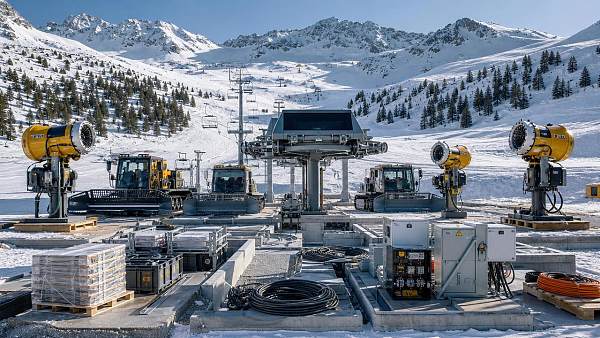
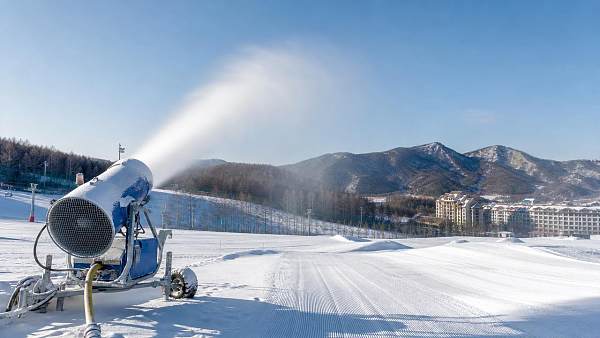
Are snow making machines worth it in low-snow winters?
In low-snow winters, project leaders must weigh guest expectations, operating costs, and long-term site viability. Are snow making machines a smart investment or an expensive stopgap? This article examines how snow making machines affect project planning, seasonal reliability, energy use, and return on investment, helping decision-makers evaluate whether artificial snow production can protect revenue and sustain winter operations.
Why do snow making machines matter more in low-snow winters?
For project managers in winter tourism, leisure operations, destination hospitality, and mixed-use recreation sites, the question is no longer whether weather is changing, but how to build operational resilience around that reality. Low-snow winters compress the season, disrupt opening dates, weaken guest confidence, and put pressure on every downstream revenue line, from lift access and ticketing to food service, rentals, and event programming.
In that context, snow making machines are not simply pieces of equipment. They are infrastructure assets tied to schedule certainty, guest experience consistency, staffing efficiency, and the commercial credibility of a site. For some facilities, they preserve a viable winter business model. For others, they create heavy utility costs without fixing deeper location or climate constraints.
This is why procurement decisions should move beyond headline purchase price. A disciplined evaluation must include climate window analysis, water access, power availability, terrain profile, labor capability, noise limitations, maintenance resources, and expected revenue protected by machine-made snow.
- Hospitality-linked ski or snow parks use snow making machines to secure opening dates and protect bookings already sold to groups, schools, and tour operators.
- Leisure developers rely on artificial snow production to stabilize branded guest experiences, especially where weather variability can damage reputation.
- Project owners in emerging winter destinations may use snow making machines as enabling assets, but only if utilities, landform, and operating margins support the model.
Are snow making machines worth the investment? Start with a project-level ROI test
Snow making machines are worth it when they protect high-value operating days, reduce cancellation risk, and support predictable winter revenue across multiple departments. They are less attractive when the cold-weather window is too short, infrastructure upgrades are too expensive, or the site lacks enough customer demand to recover capital and operating costs.
A project manager should treat the decision as a site systems question, not a single-equipment question. The machine itself may be viable, but the surrounding utility and operational framework may not be. That distinction often determines whether the investment performs over five to ten seasons.
The table below helps frame whether snow making machines fit your commercial model, especially when balancing reliability, budget, and long-term winter operations.
A strong result across these categories does not guarantee payback, but it does suggest that snow making machines can act as strategic insurance rather than an isolated cost center. Weak results usually indicate that alternative winter programming or partial coverage strategies deserve closer review.
Which project scenarios benefit most from snow making machines?
Destination resorts and hotel-linked winter attractions
Properties that sell a bundled winter experience are often the clearest candidates. If rooms, dining, spa packages, family programming, and transport arrangements depend on snow-based activity, one missed holiday period can erase more value than the cost of controlled snow production. Here, snow making machines support occupancy protection as much as slope coverage.
Urban or regional snow parks
Smaller snow parks near population centers often operate on compressed calendars, school holidays, and high footfall turnover. They may benefit from compact or modular systems that create reliable beginner zones, tubing lanes, or event spaces without covering a full mountain footprint. In these projects, selective snow making can outperform broad installation.
Event-driven and promotional winter venues
Temporary or seasonal attractions face different economics. A short activation tied to retail, hospitality, or city programming may justify rental equipment or outsourced snow production support instead of permanent assets. Project leaders must compare brand value and traffic generation against mobilization cost, utility setup, and weather risk.
Different commercial settings require different levels of snow coverage, utility investment, and operating sophistication. The comparison below shows how snow making machines align with common project types.
The key insight is that “worth it” depends on fit. Snow making machines deliver the strongest value when matched to a narrow operational target first, then scaled as demand and climate performance are proven.
What technical factors should project managers review before procurement?
Technical due diligence matters because many disappointing snow projects fail upstream, before the first machine runs. Machine specifications must be read together with meteorological conditions, pumping design, terrain needs, and staffing capability. A machine that performs well on paper may underdeliver if the site cannot support flow, pressure, or efficient deployment windows.
Core technical checkpoints
- Wet-bulb operating range: Procurement teams should verify realistic production conditions based on local temperature and humidity, not just nominal cold-weather assumptions.
- Water availability and storage: Snow making machines require dependable source volume, transfer capacity, and storage planning to avoid production bottlenecks during critical weather windows.
- Power demand and grid stability: Electrical load, starting current, backup arrangements, and tariff structures can materially change operating economics.
- Automation and controls: Remote monitoring, weather-linked adjustment, and flow optimization can reduce labor burden and improve consistency.
- Mobility and deployment pattern: Some projects need fixed coverage networks, while others need portable systems for targeted zones and flexible seasonal layouts.
What often gets missed?
Many project teams focus heavily on machine count and output but underestimate pipeline routing, nozzle maintenance, drainage impact, freeze protection, storage pond management, and operator training. In real operations, these supporting elements determine whether snow making machines can respond fast enough to short weather opportunities.
How do costs compare with the revenue they protect?
Cost analysis should separate capital expense from annual operating expense. Capital may include machines, pumps, water storage, pipework, hydrants, electrical works, controls, commissioning, and any civil or permitting work. Annual costs commonly include energy, water where applicable, labor, servicing, replacement parts, preseason testing, and in-season repair response.
The business case becomes stronger when those costs are measured against protected revenue, not only direct snow-sport income. Winter operations often support broader commercial ecosystems, especially in hospitality and leisure destinations where guest spend spreads across lodging, dining, retail, and ancillary services.
This cost framework can help project leaders evaluate whether snow making machines deliver a reasonable commercial return in low-snow winters.
For many operators, the best financial lens is not “How much does snow making cost?” but “What revenue disappears when we cannot open, cannot maintain surface quality, or must reduce the guest promise?” That reframing often leads to more accurate investment decisions.
What alternatives should be considered if full-scale snow making machines do not fit?
Partial coverage strategy
Instead of covering an entire site, some operators focus on high-value areas such as beginner slopes, connectors, tubing zones, event pads, or guest-visible arrival areas. This reduces capital exposure while preserving marketable winter functionality.
Phased infrastructure rollout
A phased approach can prioritize storage, pumping, and distribution first, followed by selective machine additions. This is often useful for developers testing demand, securing future investment, or aligning expansion with utility upgrades and permitting timelines.
Diversified winter programming
Where climate conditions are borderline, project owners may need to reduce dependence on snow-heavy activity and strengthen alternative winter experiences such as wellness, indoor entertainment, dining, festivals, family attractions, or hybrid recreation concepts. Snow making machines can still play a role, but not as the only strategy.
How should procurement teams compare suppliers and proposals?
Project managers should compare suppliers on system fit, not just unit price. The most useful proposal is one that connects machine selection with water design, operating climate, support expectations, spare parts planning, and the project’s commercial goals. In complex leisure and hospitality developments, coordination quality can be as important as equipment quality.
- Request a site-specific production concept showing priority coverage zones, utility assumptions, and staged expansion options.
- Confirm what is included in the offer: machine supply only, or also pumps, controls, pipework interfaces, commissioning, and operator training.
- Review support readiness, including spare parts availability, service response expectations, and preseason maintenance planning.
- Assess operational complexity. A more automated system may cost more initially but reduce labor pressure in short production windows.
- Check environmental and regulatory alignment, including water use permissions, local noise constraints, and any required electrical or safety compliance documentation.
For international buyers, this is where a sourcing and intelligence partner adds value. GCT helps commercial decision-makers compare suppliers in a broader operational context, linking technical fit with procurement risk, lead times, documentation needs, and long-term project performance across hospitality and leisure environments.
What standards, compliance, and operational risks should be reviewed?
Requirements differ by market, but project teams should expect scrutiny around electrical safety, pressure systems, water management, site drainage, worker safety, and public-area risk control. Noise and environmental impact may also become material issues, especially for hospitality properties near guest rooms or mixed-use developments with residential neighbors.
- Verify that all electrical and control components can be supplied with documentation suitable for the destination market.
- Review water abstraction, storage, and discharge implications early, before capital is committed.
- Plan safe access for installation, maintenance, and in-season operation under freezing conditions.
- Coordinate insurance, contractor responsibilities, and public-area controls where guests are close to operating infrastructure.
These issues do not make snow making machines unattractive. They simply reinforce that artificial snow production should be handled as a cross-functional capital project involving operations, engineering, finance, and compliance teams from the start.
FAQ: what do project leaders ask most about snow making machines?
How do I know if my climate is suitable for snow making machines?
Start with several seasons of local weather data and focus on wet-bulb temperature, not air temperature alone. The right assessment looks at how many production hours are available during likely operating months, how reliable those windows are, and whether they align with your peak demand periods such as holidays or group bookings.
Should I buy permanent equipment or start with a smaller pilot?
If your winter business is proven and guest expectations are already high, a permanent system may be justified. If demand is uncertain, utilities are incomplete, or the location is entering the market, a pilot or phased rollout is often safer. This approach lets you test operating cost, guest response, and revenue protection before scaling.
What is the biggest procurement mistake with snow making machines?
The most common mistake is buying machines before validating the full infrastructure model. Water supply, pumping, electrical capacity, terrain coverage, and labor readiness must be solved together. Another frequent issue is overbuilding coverage instead of first securing the highest-value zones.
Can snow making machines improve guest satisfaction even if natural snow still falls?
Yes. Even in regions with some snowfall, machine-made snow can improve base depth, surface consistency, and resilience after thaw events. For resorts and leisure parks, that often means more predictable opening dates, better learning areas, and fewer disappointing closures after guests have already committed to travel.
Why work with GCT when evaluating snow making machines?
Snow making machine procurement rarely sits in isolation. It connects to guest experience design, commercial positioning, capex control, compliance review, and supplier coordination. GCT supports buyers who need more than a product list. Our role is to help project leaders assess sourcing options in the broader context of commercial hospitality, leisure development, and specialty operational environments.
If you are evaluating snow making machines for a resort, snow park, winter attraction, or mixed-use leisure project, we can help you structure the decision around practical procurement questions:
- Which machine types and system layouts best match your climate window, terrain, and guest volume targets
- What utility assumptions should be validated before requesting final quotations
- How to compare supplier proposals on technical scope, delivery timeline, commissioning support, and lifecycle risk
- What documentation, certification expectations, and market-entry considerations may affect sourcing decisions
- Whether a phased rollout, pilot zone, or selective coverage strategy would improve ROI and reduce exposure
Contact GCT to discuss parameter confirmation, product selection, lead time planning, custom sourcing pathways, certification-related questions, sample or specification review, and quotation alignment. For project managers facing low-snow winters, a better sourcing decision can mean the difference between reactive seasonal compromise and a controlled, investable winter operation.
Search News
Hot Articles
Popular Tags
Need ExpertConsultation?
Connect with our specialized leisureengineering team for procurementstrategies.
Recommended News
 Jun 05, 2026Safari Tents Wholesale: How to Compare Frame Materials, Sizes, and MOQSafari tents wholesale guide: compare frame materials, tent sizes, and MOQ to reduce sourcing risk, control costs, and choose a scalable supplier for profitable hospitality projects.● Hospitality Sourcing Dir
 May 25, 2026RCEP ASEAN Origin Rules Adjusted for Travel Services Outdoor GearRCEP ASEAN origin rules updated for travel services outdoor gear — zero tariffs from 1 Aug 2026 if 60%+ Chinese materials & RCEP traceability code applied.● Hospitality Sourcing Dir
 May 18, 2026How to judge simultaneous interpretation equipment qualitySimultaneous interpretation equipment quality affects clarity, stability, and event success. Learn the key checklist, testing points, and sourcing tips to choose with confidence.● Hospitality Sourcing Dir
 May 18, 2026What to check before choosing tour guide systems wholesaleTour guide systems wholesale: learn what to check before buying, from audio stability and certifications to battery life, customization, and supplier support.● Hospitality Sourcing Dir
 May 14, 2026China's MCT Launches Travel Services Overseas Compliance GuideChina's MCT Overseas Compliance Guide helps travel & entertainment firms navigate GDPR, CCPA & ESG rules—boost global trust and market access.● Hospitality Sourcing Dir
 May 13, 2026China's MCT Launches 'Travel Services' Overseas Compliance GuideChina's MCT Travel Services Compliance Guide: Essential for sports tourism, study-abroad & customized tour operators expanding to EU/US markets under GDPR, CCPA & CSDDD.● Hospitality Sourcing Dir
 May 09, 2026Inflatable clear bubble tents and the privacy trade-offInflatable clear bubble tents offer immersive appeal, but is the privacy trade-off worth it? Explore scenario-based insights for resorts, events, dining, and public spaces.● Hospitality Sourcing Dir
 May 09, 2026Camping glamping tents: what guests notice before anything elseCamping glamping tents guests love start with first impressions—space, privacy, materials, light, and comfort. Discover what buyers should prioritize to boost appeal and bookings.● Hospitality Sourcing Dir
 May 09, 2026Safari tents wholesale and the weatherproofing details that matterSafari tents wholesale buyers now prioritize weatherproofing. Learn which waterproof, windproof, ventilation, and corrosion details reduce risk, protect uptime, and improve long-term value.● Hospitality Sourcing Dir
 May 09, 2026Geodesic dome tents: are they practical for year-round stays?Geodesic dome tents can work for year-round stays—but only with the right insulation, ventilation, and structural planning. Discover what makes them practical, comfortable, and cost-effective.● Hospitality Sourcing Dir
 May 09, 2026Inflatable paddle boards commercial buyers often overlook thisInflatable paddle boards commercial buyers often miss the factors that drive long-term value—durability, safety, compliance, and supplier consistency. Learn what to check before you buy.● Hospitality Sourcing Dir
 May 09, 2026Wholesale jet skis: what determines long-term service costs?Wholesale jet skis buyers should look beyond unit price. Discover how durability, parts access, corrosion resistance, and warranty support shape long-term service costs and fleet profitability.● Hospitality Sourcing Dir
 May 09, 2026Inflatable docks: which designs hold up in busy marinas?Inflatable docks for busy marinas: discover which designs deliver superior rigidity, slip resistance, and durability for safer boarding and lower maintenance.● Hospitality Sourcing Dir
 May 09, 2026Ice skating rink equipment that causes the most downtimeIce skating rink equipment causing the most downtime starts with refrigeration, controls, HVAC, and power. Learn the highest-risk systems and smart ways to cut outages.● Hospitality Sourcing Dir
 May 09, 2026Synthetic ice panels wholesale: what affects glide quality?Synthetic ice panels wholesale: discover what really affects glide quality, from polymer formulation and seam precision to maintenance needs, so you can compare suppliers with confidence.● Hospitality Sourcing Dir
 May 09, 2026Why ski resort equipment budgets often miss hidden costsSki resort equipment budgets often miss freight, installation, compliance, and service costs. Learn the hidden drivers behind overruns and budget smarter for stronger ROI.● Hospitality Sourcing Dir
 May 09, 2026Artificial snow mats vs real snow for beginner ski zonesArtificial snow mats vs real snow: discover which option gives beginner ski zones safer training, longer seasons, lower operating risk, and stronger commercial value.● Hospitality Sourcing Dir
 May 09, 2026What changes first when ski lift parts start to wear out?Ski lift parts often show wear through vibration, noise, heat, and tracking changes first. Learn the key early warning signs to improve safety, reduce downtime, and plan smarter maintenance.● Hospitality Sourcing Dir
 May 09, 2026Are snow making machines worth it in low-snow winters?Snow making machines: are they worth the cost in low-snow winters? Explore ROI, energy use, seasonal reliability, and smart investment strategies to protect winter revenue.● Hospitality Sourcing Dir
 May 08, 2026Custom Fiberglass Statues That Hold Up OutdoorsFiberglass statues custom solutions for outdoor commercial spaces: discover durable, weather-ready designs that strengthen branding, reduce maintenance, and enhance long-term project value.● Hospitality Sourcing Dir
 May 03, 2026Zunyi Liquor League: Fengrongjiao Wins, AR+Digital Twin System Drives 130% Export Inquiry GrowthZunyi Liquor League sparks global interest: Fengrongjiao’s win + AR/digital twin system drives 130% export inquiry growth — key for liquor tourism, smart hardware & ASEAN compliance.● Hospitality Sourcing Dir
 Apr 25, 2026Discover the Best of the Silk Road: Top Xi'an Hot Tourism Routes for 2026● Hospitality Sourcing Dir
 Apr 22, 2026Peak of China: The Ultimate 7-Day Central Plains Heritage Odyssey 2026Plan a 7-day Henan heritage tour in 2026 with Luoyang, Shaolin Temple and Kaifeng highlights, plus visa-free transit and rail tips.● Hospitality Sourcing Dir