Wholesale jet skis: what determines long-term service costs?
For procurement teams evaluating wholesale jet skis, the real financial picture begins after delivery. Unit price matters, but long-term service costs often determine whether a fleet performs profitably over three to five seasons or becomes an ongoing drain on labor, parts budgets, and customer uptime. In commercial leisure operations, resorts, rental fleets, marine clubs, and water-sports destinations all face the same reality: service intervals, engine durability, corrosion resistance, warranty execution, and technical support can outweigh a seemingly attractive initial quote. A better sourcing decision comes from lifecycle analysis, not invoice comparison alone.
Long-term cost structure behind wholesale jet skis
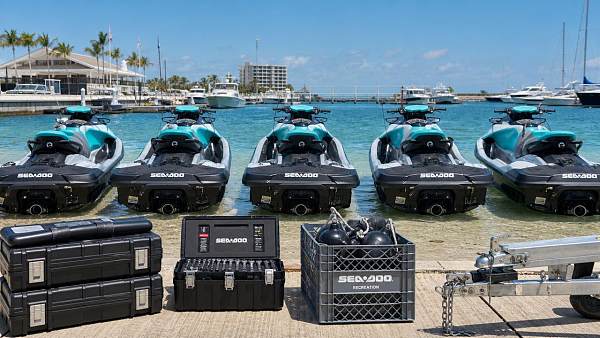
The term wholesale jet skis usually refers to volume purchasing for commercial use, fleet deployment, resale, or project-based marine recreation development. In this context, service cost is the combined expense of preventive maintenance, corrective repair, spare parts logistics, technician time, downtime loss, and eventual replacement planning. Buyers who only compare horsepower, styling, or landed cost may underestimate how quickly service variables affect total ownership value.
A practical lifecycle view includes five main dimensions: mechanical reliability, maintenance frequency, parts pricing, supplier responsiveness, and operating environment. These dimensions interact. A highly efficient model with poor parts availability may still create expensive idle periods. Likewise, a low-cost model with aggressive service intervals may consume more labor hours than a premium platform with higher purchase cost but lower annual maintenance burden.
For global trade and commercial sourcing projects, this matters because fleet equipment is not purchased in isolation. It supports guest experience, seasonal revenue, insurance compliance, and brand reputation. In commercial leisure settings, a disabled watercraft during peak demand creates costs beyond repair invoices, including booking disruption, replacement logistics, and avoidable safety concerns.
Current market signals affecting service economics
The market for wholesale jet skis has become more data-driven as buyers demand better visibility into lifetime operating cost. Several industry signals now influence sourcing decisions more than before:
- Greater focus on fleet standardization to reduce technician training complexity.
- Closer review of corrosion resistance in saltwater and tropical deployments.
- Stronger emphasis on OEM parts lead times and regional warehousing.
- Increased scrutiny of warranty terms, exclusions, and claim turnaround.
- Preference for models with proven commercial service history rather than consumer-only positioning.
These shifts are especially relevant in the broader commercial experience economy, where marine leisure assets must support dependable operations and premium customer expectations. The most competitive sourcing frameworks now include operating-hour assumptions, expected repair ratios, and regional after-sales mapping before purchase approval.
What most strongly determines long-term service costs
Engine and propulsion durability
The biggest cost variable in wholesale jet skis is usually the powertrain. Engines operating in high-hour rental conditions face repeated start-stop cycles, varying rider behavior, and occasional overloading. Proven engine architecture with stable cooling performance and clear maintenance documentation generally produces lower service cost than high-output models pushed near performance limits. Impeller wear, pump housing damage, and cooling system issues can also become recurrent fleet expenses if water conditions include sand, debris, or shallow launches.
Corrosion exposure and material quality
Saltwater use dramatically changes service economics. Corrosion affects fasteners, electrical systems, exhaust components, brackets, steering mechanisms, and trailer interfaces. A model that performs well in freshwater may become expensive in coastal deployment if anti-corrosion design is weak or flushing access is inconvenient. Material selection, protective coatings, sealed connectors, and washdown-friendly layouts should be assessed during sourcing, not after service issues emerge.
Parts ecosystem and interchangeability
Service cost is rarely just the price of a replacement component. It includes freight, customs delay, order minimums, and lost operating days. When comparing wholesale jet skis, examine whether wear parts are standardized across the fleet, whether multiple authorized channels can supply them, and whether common failures require full assembly replacement or simple component-level repair. Better parts interchangeability lowers inventory complexity and improves maintenance planning.
Electronics and diagnostics
Modern jet skis increasingly rely on sensors, digital controls, and electronic diagnostics. These systems can improve performance and fault identification, but they may also increase dependence on proprietary tools or authorized technicians. In remote tourism or island environments, electronic complexity becomes a cost issue if troubleshooting cannot be done quickly. A technically advanced craft is not automatically the most economical choice for every commercial fleet.
Warranty execution and supplier support
Warranty language should be read alongside practical execution. Some suppliers advertise generous terms, but turnaround time, claim evidence requirements, and freight responsibilities can limit actual value. The best wholesale jet skis programs are supported by clear spare parts commitments, service documentation, training access, and response protocols for urgent failures. Long-term service cost falls when support quality is predictable.
Business value of lifecycle-focused sourcing
Lifecycle-focused sourcing creates operational and financial advantages beyond maintenance savings. For businesses in marine leisure and experiential hospitality, stable equipment availability protects booking confidence, labor scheduling, and brand consistency. Choosing wholesale jet skis based on total service economics also improves budgeting accuracy, which is essential for seasonal operations with compressed revenue windows.
This approach also supports broader commercial procurement discipline. It aligns asset selection with uptime targets, service staffing realities, and customer experience standards. Instead of treating maintenance as a post-purchase problem, it becomes a sourcing variable that can be benchmarked, negotiated, and controlled.
- Lower downtime during peak operating periods
- Better forecasting of annual maintenance budgets
- Reduced emergency freight and unplanned parts purchases
- Higher residual value through disciplined service records
- Simpler fleet management through standardization
Typical deployment scenarios and service priorities
Practical evaluation steps before contract commitment
Before selecting wholesale jet skis, build a service-cost checklist into technical and commercial review. This reduces the chance of choosing a model that looks competitive on paper but performs poorly under commercial conditions.
- Request maintenance schedules by operating hours, including consumables and inspection points.
- Ask for a recommended spare parts list for the first year of fleet operation.
- Verify regional parts inventory, average dispatch time, and backorder policy.
- Review commercial-use warranty wording, exclusions, and claim workflow.
- Assess whether technician training, manuals, and diagnostic support are included.
- Compare corrosion protection features for the intended environment.
- Estimate downtime cost per unit per day and include it in model comparison.
If multiple platforms are under consideration, a simple total-cost matrix can clarify the decision. Score each option on reliability history, parts lead time, annual service hours, warranty responsiveness, and expected resale strength. This method often reveals that the lowest purchase-price option is not the lowest-cost fleet asset.
A stronger next step for wholesale jet skis sourcing
Effective sourcing of wholesale jet skis depends on disciplined lifecycle evaluation. The most important determinants of long-term service cost are not hidden, but they do require structured review: engine durability, environment fit, parts logistics, maintenance design, and supplier accountability. When these factors are compared early, buyers gain a clearer picture of true operating cost, not just landed price.
For commercial trade projects, the next step is to request service documentation, regional support details, and commercial warranty evidence alongside product specifications. A sourcing process grounded in uptime, maintainability, and supply continuity will deliver stronger long-term value, better operational resilience, and more reliable results from every investment in wholesale jet skis.
Search News
Hot Articles
Popular Tags
Need ExpertConsultation?
Connect with our specialized leisureengineering team for procurementstrategies.
Recommended News
 Jun 05, 2026Safari Tents Wholesale: How to Compare Frame Materials, Sizes, and MOQSafari tents wholesale guide: compare frame materials, tent sizes, and MOQ to reduce sourcing risk, control costs, and choose a scalable supplier for profitable hospitality projects.● Hospitality Sourcing Dir
 May 25, 2026RCEP ASEAN Origin Rules Adjusted for Travel Services Outdoor GearRCEP ASEAN origin rules updated for travel services outdoor gear — zero tariffs from 1 Aug 2026 if 60%+ Chinese materials & RCEP traceability code applied.● Hospitality Sourcing Dir
 May 18, 2026How to judge simultaneous interpretation equipment qualitySimultaneous interpretation equipment quality affects clarity, stability, and event success. Learn the key checklist, testing points, and sourcing tips to choose with confidence.● Hospitality Sourcing Dir
 May 18, 2026What to check before choosing tour guide systems wholesaleTour guide systems wholesale: learn what to check before buying, from audio stability and certifications to battery life, customization, and supplier support.● Hospitality Sourcing Dir
 May 14, 2026China's MCT Launches Travel Services Overseas Compliance GuideChina's MCT Overseas Compliance Guide helps travel & entertainment firms navigate GDPR, CCPA & ESG rules—boost global trust and market access.● Hospitality Sourcing Dir
 May 13, 2026China's MCT Launches 'Travel Services' Overseas Compliance GuideChina's MCT Travel Services Compliance Guide: Essential for sports tourism, study-abroad & customized tour operators expanding to EU/US markets under GDPR, CCPA & CSDDD.● Hospitality Sourcing Dir
 May 09, 2026Inflatable clear bubble tents and the privacy trade-offInflatable clear bubble tents offer immersive appeal, but is the privacy trade-off worth it? Explore scenario-based insights for resorts, events, dining, and public spaces.● Hospitality Sourcing Dir
 May 09, 2026Camping glamping tents: what guests notice before anything elseCamping glamping tents guests love start with first impressions—space, privacy, materials, light, and comfort. Discover what buyers should prioritize to boost appeal and bookings.● Hospitality Sourcing Dir
 May 09, 2026Safari tents wholesale and the weatherproofing details that matterSafari tents wholesale buyers now prioritize weatherproofing. Learn which waterproof, windproof, ventilation, and corrosion details reduce risk, protect uptime, and improve long-term value.● Hospitality Sourcing Dir
 May 09, 2026Geodesic dome tents: are they practical for year-round stays?Geodesic dome tents can work for year-round stays—but only with the right insulation, ventilation, and structural planning. Discover what makes them practical, comfortable, and cost-effective.● Hospitality Sourcing Dir
 May 09, 2026Inflatable paddle boards commercial buyers often overlook thisInflatable paddle boards commercial buyers often miss the factors that drive long-term value—durability, safety, compliance, and supplier consistency. Learn what to check before you buy.● Hospitality Sourcing Dir
 May 09, 2026Wholesale jet skis: what determines long-term service costs?Wholesale jet skis buyers should look beyond unit price. Discover how durability, parts access, corrosion resistance, and warranty support shape long-term service costs and fleet profitability.● Hospitality Sourcing Dir
 May 09, 2026Inflatable docks: which designs hold up in busy marinas?Inflatable docks for busy marinas: discover which designs deliver superior rigidity, slip resistance, and durability for safer boarding and lower maintenance.● Hospitality Sourcing Dir
 May 09, 2026Ice skating rink equipment that causes the most downtimeIce skating rink equipment causing the most downtime starts with refrigeration, controls, HVAC, and power. Learn the highest-risk systems and smart ways to cut outages.● Hospitality Sourcing Dir
 May 09, 2026Synthetic ice panels wholesale: what affects glide quality?Synthetic ice panels wholesale: discover what really affects glide quality, from polymer formulation and seam precision to maintenance needs, so you can compare suppliers with confidence.● Hospitality Sourcing Dir
 May 09, 2026Why ski resort equipment budgets often miss hidden costsSki resort equipment budgets often miss freight, installation, compliance, and service costs. Learn the hidden drivers behind overruns and budget smarter for stronger ROI.● Hospitality Sourcing Dir
 May 09, 2026Artificial snow mats vs real snow for beginner ski zonesArtificial snow mats vs real snow: discover which option gives beginner ski zones safer training, longer seasons, lower operating risk, and stronger commercial value.● Hospitality Sourcing Dir
 May 09, 2026What changes first when ski lift parts start to wear out?Ski lift parts often show wear through vibration, noise, heat, and tracking changes first. Learn the key early warning signs to improve safety, reduce downtime, and plan smarter maintenance.● Hospitality Sourcing Dir
 May 09, 2026Are snow making machines worth it in low-snow winters?Snow making machines: are they worth the cost in low-snow winters? Explore ROI, energy use, seasonal reliability, and smart investment strategies to protect winter revenue.● Hospitality Sourcing Dir
 May 08, 2026Custom Fiberglass Statues That Hold Up OutdoorsFiberglass statues custom solutions for outdoor commercial spaces: discover durable, weather-ready designs that strengthen branding, reduce maintenance, and enhance long-term project value.● Hospitality Sourcing Dir
 May 03, 2026Zunyi Liquor League: Fengrongjiao Wins, AR+Digital Twin System Drives 130% Export Inquiry GrowthZunyi Liquor League sparks global interest: Fengrongjiao’s win + AR/digital twin system drives 130% export inquiry growth — key for liquor tourism, smart hardware & ASEAN compliance.● Hospitality Sourcing Dir
 Apr 25, 2026Discover the Best of the Silk Road: Top Xi'an Hot Tourism Routes for 2026● Hospitality Sourcing Dir
 Apr 22, 2026Peak of China: The Ultimate 7-Day Central Plains Heritage Odyssey 2026Plan a 7-day Henan heritage tour in 2026 with Luoyang, Shaolin Temple and Kaifeng highlights, plus visa-free transit and rail tips.● Hospitality Sourcing Dir