FIFA Cuts 2026 World Cup Broadcast Rights Fee, Opening IP Licensing Window for Chinese Arcade/VR Firms
FIFA officially finalized its 2026 FIFA World Cup™全媒体 (all-media) rights agreement with China Central Television (CCTV) on May 15, 2026, setting the total fee at USD 60 million (approx. RMB 430 million), a reduction of over 70% from the initial asking price. This development lowers the financial and procedural barriers for Chinese arcade hardware manufacturers, VR entertainment terminal makers, and interactive motion-sensing solution providers seeking official FIFA IP licensing — particularly relevant for export-oriented OEM/ODM firms targeting themed content partnerships in Latin America, Southeast Asia, and the Middle East.
Event Overview
On May 15, 2026, FIFA announced it had reached an all-media broadcast rights agreement with CCTV for the 2026 FIFA World Cup co-hosted by the United States, Canada, and Mexico. The confirmed license fee is USD 60 million, representing a reduction of more than 70% compared to the original offer. No further terms — including sub-licensing provisions, territorial scope beyond mainland China, or commercial usage rights for third-party hardware vendors — have been publicly disclosed by either FIFA or CCTV.
Industries Affected
Arcade Hardware Manufacturers (OEM/ODM): The reduced rights fee signals potential easing in FIFA’s overall IP licensing strategy, making official co-branding or tournament-themed content integration more financially viable. Impact manifests primarily in lower upfront cost expectations when approaching national football associations or regional FIFA licensees for localized arcade cabinet deployments.
VR Entertainment Terminal Makers: With lowered broadcast rights costs, there is increased likelihood that domestic or regional broadcasters may allocate budget toward licensed interactive experiences — such as VR stadium tours or penalty shootout simulations — creating new opportunities for hardware integration and content co-development.
Interactive Motion-Sensing Solution Providers: Lower rights fees may correlate with broader willingness by rights holders to permit non-broadcast, experiential use cases. This could accelerate pilot programs for motion-controlled football training or fan engagement modules deployed in shopping malls or sports venues across emerging markets.
What Relevant Companies or Practitioners Should Focus On and How to Respond
Monitor official licensing frameworks issued by FIFA’s regional offices
The May 15 agreement covers only CCTV’s broadcast rights in mainland China. Any downstream IP licensing for hardware or software applications must be negotiated separately — and typically through FIFA’s regional representatives (e.g., CONCACAF, AFC, or UAFA). Companies should track public updates from these bodies, not assume automatic access based on the CCTV deal.
Assess feasibility of pre-emptive content localization for priority markets
Given the stated focus on Latin America, Southeast Asia, and the Middle East, firms should prioritize language localization, regulatory compliance (e.g., UAE’s TRA, Thailand’s NBTC), and regional payment integrations for any FIFA-branded arcade or VR product — before initiating formal licensing discussions.
Distinguish between broadcast rights and commercial IP usage rights
The USD 60 million fee applies solely to linear and digital broadcast distribution by CCTV. It does not grant sublicensing rights for hardware embedding, game publishing, or venue-based installations. Companies must treat broadcast agreements and commercial IP licenses as legally and operationally separate processes.
Prepare technical documentation and compliance packages for rapid response
FIFA and its regional partners typically require detailed hardware specifications, data privacy policies, and content moderation protocols prior to granting commercial licenses. Export-focused firms should compile these materials proactively — especially those covering child safety, user data handling, and offline functionality — to shorten approval timelines once licensing windows open.
Editorial Perspective / Industry Observation
Observably, this rights fee reduction is less an indication of diminished commercial value for the 2026 tournament and more a strategic recalibration aimed at expanding broadcast reach and enabling downstream ecosystem participation. Analysis shows FIFA appears to be decoupling broadcast monetization from experiential IP licensing — suggesting future pathways for hardware vendors may depend less on global rights acquisition and more on regional licensee engagement. From an industry perspective, the event is best understood not as a finalized licensing gateway, but as a signal that FIFA is actively adjusting its commercial architecture to accommodate non-traditional distribution channels. Continuous monitoring of regional federation announcements remains essential, as actual licensing terms — including fees, duration, and territorial scope — have yet to be published.
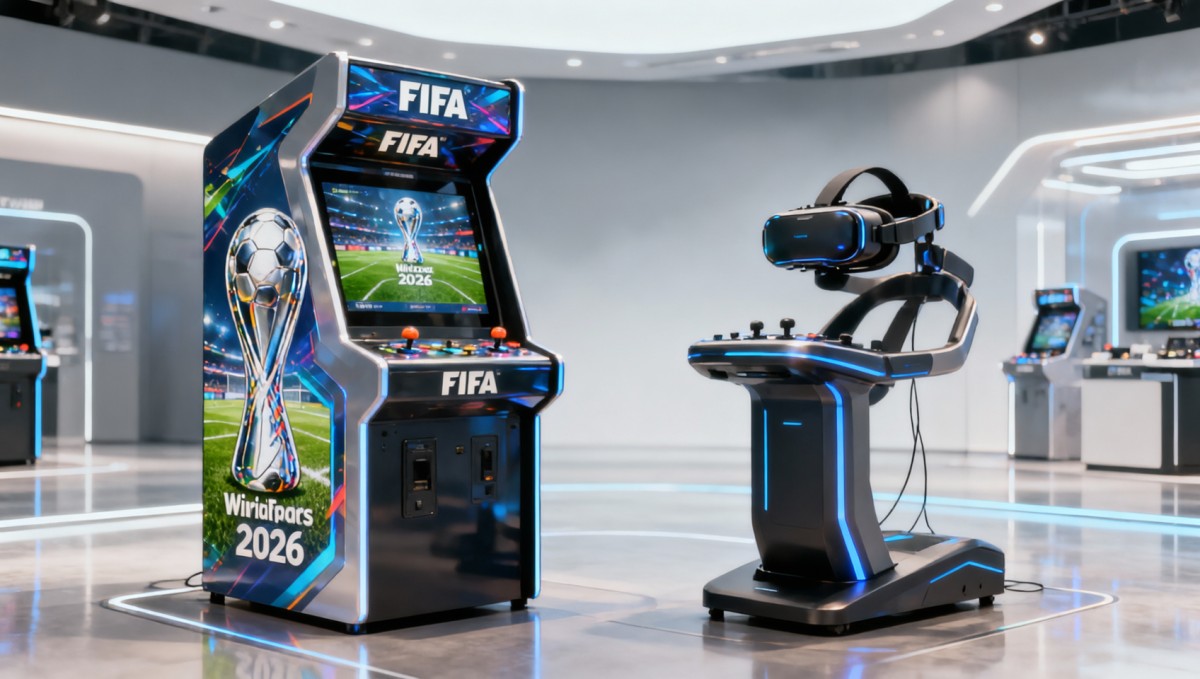
In summary, the USD 60 million broadcast rights agreement reflects a deliberate shift in FIFA’s commercial approach rather than a broad relaxation of IP controls. For Chinese arcade, VR, and interactive solution providers, the immediate implication is not automatic access, but rather a strengthened rationale to initiate structured, region-specific licensing outreach — grounded in technical readiness and regulatory alignment. Currently, this development is better interpreted as a preparatory inflection point than an operational green light.
Source: Official announcement by FIFA and China Central Television (CCTV), dated May 15, 2026. Note: Details regarding sub-licensing eligibility, regional implementation timelines, and commercial usage guidelines remain unconfirmed and are subject to ongoing observation.
Search News
Hot Articles
- Restaurant FurnitureFast-Casual Restaurant Interiors: Design Choices That Improve Speed and Guest FlowOct 04, 2026
- Outdoor RidesHow to Select Leisure Park Equipment for Safe, High-Throughput Visitor AreasOct 03, 2026
- Fashion & Gem JewelryDiamond Tester Wholesale: How to Vet Accuracy, Calibration, and MOQ Before OrderingOct 02, 2026
Popular Tags
Need ExpertConsultation?
Connect with our specialized leisureengineering team for procurementstrategies.
Recommended News
 Sep 15, 2026How to Choose Coin-Operated Pool Tables for Bars, Hotels, and Arcade VenuesCoin operated pool tables for bars, hotels, and arcades: compare sizes, payment systems, durability, service access, and revenue potential.● Theme Park Strategist
 Sep 08, 2026What to Look for in a Flight Simulator Chair Manufacturer for Commercial VR CentersChoose a flight simulator chair manufacturer that delivers durable, safe, customizable seating for commercial VR centers. Explore key sourcing criteria now.● Theme Park Strategist
 Aug 25, 2026What to Evaluate Before Buying Commercial Self Service Photo Booths for VenuesCommercial self service photo booths for venues: learn how to evaluate durability, software stability, branding flexibility, support, and total ROI before you buy.● Theme Park Strategist
 Aug 23, 2026How to Evaluate Wholesale Vending Machines for Multi-Location Business DeploymentWholesale vending machines for multi-location deployment require more than low unit cost. Learn how to compare reliability, payments, telemetry, and supplier support to scale smarter.● Theme Park Strategist
 Aug 17, 2026U.S. CPSC Urges Bilingual Warnings for Arcade and VR MachinesU.S. CPSC urges bilingual safety warnings for Arcade & VR Machines—learn what exporters, importers, and distributors must do now to avoid delays and returns.● Theme Park Strategist
 Aug 16, 2026EU Enforces EN IEC 62368-1:2026 Certification for Arcade and VR MachinesEU Enforces EN IEC 62368-1:2026 certification for arcade and VR machines, reshaping EU market access, customs clearance, and compliance planning for exporters and distributors.● Theme Park Strategist
 Aug 13, 2026UFLPA’s new guidelines take effect: Exports of Arcade and VR equipment face full-link labor compliance requirementsUFLPA’s new guide takes effect: Arcade and VR machine exports to the U.S. now face full-chain labor compliance checks. Discover key risks and action steps.● Theme Park Strategist
 Aug 12, 2026EU PPWR takes effect, Arcade and VR packaging incorporate heavy metal and PFAS restrictionsEU PPWR now applies to Arcade and VR packaging, tightening heavy metal and PFAS compliance. Learn how exporters can avoid delays, fines, and customs risks.● Theme Park Strategist
 Aug 11, 2026CPSC Sets Bilingual Labels for Arcade and VR ImportsCPSC bilingual labels for arcade and VR imports become mandatory on October 1, 2026. Learn the new English-Spanish warning rules, customs risks, and key compliance steps now.● Theme Park Strategist
 Aug 10, 2026EU Rule Takes Effect for Arcade & VR Machine ClearanceArcade & VR Machine clearance in the EU now depends on EN IEC 62368-1:2026+A11:2026 compliance. Learn what changed, who is affected, and how to avoid customs delays.● Theme Park Strategist
 Aug 09, 2026CPSC Requires New Labels for Arcade and VR ImportsCPSC requires new labels for Arcade and VR imports starting Oct 1, 2026. Learn the multilingual warning rules, compliance risks, and key steps exporters and buyers must take now.● Theme Park Strategist
 Aug 08, 2026EU Entry Rule Tightens for Arcade & VR MachinesArcade & VR Machines entering the EU now face stricter CE compliance under EN IEC 62368-1:2026+A11:2026. Learn the new rule, risks, and what exporters must do now.● Theme Park Strategist
 Aug 07, 2026CPSC Notice Tightens U.S. Entry Rules for Arcade and VR MachinesCPSC Notice Tightens U.S. Entry Rules for Arcade and VR Machines: learn the new labeling, FCC, UN38.3, and compliance document requirements before October 1, 2026.● Theme Park Strategist
 Aug 06, 2026EU Rule Takes Effect for CE-UKCA Labels on Arcade & VR MachinesArcade & VR Machines face new CE-UKCA label and ECPD filing rules in the EU and UK. Learn what manufacturers, importers, and distributors must do now to avoid delays.● Theme Park Strategist
 Aug 05, 2026CPSC Recalls Arcade and VR Machines Over UL 62368-1CPSC recalls arcade and VR machines over UL 62368-1 non-compliance. Learn how this 2026 safety action may affect imports, distribution, customs clearance, and market access.● Theme Park Strategist
 Aug 02, 2026EU Sets New Certification Rule for Arcade and VR MachinesArcade and VR Machines face a new EU certification rule from Oct 1, 2026. Learn how EN IEC 62368-1:2026+A11:2026 affects CE marking, customs clearance, and market access.● Theme Park Strategist
 Aug 01, 2026CPSC Moves to Require Bilingual Warnings on Arcade and VR MachinesCPSC bilingual warnings for Arcade and VR Machines may reshape U.S. import compliance. Learn how English-Spanish labels affect packaging, customs risk, and shipment readiness.● Theme Park Strategist
 Jul 31, 2026EU Sets EN IEC 62368-1:2025 Rule for Arcade and VR MachinesEU Sets EN IEC 62368-1:2025 Rule for Arcade and VR Machines. Learn the new EU compliance deadlines, safety updates, and key actions for manufacturers, OEMs, and distributors.● Theme Park Strategist
 Jul 30, 2026CPSC Sets New Warning Label Rule for Arcade & VR MachinesCPSC sets a new warning label rule for Arcade & VR Machines effective August 15, 2026. Learn key compliance risks, multilingual label requirements, and shipment actions now.● Theme Park Strategist
 Jul 29, 2026EU Enforces New Safety Standard for Arcade and VR MachinesEU Enforces New Safety Standard for Arcade and VR Machines: learn how EN IEC 62368-1 affects CE compliance, customs clearance, and EU market access for exporters and buyers.● Theme Park Strategist
 Jul 28, 2026CPSC Sets ASTM F3472-26 Rule for Arcade & VR ImportsCPSC ASTM F3472-26 rule reshapes Arcade & VR imports to the U.S. Learn key compliance deadlines, certification risks, and what exporters, OEM/ODM suppliers, and buyers should do now.● Theme Park Strategist
 Jul 27, 2026EU Rule Takes Effect for Arcade & VR Machine CybersecurityEU Rule Takes Effect for Arcade & VR Machine Cybersecurity: learn how EN IEC 62443-3-3:2025 affects compliance, customs clearance, sales continuity, and supplier planning in the EU market.● Theme Park Strategist
 Jul 25, 2026CPSC Sets Bilingual Warning Rule for Arcade and VR ImportsCPSC bilingual warning rule for arcade and VR imports takes effect August 1, 2026. Learn how OEM/ODM exporters can avoid CBP delays, relabel shipments, and protect U.S. delivery timelines.● Theme Park Strategist
 Jul 24, 2026EU Enforces New Safety Standard for Arcade and VR MachinesEU Enforces New Safety Standard for Arcade and VR Machines: learn how EN IEC 62368-1:2026+A11:2026 reshapes EU compliance, CE documentation, testing timelines, and export readiness.● Theme Park Strategist