US CPSC to Enforce New EMC Radiation Limits for Arcade Devices Starting June 2026
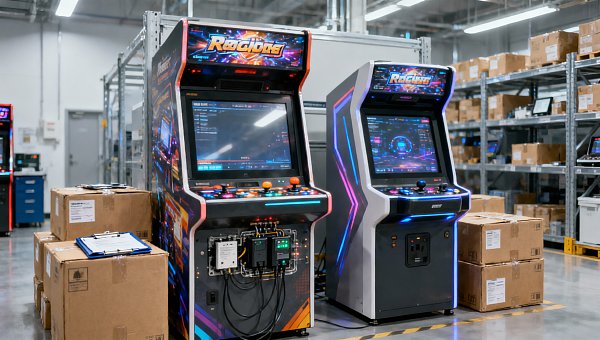
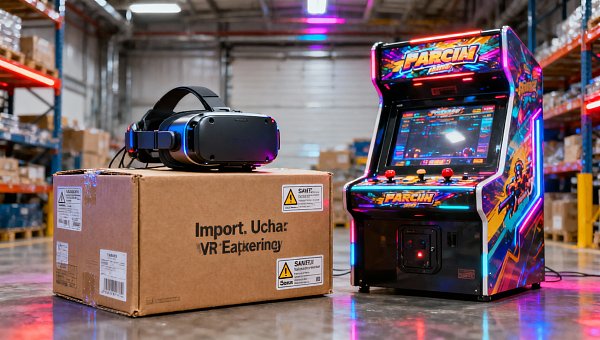
On May 13, 2026, the U.S. Consumer Product Safety Commission (CPSC) issued an emergency draft notice mandating new electromagnetic compatibility (EMC) radiation limits for arcade and VR machines imported into the United States. Effective June 1, 2026, all such devices must comply with FCC Part 15 Subpart B — including broadband scanning above 1 GHz — prior to entry. This regulatory shift directly impacts global supply chains, particularly China-based OEM/ODM manufacturers serving U.S. distributors and branded retailers.
Event Overview
The U.S. CPSC published a draft emergency notice on May 13, 2026, requiring that all arcade and virtual reality machines entering the U.S. market from June 1, 2026 onward undergo mandatory EMC radiation testing per FCC Part 15 Subpart B, with expanded requirements covering frequencies above 1 GHz via broadband scanning. Non-compliant units will be detained at U.S. ports of entry. The notice is currently in draft form and subject to public comment; final adoption status remains pending formal rulemaking.
Industries Affected
Direct Trading Enterprises: U.S.-based importers, distributors, and branded operators (e.g., location-based entertainment venues, VR arcades) face increased lead time risk and potential inventory gaps. Since compliance verification now occurs pre-shipment — rather than post-entry — delays in test reporting or failure retesting may disrupt seasonal launch windows (e.g., summer 2026 rollout plans). Liability exposure also rises if non-compliant units are inadvertently cleared by third-party agents lacking updated test oversight protocols.
Raw Material Procurement Enterprises: Suppliers of high-frequency PCB substrates, RF-shielded enclosures, ferrite components, and EMI gasketing materials may see demand shifts toward higher-grade, certified variants. However, no new material specifications have been codified in the draft notice; procurement impact is indirect and driven by downstream manufacturing upgrades rather than direct regulatory mandates on components.
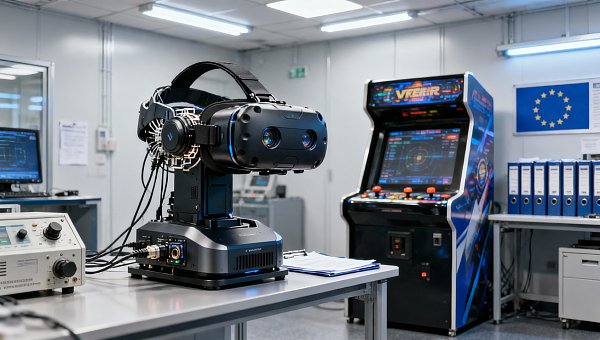
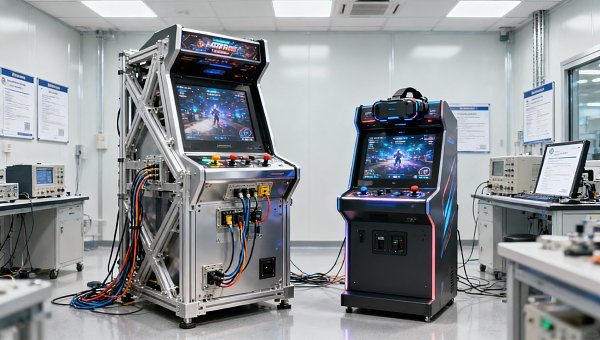
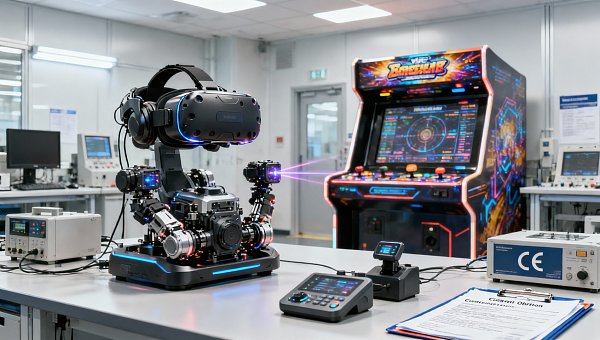
Contract Manufacturing & OEM/ODM Enterprises: Chinese and Southeast Asian electronics manufacturers producing arcade and VR hardware bear primary compliance responsibility under the draft rule. They must now integrate 1 GHz+ broadband EMC scans into pre-compliance workflows — a capability not routinely deployed for legacy gaming cabinets. This requires investment in upgraded test chambers, spectrum analyzers with real-time bandwidth ≥ 40 MHz, and staff trained in CISPR 32 / ANSI C63.4-2023 methodologies. Lead times for design validation cycles are expected to increase by 2–3 weeks per iteration.
Supply Chain Service Providers: Third-party testing labs, customs brokers, and certification consultants face heightened demand for FCC-aligned EMC pre-testing and documentation support. Notably, labs accredited to ISO/IEC 17025 for FCC Part 15 Subpart B — especially those with validated 1–6 GHz broadband scan capabilities — are seeing early inquiry surges. However, capacity constraints exist: fewer than 12 labs globally currently hold full accreditation for this expanded frequency scope in the context of Class B digital devices.
Key Focus Areas and Recommended Actions
Verify current test lab accreditation scope
Manufacturers must confirm whether their existing EMC lab partners are accredited for FCC Part 15 Subpart B including frequencies above 1 GHz — not just legacy 30 MHz–1 GHz scans. Accreditation certificates should explicitly reference ANSI C63.4-2023 Annex G (broadband emission measurement).
Integrate broadband scanning into early-stage design reviews
EMC risk mitigation can no longer be deferred to final pre-certification. Layout-level decisions — such as clock routing, power plane segmentation, and I/O filter placement — significantly affect >1 GHz emissions. Engineering teams should adopt simulation tools validated against measured broadband data (e.g., CST Studio Suite with near-field probe correlation) starting at schematic review phase.
Update technical documentation packages for U.S. importers
Required submission elements now include full broadband scan reports (not just peak/average plots), annotated test setup photos, and detailed justification for any marginally compliant readings. CPSC’s draft guidance emphasizes traceability between test configuration and production unit build specifications — meaning BOM revisions post-test require re-evaluation.
Editorial Perspective / Industry Observation
Observably, this move signals a broader regulatory pivot: CPSC is increasingly leveraging FCC’s technical infrastructure to enforce safety-related EMC performance — blurring traditional jurisdictional lines between interference control (FCC) and hazard prevention (CPSC). Analysis shows this is not an isolated expansion but aligns with CPSC’s 2025–2028 Strategic Plan emphasis on “pre-market technical gatekeeping” for interactive electronics. From an industry perspective, it reflects growing concern over uncontrolled high-frequency emissions from densely packed, low-latency VR systems — particularly those using wireless 60 GHz links or high-speed serial interfaces (e.g., DisplayPort 2.1, PCIe Gen 5). Current more critical question is whether similar requirements will extend to consumer-facing mixed-reality headsets later this year — a scenario CPSC has not confirmed but is actively assessing in parallel working groups.
Conclusion
This requirement marks a material escalation in regulatory expectations for embedded electronics in entertainment hardware. It does not merely add a test step — it redefines the timing, depth, and accountability structure of EMC assurance. For global manufacturers, the shift underscores that compliance is no longer a final checkpoint but a continuous engineering discipline integrated across R&D, procurement, and quality systems. A rational interpretation is that long-term competitiveness will hinge less on cost-per-unit and more on demonstrable, auditable EMC maturity — a capability still unevenly distributed across Tier 2 and Tier 3 suppliers.
Source Attribution
U.S. CPSC Emergency Draft Notice (Docket No. CPSC-2026-0041), published May 13, 2026; FCC Part 15 Subpart B, revised April 2026 edition; ANSI C63.4-2023 Standard for Methods of Measurement of Radio-Noise Emissions. Note: Final rule publication date, effective enforcement details, and potential exemptions for legacy models remain under public comment through July 31, 2026 — to be monitored closely.
Search News
Hot Articles
- Restaurant FurnitureFast-Casual Restaurant Interiors: Design Choices That Improve Speed and Guest FlowOct 04, 2026
- Outdoor RidesHow to Select Leisure Park Equipment for Safe, High-Throughput Visitor AreasOct 03, 2026
- Fashion & Gem JewelryDiamond Tester Wholesale: How to Vet Accuracy, Calibration, and MOQ Before OrderingOct 02, 2026
Popular Tags
Need ExpertConsultation?
Connect with our specialized leisureengineering team for procurementstrategies.
Recommended News
 Sep 15, 2026How to Choose Coin-Operated Pool Tables for Bars, Hotels, and Arcade VenuesCoin operated pool tables for bars, hotels, and arcades: compare sizes, payment systems, durability, service access, and revenue potential.● Theme Park Strategist
 Sep 08, 2026What to Look for in a Flight Simulator Chair Manufacturer for Commercial VR CentersChoose a flight simulator chair manufacturer that delivers durable, safe, customizable seating for commercial VR centers. Explore key sourcing criteria now.● Theme Park Strategist
 Aug 25, 2026What to Evaluate Before Buying Commercial Self Service Photo Booths for VenuesCommercial self service photo booths for venues: learn how to evaluate durability, software stability, branding flexibility, support, and total ROI before you buy.● Theme Park Strategist
 Aug 23, 2026How to Evaluate Wholesale Vending Machines for Multi-Location Business DeploymentWholesale vending machines for multi-location deployment require more than low unit cost. Learn how to compare reliability, payments, telemetry, and supplier support to scale smarter.● Theme Park Strategist
 Aug 17, 2026U.S. CPSC Urges Bilingual Warnings for Arcade and VR MachinesU.S. CPSC urges bilingual safety warnings for Arcade & VR Machines—learn what exporters, importers, and distributors must do now to avoid delays and returns.● Theme Park Strategist
 Aug 16, 2026EU Enforces EN IEC 62368-1:2026 Certification for Arcade and VR MachinesEU Enforces EN IEC 62368-1:2026 certification for arcade and VR machines, reshaping EU market access, customs clearance, and compliance planning for exporters and distributors.● Theme Park Strategist
 Aug 13, 2026UFLPA’s new guidelines take effect: Exports of Arcade and VR equipment face full-link labor compliance requirementsUFLPA’s new guide takes effect: Arcade and VR machine exports to the U.S. now face full-chain labor compliance checks. Discover key risks and action steps.● Theme Park Strategist
 Aug 12, 2026EU PPWR takes effect, Arcade and VR packaging incorporate heavy metal and PFAS restrictionsEU PPWR now applies to Arcade and VR packaging, tightening heavy metal and PFAS compliance. Learn how exporters can avoid delays, fines, and customs risks.● Theme Park Strategist
 Aug 11, 2026CPSC Sets Bilingual Labels for Arcade and VR ImportsCPSC bilingual labels for arcade and VR imports become mandatory on October 1, 2026. Learn the new English-Spanish warning rules, customs risks, and key compliance steps now.● Theme Park Strategist
 Aug 10, 2026EU Rule Takes Effect for Arcade & VR Machine ClearanceArcade & VR Machine clearance in the EU now depends on EN IEC 62368-1:2026+A11:2026 compliance. Learn what changed, who is affected, and how to avoid customs delays.● Theme Park Strategist
 Aug 09, 2026CPSC Requires New Labels for Arcade and VR ImportsCPSC requires new labels for Arcade and VR imports starting Oct 1, 2026. Learn the multilingual warning rules, compliance risks, and key steps exporters and buyers must take now.● Theme Park Strategist
 Aug 08, 2026EU Entry Rule Tightens for Arcade & VR MachinesArcade & VR Machines entering the EU now face stricter CE compliance under EN IEC 62368-1:2026+A11:2026. Learn the new rule, risks, and what exporters must do now.● Theme Park Strategist
 Aug 07, 2026CPSC Notice Tightens U.S. Entry Rules for Arcade and VR MachinesCPSC Notice Tightens U.S. Entry Rules for Arcade and VR Machines: learn the new labeling, FCC, UN38.3, and compliance document requirements before October 1, 2026.● Theme Park Strategist
 Aug 06, 2026EU Rule Takes Effect for CE-UKCA Labels on Arcade & VR MachinesArcade & VR Machines face new CE-UKCA label and ECPD filing rules in the EU and UK. Learn what manufacturers, importers, and distributors must do now to avoid delays.● Theme Park Strategist
 Aug 05, 2026CPSC Recalls Arcade and VR Machines Over UL 62368-1CPSC recalls arcade and VR machines over UL 62368-1 non-compliance. Learn how this 2026 safety action may affect imports, distribution, customs clearance, and market access.● Theme Park Strategist
 Aug 02, 2026EU Sets New Certification Rule for Arcade and VR MachinesArcade and VR Machines face a new EU certification rule from Oct 1, 2026. Learn how EN IEC 62368-1:2026+A11:2026 affects CE marking, customs clearance, and market access.● Theme Park Strategist
 Aug 01, 2026CPSC Moves to Require Bilingual Warnings on Arcade and VR MachinesCPSC bilingual warnings for Arcade and VR Machines may reshape U.S. import compliance. Learn how English-Spanish labels affect packaging, customs risk, and shipment readiness.● Theme Park Strategist
 Jul 31, 2026EU Sets EN IEC 62368-1:2025 Rule for Arcade and VR MachinesEU Sets EN IEC 62368-1:2025 Rule for Arcade and VR Machines. Learn the new EU compliance deadlines, safety updates, and key actions for manufacturers, OEMs, and distributors.● Theme Park Strategist
 Jul 30, 2026CPSC Sets New Warning Label Rule for Arcade & VR MachinesCPSC sets a new warning label rule for Arcade & VR Machines effective August 15, 2026. Learn key compliance risks, multilingual label requirements, and shipment actions now.● Theme Park Strategist
 Jul 29, 2026EU Enforces New Safety Standard for Arcade and VR MachinesEU Enforces New Safety Standard for Arcade and VR Machines: learn how EN IEC 62368-1 affects CE compliance, customs clearance, and EU market access for exporters and buyers.● Theme Park Strategist
 Jul 28, 2026CPSC Sets ASTM F3472-26 Rule for Arcade & VR ImportsCPSC ASTM F3472-26 rule reshapes Arcade & VR imports to the U.S. Learn key compliance deadlines, certification risks, and what exporters, OEM/ODM suppliers, and buyers should do now.● Theme Park Strategist
 Jul 27, 2026EU Rule Takes Effect for Arcade & VR Machine CybersecurityEU Rule Takes Effect for Arcade & VR Machine Cybersecurity: learn how EN IEC 62443-3-3:2025 affects compliance, customs clearance, sales continuity, and supplier planning in the EU market.● Theme Park Strategist
 Jul 25, 2026CPSC Sets Bilingual Warning Rule for Arcade and VR ImportsCPSC bilingual warning rule for arcade and VR imports takes effect August 1, 2026. Learn how OEM/ODM exporters can avoid CBP delays, relabel shipments, and protect U.S. delivery timelines.● Theme Park Strategist
 Jul 24, 2026EU Enforces New Safety Standard for Arcade and VR MachinesEU Enforces New Safety Standard for Arcade and VR Machines: learn how EN IEC 62368-1:2026+A11:2026 reshapes EU compliance, CE documentation, testing timelines, and export readiness.● Theme Park Strategist