EN 1176-1:2026 Effective for Outdoor Rides Safety Certification
On 12 May 2026, the European Committee for Standardization (CEN) officially published EN 1176-1:2026, Playground equipment — Part 1: General safety requirements. This revision introduces stricter structural safety criteria for outdoor rides, triggering mandatory re-certification for all CE-marked products. Exporters and manufacturers supplying to the EU market — particularly those in playground equipment design, fabrication, and distribution — must now reassess compliance timelines, testing protocols, and supply chain readiness.
Event Overview
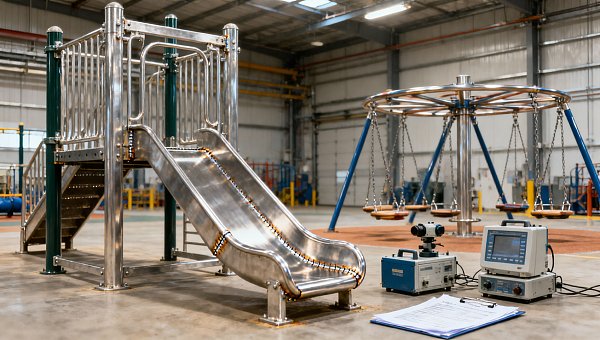
The European Committee for Standardization (CEN) published EN 1176-1:2026 on 12 May 2026. The standard revises general safety requirements for playground equipment, with specific new provisions for outdoor rides: (1) mandatory dynamic load simulation testing; (2) 100% X-ray inspection requirement for stainless steel welds; and (3) tightened finger-trap gap threshold reduced to 4 mm. All outdoor rides previously certified under earlier versions of EN 1176-1 must undergo full structural safety type certification against the 2026 edition by 30 November 2026 to remain eligible for placement on the EU market.
Industries Affected
Direct Exporters and OEMs
Companies exporting outdoor rides directly into the EU are directly subject to the conformity assessment requirement. Their existing CE certificates — issued under prior editions of EN 1176-1 — will no longer support market access after 30 November 2026 unless re-validated. Impact includes potential shipment delays, increased testing costs, and possible redesign efforts for products failing the new dynamic load or gap assessments.
Manufacturers and Fabricators
Producers responsible for structural assembly — especially those welding stainless steel components — face higher quality control demands. The 100% X-ray inspection mandate implies greater non-destructive testing (NDT) capacity, documentation traceability, and process validation. Facilities without certified NDT personnel or accredited inspection workflows may require external support or internal capability upgrades.
Component Suppliers and Material Providers
Suppliers of stainless steel tubing, fasteners, and structural hardware may see revised technical specifications from downstream fabricators. While the standard does not directly regulate raw materials, tighter weld integrity and gap tolerances increase demand for consistent material thickness, surface finish, and dimensional accuracy — particularly where parts interface with moving mechanisms or pinch zones.
Distribution and Import Agents
EU-based importers and authorized representatives bear legal responsibility for product compliance under Regulation (EU) 2019/1020. They must verify that incoming shipments carry valid certificates referencing EN 1176-1:2026 and confirm supporting test reports include dynamic load simulations and full weld inspection records — not just declarations of conformity.
Key Focus Areas and Recommended Actions
Monitor Official CEN and Notified Body Guidance
While EN 1176-1:2026 is published, harmonized standards lists in the Official Journal of the EU (OJEU) have not yet been updated. Analysis shows that full regulatory enforceability depends on this OJEU listing — expected within Q3 2026. Until then, enforcement may vary across Member States. Stakeholders should track updates from national market surveillance authorities and their assigned Notified Bodies.
Prioritize Products with High Dynamic Load Exposure or Stainless Steel Welding
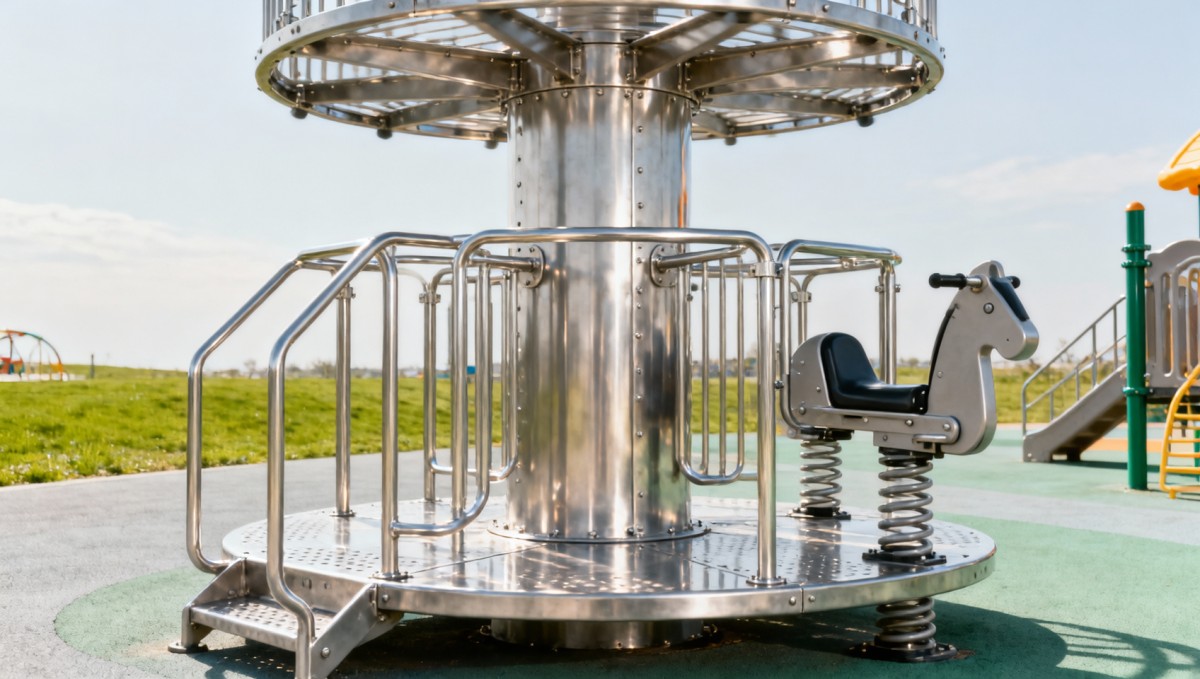
Observably, swing sets, rotating towers, and spring riders are more likely to require dynamic load retesting than static climbing frames. Similarly, products relying heavily on stainless steel frame welds — such as elevated platforms or cantilevered structures — face the greatest impact from the 100% X-ray requirement. Companies should triage their portfolio accordingly and allocate testing resources early.
Distinguish Between Certification Validity and Market Surveillance Timing
The 30 November 2026 deadline applies to certificate validity, not necessarily first-market-entry dates. A product placed on the EU market before that date under an older certificate remains compliant until its certificate expires — unless challenged during post-market surveillance. Current more appropriately understood as a hard cutoff for new certifications, not a blanket recall trigger.
Initiate Internal Gap Assessment and Supplier Alignment Now
Re-certification requires full technical documentation review, test planning, and coordination with accredited labs. Lead times for dynamic load testing and X-ray inspection are currently reported at 8–12 weeks. Companies should begin internal gap analysis, update drawings and BOMs to reflect 4 mm gap limits, and align with suppliers on weld procedure specifications (WPS) and material certifications — ideally before Q3 2026.
Editorial Perspective / Industry Observation
This revision signals a structural shift toward performance-based verification — moving beyond static geometry checks to simulated real-world use conditions. Observably, the inclusion of dynamic load simulation reflects growing emphasis on fatigue and service-life safety, not just initial installation integrity. Analysis shows that EN 1176-1:2026 functions less as an isolated update and more as part of a broader trend in EU product legislation: increasing reliance on test evidence over self-declaration, and tightening thresholds where injury risk is empirically documented (e.g., finger entrapment). It is not yet a fully enforced regulation, but it is a binding technical reference once harmonized — making proactive alignment commercially prudent.
In summary, EN 1176-1:2026 represents a defined, time-bound compliance inflection point for outdoor ride exporters and manufacturers serving the EU. Its significance lies not in novelty alone, but in the specificity and enforceability of its new requirements — particularly the combination of dynamic testing, full weld inspection, and quantified gap limits. It is best understood not as a temporary adjustment, but as the new baseline for structural safety assessment in this segment.
Source: European Committee for Standardization (CEN), EN 1176-1:2026, published 12 May 2026.
Note: Harmonization status in the Official Journal of the EU remains pending and is subject to ongoing observation.
Search News
Hot Articles
- Restaurant FurnitureFast-Casual Restaurant Interiors: Design Choices That Improve Speed and Guest FlowOct 04, 2026
- Outdoor RidesHow to Select Leisure Park Equipment for Safe, High-Throughput Visitor AreasOct 03, 2026
- Fashion & Gem JewelryDiamond Tester Wholesale: How to Vet Accuracy, Calibration, and MOQ Before OrderingOct 02, 2026
Popular Tags
Need ExpertConsultation?
Connect with our specialized leisureengineering team for procurementstrategies.
Recommended News
 Oct 03, 2026How to Select Leisure Park Equipment for Safe, High-Throughput Visitor AreasLeisure park equipment selection guide for safe, high-throughput venues—explore capacity, supervision, durability, accessibility, and supplier criteria.● Theme Park Strategist
 Sep 18, 2026What Drives Animatronic Dinosaur Manufacturer Prices for Theme Park Projects?Animatronic dinosaurs manufacturer price guide: compare motion, materials, controls, installation, and lifecycle costs to plan a durable theme park attraction.● Theme Park Strategist
 Sep 06, 2026Do Amusement Ride Safety Compliance Requirements Change Every Year?Do amusement safety compliance requirements change annually? Learn what really changes, from standards and inspections to permits, upgrades, and local approvals.● Theme Park Strategist
 Sep 02, 2026How Long Does It Take to Receive Full Safety Documents From an OEM?How long does it take to get full safety documentation from OEM partners? Discover realistic timelines, common delays, and practical steps to secure compliant files faster.● Theme Park Strategist
 Sep 03, 2026Designing Adventure Park Safety Systems for Zip Lines, Ropes Courses, and Daily InspectionsAdventure park safety systems: learn how to design safer zip lines and ropes courses with daily inspections, defect controls, rescue readiness, and staff training.● Theme Park Strategist
 Aug 22, 2026What to Look for When Choosing Three Seat Jet Skis for Rental or Resort UseThree seat jet skis for rental or resort use should balance stability, safety, maintenance, and guest comfort. Learn how to choose models that boost uptime and guest satisfaction.● Theme Park Strategist
 Aug 17, 2026What Parts Matter Most in a Roller Coaster and How Do They Affect Ride Safety?Roller coaster parts determine ride safety more than most riders realize. Explore how tracks, restraints, brakes, wheels, and control systems work together to protect every ride.● Theme Park Strategist
 Aug 15, 20262026 China Sports Expo Sees 45.74% More Overseas Pre-registered Buyers as POB Expands Procurement Matching2026 China Sports Expo boosts overseas pre-registered buyers by 45.74% as POB expands procurement matching for fitness, outdoor, and venue suppliers.● Theme Park Strategist
 Aug 14, 2026What Should Buyers Check Before Choosing a Flying Chair Ride Exporter?Flying chair ride exporter buyers should check safety, structure, export support, and spare parts before purchase to reduce risk and choose a reliable supplier.● Theme Park Strategist
 Aug 04, 2026EU Issues EN 1176-1:2026 for Playground SafetyEU Issues EN 1176-1:2026 for Playground Safety: learn how the new standard impacts Outdoor Rides, CE certification, inventory checks, and EU compliance before March 2027.● Theme Park Strategist
 Aug 03, 2026CPSC Adopts ASTM F1487-26 for Imported Outdoor RidesOutdoor Rides face a major U.S. compliance shift as CPSC adopts ASTM F1487-26. Learn the new certification, testing, and customs risks before November 1, 2026.● Theme Park Strategist
 Jul 26, 2026Revised EN 1176:2026 Triggers Re-Certification for Outdoor RidesOutdoor Rides face immediate EN 1176:2026 re-certification for new CE applications. Learn how testing, documentation, and EU market access rules now affect exports and delivery plans.● Theme Park Strategist
 Jul 21, 2026CPSC Recall Flags Structural Risk in Outdoor RidesCPSC recall flags structural risk in outdoor rides: learn how ASTM F1487-23 failures affect importers, distributors, and compliance teams across the U.S., Canada, and Australia.● Theme Park Strategist
 Jul 19, 2026How to Choose Outdoor Fitness Equipment for Parks Based on Users, Space, and BudgetOutdoor fitness equipment for parks: learn how to choose the right mix based on users, space, and budget to improve safety, usage, and long-term value.● Theme Park Strategist
 Jul 15, 2026Ocean Freight Spike Pressures Outdoor Rides ExportsOcean Freight Spike Pressures Outdoor Rides Exports as Shanghai-Rotterdam rates surge 42%. See how rising freight costs, delays, and rerouting risks could reshape Europe-bound delivery plans.● Theme Park Strategist
 Jul 14, 2026EN 1176 Revision Takes Effect for Outdoor Ride Weld TestingEN 1176 revision takes effect for outdoor ride weld testing from Sept 1, 2026. Learn ISO 5817 level B, third-party NDT report rules, and key EU compliance steps.● Theme Park Strategist
 Jul 12, 2026Vietnam Requires AI Anti-Collision Systems for Imported Outdoor RidesVietnam Requires AI Anti-Collision Systems for Imported Outdoor Rides from Sept. 15, 2026. Learn compliance rules, VAST certification needs, and how importers can avoid delays.● Theme Park Strategist
 Jul 11, 2026Vietnam Tightens Rules for Imported Outdoor RidesVietnam Tightens Rules for Imported Outdoor Rides: learn how Vietnam’s 2026 compliance update adds AI anti-collision, Vietnamese logs, and local maintenance duties for importers and manufacturers.● Theme Park Strategist
 Jul 09, 2026How to Evaluate a Lazy River Equipment Supplier for Safety, Flow Design, and MaintenanceLazy river equipment supplier selection affects safety, flow design, and maintenance costs. Learn what to compare, what to ask, and how to choose a reliable partner.● Theme Park Strategist
 Jul 08, 2026RCEP Update Cuts ASEAN Tariffs to Zero for Outdoor RidesRCEP update cuts ASEAN tariffs to zero for outdoor rides from China. Learn how FSC-CoC, PEFC traceability, and e-CO compliance affect exports, sourcing, and buyer decisions.● Theme Park Strategist
 Jul 07, 2026RCEP Guide Adds Dual Wood Traceability for Outdoor RidesOutdoor Rides exporters face a new RCEP traceability rule: dual FSC-CoC and PEFC-STS 2023 codes for wood components. See what changes before Oct. 1, 2026.● Theme Park Strategist
 Jul 06, 2026Vietnam Tightens RCEP Rules for Wooden Ride PartsVietnam Tightens RCEP Rules for Wooden Ride Parts: learn how FSC Chain-of-Custody and QR code requirements now affect outdoor rides, RCEP imports, and shipment compliance.● Theme Park Strategist
 Jul 06, 2026How to Evaluate a Bumper Cars on Ice Manufacturer for Safety, Capacity, and ROIBumper cars on ice manufacturer selection starts with safety, capacity, and ROI. Learn how to compare suppliers, reduce risk, and choose a partner built for long-term commercial success.● Theme Park Strategist
 Jul 04, 2026Electric Drift Bumper Cars vs Traditional Bumper Cars: Which Fits Your Venue Better?Electric drift bumper cars or traditional bumper cars? Compare installation, safety, maintenance, guest appeal, and ROI to choose the best fit for your venue.● Theme Park Strategist