China Customs Launches Smart Classification System for Outdoor Rides
China Customs General Administration officially launched the Sports and Entertainment Goods Smart Classification Assistant System Version 2.0 on May 12, 2026 — a regulatory upgrade specifically designed to streamline export declarations for outdoor amusement rides. The initiative directly addresses long-standing classification ambiguities under HS headings 9508.10 and 9508.20, significantly reducing administrative friction for manufacturers and exporters in the global leisure equipment supply chain.
Event Overview
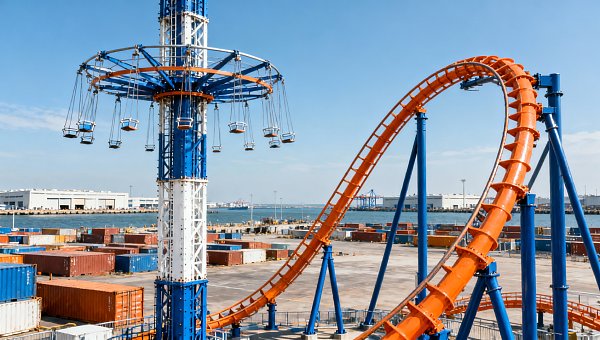
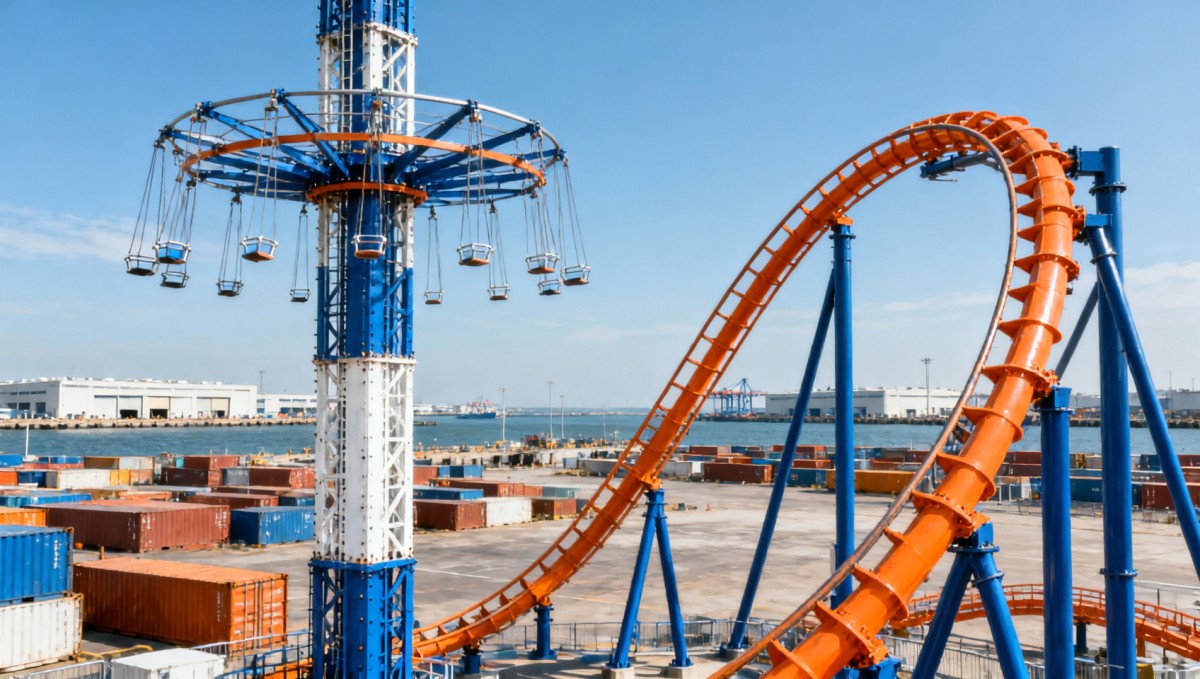
On May 12, 2026, China Customs General Administration rolled out Version 2.0 of its Sports and Entertainment Goods Smart Classification Assistant System. The update introduces 12 new structural pattern recognition models tailored to outdoor rides (e.g., swing rides, rotating towers, track-based coasters), enabling automated HS code assignment — primarily under subheadings 9508.10 (mechanical amusement park rides) and 9508.20 (non-mechanical amusement park rides). The system now operates across 21 major ports nationwide, achieving a declared HS code accuracy rate of 99.2% and cutting average customs clearance time by 2.3 days.
Industries Affected
Direct trading enterprises — particularly exporters of outdoor rides to EU, ASEAN, and Latin American markets — face immediate operational impact. Prior to the system’s deployment, manual classification often triggered post-submission verification, delays at destination customs, or reclassification penalties. With automated matching, pre-shipment compliance checks are faster and more consistent, lowering documentation error rates and reducing reliance on external classification consultants.
Raw material procurement enterprises — especially those sourcing structural steel, composite panels, control systems, or safety harness components for ride assembly — experience indirect but meaningful effects. As export lead times compress, demand forecasting becomes more responsive; however, tighter declaration windows also amplify sensitivity to component-level HS mismatches (e.g., if a control module is misclassified as industrial automation gear rather than ride-specific parts). Procurement contracts now require clearer HS alignment clauses.
Manufacturing enterprises — including OEM/ODM producers of outdoor rides — must adapt internal product data management. The system relies on standardized technical descriptors (e.g., drive type, passenger capacity, structural topology). Firms lacking structured BOMs with classification-relevant attributes may see lower initial match rates, requiring targeted data enrichment — not just for customs, but for downstream certification (e.g., EN 13814, ASTM F2291).
Supply chain service enterprises — such as freight forwarders, customs brokers, and compliance SaaS platforms — face both opportunity and pressure. Demand for integration-ready API access to the system (where available) is rising, while legacy classification support services must evolve from reactive advisory to proactive data hygiene and model training support.
Key Considerations and Recommended Actions
Verify product-level structural schematics against the 12 new pattern models
Manufacturers should cross-check their technical drawings — especially kinematic diagrams and frame topology maps — against the publicly referenced pattern taxonomy. Misalignment here reduces auto-classification confidence, even if functional descriptions are accurate.
Update internal HS code libraries with versioned mappings to 9508.10/9508.20 subcategories
Export departments must replace generic “9508” entries with granular, use-case-specific codes (e.g., distinguishing gravity-driven vs. motorized rotation mechanisms). This supports both system compatibility and audit readiness.
Engage customs brokers early in prototype and pre-shipment stages
Given the system’s reliance on declared technical parameters, early validation of classification inputs — before mass production — helps avoid cascading corrections during peak shipping periods.
Editorial Perspective / Industry Observation
Observably, this rollout signals a broader shift: China Customs is moving beyond digitizing paperwork toward embedding classification logic into product design workflows. Analysis shows the 12 new pattern models reflect real-world enforcement pain points — notably around hybrid rides combining mechanical and inflatable elements, where prior rulings were inconsistent. From an industry perspective, the 2.3-day clearance gain is less about speed alone and more about predictability: shippers can now align factory dispatch, vessel booking, and inland transport with higher confidence. That said, current system coverage remains limited to outdoor rides — not related categories like indoor simulators or water park slides — meaning classification fragmentation persists elsewhere in the broader amusement equipment sector.
Conclusion
This initiative marks a maturation point in China’s trade facilitation infrastructure — one that rewards technical transparency over procedural workarounds. For outdoor ride exporters, it is better understood not as a one-time compliance update, but as an incentive to institutionalize product data discipline. Over time, firms that treat HS classification as an integral part of engineering documentation — rather than a final-step customs formality — will capture disproportionate efficiency gains.
Source Attribution
Official announcement: China Customs General Administration, Notice No. 2026–47 (May 12, 2026); Technical specifications published via the China International Trade Single Window portal. Note: Integration protocols for third-party ERP/TMS systems remain under pilot testing at Shanghai and Shenzhen ports — further updates expected Q3 2026.
Search News
Hot Articles
Popular Tags
Need ExpertConsultation?
Connect with our specialized leisureengineering team for procurementstrategies.
Recommended News
 May 13, 2026China Customs Launches Smart Classification System for Outdoor RidesChina Customs' new Smart Classification System streamlines outdoor rides export under HS 9508.10/9508.20 — boost accuracy, slash clearance time by 2.3 days.● Theme Park Strategist
 May 12, 20262026 Inner Mongolia Football Super League Kicks Off May 15; LED Stadium Lighting Export Inquiries Up 28%LED stadium lighting export inquiries surge 28% amid 2026 Inner Mongolia Football Super League kickoff — high Ra≥90, UGR≤19, IP66 systems in demand across Middle East & LATAM.● Theme Park Strategist
 May 12, 2026US CPSC Recalls 3 Chinese-Made Kids' Outdoor Climbing FramesUS CPSC recalls 3 Chinese-made kids' outdoor climbing frames over structural & finger-trap hazards—urgent compliance action for importers, manufacturers & labs.● Theme Park Strategist
 May 12, 2026China Customs Launches Smart Classification System for Outdoor RidesOutdoor Rides exporters: China Customs' new Smart Classification System boosts HS code accuracy to 99.2% and cuts clearance by 1.8 days—act now to optimize compliance & speed.● Theme Park Strategist
 May 10, 2026US CPSC Recalls 3 Chinese-Made Outdoor Climbing SetsUS CPSC recalls 3 Chinese-made outdoor climbing sets over structural & pinch-point hazards—key implications for exporters, importers, and labs.● Theme Park Strategist
 May 09, 20262026 Inner Mongolia Football Super League Kicks Off, Boosting LED Stadium Lighting Export InquiriesLED stadium lighting export inquiries surge 28% after 2026 Inner Mongolia Football Super League launch — key specs: IP66, −30°C cold-start, CISPR 15.● Theme Park Strategist
 May 09, 2026US CPSC Recalls 3 Chinese-Made Kids' Outdoor Climbing FramesUS CPSC recalls 124,000 Chinese-made kids' outdoor climbing frames over ASTM F1487-23 compliance failures—act now to avoid liability & supply chain disruption.● Theme Park Strategist
 May 09, 2026Outdoor fitness equipment park plans often fail at this stepOutdoor fitness equipment park plans often fail before installation due to one missed planning step. Learn how to avoid compliance delays, layout errors, and costly rework.● Theme Park Strategist
 May 09, 2026Zorb balls wholesale: which material choices really matter?Zorb balls wholesale starts with smarter material choices. Compare TPU, PVC, and hybrid options to improve safety, durability, clarity, and long-term ROI.● Theme Park Strategist
 May 09, 2026Why water tricycles are showing up in more resort projectsWater tricycles are becoming a smart resort amenity for family-friendly, low-noise waterfront experiences. Discover why developers value them for guest appeal, branding, and practical ROI.● Theme Park Strategist
 May 09, 2026Commercial pedal boats or water tricycles for rental lakes?Commercial pedal boats or water tricycles for rental lakes? Compare stability, capacity, maintenance, safety, and ROI to choose the best fleet for resorts, parks, and leisure venues.● Theme Park Strategist
 May 09, 2026What makes floating water parks expensive to maintain?Floating water parks cost more to maintain due to anchoring, UV damage, inspections, repairs, and weather exposure. Learn the key cost drivers and how to reduce downtime.● Theme Park Strategist
 May 09, 2026Bumper cars on ice: fun attraction or maintenance headache?Bumper cars on ice: exciting family attraction or costly upkeep? Discover safety, maintenance, venue fit, and ROI factors before you invest.● Theme Park Strategist
 May 08, 2026Choosing an Animatronic Dinosaurs Manufacturer for Outdoor ParksAnimatronic dinosaurs manufacturer selection for outdoor parks: learn how to compare durability, customization, safety, and after-sales support to avoid costly mistakes.● Theme Park Strategist
 May 08, 2026Drift Bumper Cars: What Separates Smooth Ride From High Repairs?Drift bumper cars buyers: discover what truly separates a smooth, low-downtime ride from repair-heavy models, from drivetrain and battery design to chassis durability.● Theme Park Strategist
 May 08, 2026High Ropes Course Equipment and the Safety Details Often MissedHigh ropes course equipment decisions go beyond appearance—discover the often-missed safety details that shape compliance, durability, uptime, and user trust.● Theme Park Strategist
 May 08, 2026Electric Go Karts Wholesale and the Battery Cost TrapElectric go karts wholesale buyers: avoid hidden battery cost traps. Learn how lifespan, charging speed, replacement pricing, and warranty support impact long-term ROI.● Theme Park Strategist
 May 08, 2026Zip Line Equipment: What Usually Delays Installation?Zip line equipment installation delays often stem from permits, terrain, design changes, and supplier gaps. Learn the key risks early to keep your project on time and avoid costly setbacks.● Theme Park Strategist
 May 08, 2026How to Compare a Go Kart Manufacturer Beyond PriceGo kart manufacturer comparison starts beyond price. Learn how to assess safety, quality control, customization, compliance, and after-sales support for smarter sourcing.● Theme Park Strategist
 May 08, 2026CPSC Recalls 3 Chinese Outdoor Climbing Sets for Structural & Pinch HazardsCPSC recalls 3 Chinese outdoor climbing sets for structural & pinch hazards—urgent compliance alert for exporters, certifiers & importers under ASTM F1487-23.● Theme Park Strategist
 May 07, 2026Shen Jing on Trade Rumors: Implications for Basketball Equipment ManufacturingBasketball equipment manufacturing gains strategic clarity as Shen Jing’s trade rumor response boosts OEM confidence—Dongguan & Suzhou suppliers see strengthened NBA facility credibility and smart gear demand.● Theme Park Strategist
 May 07, 2026Ferris Wheel Manufacturer Shortlists Often Miss This RiskFerris wheel manufacturer shortlists often miss lifecycle compliance risk. Learn how to avoid costly delays, safety gaps, and weak after-sales support before you buy.● Theme Park Strategist
 May 07, 2026Lazy River Equipment: Where Energy Use Adds Up FastLazy river equipment can drive energy costs higher than expected. Learn what technical evaluators should check before sourcing or upgrading for better efficiency and lifecycle value.● Theme Park Strategist
 May 07, 2026Water Playground Structures: Design Choices That Reduce Queue TimeWater playground structures that cut queue time: discover layout, capacity, and feature strategies that improve guest flow, safety, and ROI for commercial aquatic projects.● Theme Park Strategist