When Hotel & Catering Equipment Specs Cause Cost Overruns
When Hotel & Catering Equipment Specs Cause Cost Overruns
In hotel fit-outs and kitchen projects, vague Hotel & Catering Equipment specifications often look harmless at first. Later, they become change orders, delayed approvals, failed inspections, and expensive rework.
A missing voltage note, unclear stainless grade, or incomplete ventilation requirement can disrupt several trades at once. Costs rise not only in procurement, but also in labor, logistics, testing, and commissioning.
This guide explains where specification gaps begin, why they escalate, and how to control Hotel & Catering Equipment risk before it affects project outcomes.
Why a structured review matters
Hotel & Catering Equipment sits at the intersection of architecture, MEP coordination, food safety, workflow, and brand standards. One unclear requirement can create conflict across all of them.
A structured review reduces assumptions. It helps align design intent, local code, supplier capability, and installation conditions before purchase orders are released.
It also improves sourcing quality. Global Commercial Trade tracks how better documentation supports smoother approvals, stronger compliance, and more reliable cross-border Hotel & Catering Equipment procurement.
Core specification checks for Hotel & Catering Equipment
- Confirm exact equipment function, output capacity, and service profile so the selected unit matches real meal volume, operating hours, and workflow intensity.
- Verify all dimensions, clearances, door swing, access paths, and service zones to avoid delivery blockage, maintenance obstruction, and on-site relocation costs.
- Define power, gas, water, drainage, and ventilation data in full, including connection points, load demand, and emergency shutdown requirements.
- State material grades clearly, especially for food-contact surfaces, corrosive environments, and visible front-of-house applications where durability and finish consistency matter.
- Check local and international compliance standards, including food safety, fire safety, electrical certification, hygiene rules, and accessibility requirements.
- Align drawings, schedules, and technical submittals so every Hotel & Catering Equipment item carries the same code, description, and revision status.
- Review heat rejection, noise output, and ambient operating conditions because poor environmental assumptions often create comfort, safety, and performance issues.
- Clarify factory scope versus site scope for accessories, supports, trims, flashings, and connectors that are frequently omitted from supplier quotations.
- Request realistic lead times for manufacture, testing, packing, shipping, customs, and installation instead of relying on optimistic production promises.
- Validate spare parts availability, warranty terms, and service coverage early, since lifecycle cost problems often begin with incomplete after-sales planning.
Where specification gaps usually begin
Concept design assumptions
Early layouts often prioritize space planning and guest experience. Technical details for Hotel & Catering Equipment may remain generic until too late.
That delay creates a chain reaction. Utilities are sized incorrectly, structural openings are missed, and substitute products start driving design decisions instead of operational needs.
Supplier interpretation gaps
If specifications are broad, suppliers interpret them differently. Quotations may appear comparable, while actual inclusions, certifications, and build quality vary sharply.
This is common in Hotel & Catering Equipment sourcing across regions. Model equivalents may differ in controls, efficiency, drainage design, or safety documentation.
Coordination failures between trades
Kitchen equipment rarely works alone. It depends on builders, MEP teams, fire systems, flooring, wall finishes, and exhaust specialists.
When one interface is missing from the Hotel & Catering Equipment package, hidden site work appears later. That is where many budgets start slipping.
Application-specific notes that affect cost
Back-of-house production kitchens
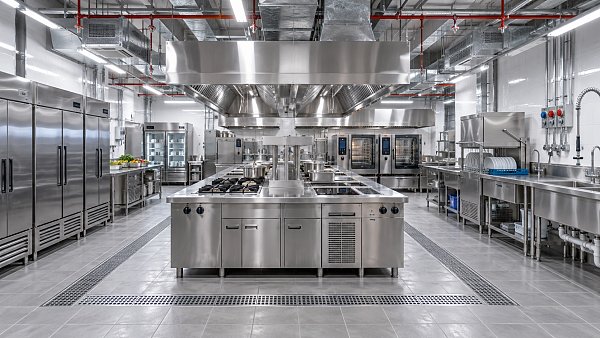
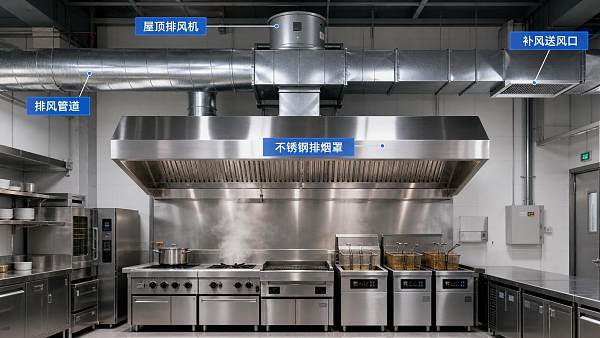
High-output kitchens need precise utility coordination. Cooking line loads, hood extraction, grease management, and floor drainage must be matched to actual operation.
In these spaces, underspecified Hotel & Catering Equipment often triggers MEP redesign. That can cause ceiling rework, duct rerouting, and higher commissioning costs.
Buffet and front-of-house service areas
Visible service equipment carries both technical and aesthetic demands. Surface finish, lighting integration, noise control, and user safety need equal attention.
For front-facing Hotel & Catering Equipment, poor specification can damage brand perception. Late finish changes are especially expensive once fabrication begins.
Laundry, stewarding, and support zones
Support areas are often value-engineered too aggressively. Yet these zones require exact drainage, humidity control, chemical resistance, and service access.
If support-space Hotel & Catering Equipment is simplified on paper, downtime risk increases after handover. Operational losses can exceed the initial savings.
Commonly missed items that increase total cost
Delivery access is often ignored. Large Hotel & Catering Equipment may fit the room on drawings, but not the freight lift, corridor turn, or service entrance.
Startup and commissioning scope is another blind spot. Calibration, balancing, training, and live testing are frequently excluded from low initial quotations.
Certification mismatch creates serious risk. Equipment approved in one market may still fail local authority review if labels, test reports, or language requirements differ.
Cleaning and maintenance access is also overlooked. Hotel & Catering Equipment that cannot be cleaned easily may breach hygiene standards and shorten service life.
Finally, revision control matters. Teams sometimes price one schedule, install another drawing, and approve a third submittal set. Rework becomes almost inevitable.
A practical review process before procurement
- Freeze operational requirements first, then confirm utility loads and compliance obligations before comparing brands or negotiating Hotel & Catering Equipment pricing.
- Use one coordinated equipment schedule linked to drawings, room data sheets, and MEP layouts so all disciplines review the same information.
- Ask suppliers to mark exclusions line by line, especially for trims, connection kits, testing, and local certification support.
- Conduct dimensional and service-point verification at site before fabrication release, not after goods have already entered production.
- Compare total installed cost, not unit cost alone, because freight, duties, installation labor, and commissioning often change the real budget.
- Plan spare parts, manuals, and training deliverables in the contract package to reduce post-handover disruption and hidden lifecycle expense.
How better sourcing reduces overruns
Better sourcing is not just about finding lower prices. It means matching supplier capability to project complexity, documentation standards, and approval pathways.
For Hotel & Catering Equipment, reliable sourcing depends on verified technical data, transparent scope definition, and evidence of similar completed commercial projects.
This is where intelligence-driven platforms add value. GCT supports sourcing decisions with market visibility, capability screening, and sharper documentation discipline across commercial sectors.
FAQ about Hotel & Catering Equipment specification risk
What is the biggest source of Hotel & Catering Equipment cost overrun?
The biggest source is incomplete coordination between equipment data and building services. Utility mismatches usually cause the most expensive late-stage corrections.
Should equivalent models always be accepted?
Not automatically. Equivalent Hotel & Catering Equipment must match capacity, certification, dimensions, connections, materials, and operating conditions, not just general function.
When should technical review happen?
It should begin during design development and continue before tender, before fabrication, and again before delivery to site.
Final takeaways and next steps
Cost overruns rarely start with one dramatic mistake. In Hotel & Catering Equipment projects, they usually begin with small missing details that multiply across trades and timelines.
A disciplined specification review protects budget, schedule, compliance, and long-term performance. It also makes supplier comparisons more accurate and contract scope easier to control.
Before releasing the next package, verify function, utilities, compliance, dimensions, finishes, delivery access, and after-sales support. That single review step can prevent major overruns later.
Search News
Hot Articles
- Restaurant FurnitureFast-Casual Restaurant Interiors: Design Choices That Improve Speed and Guest FlowOct 04, 2026
- Outdoor RidesHow to Select Leisure Park Equipment for Safe, High-Throughput Visitor AreasOct 03, 2026
- Fashion & Gem JewelryDiamond Tester Wholesale: How to Vet Accuracy, Calibration, and MOQ Before OrderingOct 02, 2026
Popular Tags
Need ExpertConsultation?
Connect with our specialized leisureengineering team for procurementstrategies.
Recommended News
 Sep 24, 2026Conveyor Pizza Oven Price: What Buyers Should Budget for Capacity and FeaturesConveyor pizza oven price guide: compare capacity, features, installation costs, and quote factors to choose the right commercial oven for your operation.● Hospitality Sourcing Dir
 Sep 23, 2026How Restaurant Buyers Can Source Hospitality Supplies Without OverorderingHospitality supplies for restaurants: learn practical sourcing strategies to cut excess inventory, protect cash flow, improve supplier reliability, and keep every service running smoothly.● Hospitality Sourcing Dir
 Sep 22, 2026Commercial Kitchen Design Price: Budgeting by Layout, Equipment, and MEP ScopeCommercial kitchen design price explained: budget smarter for layout, equipment, MEP scope, compliance, installation, and long-term operational performance.● Hospitality Sourcing Dir
 Sep 19, 2026How to Select a Spiral Dough Mixer for Bakery Batch Size and Dough HydrationSpiral dough mixer bakery guide: match batch size, flour load, and hydration to select reliable torque, temperature control, and consistent dough results.● Hospitality Sourcing Dir
 Sep 14, 2026How Restaurants Can Choose Disposable Wooden Cutlery for Takeout and CateringDisposable wooden cutlery fork spoon knife guide for restaurants: compare strength, finish, packaging, food-contact needs, and catering performance.● Hospitality Sourcing Dir
 Sep 12, 2026How to Size a Restaurant Walk-In Cooler for Peak Inventory and Kitchen LayoutRestaurant walk in coolers sized for peak inventory and kitchen workflow help improve food safety, staff efficiency, storage access, and long-term operational performance.● Hospitality Sourcing Dir
 Sep 10, 2026How to Choose a CE Hot Dog Roller for Safe, High-Volume Food Service?Choose a CE hot dog roller with confidence: compare compliance documents, heating consistency, cleaning design, capacity, and total cost for safe, high-volume food service.● Hospitality Sourcing Dir
 Sep 04, 2026How to Evaluate a Commercial Food Warmer Manufacturer for Bulk Catering ProjectsCommercial food warmer manufacturer evaluation guide for bulk catering projects: compare thermal performance, compliance, customization, costs, and after-sales support.● Hospitality Sourcing Dir
 Aug 30, 2026How Can Buyers Verify Supplier Qualifications Before a Bulk Order?How to confirm supplier qualifications before placing a bulk order: verify legal identity, factory capability, certificates, samples, quality controls, and payment safeguards.● Hospitality Sourcing Dir
 Aug 28, 2026Commercial Kitchen Design Standards: A Planning Checklist for Code-Compliant LayoutsCommercial kitchen design standards: use this practical checklist to plan safer, code-compliant layouts, streamline approvals, and avoid costly rework.● Hospitality Sourcing Dir
 Aug 06, 2026How to Choose Flake Ice Makers for Seafood Displays, Bars, and Food Prep?Flake ice makers buying guide: compare output, hygiene, storage, energy use, and reliability to choose the best solution for seafood displays, bars, and food prep.● Hospitality Sourcing Dir
 Aug 03, 2026Commercial Kitchen Design Price: What Drives Cost in a New Build Project?Commercial kitchen design price explained: discover what drives cost in a new build, from layout and equipment to ventilation, compliance, and hidden budget risks.● Hospitality Sourcing Dir
 Jul 30, 2026How to Choose a Countertop Commercial Pizza Oven for Capacity, Speed, and Space?Countertop commercial pizza oven buying guide: learn how to match capacity, bake speed, and kitchen space for consistent output, lower costs, and smarter purchasing decisions.● Hospitality Sourcing Dir
 Jul 22, 2026How to Evaluate a Cotton Candy Machine Supplier for Quality, Lead Time, and MOQCotton candy machine supplier selection starts with quality, lead time, and MOQ. Learn how to compare suppliers, reduce sourcing risk, and choose a partner that supports reliable growth.● Hospitality Sourcing Dir
 Jul 21, 2026How to Choose a Charcoal Commercial Grill for Capacity, Heat Control, and Menu FitCharcoal commercial grill buying guide: learn how to match capacity, heat control, and menu fit to boost consistency, service speed, and ROI in commercial kitchens.● Hospitality Sourcing Dir
 Jul 10, 2026FDA Import Alert Adds NSF/ANSI 50-2026 for Commercial Kitchen EquipmentFDA Import Alert now highlights NSF/ANSI 50-2026 for commercial kitchen equipment. Learn how dishwashers, ice machines, and steam cabinets can avoid U.S. port detention.● Hospitality Sourcing Dir
 Jul 05, 2026How to Select Energy Efficient Display Cabinets for Food Retail and HospitalityEnergy efficient display cabinets can cut operating costs while improving food safety, visibility, and service efficiency. Learn how to choose the right model for retail and hospitality.● Hospitality Sourcing Dir
 Jul 04, 2026CPSC Flags New UL 2595 Label Rule for Commercial Ice MakersCPSC flags a new UL 2595 label rule for commercial ice makers entering the U.S. after Aug. 1, 2026. Learn who is affected, key compliance steps, and how to avoid port delays and recall risk.● Hospitality Sourcing Dir
 Jun 29, 2026How to Choose Thermal Receipt Printers for Retail and Restaurant CountersThermal receipt printers for retail and restaurant counters: learn how to compare speed, durability, connectivity, and total operating cost to choose a model that supports smoother service.● Hospitality Sourcing Dir
 Jun 28, 2026Stainless Steel Kitchen Ventilation Systems: Key Specifications for Commercial ProjectsStainless steel kitchen ventilation systems: compare material grades, airflow capture, hygiene, fire safety, and installation specs for commercial projects before you buy.● Hospitality Sourcing Dir
 Jun 27, 2026Commercial Shawarma Machines: What to Check Before Buying for High-Volume ServiceShawarma machines commercial buying guide: learn how to compare capacity, heat control, durability, compliance, and lifecycle cost before choosing equipment for high-volume service.● Hospitality Sourcing Dir
 Jun 26, 2026Restaurant POS Systems: How to Compare Features, Costs, and ScalabilityRestaurant POS systems: compare features, costs, and scalability to find the best fit for your restaurant and boost long-term efficiency.● Hospitality Sourcing Dir
 Jun 25, 2026Kitchen Ventilation Systems Design: How to Size Hoods, Airflow, and Make-Up AirKitchen ventilation systems design explained clearly: learn how to size hoods, set exhaust airflow, and balance make-up air for safer, more efficient commercial kitchens.● Hospitality Sourcing Dir
 Jun 14, 2026Hot Dog Rollers for Convenience Stores and Cafes: Capacity, Heating Zones, and Cleaning TipsHot dog rollers buying guide for convenience stores and cafes: compare real capacity, heating zones, energy use, and cleaning tips to choose a smarter, lower-waste setup.● Hospitality Sourcing Dir