ASEAN Arcade EPR Portal Launches for VR Machine Exporters
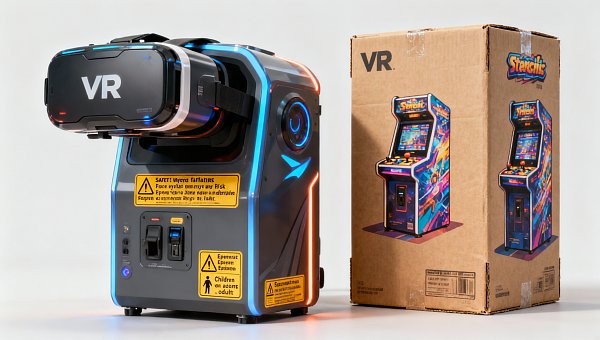
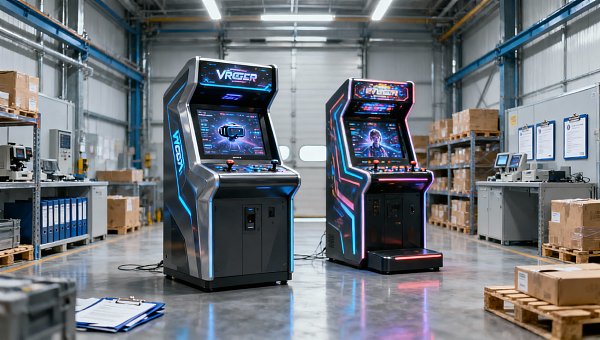
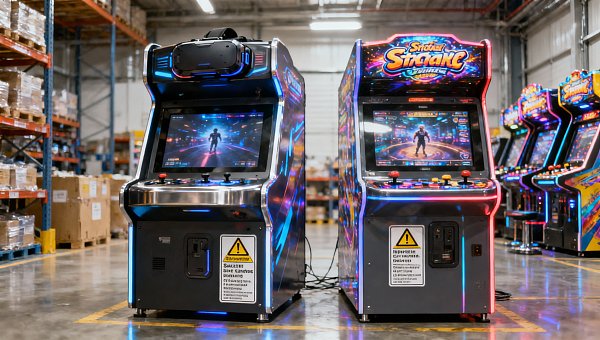
On May 13, 2026, Thailand, Vietnam, Indonesia, Malaysia, and the Philippines jointly launched the ‘ASEAN Arcade EPR Portal’, a digital registration platform for Extended Producer Responsibility (EPR) targeting manufacturers of Arcade & VR Machines exporting to the region—including Chinese OEMs. This requirement directly affects electronics exporters, hardware OEM/ODM providers, and cross-border logistics operators serving Southeast Asia, as non-compliance results in customs rejection and warehouse denial.
Event Overview
On May 13, 2026, the environmental authorities of Thailand, Vietnam, Indonesia, Malaysia, and the Philippines officially activated the ‘ASEAN Arcade EPR Portal’. All manufacturers exporting Arcade & VR Machines to these five countries—including Chinese OEMs—must complete EPR registration and pay the annual ecological handling fee (0.8%–1.2% of declared shipment value) within 72 hours prior to first customs clearance. Products from unregistered producers will be denied entry into bonded warehouses.
Industries Affected by Segment
Direct Exporters (Trading Companies & Brand Holders)
These entities bear primary compliance responsibility under the new mandate. Since registration must occur before first customs clearance—and is tied to each consignment’s entry timeline—they face immediate operational pressure on documentation timing, tariff classification alignment, and fee remittance coordination with local agents.
OEM/ODM Manufacturers (Including Chinese Contract Producers)
Chinese manufacturers producing Arcade & VR Machines for foreign brands are explicitly included in the scope. They may be contractually required by buyers to assume EPR registration or co-register, affecting quotation models, lead-time commitments, and liability clauses in supply agreements.
Cross-Border Logistics & Customs Service Providers
Freight forwarders and customs brokers supporting ASEAN-bound shipments now need to verify EPR registration status before release processing. Their service scope may expand to include EPR filing support—or risk delays if documentation gaps emerge at port.
Component & Subsystem Suppliers
While not directly mandated, upstream suppliers of core modules (e.g., motion sensors, display drivers, PCB assemblies) may face downstream requests for traceability data or eco-design documentation to support their customers’ EPR submissions—particularly where product-level environmental declarations require material composition inputs.
Key Points for Enterprises and Practitioners to Monitor and Act Upon
Track official portal updates and national implementation timelines
Although the portal launched regionally on May 13, 2026, individual countries may issue supplementary guidance on fee collection mechanisms, registration validation windows, or transitional allowances. Monitoring national environmental agency notices—not just ASEAN-level announcements—is critical for accurate planning.
Verify product scope definitions before shipment scheduling
The regulation applies specifically to ‘Arcade & VR Machines’. Analysis shows that classification hinges on functional use and physical configuration—not just branding or marketing labels. Exporters should proactively confirm whether hybrid devices (e.g., VR-enabled kiosks or educational simulators) fall under this scope before committing to delivery schedules.
Distinguish between registration obligation and fee payment timing
Registration must be completed within 72 hours pre-clearance, but the annual ecological handling fee may be invoiced separately and subject to local fiscal calendar rules. Observably, some jurisdictions may allow post-registration fee settlement—but only after confirmation via the portal dashboard or national authority notice.
Prepare internal handoff protocols between sales, logistics, and compliance teams
Since the 72-hour window starts upon confirmed shipment booking—not arrival—the registration trigger point lies upstream in order management. Current best practice involves embedding EPR readiness checks into the order-to-shipment workflow, including pre-clearance checklist sign-offs and designated portal account access delegation.
Editorial Perspective / Industry Observation
This initiative is better understood as a coordinated policy signal than an immediately enforceable regime across all five markets. While the portal is live, enforcement rigor—especially for small-volume or first-time exporters—may vary during the initial six-month observation period. From an industry perspective, it reflects growing regional convergence on EPR frameworks for electronics beyond traditional WEEE categories, with Arcade & VR Machines now formally treated as regulated end-of-life equipment. It also signals increasing reliance on centralized digital infrastructure for transnational environmental compliance—a trend likely to extend to other device categories in coming years.
Conclusion
The ASEAN Arcade EPR Portal launch marks a formal step toward harmonized environmental accountability for interactive entertainment hardware in Southeast Asia. Its immediate impact is procedural rather than punitive: it introduces a mandatory checkpoint in export workflows, not a ban or penalty regime—at least not yet. For affected enterprises, the most pragmatic interpretation is that this is a compliance gate requiring process integration—not a strategic inflection point demanding market exit or redesign. Ongoing attention should focus on implementation fidelity per country, not theoretical scope expansion.
Source Attribution
Main source: Joint announcement by environmental ministries of Thailand, Vietnam, Indonesia, Malaysia, and the Philippines, published May 13, 2026, regarding the ASEAN Arcade EPR Portal.
Points requiring continued observation: National-level fee collection procedures, eligibility criteria for multi-country registration, and treatment of refurbished or second-hand units.
Search News
Hot Articles
- Restaurant FurnitureFast-Casual Restaurant Interiors: Design Choices That Improve Speed and Guest FlowOct 04, 2026
- Outdoor RidesHow to Select Leisure Park Equipment for Safe, High-Throughput Visitor AreasOct 03, 2026
- Fashion & Gem JewelryDiamond Tester Wholesale: How to Vet Accuracy, Calibration, and MOQ Before OrderingOct 02, 2026
Popular Tags
Need ExpertConsultation?
Connect with our specialized leisureengineering team for procurementstrategies.
Recommended News
 Sep 15, 2026How to Choose Coin-Operated Pool Tables for Bars, Hotels, and Arcade VenuesCoin operated pool tables for bars, hotels, and arcades: compare sizes, payment systems, durability, service access, and revenue potential.● Theme Park Strategist
 Sep 08, 2026What to Look for in a Flight Simulator Chair Manufacturer for Commercial VR CentersChoose a flight simulator chair manufacturer that delivers durable, safe, customizable seating for commercial VR centers. Explore key sourcing criteria now.● Theme Park Strategist
 Aug 25, 2026What to Evaluate Before Buying Commercial Self Service Photo Booths for VenuesCommercial self service photo booths for venues: learn how to evaluate durability, software stability, branding flexibility, support, and total ROI before you buy.● Theme Park Strategist
 Aug 23, 2026How to Evaluate Wholesale Vending Machines for Multi-Location Business DeploymentWholesale vending machines for multi-location deployment require more than low unit cost. Learn how to compare reliability, payments, telemetry, and supplier support to scale smarter.● Theme Park Strategist
 Aug 17, 2026U.S. CPSC Urges Bilingual Warnings for Arcade and VR MachinesU.S. CPSC urges bilingual safety warnings for Arcade & VR Machines—learn what exporters, importers, and distributors must do now to avoid delays and returns.● Theme Park Strategist
 Aug 16, 2026EU Enforces EN IEC 62368-1:2026 Certification for Arcade and VR MachinesEU Enforces EN IEC 62368-1:2026 certification for arcade and VR machines, reshaping EU market access, customs clearance, and compliance planning for exporters and distributors.● Theme Park Strategist
 Aug 13, 2026UFLPA’s new guidelines take effect: Exports of Arcade and VR equipment face full-link labor compliance requirementsUFLPA’s new guide takes effect: Arcade and VR machine exports to the U.S. now face full-chain labor compliance checks. Discover key risks and action steps.● Theme Park Strategist
 Aug 12, 2026EU PPWR takes effect, Arcade and VR packaging incorporate heavy metal and PFAS restrictionsEU PPWR now applies to Arcade and VR packaging, tightening heavy metal and PFAS compliance. Learn how exporters can avoid delays, fines, and customs risks.● Theme Park Strategist
 Aug 11, 2026CPSC Sets Bilingual Labels for Arcade and VR ImportsCPSC bilingual labels for arcade and VR imports become mandatory on October 1, 2026. Learn the new English-Spanish warning rules, customs risks, and key compliance steps now.● Theme Park Strategist
 Aug 10, 2026EU Rule Takes Effect for Arcade & VR Machine ClearanceArcade & VR Machine clearance in the EU now depends on EN IEC 62368-1:2026+A11:2026 compliance. Learn what changed, who is affected, and how to avoid customs delays.● Theme Park Strategist
 Aug 09, 2026CPSC Requires New Labels for Arcade and VR ImportsCPSC requires new labels for Arcade and VR imports starting Oct 1, 2026. Learn the multilingual warning rules, compliance risks, and key steps exporters and buyers must take now.● Theme Park Strategist
 Aug 08, 2026EU Entry Rule Tightens for Arcade & VR MachinesArcade & VR Machines entering the EU now face stricter CE compliance under EN IEC 62368-1:2026+A11:2026. Learn the new rule, risks, and what exporters must do now.● Theme Park Strategist
 Aug 07, 2026CPSC Notice Tightens U.S. Entry Rules for Arcade and VR MachinesCPSC Notice Tightens U.S. Entry Rules for Arcade and VR Machines: learn the new labeling, FCC, UN38.3, and compliance document requirements before October 1, 2026.● Theme Park Strategist
 Aug 06, 2026EU Rule Takes Effect for CE-UKCA Labels on Arcade & VR MachinesArcade & VR Machines face new CE-UKCA label and ECPD filing rules in the EU and UK. Learn what manufacturers, importers, and distributors must do now to avoid delays.● Theme Park Strategist
 Aug 05, 2026CPSC Recalls Arcade and VR Machines Over UL 62368-1CPSC recalls arcade and VR machines over UL 62368-1 non-compliance. Learn how this 2026 safety action may affect imports, distribution, customs clearance, and market access.● Theme Park Strategist
 Aug 02, 2026EU Sets New Certification Rule for Arcade and VR MachinesArcade and VR Machines face a new EU certification rule from Oct 1, 2026. Learn how EN IEC 62368-1:2026+A11:2026 affects CE marking, customs clearance, and market access.● Theme Park Strategist
 Aug 01, 2026CPSC Moves to Require Bilingual Warnings on Arcade and VR MachinesCPSC bilingual warnings for Arcade and VR Machines may reshape U.S. import compliance. Learn how English-Spanish labels affect packaging, customs risk, and shipment readiness.● Theme Park Strategist
 Jul 31, 2026EU Sets EN IEC 62368-1:2025 Rule for Arcade and VR MachinesEU Sets EN IEC 62368-1:2025 Rule for Arcade and VR Machines. Learn the new EU compliance deadlines, safety updates, and key actions for manufacturers, OEMs, and distributors.● Theme Park Strategist
 Jul 30, 2026CPSC Sets New Warning Label Rule for Arcade & VR MachinesCPSC sets a new warning label rule for Arcade & VR Machines effective August 15, 2026. Learn key compliance risks, multilingual label requirements, and shipment actions now.● Theme Park Strategist
 Jul 29, 2026EU Enforces New Safety Standard for Arcade and VR MachinesEU Enforces New Safety Standard for Arcade and VR Machines: learn how EN IEC 62368-1 affects CE compliance, customs clearance, and EU market access for exporters and buyers.● Theme Park Strategist
 Jul 28, 2026CPSC Sets ASTM F3472-26 Rule for Arcade & VR ImportsCPSC ASTM F3472-26 rule reshapes Arcade & VR imports to the U.S. Learn key compliance deadlines, certification risks, and what exporters, OEM/ODM suppliers, and buyers should do now.● Theme Park Strategist
 Jul 27, 2026EU Rule Takes Effect for Arcade & VR Machine CybersecurityEU Rule Takes Effect for Arcade & VR Machine Cybersecurity: learn how EN IEC 62443-3-3:2025 affects compliance, customs clearance, sales continuity, and supplier planning in the EU market.● Theme Park Strategist
 Jul 25, 2026CPSC Sets Bilingual Warning Rule for Arcade and VR ImportsCPSC bilingual warning rule for arcade and VR imports takes effect August 1, 2026. Learn how OEM/ODM exporters can avoid CBP delays, relabel shipments, and protect U.S. delivery timelines.● Theme Park Strategist
 Jul 24, 2026EU Enforces New Safety Standard for Arcade and VR MachinesEU Enforces New Safety Standard for Arcade and VR Machines: learn how EN IEC 62368-1:2026+A11:2026 reshapes EU compliance, CE documentation, testing timelines, and export readiness.● Theme Park Strategist