Southeast Asia's EPR Platform Launches for Arcade Devices
On May 14, 2026, the joint Extended Producer Responsibility (EPR) digital registration platform for arcade devices officially went live across five Southeast Asian countries — Singapore, Malaysia, Thailand, Vietnam, and the Philippines. This marks a significant regulatory escalation targeting Chinese exporters of indoor amusement equipment, VR kiosks, and OEM coin-operated gaming machines. The requirement stems from coordinated environmental governance efforts aimed at enforcing lifecycle accountability — from material sourcing to end-of-life recovery — and reflects a broader regional shift toward import-linked sustainability compliance.
Event Overview
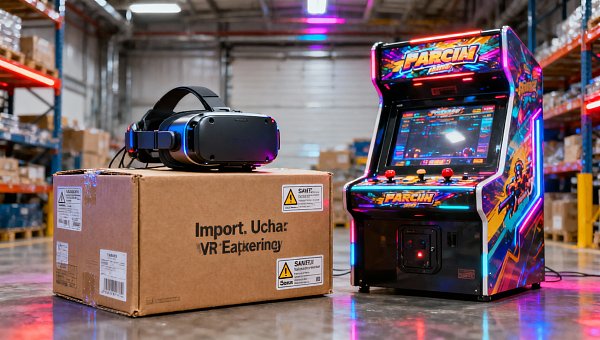
Following a joint announcement on May 13, 2026, the EPR registration platform for arcade devices launched on May 14, 2026. Exporters of arcade equipment from China must obtain a unique EPR identification code within 72 hours prior to the first shipment to any of the five participating countries. Failure to register in time may result in customs clearance delays and rejection by downstream retail or venue operators. The mandate explicitly covers indoor amusement devices, VR arcade cabinets, and street-style OEM gaming hardware. Registrants are required to submit verified data on material composition, certified recycling pathways, and product-level carbon footprint declarations.
Industries Affected
Direct Trading Enterprises
Export-oriented trading companies face immediate operational risk: registration is tied to shipment timing, not contract signing or production completion. Since the 72-hour window begins only upon confirmed first dispatch, forward planning becomes highly inflexible. Delays in EPR submission directly translate into port hold-ups and potential contractual penalties with overseas buyers — especially where venue operators enforce strict 'no-unregistered-unit' policies.
Raw Material Procurement Firms
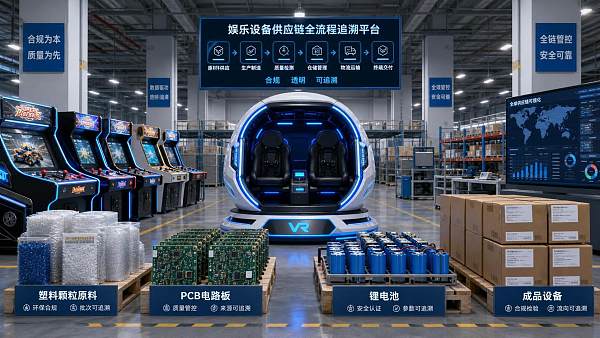
Suppliers of plastics, PCB substrates, display modules, and metal casings must now provide traceable, standardized environmental documentation — including substance declarations (e.g., RoHS-compliant alloys, halogen-free laminates) and recyclability certifications. Without such documentation, manufacturers cannot complete EPR submissions, making procurement due diligence a prerequisite rather than a post-facto audit step.
Contract Manufacturing & OEM Facilities
OEM and ODM factories producing arcade hardware for export brands bear dual responsibility: they must both generate verifiable carbon footprint data (requiring energy-use tracking and LCA-capable reporting systems) and maintain auditable records of material inputs and packaging. Notably, the regulation holds the ‘producer’ — defined as the entity whose brand appears on the device or that controls design specifications — legally accountable, even if manufacturing occurs offshore.
Supply Chain Service Providers
Certification consultants, logistics coordinators, and customs brokers must now integrate EPR validation into pre-shipment checks. For example, freight forwarders may need to verify EPR ID inclusion in commercial invoices and packing lists; certification agencies must expand scope to cover carbon accounting alignment with ISO 14067 and local recycling standard equivalency (e.g., Singapore’s NEA-approved take-back schemes). Service offerings lacking this capability risk losing clients to integrated compliance platforms.
Key Considerations and Recommended Actions
Verify Producer Status Before Shipment
Confirm whether your company is classified as the ‘producer’ under the five countries’ EPR definitions — based on branding, technical control, or contractual liability — as this determines registration obligation and data submission scope.
Pre-validate Material and Carbon Data Sets
Begin compiling third-party-verified material safety data sheets (MSDS), recyclability test reports (e.g., ISO 11469), and preliminary carbon footprint assessments using regionally accepted calculation tools (e.g., GHG Protocol Product Standard), ahead of platform access.
Assign Cross-Functional EPR Coordination
Designate an internal EPR task force linking R&D, procurement, QA, and export operations — since data requirements span design specs (e.g., modular disassembly), supplier contracts (e.g., recyclability clauses), and shipping logistics (e.g., 72-hour trigger point).
Editorial Perspective / Industry Observation
Observably, this initiative is less about revenue generation through EPR fees and more about establishing a traceability backbone for circular economy enforcement. Unlike EU WEEE or Japan’s Home Appliance Recycling Law — which rely on national producer registers — this platform links registration directly to customs manifests and terminal delivery records, enabling real-time compliance monitoring. Analysis shows that the tight 72-hour window is likely calibrated to prevent ‘registration arbitrage’ (e.g., registering only high-value units while omitting accessories), suggesting future expansions may include component-level reporting. From an industry standpoint, the inclusion of carbon footprint declarations — not yet mandatory under most ASEAN environmental statutes — signals a convergence of EPR and climate disclosure frameworks, particularly for digitally intensive hardware.
Conclusion
This EPR rollout represents a structural inflection point: environmental compliance is no longer a post-export administrative step but a condition precedent to market access. For arcade device exporters, it shifts EPR from a corporate social responsibility initiative to a core supply chain KPI — one that demands interoperability between engineering databases, procurement systems, and customs documentation workflows. A rational interpretation is that early adopters who embed EPR readiness into product development cycles will gain measurable lead time and margin stability over competitors managing compliance reactively.
Source Attribution
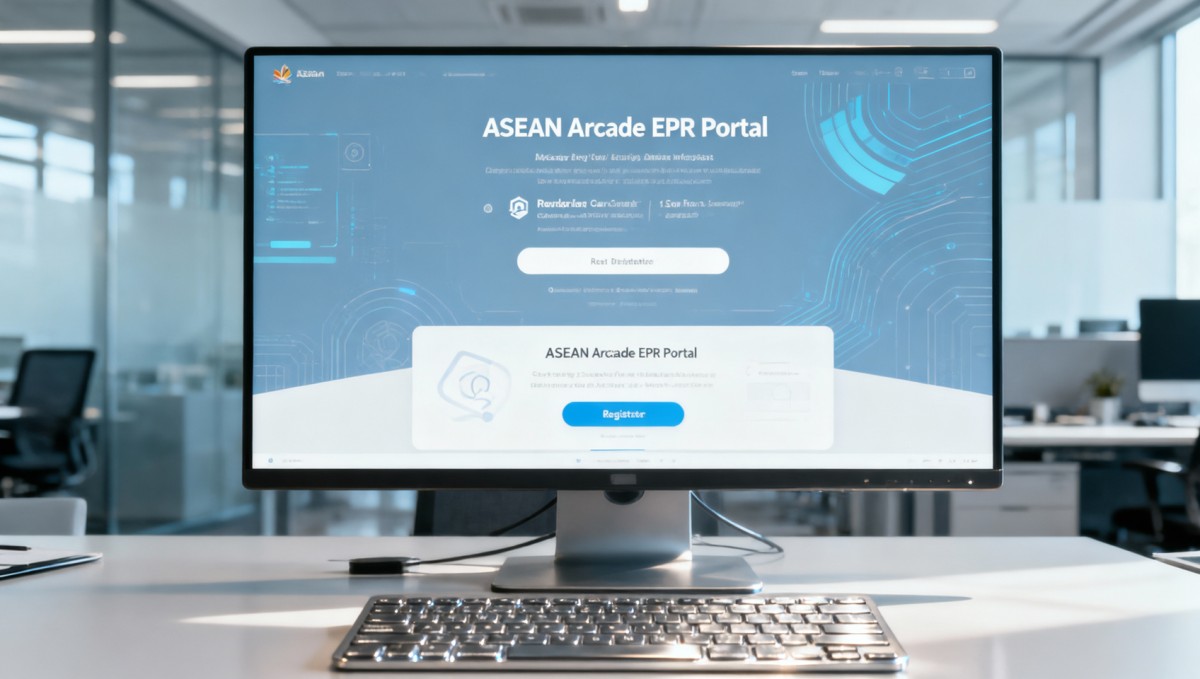
Official joint statement issued by the National Environmental Agencies of Singapore, Malaysia, Thailand, Vietnam, and the Philippines on May 13, 2026; EPR platform technical specifications published on asean-epr-arcade.org (launched May 14, 2026). Note: Final fee structures, audit frequency, and penalties for incomplete carbon data remain pending official publication — subject to ongoing monitoring.
Search News
Hot Articles
- Restaurant FurnitureFast-Casual Restaurant Interiors: Design Choices That Improve Speed and Guest FlowOct 04, 2026
- Outdoor RidesHow to Select Leisure Park Equipment for Safe, High-Throughput Visitor AreasOct 03, 2026
- Fashion & Gem JewelryDiamond Tester Wholesale: How to Vet Accuracy, Calibration, and MOQ Before OrderingOct 02, 2026
Popular Tags
Need ExpertConsultation?
Connect with our specialized leisureengineering team for procurementstrategies.
Recommended News
 Sep 15, 2026How to Choose Coin-Operated Pool Tables for Bars, Hotels, and Arcade VenuesCoin operated pool tables for bars, hotels, and arcades: compare sizes, payment systems, durability, service access, and revenue potential.● Theme Park Strategist
 Sep 08, 2026What to Look for in a Flight Simulator Chair Manufacturer for Commercial VR CentersChoose a flight simulator chair manufacturer that delivers durable, safe, customizable seating for commercial VR centers. Explore key sourcing criteria now.● Theme Park Strategist
 Aug 25, 2026What to Evaluate Before Buying Commercial Self Service Photo Booths for VenuesCommercial self service photo booths for venues: learn how to evaluate durability, software stability, branding flexibility, support, and total ROI before you buy.● Theme Park Strategist
 Aug 23, 2026How to Evaluate Wholesale Vending Machines for Multi-Location Business DeploymentWholesale vending machines for multi-location deployment require more than low unit cost. Learn how to compare reliability, payments, telemetry, and supplier support to scale smarter.● Theme Park Strategist
 Aug 17, 2026U.S. CPSC Urges Bilingual Warnings for Arcade and VR MachinesU.S. CPSC urges bilingual safety warnings for Arcade & VR Machines—learn what exporters, importers, and distributors must do now to avoid delays and returns.● Theme Park Strategist
 Aug 16, 2026EU Enforces EN IEC 62368-1:2026 Certification for Arcade and VR MachinesEU Enforces EN IEC 62368-1:2026 certification for arcade and VR machines, reshaping EU market access, customs clearance, and compliance planning for exporters and distributors.● Theme Park Strategist
 Aug 13, 2026UFLPA’s new guidelines take effect: Exports of Arcade and VR equipment face full-link labor compliance requirementsUFLPA’s new guide takes effect: Arcade and VR machine exports to the U.S. now face full-chain labor compliance checks. Discover key risks and action steps.● Theme Park Strategist
 Aug 12, 2026EU PPWR takes effect, Arcade and VR packaging incorporate heavy metal and PFAS restrictionsEU PPWR now applies to Arcade and VR packaging, tightening heavy metal and PFAS compliance. Learn how exporters can avoid delays, fines, and customs risks.● Theme Park Strategist
 Aug 11, 2026CPSC Sets Bilingual Labels for Arcade and VR ImportsCPSC bilingual labels for arcade and VR imports become mandatory on October 1, 2026. Learn the new English-Spanish warning rules, customs risks, and key compliance steps now.● Theme Park Strategist
 Aug 10, 2026EU Rule Takes Effect for Arcade & VR Machine ClearanceArcade & VR Machine clearance in the EU now depends on EN IEC 62368-1:2026+A11:2026 compliance. Learn what changed, who is affected, and how to avoid customs delays.● Theme Park Strategist
 Aug 09, 2026CPSC Requires New Labels for Arcade and VR ImportsCPSC requires new labels for Arcade and VR imports starting Oct 1, 2026. Learn the multilingual warning rules, compliance risks, and key steps exporters and buyers must take now.● Theme Park Strategist
 Aug 08, 2026EU Entry Rule Tightens for Arcade & VR MachinesArcade & VR Machines entering the EU now face stricter CE compliance under EN IEC 62368-1:2026+A11:2026. Learn the new rule, risks, and what exporters must do now.● Theme Park Strategist
 Aug 07, 2026CPSC Notice Tightens U.S. Entry Rules for Arcade and VR MachinesCPSC Notice Tightens U.S. Entry Rules for Arcade and VR Machines: learn the new labeling, FCC, UN38.3, and compliance document requirements before October 1, 2026.● Theme Park Strategist
 Aug 06, 2026EU Rule Takes Effect for CE-UKCA Labels on Arcade & VR MachinesArcade & VR Machines face new CE-UKCA label and ECPD filing rules in the EU and UK. Learn what manufacturers, importers, and distributors must do now to avoid delays.● Theme Park Strategist
 Aug 05, 2026CPSC Recalls Arcade and VR Machines Over UL 62368-1CPSC recalls arcade and VR machines over UL 62368-1 non-compliance. Learn how this 2026 safety action may affect imports, distribution, customs clearance, and market access.● Theme Park Strategist
 Aug 02, 2026EU Sets New Certification Rule for Arcade and VR MachinesArcade and VR Machines face a new EU certification rule from Oct 1, 2026. Learn how EN IEC 62368-1:2026+A11:2026 affects CE marking, customs clearance, and market access.● Theme Park Strategist
 Aug 01, 2026CPSC Moves to Require Bilingual Warnings on Arcade and VR MachinesCPSC bilingual warnings for Arcade and VR Machines may reshape U.S. import compliance. Learn how English-Spanish labels affect packaging, customs risk, and shipment readiness.● Theme Park Strategist
 Jul 31, 2026EU Sets EN IEC 62368-1:2025 Rule for Arcade and VR MachinesEU Sets EN IEC 62368-1:2025 Rule for Arcade and VR Machines. Learn the new EU compliance deadlines, safety updates, and key actions for manufacturers, OEMs, and distributors.● Theme Park Strategist
 Jul 30, 2026CPSC Sets New Warning Label Rule for Arcade & VR MachinesCPSC sets a new warning label rule for Arcade & VR Machines effective August 15, 2026. Learn key compliance risks, multilingual label requirements, and shipment actions now.● Theme Park Strategist
 Jul 29, 2026EU Enforces New Safety Standard for Arcade and VR MachinesEU Enforces New Safety Standard for Arcade and VR Machines: learn how EN IEC 62368-1 affects CE compliance, customs clearance, and EU market access for exporters and buyers.● Theme Park Strategist
 Jul 28, 2026CPSC Sets ASTM F3472-26 Rule for Arcade & VR ImportsCPSC ASTM F3472-26 rule reshapes Arcade & VR imports to the U.S. Learn key compliance deadlines, certification risks, and what exporters, OEM/ODM suppliers, and buyers should do now.● Theme Park Strategist
 Jul 27, 2026EU Rule Takes Effect for Arcade & VR Machine CybersecurityEU Rule Takes Effect for Arcade & VR Machine Cybersecurity: learn how EN IEC 62443-3-3:2025 affects compliance, customs clearance, sales continuity, and supplier planning in the EU market.● Theme Park Strategist
 Jul 25, 2026CPSC Sets Bilingual Warning Rule for Arcade and VR ImportsCPSC bilingual warning rule for arcade and VR imports takes effect August 1, 2026. Learn how OEM/ODM exporters can avoid CBP delays, relabel shipments, and protect U.S. delivery timelines.● Theme Park Strategist
 Jul 24, 2026EU Enforces New Safety Standard for Arcade and VR MachinesEU Enforces New Safety Standard for Arcade and VR Machines: learn how EN IEC 62368-1:2026+A11:2026 reshapes EU compliance, CE documentation, testing timelines, and export readiness.● Theme Park Strategist