US CPSC to Enforce EMC Radiation Limits on Arcade Devices from June 2026
U.S. regulators are tightening electromagnetic compatibility (EMC) requirements for interactive entertainment hardware targeting children and public venues — a move with immediate implications for global exporters, particularly those in China’s arcade and VR equipment supply chain.
Event Overview
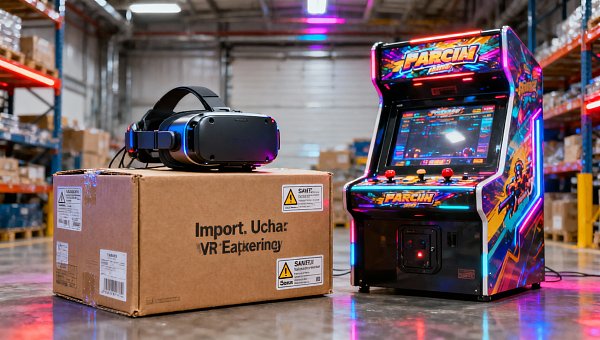
The U.S. Consumer Product Safety Commission (CPSC) issued a Notice of Proposed Rulemaking (NPRM) on May 14, 2026, proposing mandatory compliance with updated EMC radiation limits under FCC Part 15 Subpart B for Arcade & VR Machines intended for children or public use. Enforcement is scheduled to begin on June 1, 2026. The rule specifically targets conducted and radiated emissions from high-frequency switching power supplies and touch-sensing circuitry. Exporters based in China must submit a documented compliance roadmap to CPSC by May 31, 2026; failure to do so may result in port detention and retail delisting.
Industries Affected
Direct Trading Enterprises: These firms — often acting as branded OEM/ODM exporters or regional distributors — face direct regulatory exposure. Since they hold legal responsibility for product conformity at U.S. entry points, delayed certification or incomplete roadmaps trigger customs holds and loss of shelf space. Their margin pressure intensifies as lead-time compression reduces flexibility in documentation and labeling updates.
Raw Material Suppliers: Firms supplying critical components such as custom switching power modules, shielded touch controllers, or EMI-filtered connectors must now align technical specifications with the new emission thresholds. This requires early engagement with downstream clients to co-develop compliant bill-of-materials (BOM), increasing engineering coordination overhead and potentially shortening design-to-qualification cycles.
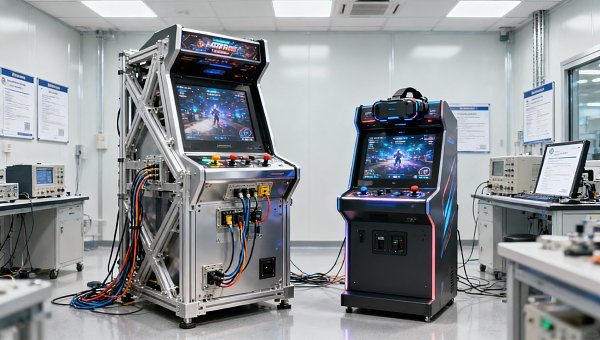
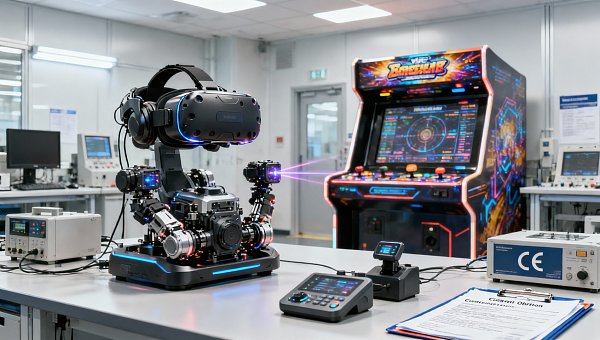
Contract Manufacturing & Assembly Facilities: EMS providers and dedicated arcade hardware assemblers will need to revise production test protocols — especially for pre-compliance radiated emission scans and conducted noise measurements at power input ports. Process validation may require third-party lab support, introducing new CapEx considerations and potential throughput bottlenecks if testing capacity is constrained.
Supply Chain Service Providers: Certification consultants, logistics intermediaries offering compliance documentation review, and customs brokers specializing in CPSC/FCC clearance will see heightened demand — but also greater liability. Errors in roadmap submissions or misclassification of device scope (e.g., misjudging whether a hybrid VR-arcade cabinet qualifies as “public-use”) could expose them to client disputes or regulatory scrutiny.
Key Focus Areas and Recommended Actions
Confirm Device Scope and Classification by May 25
Not all arcade-style devices fall under the NPRM’s definition — only those marketed for children or deployed in public locations (e.g., malls, arcades, schools). Firms should cross-check marketing materials, user manuals, and sales channel data against CPSC’s functional criteria before finalizing roadmap submissions.
Engage Accredited Labs for Pre-Compliance EMC Scans Now
Given the tight timeline, waiting for formal FCC-recognized lab availability post-June 2026 is risky. Early pre-compliance testing — especially on prototype-level PCB layouts and power supply modules — helps identify hotspots (e.g., 100–500 MHz radiated peaks from touch IC clock harmonics) and avoids costly redesign loops later.
Update Technical Documentation Packages
Required deliverables extend beyond test reports: manufacturers must maintain traceable records of component-level EMC performance, shielding implementation rationale, and layout decisions affecting emission paths. Internal documentation systems should reflect this as part of quality management, not just as a one-off submission.
Designate a Cross-Functional Compliance Coordinator
Effective implementation requires alignment across R&D, procurement, QA, and export operations. A single point of accountability — with authority to escalate technical trade-offs (e.g., cost vs. shielding weight, speed vs. filter insertion loss) — improves roadmap credibility and audit readiness.
Editorial Perspective / Industry Observation
Analysis shows this NPRM signals a broader shift: CPSC is increasingly treating interactive consumer electronics — even non-connected ones — as convergence devices subject to layered regulatory expectations (safety + EMC + software update governance). Observably, the focus on touch circuits and switching power supplies reflects growing concern over unintended RF coupling in densely packed, low-voltage digital interfaces. From an industry perspective, this is less about isolated compliance and more about embedding electromagnetic design discipline into earlier development stages — a capability gap still prevalent among mid-tier Chinese manufacturers. Current emphasis on ‘roadmap’ submissions, rather than blanket certification deadlines, suggests CPSC intends to incentivize proactive engineering investment over reactive remediation.
Conclusion
This rule does not represent a sudden barrier — but rather a formalization of emerging best practices in electromagnetic design for interactive hardware. Its real-world impact will be measured not in immediate rejections, but in how quickly firms integrate EMC-awareness into product conception, sourcing, and manufacturing control. A rational interpretation is that compliance agility — not just certification attainment — will define competitive advantage in North American arcade and immersive entertainment markets over the next 18 months.
Sources and Ongoing Monitoring
Official source: CPSC Federal Register Notice, Docket No. CPSC-2026-0027, published May 14, 2026 (https://www.federalregister.gov/documents/2026/05/14/2026-XXXXX). FCC Part 15 Subpart B revisions remain pending final rule publication; stakeholders should monitor CPSC’s docket page and FCC’s Equipment Authorization Office updates for confirmation of test procedures, measurement configurations, and grandfathering provisions.

Search News
Hot Articles
- Restaurant FurnitureFast-Casual Restaurant Interiors: Design Choices That Improve Speed and Guest FlowOct 04, 2026
- Outdoor RidesHow to Select Leisure Park Equipment for Safe, High-Throughput Visitor AreasOct 03, 2026
- Fashion & Gem JewelryDiamond Tester Wholesale: How to Vet Accuracy, Calibration, and MOQ Before OrderingOct 02, 2026
Popular Tags
Need ExpertConsultation?
Connect with our specialized leisureengineering team for procurementstrategies.
Recommended News
 Sep 15, 2026How to Choose Coin-Operated Pool Tables for Bars, Hotels, and Arcade VenuesCoin operated pool tables for bars, hotels, and arcades: compare sizes, payment systems, durability, service access, and revenue potential.● Theme Park Strategist
 Sep 08, 2026What to Look for in a Flight Simulator Chair Manufacturer for Commercial VR CentersChoose a flight simulator chair manufacturer that delivers durable, safe, customizable seating for commercial VR centers. Explore key sourcing criteria now.● Theme Park Strategist
 Aug 25, 2026What to Evaluate Before Buying Commercial Self Service Photo Booths for VenuesCommercial self service photo booths for venues: learn how to evaluate durability, software stability, branding flexibility, support, and total ROI before you buy.● Theme Park Strategist
 Aug 23, 2026How to Evaluate Wholesale Vending Machines for Multi-Location Business DeploymentWholesale vending machines for multi-location deployment require more than low unit cost. Learn how to compare reliability, payments, telemetry, and supplier support to scale smarter.● Theme Park Strategist
 Aug 17, 2026U.S. CPSC Urges Bilingual Warnings for Arcade and VR MachinesU.S. CPSC urges bilingual safety warnings for Arcade & VR Machines—learn what exporters, importers, and distributors must do now to avoid delays and returns.● Theme Park Strategist
 Aug 16, 2026EU Enforces EN IEC 62368-1:2026 Certification for Arcade and VR MachinesEU Enforces EN IEC 62368-1:2026 certification for arcade and VR machines, reshaping EU market access, customs clearance, and compliance planning for exporters and distributors.● Theme Park Strategist
 Aug 13, 2026UFLPA’s new guidelines take effect: Exports of Arcade and VR equipment face full-link labor compliance requirementsUFLPA’s new guide takes effect: Arcade and VR machine exports to the U.S. now face full-chain labor compliance checks. Discover key risks and action steps.● Theme Park Strategist
 Aug 12, 2026EU PPWR takes effect, Arcade and VR packaging incorporate heavy metal and PFAS restrictionsEU PPWR now applies to Arcade and VR packaging, tightening heavy metal and PFAS compliance. Learn how exporters can avoid delays, fines, and customs risks.● Theme Park Strategist
 Aug 11, 2026CPSC Sets Bilingual Labels for Arcade and VR ImportsCPSC bilingual labels for arcade and VR imports become mandatory on October 1, 2026. Learn the new English-Spanish warning rules, customs risks, and key compliance steps now.● Theme Park Strategist
 Aug 10, 2026EU Rule Takes Effect for Arcade & VR Machine ClearanceArcade & VR Machine clearance in the EU now depends on EN IEC 62368-1:2026+A11:2026 compliance. Learn what changed, who is affected, and how to avoid customs delays.● Theme Park Strategist
 Aug 09, 2026CPSC Requires New Labels for Arcade and VR ImportsCPSC requires new labels for Arcade and VR imports starting Oct 1, 2026. Learn the multilingual warning rules, compliance risks, and key steps exporters and buyers must take now.● Theme Park Strategist
 Aug 08, 2026EU Entry Rule Tightens for Arcade & VR MachinesArcade & VR Machines entering the EU now face stricter CE compliance under EN IEC 62368-1:2026+A11:2026. Learn the new rule, risks, and what exporters must do now.● Theme Park Strategist
 Aug 07, 2026CPSC Notice Tightens U.S. Entry Rules for Arcade and VR MachinesCPSC Notice Tightens U.S. Entry Rules for Arcade and VR Machines: learn the new labeling, FCC, UN38.3, and compliance document requirements before October 1, 2026.● Theme Park Strategist
 Aug 06, 2026EU Rule Takes Effect for CE-UKCA Labels on Arcade & VR MachinesArcade & VR Machines face new CE-UKCA label and ECPD filing rules in the EU and UK. Learn what manufacturers, importers, and distributors must do now to avoid delays.● Theme Park Strategist
 Aug 05, 2026CPSC Recalls Arcade and VR Machines Over UL 62368-1CPSC recalls arcade and VR machines over UL 62368-1 non-compliance. Learn how this 2026 safety action may affect imports, distribution, customs clearance, and market access.● Theme Park Strategist
 Aug 02, 2026EU Sets New Certification Rule for Arcade and VR MachinesArcade and VR Machines face a new EU certification rule from Oct 1, 2026. Learn how EN IEC 62368-1:2026+A11:2026 affects CE marking, customs clearance, and market access.● Theme Park Strategist
 Aug 01, 2026CPSC Moves to Require Bilingual Warnings on Arcade and VR MachinesCPSC bilingual warnings for Arcade and VR Machines may reshape U.S. import compliance. Learn how English-Spanish labels affect packaging, customs risk, and shipment readiness.● Theme Park Strategist
 Jul 31, 2026EU Sets EN IEC 62368-1:2025 Rule for Arcade and VR MachinesEU Sets EN IEC 62368-1:2025 Rule for Arcade and VR Machines. Learn the new EU compliance deadlines, safety updates, and key actions for manufacturers, OEMs, and distributors.● Theme Park Strategist
 Jul 30, 2026CPSC Sets New Warning Label Rule for Arcade & VR MachinesCPSC sets a new warning label rule for Arcade & VR Machines effective August 15, 2026. Learn key compliance risks, multilingual label requirements, and shipment actions now.● Theme Park Strategist
 Jul 29, 2026EU Enforces New Safety Standard for Arcade and VR MachinesEU Enforces New Safety Standard for Arcade and VR Machines: learn how EN IEC 62368-1 affects CE compliance, customs clearance, and EU market access for exporters and buyers.● Theme Park Strategist
 Jul 28, 2026CPSC Sets ASTM F3472-26 Rule for Arcade & VR ImportsCPSC ASTM F3472-26 rule reshapes Arcade & VR imports to the U.S. Learn key compliance deadlines, certification risks, and what exporters, OEM/ODM suppliers, and buyers should do now.● Theme Park Strategist
 Jul 27, 2026EU Rule Takes Effect for Arcade & VR Machine CybersecurityEU Rule Takes Effect for Arcade & VR Machine Cybersecurity: learn how EN IEC 62443-3-3:2025 affects compliance, customs clearance, sales continuity, and supplier planning in the EU market.● Theme Park Strategist
 Jul 25, 2026CPSC Sets Bilingual Warning Rule for Arcade and VR ImportsCPSC bilingual warning rule for arcade and VR imports takes effect August 1, 2026. Learn how OEM/ODM exporters can avoid CBP delays, relabel shipments, and protect U.S. delivery timelines.● Theme Park Strategist
 Jul 24, 2026EU Enforces New Safety Standard for Arcade and VR MachinesEU Enforces New Safety Standard for Arcade and VR Machines: learn how EN IEC 62368-1:2026+A11:2026 reshapes EU compliance, CE documentation, testing timelines, and export readiness.● Theme Park Strategist