CCTV Secures 2026 FIFA World Cup Media Rights, Boosting Chinese Arcade & VR Hardware Export Opportunities
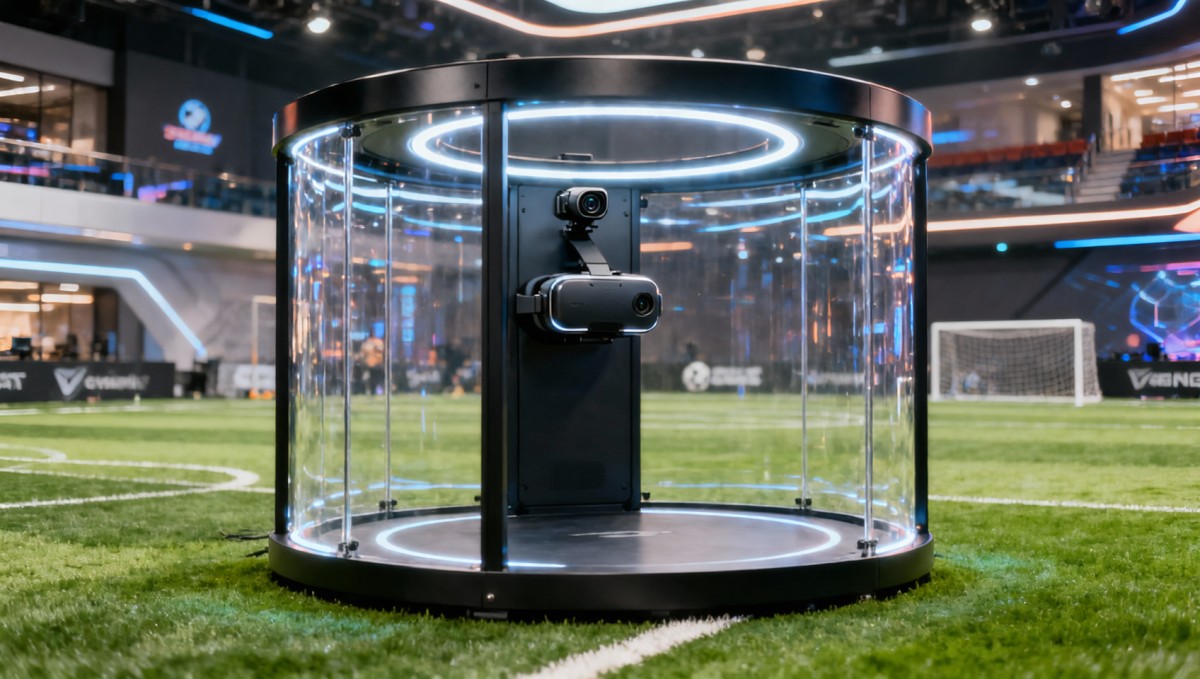
On May 17, 2026, China Central Television (CCTV) officially confirmed its acquisition of the exclusive mainland China and Hong Kong–Macao multimedia broadcast rights for the 2026 FIFA World Cup — co-hosted by the United States, Canada, and Mexico. This licensing milestone unlocks new commercial pathways for Chinese arcade cabinet and VR hardware manufacturers, particularly in IP licensing, real-time content integration, and B2B-oriented immersive experience solutions targeting overseas leisure and training venues.
Event Overview
China Central Television announced on May 17, 2026, that it has secured full multimedia rights to the 2026 FIFA World Cup across mainland China, Hong Kong, and Macao. The rights cover linear broadcast, digital streaming, social media redistribution, and official highlight compilation — subject to FIFA’s global content governance framework.
Industries Affected
Direct Trade Enterprises: Export-focused arcade and VR equipment OEMs/ODMs now face heightened demand from international B2B buyers — including amusement park operators, bar arcade chains, hotel entertainment departments, and vocational VR training centers. Impact manifests in accelerated quotation cycles, tighter delivery windows, and increased requests for FIFA-compliant API integration documentation.
Raw Material Procurement Enterprises: Suppliers of high-brightness LCD panels, motion-tracking sensors, haptic feedback modules, and certified low-latency wireless transceivers may see revised order forecasts — especially for components meeting FIFA’s live-stream synchronization latency thresholds (≤80ms end-to-end). Demand shifts are not yet quantified but are observable in early RFQ volume from Tier-2 integrators.
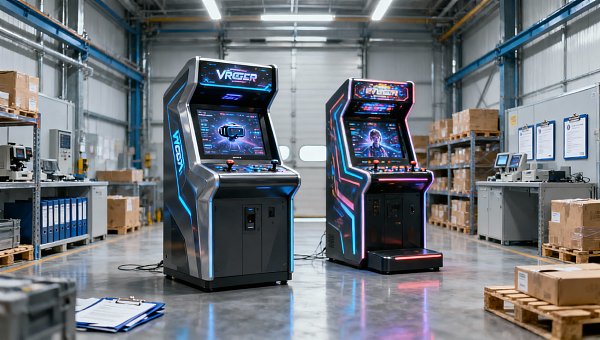
Manufacturing Enterprises: Contract manufacturers specializing in ruggedized arcade cabinets, VR-ready all-in-one kiosks, or modular stadium-simulation pods now need to validate firmware compatibility with FIFA’s official match data feeds (e.g., real-time score, player tracking metadata). This requires updated QA protocols and optional certification support from authorized technical partners.
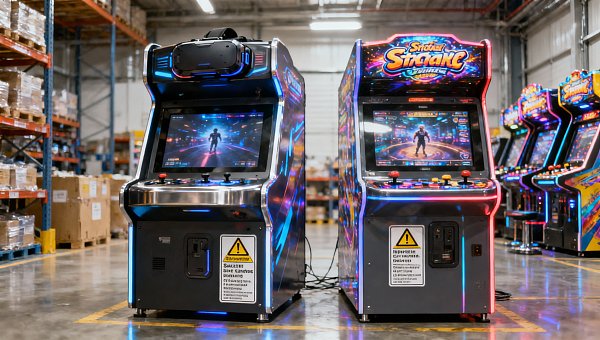
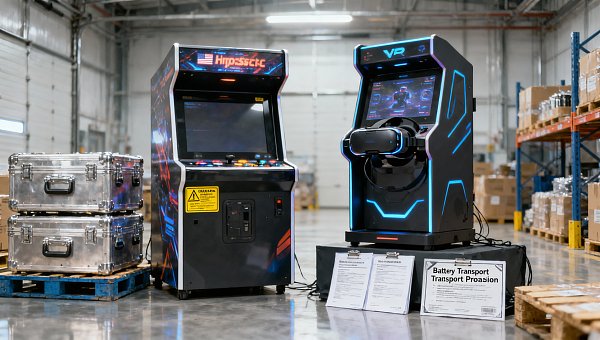
Supply Chain Service Providers: Logistics firms offering bonded warehousing in Shenzhen and Dongguan report rising inquiries for FIFA-branded packaging compliance (e.g., multilingual labeling, anti-counterfeit holograms), while customs brokers note increased scrutiny on ‘interactive sports entertainment devices’ under HS code 9504.40. This reflects tightening alignment between media licensing status and physical product classification.
Key Considerations and Recommended Actions
Verify FIFA Content Interface Certification Pathways
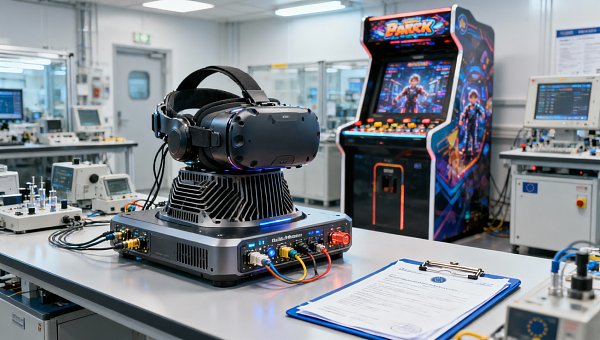
Manufacturers should confirm whether their existing SDKs or middleware platforms meet FIFA’s official content distribution standards — not just generic streaming capability. Non-certified systems risk exclusion from licensed venue deployments despite hardware compliance.
Prioritize B2B Channel Development over Direct-to-Consumer Launches
Given the nature of the license (media rights, not consumer product licensing), immediate ROI lies in supplying integrated solutions to overseas operators — not launching branded consumer headsets or cabinets. Early engagement with regional distributors serving Latin American and Southeast Asian entertainment venues is advised.
Align Product Roadmaps with Broadcast Timing Windows
The 2026 tournament runs from June 11 to July 19, 2026. To capture pre-tournament procurement cycles, Q3 2025 is the latest viable window for pilot deployments and certification completion — making Q2 2025 the critical period for technical scoping and partner onboarding.
Editorial Perspective / Industry Observation
Analysis shows this development is less about a sudden surge in domestic VR adoption and more about structural recalibration in China’s interactive hardware export value chain. Observably, the CCTV–FIFA agreement functions as a de facto technical trust signal — lowering perceived integration risk for overseas buyers unfamiliar with Chinese hardware ecosystems. From industry perspective, this represents a rare instance where broadcast rights directly catalyze upstream hardware qualification, rather than merely enabling downstream advertising or merchandising. Current evidence does not suggest broad consumer-level licensing; instead, the opportunity is narrowly concentrated in certified B2B deployment scenarios.
Conclusion
This rights acquisition does not transform the Chinese arcade or VR sector overnight — but it does materially shift the competitive threshold for export-ready hardware providers. Success will hinge less on raw component cost and more on demonstrable interoperability with official sports data infrastructures. A rational interpretation is that the event marks the beginning of a multi-year validation cycle for China’s role in global immersive sports entertainment infrastructure — not a one-off sales spike.
Source Attribution
Official announcement issued by China Media Group (CMG) on May 17, 2026; confirmed via FIFA’s Media Rights Tracker (public version, updated May 18, 2026). Note: Final scope of sublicensing permissions for third-party hardware vendors remains subject to bilateral technical annexes — ongoing monitoring recommended.
Search News
Hot Articles
- Restaurant FurnitureFast-Casual Restaurant Interiors: Design Choices That Improve Speed and Guest FlowOct 04, 2026
- Outdoor RidesHow to Select Leisure Park Equipment for Safe, High-Throughput Visitor AreasOct 03, 2026
- Fashion & Gem JewelryDiamond Tester Wholesale: How to Vet Accuracy, Calibration, and MOQ Before OrderingOct 02, 2026
Popular Tags
Need ExpertConsultation?
Connect with our specialized leisureengineering team for procurementstrategies.
Recommended News
 Sep 15, 2026How to Choose Coin-Operated Pool Tables for Bars, Hotels, and Arcade VenuesCoin operated pool tables for bars, hotels, and arcades: compare sizes, payment systems, durability, service access, and revenue potential.● Theme Park Strategist
 Sep 08, 2026What to Look for in a Flight Simulator Chair Manufacturer for Commercial VR CentersChoose a flight simulator chair manufacturer that delivers durable, safe, customizable seating for commercial VR centers. Explore key sourcing criteria now.● Theme Park Strategist
 Aug 25, 2026What to Evaluate Before Buying Commercial Self Service Photo Booths for VenuesCommercial self service photo booths for venues: learn how to evaluate durability, software stability, branding flexibility, support, and total ROI before you buy.● Theme Park Strategist
 Aug 23, 2026How to Evaluate Wholesale Vending Machines for Multi-Location Business DeploymentWholesale vending machines for multi-location deployment require more than low unit cost. Learn how to compare reliability, payments, telemetry, and supplier support to scale smarter.● Theme Park Strategist
 Aug 17, 2026U.S. CPSC Urges Bilingual Warnings for Arcade and VR MachinesU.S. CPSC urges bilingual safety warnings for Arcade & VR Machines—learn what exporters, importers, and distributors must do now to avoid delays and returns.● Theme Park Strategist
 Aug 16, 2026EU Enforces EN IEC 62368-1:2026 Certification for Arcade and VR MachinesEU Enforces EN IEC 62368-1:2026 certification for arcade and VR machines, reshaping EU market access, customs clearance, and compliance planning for exporters and distributors.● Theme Park Strategist
 Aug 13, 2026UFLPA’s new guidelines take effect: Exports of Arcade and VR equipment face full-link labor compliance requirementsUFLPA’s new guide takes effect: Arcade and VR machine exports to the U.S. now face full-chain labor compliance checks. Discover key risks and action steps.● Theme Park Strategist
 Aug 12, 2026EU PPWR takes effect, Arcade and VR packaging incorporate heavy metal and PFAS restrictionsEU PPWR now applies to Arcade and VR packaging, tightening heavy metal and PFAS compliance. Learn how exporters can avoid delays, fines, and customs risks.● Theme Park Strategist
 Aug 11, 2026CPSC Sets Bilingual Labels for Arcade and VR ImportsCPSC bilingual labels for arcade and VR imports become mandatory on October 1, 2026. Learn the new English-Spanish warning rules, customs risks, and key compliance steps now.● Theme Park Strategist
 Aug 10, 2026EU Rule Takes Effect for Arcade & VR Machine ClearanceArcade & VR Machine clearance in the EU now depends on EN IEC 62368-1:2026+A11:2026 compliance. Learn what changed, who is affected, and how to avoid customs delays.● Theme Park Strategist
 Aug 09, 2026CPSC Requires New Labels for Arcade and VR ImportsCPSC requires new labels for Arcade and VR imports starting Oct 1, 2026. Learn the multilingual warning rules, compliance risks, and key steps exporters and buyers must take now.● Theme Park Strategist
 Aug 08, 2026EU Entry Rule Tightens for Arcade & VR MachinesArcade & VR Machines entering the EU now face stricter CE compliance under EN IEC 62368-1:2026+A11:2026. Learn the new rule, risks, and what exporters must do now.● Theme Park Strategist
 Aug 07, 2026CPSC Notice Tightens U.S. Entry Rules for Arcade and VR MachinesCPSC Notice Tightens U.S. Entry Rules for Arcade and VR Machines: learn the new labeling, FCC, UN38.3, and compliance document requirements before October 1, 2026.● Theme Park Strategist
 Aug 06, 2026EU Rule Takes Effect for CE-UKCA Labels on Arcade & VR MachinesArcade & VR Machines face new CE-UKCA label and ECPD filing rules in the EU and UK. Learn what manufacturers, importers, and distributors must do now to avoid delays.● Theme Park Strategist
 Aug 05, 2026CPSC Recalls Arcade and VR Machines Over UL 62368-1CPSC recalls arcade and VR machines over UL 62368-1 non-compliance. Learn how this 2026 safety action may affect imports, distribution, customs clearance, and market access.● Theme Park Strategist
 Aug 02, 2026EU Sets New Certification Rule for Arcade and VR MachinesArcade and VR Machines face a new EU certification rule from Oct 1, 2026. Learn how EN IEC 62368-1:2026+A11:2026 affects CE marking, customs clearance, and market access.● Theme Park Strategist
 Aug 01, 2026CPSC Moves to Require Bilingual Warnings on Arcade and VR MachinesCPSC bilingual warnings for Arcade and VR Machines may reshape U.S. import compliance. Learn how English-Spanish labels affect packaging, customs risk, and shipment readiness.● Theme Park Strategist
 Jul 31, 2026EU Sets EN IEC 62368-1:2025 Rule for Arcade and VR MachinesEU Sets EN IEC 62368-1:2025 Rule for Arcade and VR Machines. Learn the new EU compliance deadlines, safety updates, and key actions for manufacturers, OEMs, and distributors.● Theme Park Strategist
 Jul 30, 2026CPSC Sets New Warning Label Rule for Arcade & VR MachinesCPSC sets a new warning label rule for Arcade & VR Machines effective August 15, 2026. Learn key compliance risks, multilingual label requirements, and shipment actions now.● Theme Park Strategist
 Jul 29, 2026EU Enforces New Safety Standard for Arcade and VR MachinesEU Enforces New Safety Standard for Arcade and VR Machines: learn how EN IEC 62368-1 affects CE compliance, customs clearance, and EU market access for exporters and buyers.● Theme Park Strategist
 Jul 28, 2026CPSC Sets ASTM F3472-26 Rule for Arcade & VR ImportsCPSC ASTM F3472-26 rule reshapes Arcade & VR imports to the U.S. Learn key compliance deadlines, certification risks, and what exporters, OEM/ODM suppliers, and buyers should do now.● Theme Park Strategist
 Jul 27, 2026EU Rule Takes Effect for Arcade & VR Machine CybersecurityEU Rule Takes Effect for Arcade & VR Machine Cybersecurity: learn how EN IEC 62443-3-3:2025 affects compliance, customs clearance, sales continuity, and supplier planning in the EU market.● Theme Park Strategist
 Jul 25, 2026CPSC Sets Bilingual Warning Rule for Arcade and VR ImportsCPSC bilingual warning rule for arcade and VR imports takes effect August 1, 2026. Learn how OEM/ODM exporters can avoid CBP delays, relabel shipments, and protect U.S. delivery timelines.● Theme Park Strategist
 Jul 24, 2026EU Enforces New Safety Standard for Arcade and VR MachinesEU Enforces New Safety Standard for Arcade and VR Machines: learn how EN IEC 62368-1:2026+A11:2026 reshapes EU compliance, CE documentation, testing timelines, and export readiness.● Theme Park Strategist