SteamVR Opens Direct OEM Certification for China Arcade VR
Valve has launched a new certification pathway for Chinese VR hardware manufacturers targeting commercial arcade deployments, effective May 15, 2026. The move streamlines integration with SteamVR’s enterprise-grade runtime and signals a strategic shift toward localized, standards-aligned validation—potentially accelerating adoption of immersive VR in public entertainment venues across China.
Event Overview
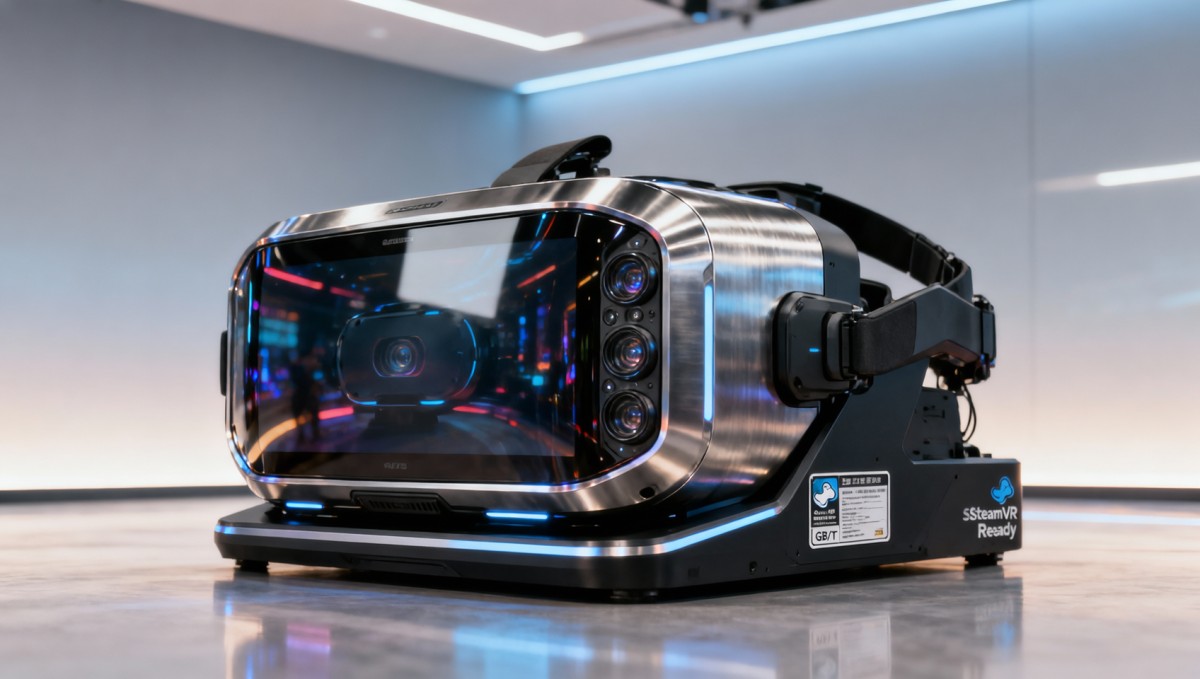
On May 15, 2026, Valve officially activated the SteamVR China OEM Direct Certification Program. Eligible manufacturers must hold both ISO 9001 certification and compliance with GB/T 28827.3–2023 (Information Technology Service Standards – Part 3: Operational Maintenance). Qualified applicants may directly submit their SDK integration documentation and full-system compatibility test reports. Upon approval, they receive the official ‘SteamVR Ready for Commercial Arcade’ certification mark. Average certification cycle time has decreased from 14 weeks to 8.5 weeks.
Industries Affected
Direct Trade Enterprises
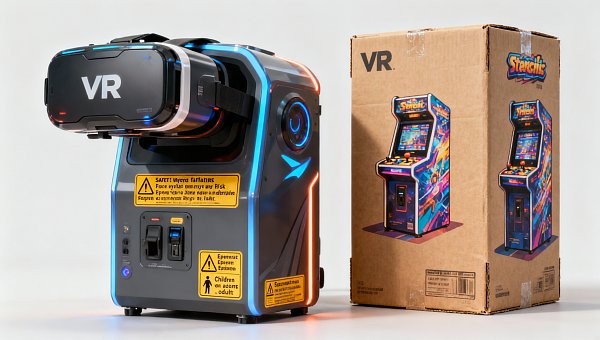
Companies engaged in cross-border VR hardware distribution—including those exporting arcade-ready headsets or all-in-one VR kiosks—are now positioned to reduce time-to-market for certified products in China. Faster certification shortens lead times for contract renewals with venue operators and lowers pre-launch compliance risk; however, eligibility hinges on demonstrable adherence to two specific standards—not just product performance.
Raw Material Procurement Enterprises
Suppliers of critical components—such as motion-tracking modules, thermal management subsystems, or certified display drivers—face indirect but measurable pressure. As OEMs prioritize faster certification, demand may shift toward components pre-validated against GB/T 28827.3–2023 operational reliability benchmarks. Procurement teams should expect increased requests for traceable conformity documentation—not merely RoHS or CE declarations.
Manufacturing Enterprises
Domestic VR hardware manufacturers, especially those serving B2B arcade integrators, benefit most directly. The shortened certification window enables quicker iteration between firmware updates and runtime compatibility testing. Yet this advantage applies only to firms already maintaining dual-standard quality systems; others may face up-front investment in internal audit capacity or third-party verification support.
Supply Chain Service Providers
Testing labs, certification consultants, and localization QA vendors specializing in gaming or immersive tech must adapt service offerings. Demand is likely to rise for GB/T 28827.3–2023 gap assessments and SteamVR SDK integration validation—particularly for embedded Linux-based arcade platforms. Providers lacking familiarity with China’s IT service operation standards may see reduced competitiveness.
Key Considerations and Recommended Actions
Verify dual-standard readiness before application
OEMs should confirm current ISO 9001 scope coverage and conduct an internal review against GB/T 28827.3–2023 clauses related to incident response, configuration control, and maintenance logging—especially if deploying on ARM-based arcade controllers.
Align SDK integration with SteamVR’s commercial runtime requirements
The program emphasizes stability over experimental features. Developers must prioritize deterministic frame timing, low-latency input handling, and recovery from GPU driver resets—criteria that differ from consumer-oriented SDK workflows.
Prepare modular compatibility documentation
Valve accepts modular submissions: separate reports for tracking subsystem, rendering pipeline, and peripheral I/O. Firms should structure test evidence accordingly—not as monolithic system reports—to accelerate review and enable partial re-certification after targeted updates.
Editorial Perspective / Industry Observation
Observably, this initiative is less about broad market access and more about tightening the operational definition of ‘arcade-ready’ VR. Unlike prior SteamVR certifications focused on PC tethering or consumer comfort, the new program embeds expectations around uptime, remote diagnostics, and serviceability—hallmarks of industrial-grade deployment. Analysis shows Valve is effectively outsourcing part of its commercial ecosystem governance to China’s national IT service framework, suggesting long-term alignment with domestic digital infrastructure policy rather than ad hoc accommodation.
Conclusion
This certification pathway does not lower technical thresholds—but compresses validation timelines for those already operating within rigorous quality and service management systems. Its real impact lies in reinforcing a bifurcation: firms treating VR as a consumer gadget versus those engineering it as mission-critical venue infrastructure. For the broader industry, it marks a quiet but meaningful step toward standardized, auditable VR operations in high-traffic public environments.
Source Attribution
Official announcement published on developer.steamvr.com/china-oem-program (May 15, 2026); GB/T 28827.3–2023 issued by SAC (Standardization Administration of China); ISO 9001:2015 remains the referenced quality management standard. Note: Certification fee structure, regional lab partnerships, and post-certification audit frequency remain unannounced and are under observation.
Search News
Hot Articles
- Restaurant FurnitureFast-Casual Restaurant Interiors: Design Choices That Improve Speed and Guest FlowOct 04, 2026
- Outdoor RidesHow to Select Leisure Park Equipment for Safe, High-Throughput Visitor AreasOct 03, 2026
- Fashion & Gem JewelryDiamond Tester Wholesale: How to Vet Accuracy, Calibration, and MOQ Before OrderingOct 02, 2026
Popular Tags
Need ExpertConsultation?
Connect with our specialized leisureengineering team for procurementstrategies.
Recommended News
 Sep 15, 2026How to Choose Coin-Operated Pool Tables for Bars, Hotels, and Arcade VenuesCoin operated pool tables for bars, hotels, and arcades: compare sizes, payment systems, durability, service access, and revenue potential.● Theme Park Strategist
 Sep 08, 2026What to Look for in a Flight Simulator Chair Manufacturer for Commercial VR CentersChoose a flight simulator chair manufacturer that delivers durable, safe, customizable seating for commercial VR centers. Explore key sourcing criteria now.● Theme Park Strategist
 Aug 25, 2026What to Evaluate Before Buying Commercial Self Service Photo Booths for VenuesCommercial self service photo booths for venues: learn how to evaluate durability, software stability, branding flexibility, support, and total ROI before you buy.● Theme Park Strategist
 Aug 23, 2026How to Evaluate Wholesale Vending Machines for Multi-Location Business DeploymentWholesale vending machines for multi-location deployment require more than low unit cost. Learn how to compare reliability, payments, telemetry, and supplier support to scale smarter.● Theme Park Strategist
 Aug 17, 2026U.S. CPSC Urges Bilingual Warnings for Arcade and VR MachinesU.S. CPSC urges bilingual safety warnings for Arcade & VR Machines—learn what exporters, importers, and distributors must do now to avoid delays and returns.● Theme Park Strategist
 Aug 16, 2026EU Enforces EN IEC 62368-1:2026 Certification for Arcade and VR MachinesEU Enforces EN IEC 62368-1:2026 certification for arcade and VR machines, reshaping EU market access, customs clearance, and compliance planning for exporters and distributors.● Theme Park Strategist
 Aug 13, 2026UFLPA’s new guidelines take effect: Exports of Arcade and VR equipment face full-link labor compliance requirementsUFLPA’s new guide takes effect: Arcade and VR machine exports to the U.S. now face full-chain labor compliance checks. Discover key risks and action steps.● Theme Park Strategist
 Aug 12, 2026EU PPWR takes effect, Arcade and VR packaging incorporate heavy metal and PFAS restrictionsEU PPWR now applies to Arcade and VR packaging, tightening heavy metal and PFAS compliance. Learn how exporters can avoid delays, fines, and customs risks.● Theme Park Strategist
 Aug 11, 2026CPSC Sets Bilingual Labels for Arcade and VR ImportsCPSC bilingual labels for arcade and VR imports become mandatory on October 1, 2026. Learn the new English-Spanish warning rules, customs risks, and key compliance steps now.● Theme Park Strategist
 Aug 10, 2026EU Rule Takes Effect for Arcade & VR Machine ClearanceArcade & VR Machine clearance in the EU now depends on EN IEC 62368-1:2026+A11:2026 compliance. Learn what changed, who is affected, and how to avoid customs delays.● Theme Park Strategist
 Aug 09, 2026CPSC Requires New Labels for Arcade and VR ImportsCPSC requires new labels for Arcade and VR imports starting Oct 1, 2026. Learn the multilingual warning rules, compliance risks, and key steps exporters and buyers must take now.● Theme Park Strategist
 Aug 08, 2026EU Entry Rule Tightens for Arcade & VR MachinesArcade & VR Machines entering the EU now face stricter CE compliance under EN IEC 62368-1:2026+A11:2026. Learn the new rule, risks, and what exporters must do now.● Theme Park Strategist
 Aug 07, 2026CPSC Notice Tightens U.S. Entry Rules for Arcade and VR MachinesCPSC Notice Tightens U.S. Entry Rules for Arcade and VR Machines: learn the new labeling, FCC, UN38.3, and compliance document requirements before October 1, 2026.● Theme Park Strategist
 Aug 06, 2026EU Rule Takes Effect for CE-UKCA Labels on Arcade & VR MachinesArcade & VR Machines face new CE-UKCA label and ECPD filing rules in the EU and UK. Learn what manufacturers, importers, and distributors must do now to avoid delays.● Theme Park Strategist
 Aug 05, 2026CPSC Recalls Arcade and VR Machines Over UL 62368-1CPSC recalls arcade and VR machines over UL 62368-1 non-compliance. Learn how this 2026 safety action may affect imports, distribution, customs clearance, and market access.● Theme Park Strategist
 Aug 02, 2026EU Sets New Certification Rule for Arcade and VR MachinesArcade and VR Machines face a new EU certification rule from Oct 1, 2026. Learn how EN IEC 62368-1:2026+A11:2026 affects CE marking, customs clearance, and market access.● Theme Park Strategist
 Aug 01, 2026CPSC Moves to Require Bilingual Warnings on Arcade and VR MachinesCPSC bilingual warnings for Arcade and VR Machines may reshape U.S. import compliance. Learn how English-Spanish labels affect packaging, customs risk, and shipment readiness.● Theme Park Strategist
 Jul 31, 2026EU Sets EN IEC 62368-1:2025 Rule for Arcade and VR MachinesEU Sets EN IEC 62368-1:2025 Rule for Arcade and VR Machines. Learn the new EU compliance deadlines, safety updates, and key actions for manufacturers, OEMs, and distributors.● Theme Park Strategist
 Jul 30, 2026CPSC Sets New Warning Label Rule for Arcade & VR MachinesCPSC sets a new warning label rule for Arcade & VR Machines effective August 15, 2026. Learn key compliance risks, multilingual label requirements, and shipment actions now.● Theme Park Strategist
 Jul 29, 2026EU Enforces New Safety Standard for Arcade and VR MachinesEU Enforces New Safety Standard for Arcade and VR Machines: learn how EN IEC 62368-1 affects CE compliance, customs clearance, and EU market access for exporters and buyers.● Theme Park Strategist
 Jul 28, 2026CPSC Sets ASTM F3472-26 Rule for Arcade & VR ImportsCPSC ASTM F3472-26 rule reshapes Arcade & VR imports to the U.S. Learn key compliance deadlines, certification risks, and what exporters, OEM/ODM suppliers, and buyers should do now.● Theme Park Strategist
 Jul 27, 2026EU Rule Takes Effect for Arcade & VR Machine CybersecurityEU Rule Takes Effect for Arcade & VR Machine Cybersecurity: learn how EN IEC 62443-3-3:2025 affects compliance, customs clearance, sales continuity, and supplier planning in the EU market.● Theme Park Strategist
 Jul 25, 2026CPSC Sets Bilingual Warning Rule for Arcade and VR ImportsCPSC bilingual warning rule for arcade and VR imports takes effect August 1, 2026. Learn how OEM/ODM exporters can avoid CBP delays, relabel shipments, and protect U.S. delivery timelines.● Theme Park Strategist
 Jul 24, 2026EU Enforces New Safety Standard for Arcade and VR MachinesEU Enforces New Safety Standard for Arcade and VR Machines: learn how EN IEC 62368-1:2026+A11:2026 reshapes EU compliance, CE documentation, testing timelines, and export readiness.● Theme Park Strategist