FIFA Grants CCTV Exclusive 2026 World Cup Media Rights in China
FIFA confirmed on May 15, 2026, that China Central Television (CCTV) has secured exclusive mainland China multimedia rights for the 2026 FIFA World Cup — including broadcast, internet, and mobile platforms — with explicit commercial sub-licensing authority. This development directly impacts Chinese OEM/ODM manufacturers of arcade cabinets, VR devices, and large-screen interactive systems, opening a newly defined, compliant pathway for co-developing World Cup-themed IP experiences with authorized media entities.
Event Overview
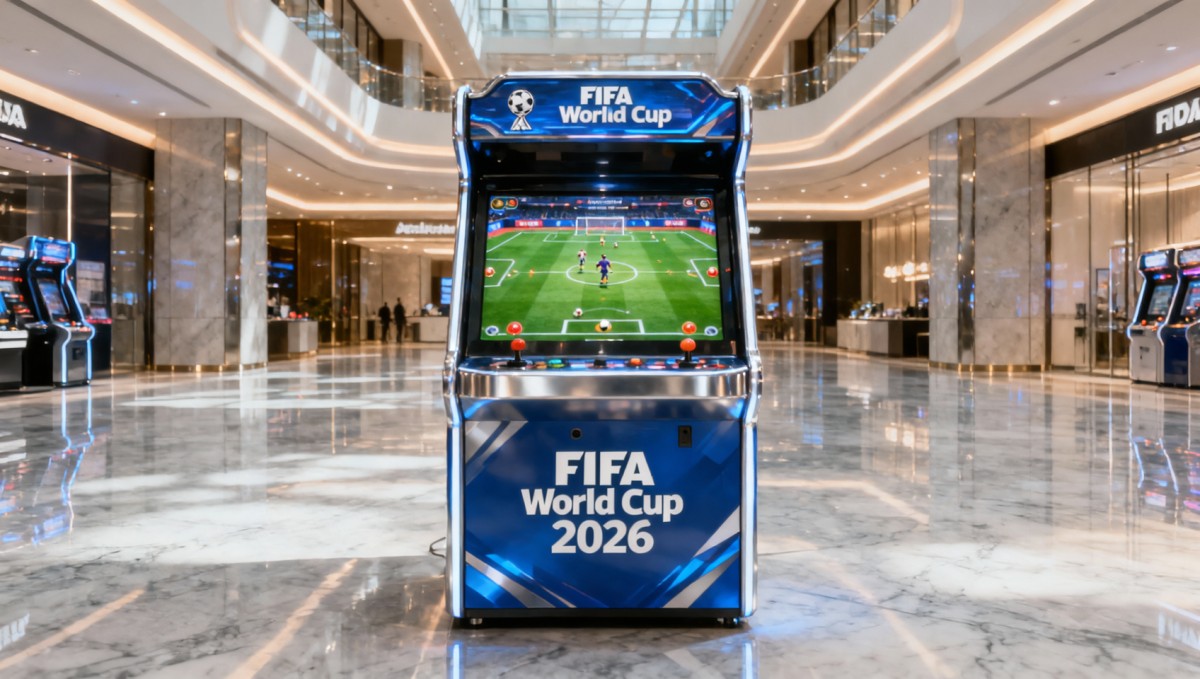
On May 15, 2026, China Central Television (CCTV) officially announced it had obtained exclusive mainland China multimedia rights to the 2026 FIFA World Cup, jointly hosted by the United States, Canada, and Mexico. The rights cover over-the-air television, internet streaming, and mobile terminal distribution. Critically, the authorization includes formal commercial sub-licensing rights — enabling third-party entities to legally deploy World Cup-branded content and experiences in commercial venues such as hotels, shopping malls, and amusement arcades.
Industries Affected
OEM/ODM Manufacturers of Arcade and VR Hardware
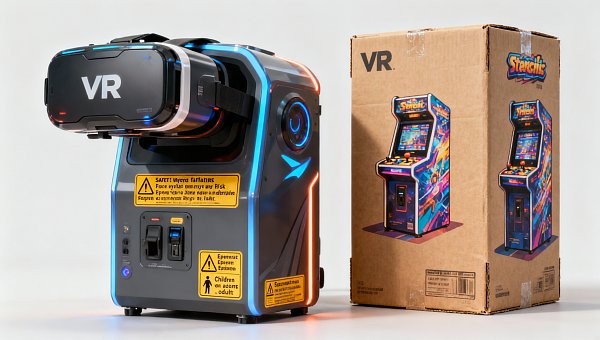
These manufacturers are directly affected because the sub-licensing provision creates a first-time, officially sanctioned channel to integrate official FIFA World Cup IP into physical interactive hardware. Impact manifests in two primary ways: (1) eligibility to co-develop licensed, venue-deployable experiences (e.g., World Cup-themed rhythm cabinets, penalty-shootout VR simulators, or stadium-scale motion-sensing displays); and (2) requirement to align product deployment with CCTV’s licensing framework — meaning commercial use must occur under formal partnership or sub-license terms, not standalone branding.
Commercial Venue Operators (Hotels, Malls, Amusement Arcades)
Venue operators gain access to officially licensed, turnkey World Cup activation solutions — but only through authorized partners. The impact lies in shifted procurement criteria: sourcing arcade or VR units for World Cup promotions now requires verification of IP compliance, rather than relying solely on generic sports-themed hardware. This increases due diligence around vendor licensing status and content certification.
IP Licensing & Experience Design Firms
Firms specializing in sports IP adaptation and immersive experience design face new collaboration parameters. The CCTV authorization does not grant direct IP access; instead, it enables structured co-development pathways with CCTV or its designated sub-licensees. Impact centers on business model alignment: projects must be scoped within the boundaries of CCTV’s sublicensable rights — e.g., limited to non-broadcast, on-site interactive formats, excluding standalone video-on-demand or social media redistribution.
What Stakeholders Should Monitor and Act On
Track Official Sub-Licensing Guidelines from CCTV
CCTV has confirmed sub-licensing rights exist, but no public documentation outlines eligibility criteria, application procedures, or fee structures. Stakeholders should monitor CCTV’s official announcements and partner communications for formal guidelines — particularly regarding permitted use cases, territorial scope, and audit requirements for deployed hardware.
Validate Hardware Integration Against Permitted Use Cases
Only specific venue-based, non-broadcast applications are explicitly enabled (e.g., arcade cabinets in malls, VR booths in hotels). Companies developing related hardware should ensure firmware, UI assets, and content packaging comply with these boundaries — avoiding features that enable unauthorized streaming, recording, or secondary distribution.
Distinguish Between Policy Signal and Operational Readiness
The May 15 announcement confirms legal authority, not immediate rollout infrastructure. There is no indication of pre-approved vendors, certified content libraries, or technical integration specs at this stage. Stakeholders should treat this as a foundational policy signal — not an invitation to launch commercial deployments without further clarification.
Prepare Cross-Functional Alignment for Potential Partnerships
Companies intending to pursue sub-licensing should proactively align internal teams (legal, product, sales) around FIFA/CCTV compliance requirements. This includes documenting IP usage protocols, preparing licensing inquiry packages, and identifying potential joint-development scenarios aligned with CCTV’s stated focus on ‘immersive, venue-based fan engagement’.
Editorial Perspective / Industry Observation
Observably, this is not a broad commercial opening — but a tightly scoped, media-led permission structure. Analysis shows the value lies less in immediate revenue generation and more in establishing a precedent: for the first time, FIFA’s China broadcast partner has been granted explicit authority to delegate IP usage for physical, location-based interactive experiences. From an industry perspective, this represents a structural shift — moving away from ad-hoc, legally ambiguous activations toward a regulated, media-governed ecosystem. It is best understood not as a finalized market opportunity, but as a formalized entry point requiring careful navigation. Continued attention is warranted because subsequent CCTV sub-licensing decisions will define the practical boundaries of what constitutes compliant World Cup-themed hardware deployment in China.
In summary, the CCTV-FIFA agreement introduces a novel, legally grounded interface between global sports IP and China’s interactive hardware sector — but one constrained by media governance, venue-specific use cases, and pending operational detail. Current understanding should emphasize procedural clarity over commercial immediacy: this is a framework announcement, not a product launch. Stakeholders benefit most by treating it as a signal to prepare — not to deploy.
Source: Official announcement by China Central Television (CCTV), May 15, 2026. Note: Sub-licensing implementation details, vendor application processes, and technical compliance specifications remain unconfirmed and require ongoing observation.
Search News
Hot Articles
- Restaurant FurnitureFast-Casual Restaurant Interiors: Design Choices That Improve Speed and Guest FlowOct 04, 2026
- Outdoor RidesHow to Select Leisure Park Equipment for Safe, High-Throughput Visitor AreasOct 03, 2026
- Fashion & Gem JewelryDiamond Tester Wholesale: How to Vet Accuracy, Calibration, and MOQ Before OrderingOct 02, 2026
Popular Tags
Need ExpertConsultation?
Connect with our specialized leisureengineering team for procurementstrategies.
Recommended News
 Sep 15, 2026How to Choose Coin-Operated Pool Tables for Bars, Hotels, and Arcade VenuesCoin operated pool tables for bars, hotels, and arcades: compare sizes, payment systems, durability, service access, and revenue potential.● Theme Park Strategist
 Sep 08, 2026What to Look for in a Flight Simulator Chair Manufacturer for Commercial VR CentersChoose a flight simulator chair manufacturer that delivers durable, safe, customizable seating for commercial VR centers. Explore key sourcing criteria now.● Theme Park Strategist
 Aug 25, 2026What to Evaluate Before Buying Commercial Self Service Photo Booths for VenuesCommercial self service photo booths for venues: learn how to evaluate durability, software stability, branding flexibility, support, and total ROI before you buy.● Theme Park Strategist
 Aug 23, 2026How to Evaluate Wholesale Vending Machines for Multi-Location Business DeploymentWholesale vending machines for multi-location deployment require more than low unit cost. Learn how to compare reliability, payments, telemetry, and supplier support to scale smarter.● Theme Park Strategist
 Aug 17, 2026U.S. CPSC Urges Bilingual Warnings for Arcade and VR MachinesU.S. CPSC urges bilingual safety warnings for Arcade & VR Machines—learn what exporters, importers, and distributors must do now to avoid delays and returns.● Theme Park Strategist
 Aug 16, 2026EU Enforces EN IEC 62368-1:2026 Certification for Arcade and VR MachinesEU Enforces EN IEC 62368-1:2026 certification for arcade and VR machines, reshaping EU market access, customs clearance, and compliance planning for exporters and distributors.● Theme Park Strategist
 Aug 13, 2026UFLPA’s new guidelines take effect: Exports of Arcade and VR equipment face full-link labor compliance requirementsUFLPA’s new guide takes effect: Arcade and VR machine exports to the U.S. now face full-chain labor compliance checks. Discover key risks and action steps.● Theme Park Strategist
 Aug 12, 2026EU PPWR takes effect, Arcade and VR packaging incorporate heavy metal and PFAS restrictionsEU PPWR now applies to Arcade and VR packaging, tightening heavy metal and PFAS compliance. Learn how exporters can avoid delays, fines, and customs risks.● Theme Park Strategist
 Aug 11, 2026CPSC Sets Bilingual Labels for Arcade and VR ImportsCPSC bilingual labels for arcade and VR imports become mandatory on October 1, 2026. Learn the new English-Spanish warning rules, customs risks, and key compliance steps now.● Theme Park Strategist
 Aug 10, 2026EU Rule Takes Effect for Arcade & VR Machine ClearanceArcade & VR Machine clearance in the EU now depends on EN IEC 62368-1:2026+A11:2026 compliance. Learn what changed, who is affected, and how to avoid customs delays.● Theme Park Strategist
 Aug 09, 2026CPSC Requires New Labels for Arcade and VR ImportsCPSC requires new labels for Arcade and VR imports starting Oct 1, 2026. Learn the multilingual warning rules, compliance risks, and key steps exporters and buyers must take now.● Theme Park Strategist
 Aug 08, 2026EU Entry Rule Tightens for Arcade & VR MachinesArcade & VR Machines entering the EU now face stricter CE compliance under EN IEC 62368-1:2026+A11:2026. Learn the new rule, risks, and what exporters must do now.● Theme Park Strategist
 Aug 07, 2026CPSC Notice Tightens U.S. Entry Rules for Arcade and VR MachinesCPSC Notice Tightens U.S. Entry Rules for Arcade and VR Machines: learn the new labeling, FCC, UN38.3, and compliance document requirements before October 1, 2026.● Theme Park Strategist
 Aug 06, 2026EU Rule Takes Effect for CE-UKCA Labels on Arcade & VR MachinesArcade & VR Machines face new CE-UKCA label and ECPD filing rules in the EU and UK. Learn what manufacturers, importers, and distributors must do now to avoid delays.● Theme Park Strategist
 Aug 05, 2026CPSC Recalls Arcade and VR Machines Over UL 62368-1CPSC recalls arcade and VR machines over UL 62368-1 non-compliance. Learn how this 2026 safety action may affect imports, distribution, customs clearance, and market access.● Theme Park Strategist
 Aug 02, 2026EU Sets New Certification Rule for Arcade and VR MachinesArcade and VR Machines face a new EU certification rule from Oct 1, 2026. Learn how EN IEC 62368-1:2026+A11:2026 affects CE marking, customs clearance, and market access.● Theme Park Strategist
 Aug 01, 2026CPSC Moves to Require Bilingual Warnings on Arcade and VR MachinesCPSC bilingual warnings for Arcade and VR Machines may reshape U.S. import compliance. Learn how English-Spanish labels affect packaging, customs risk, and shipment readiness.● Theme Park Strategist
 Jul 31, 2026EU Sets EN IEC 62368-1:2025 Rule for Arcade and VR MachinesEU Sets EN IEC 62368-1:2025 Rule for Arcade and VR Machines. Learn the new EU compliance deadlines, safety updates, and key actions for manufacturers, OEMs, and distributors.● Theme Park Strategist
 Jul 30, 2026CPSC Sets New Warning Label Rule for Arcade & VR MachinesCPSC sets a new warning label rule for Arcade & VR Machines effective August 15, 2026. Learn key compliance risks, multilingual label requirements, and shipment actions now.● Theme Park Strategist
 Jul 29, 2026EU Enforces New Safety Standard for Arcade and VR MachinesEU Enforces New Safety Standard for Arcade and VR Machines: learn how EN IEC 62368-1 affects CE compliance, customs clearance, and EU market access for exporters and buyers.● Theme Park Strategist
 Jul 28, 2026CPSC Sets ASTM F3472-26 Rule for Arcade & VR ImportsCPSC ASTM F3472-26 rule reshapes Arcade & VR imports to the U.S. Learn key compliance deadlines, certification risks, and what exporters, OEM/ODM suppliers, and buyers should do now.● Theme Park Strategist
 Jul 27, 2026EU Rule Takes Effect for Arcade & VR Machine CybersecurityEU Rule Takes Effect for Arcade & VR Machine Cybersecurity: learn how EN IEC 62443-3-3:2025 affects compliance, customs clearance, sales continuity, and supplier planning in the EU market.● Theme Park Strategist
 Jul 25, 2026CPSC Sets Bilingual Warning Rule for Arcade and VR ImportsCPSC bilingual warning rule for arcade and VR imports takes effect August 1, 2026. Learn how OEM/ODM exporters can avoid CBP delays, relabel shipments, and protect U.S. delivery timelines.● Theme Park Strategist
 Jul 24, 2026EU Enforces New Safety Standard for Arcade and VR MachinesEU Enforces New Safety Standard for Arcade and VR Machines: learn how EN IEC 62368-1:2026+A11:2026 reshapes EU compliance, CE documentation, testing timelines, and export readiness.● Theme Park Strategist