IOC Updates LA28 Supplier List: 3 Chinese Stage Lighting Firms Added
On May 15, 2026, the International Olympic Committee (IOC) updated the official supplier list for the Los Angeles 2028 Olympic and Paralympic Games, adding three Chinese stage lighting manufacturers to the ‘Official Lighting Partner’ tier. This development is particularly relevant for enterprises in professional lighting manufacturing, live event technology integration, wireless control systems, and international sports infrastructure supply chains — signaling a measurable shift in global recognition of high-end Chinese industrial capability in mission-critical venue systems.
Event Overview
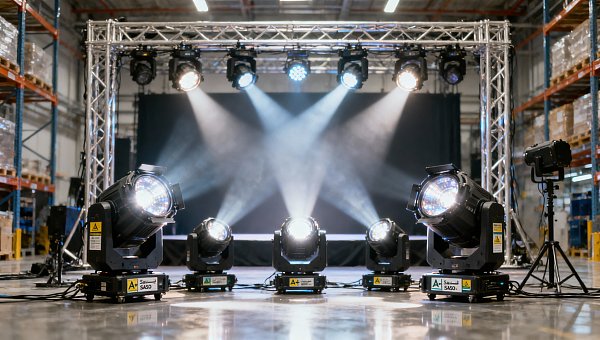
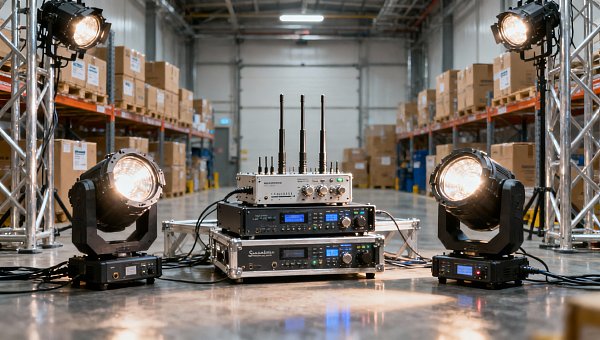
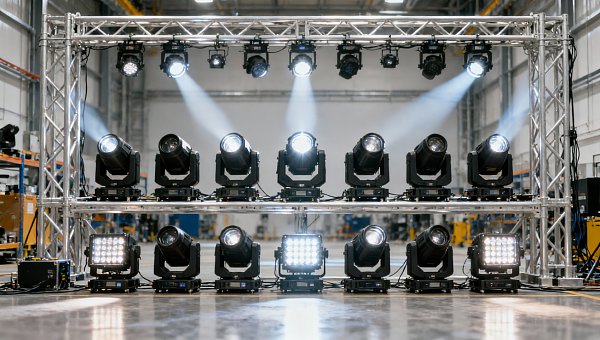
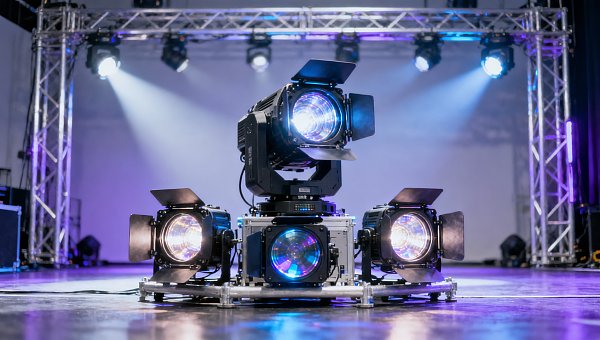
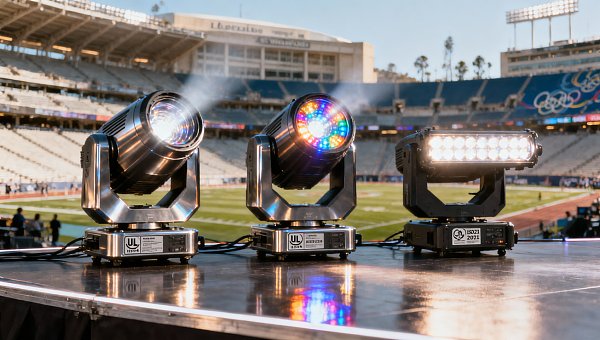
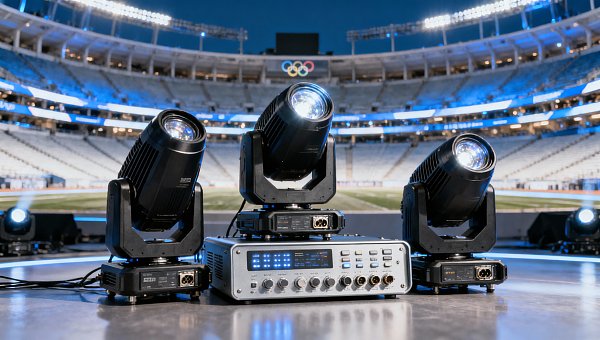
On May 15, 2026, the IOC published an update to the ‘LA28 Official Supplier List’. Three China-based stage lighting companies were newly included under the ‘Official Lighting Partner’ designation. The group comprises two LED moving head light OEM manufacturers and one DMX wireless control system solution provider. As confirmed by the IOC’s public list, these firms are now authorized to use the LA28 official branding and participate in pre-installation commissioning and technical integration at designated venues.
Industries Affected
Direct Export-Oriented Lighting Manufacturers: Companies producing stage lighting hardware — especially those with OEM/ODM capabilities for moving heads or digital control interfaces — may face increased scrutiny from international procurement teams evaluating technical compliance, certification readiness (e.g., CE, UL, FCC), and interoperability with legacy DMX-512 and RDM ecosystems. Recognition at this level does not imply automatic orders, but it elevates visibility in bid qualification processes for large-scale cultural and sporting infrastructure projects.
Wireless Control System Developers & Integrators: Firms specializing in DMX-over-wireless solutions (e.g., CRMX, LumenRadio, or proprietary protocols) may experience heightened demand for documentation aligned with IOC technical standards, including latency benchmarks, RF coexistence testing, and fail-safe redundancy mechanisms. Inclusion of a Chinese DMX wireless provider signals growing acceptance of non-Western protocol stacks in time-sensitive, safety-critical environments.
Lighting System Integrators Serving Global Events: Integrators bidding on Olympic-related subcontracts — especially those supporting arena rigging, broadcast lighting, or opening/closing ceremony staging — may need to reassess vendor pre-qualification checklists. LA28’s endorsement implies verified compatibility with venue-level network architectures and timing synchronization requirements (e.g., SMPTE timecode, PTPv2).
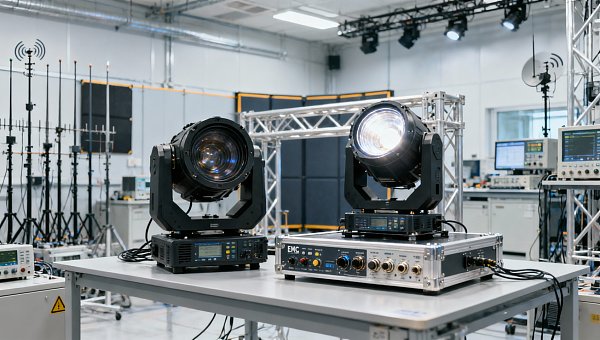
Supply Chain Service Providers (Certification, Logistics, Technical Translation): Third-party service providers supporting export compliance — such as EMC/EMI test labs, customs classification consultants, and multilingual technical documentation agencies — may see rising request volumes for IOC-aligned documentation packages, including bilingual test reports, installation manuals compliant with ISO/IEC 82045, and bilingual operator training materials.
What Relevant Enterprises or Practitioners Should Monitor and Do Now
Track official LA28 technical specifications and vendor onboarding timelines
The IOC and LA28 Organizing Committee have not yet published detailed technical annexes for lighting partners. Enterprises should monitor the LA28 Procurement Portal and IOC Supplier Hub for updates on mandatory conformance testing windows, site access schedules, and interoperability validation deadlines — all of which directly affect production planning and resource allocation.
Verify alignment between current product certifications and LA28’s venue deployment requirements
‘Official Lighting Partner’ status does not waive regulatory or safety compliance obligations. Firms must confirm whether existing CE/UL marks cover the exact configurations deployed in LA28 venues — particularly regarding thermal management in enclosed rigging structures, ingress protection (IP) ratings for outdoor stages, and electromagnetic compatibility under dense RF environments typical of broadcast-heavy venues.
Distinguish between branding authorization and contractual scope
Use of the LA28 logo is permitted per IOC licensing terms, but it does not constitute a supply contract or volume commitment. Enterprises should avoid conflating brand visibility with revenue certainty; actual procurement remains subject to separate tendering procedures managed by LA28’s Venue Operations and Broadcast departments.
Prepare for pre-commissioning coordination with venue technical teams
Participation in pre-installation debugging requires documented interoperability with LA28’s centralized lighting control architecture. Firms should ensure firmware versions, API documentation, and diagnostic toolsets are ready for handover — including support for standard protocols such as Art-Net, sACN, and RDM device discovery.
Editorial Perspective / Industry Observation
Observably, this update functions primarily as a signal — not yet an outcome. It reflects formal acknowledgment of technical maturity in specific product categories, rather than evidence of broad market penetration or systemic supply chain integration. Analysis shows that inclusion at the ‘Official Lighting Partner’ tier is selective, limited to vendors demonstrating verifiable integration success in prior mega-events (e.g., Asian Games, World Athletics Championships) or third-party validation via IOC-accredited test centers. From an industry perspective, sustained relevance will depend less on symbolic listing and more on demonstrable performance during LA28’s venue commissioning phase — where reliability, remote diagnostics, and rapid fault resolution become operational imperatives.
Current more appropriate interpretation is that this represents a threshold moment in perception — not a pivot point in global market share. It suggests growing eligibility for participation in high-stakes infrastructure tenders, but not automatic preference in award decisions.
Conclusion: This listing confirms that select Chinese stage lighting manufacturers have met IOC-defined benchmarks for technical credibility and system integration readiness. However, it does not indicate immediate commercial scale-up, nor does it alter underlying procurement rules or certification pathways. For industry stakeholders, it serves best as a reference point for benchmarking technical readiness — not as a catalyst for strategic redirection.
Information Source: International Olympic Committee (IOC) – LA28 Official Supplier List, updated May 15, 2026. Note: Technical specifications, procurement timelines, and contractual obligations associated with the ‘Official Lighting Partner’ designation remain pending official publication and are subject to ongoing verification.
Search News
Hot Articles
- Restaurant FurnitureFast-Casual Restaurant Interiors: Design Choices That Improve Speed and Guest FlowOct 04, 2026
- Outdoor RidesHow to Select Leisure Park Equipment for Safe, High-Throughput Visitor AreasOct 03, 2026
- Fashion & Gem JewelryDiamond Tester Wholesale: How to Vet Accuracy, Calibration, and MOQ Before OrderingOct 02, 2026
Popular Tags
Need ExpertConsultation?
Connect with our specialized leisureengineering team for procurementstrategies.
Recommended News
 Jul 13, 2026Stage Riser Platforms Explained: Types, Load Ratings, and Best-Fit Event UsesStage riser platforms explained clearly: compare types, load ratings, safety factors, and best-fit event uses to choose smarter, safer solutions for conferences, schools, hotels, and live shows.● Pro Audio Engineer
 Jul 09, 2026SASO Fast Track Cuts Stage Lighting Export Lead TimeSASO Fast Track cuts stage lighting export lead time from 45 days to 12 working days. Learn how Saudi certification changes affect truss suppliers, OEMs, buyers, and shipment planning.● Pro Audio Engineer
 Jul 08, 2026SASO Updates Stage Lighting Label Rules for LED Moving HeadsSASO updates stage lighting label rules for LED moving heads, requiring three-level energy efficiency values and bilingual labels. See what exporters and buyers must do before October 2026.● Pro Audio Engineer
 Jul 07, 2026SASO Adds Energy Label Rules for Stage Lighting ImportsSASO Adds Energy Label Rules for Stage Lighting Imports: learn which stage lighting products now need Arabic energy labels and SASO-recognized test reports before Sept. 1, 2026.● Pro Audio Engineer
 Jul 06, 2026Saudi SASO Sets A+ Rule for Stage LED LightingSaudi SASO sets A+ rule for stage LED lighting from Oct 1, 2026. Learn how the new SASO label and IEC 62722-2-1:2026 standard impact compliance, shipping, and market access.● Pro Audio Engineer
 Jul 04, 2026SASO Tightens RF Test Rules for Wireless Stage ControlsSASO tightens RF test rules for wireless stage controls in Saudi Arabia. Learn how the new IEC 62368-3 requirement impacts stage lighting exports, compliance, and delivery.● Pro Audio Engineer
 Jul 03, 2026Saudi SASO Adds RF Approval Rule for Stage LightingSaudi SASO adds RF approval rule for stage lighting. Learn how the new SASO RoHS+RF certification affects wireless lighting, truss control exports, retail access, and project delivery in Saudi Arabia.● Pro Audio Engineer
 Jul 02, 2026SASO Starts EMC Pilot for Smart Stage Lighting in SaudiSASO starts an EMC pilot for smart stage lighting in Saudi Arabia, impacting dimming controllers, cloud access, and project compliance. See what suppliers and integrators must do now.● Pro Audio Engineer
 Jul 01, 2026Saudi SASO Tightens UV-C Limits for Stage LightingSaudi SASO tightens UV-C limits for stage lighting and truss products. Learn the 2026 SASO IEC 62471 update, retesting deadline, customs risks, and how to protect Saudi shipments.● Pro Audio Engineer
 Jun 30, 2026EN 62471:2026 Adds UV-C Limit for Stage LightingEN 62471:2026 adds a UV-C limit for stage lighting, impacting LED moving heads, laser fixtures, and truss lighting. Learn what changes before Dec 1, 2026.● Pro Audio Engineer
 Jun 29, 2026TUV Adds Wi-Fi 7 EMC Test for Stage LightingTUV Adds Wi-Fi 7 EMC Test for Stage Lighting sold into the EU. Learn the Oct 1, 2026 deadline, retesting rules, and how EN 55032:2024 impacts certificates, shipments, and compliance planning.● Pro Audio Engineer
 Jun 25, 2026LED PAR Cans Wholesale: What to Compare in Wattage, Beam Angle, and DMX ControlLED par cans wholesale buyers should compare wattage, beam angle, and DMX control before requesting quotes. Learn how to avoid costly mismatches and choose fixtures that fit each venue.● Pro Audio Engineer
 Jun 16, 2026Stage Lighting Equipment List for Small Venues: What You Need and How to Plan ItStage lighting equipment for small venues: discover a practical equipment list, planning tips, and smart setup ideas to improve performance, flexibility, and long-term value.● Pro Audio Engineer
 Jun 12, 2026Vietnam Tightens EMC Rules for Stage Lighting LEDsVietnam Tightens EMC Rules for Stage Lighting LEDs: learn how QCVN 139:2026 impacts imports, testing, sourcing, and delivery planning for stage lighting businesses.● Pro Audio Engineer
 Jun 11, 2026LPGA Shanghai Debut Lifts Stage Lighting OrdersStage lighting and truss demand is rising as LPGA Shanghai debuts in 2026. Learn how tighter delivery windows, compliance, and project execution are reshaping global orders.● Pro Audio Engineer
 Jun 04, 2026UK EPR Rules Expand to Stage Lighting and TrussUK EPR rules for stage lighting and truss expand in Q3 2026. Learn how UKCA-linked registration, reporting, recycling fees, and material documentation will affect compliance and market access.● Pro Audio Engineer
 Jun 03, 2026UK EPR Fee Hits Stage Truss Textiles in Q3 2026UK EPR Fee for stage truss textiles starts in Q3 2026. Learn what new recycling charges and UKCA-Flame rules mean for lighting and truss suppliers.● Pro Audio Engineer
 Jun 02, 2026UK EPR Fee Hits Stage Lighting & TrussUK EPR Fee Hits Stage Lighting & Truss products with textile components in 2026. Learn compliance risks, BOM updates, and cost impacts for UK exporters.● Pro Audio Engineer
 May 25, 2026China's Carbon Fiber Truss Strength Up 32% at 2026 Sports ExpoCarbon fiber truss strength up 32% at 2026 Sports Expo—UL 1598 certified, CE+UL ready. Discover how China’s stage infrastructure is winning European music festivals & global tenders.● Pro Audio Engineer
 May 23, 2026Vietnam Mandates Bilingual MSDS for Stage Lighting & Truss ImportsVietnam mandates bilingual MSDS (Vietnamese & Chinese) for stage lighting and truss imports — ensure compliance by July 1, 2026 to avoid shipment rejection.● Pro Audio Engineer
 May 20, 20263 Chinese Stage Lighting Firms Join LA28 Olympic Supplier List3 Chinese stage lighting firms join LA28 Olympic supplier list — showcasing ISO 20121 & UL 1574 compliance, sustainability leadership, and global credibility in live-event infrastructure.● Pro Audio Engineer
 May 20, 2026What matters most when choosing lighting stands crank up?Lighting stands crank up: learn what really matters beyond height—load capacity, crank safety, stability, compatibility, and serviceability—to choose the right stand with confidence.● Pro Audio Engineer
 May 19, 20263 Chinese Stage Lighting Firms Join IOC’s 2028 LA Olympics Supplier ListChinese stage lighting firms join IOC's 2028 LA Olympics supplier list — a major validation for OEM/ODM exporters and tech integrators in global sports & entertainment lighting.● Pro Audio Engineer
 May 19, 2026When are chain hoists for stage the better rigging choiceChain hoists for stage are the better rigging choice when you need precise lifting, compact headroom use, and reliable repeat performance. See key use cases and buyer tips.● Pro Audio Engineer