GCC Introduces Bilingual Labeling Rule for Musical Instruments
Gulf Cooperation Council (GCC) authorities have introduced a new Conformity Marking requirement for musical instruments, effective 1 June 2026. The rule mandates dual-language safety warnings—Arabic and Simplified Chinese—on all applicable products entering the six GCC member states. This development reflects growing regulatory attention to multilingual consumer information in high-growth export markets, particularly where Chinese manufacturing presence and regional retail expansion intersect.
Event Overview
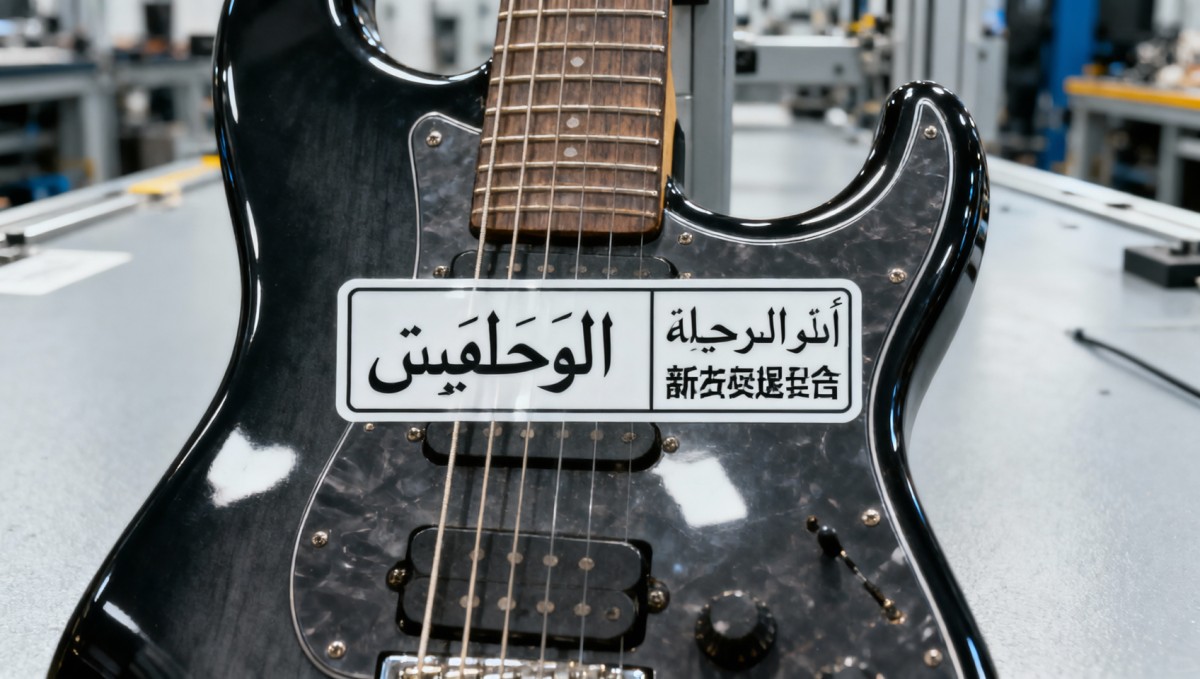
The Gulf Standardization Organization (GSO) published GSO IEC 60065:2026 Amendment 1 on 15 May 2026. It stipulates that, from 1 June 2026 onward, all musical instruments placed on the market in Saudi Arabia, United Arab Emirates, Kuwait, Qatar, Bahrain, and Oman must bear Conformity Marking labels containing electrical safety warnings in both Arabic and Simplified Chinese. The bilingual text must use a minimum font size of 6 pt. Non-compliant products will be detained at customs and subject to a penalty equal to 20% of the shipment’s declared value.
Industries Affected
Direct Exporters and Trading Companies
Exporters shipping instruments directly to GCC countries face immediate operational impact. Label redesign, print verification, and pre-shipment compliance checks now require bilingual content validation—not just translation accuracy but typographic legibility per GSO’s 6-pt minimum. Delays in label approval may disrupt shipment schedules, especially for time-sensitive seasonal orders (e.g., back-to-school or holiday inventory).
Raw Material and Component Suppliers
Suppliers of PCBs, power adapters, speaker enclosures, or other safety-critical subassemblies are indirectly affected: OEM/ODM clients increasingly demand pre-certified components with compliant labeling space reserved on packaging or nameplates. Some suppliers may need to revise technical documentation templates and update quality control checklists to include bilingual warning verification as a release criterion.
Manufacturers and OEM/ODM Factories
Factories producing for GCC-bound brands must integrate bilingual warning placement into final assembly workflows. This includes updating label artwork management systems, training line supervisors on font-size verification, and allocating additional QA time for visual inspection. For facilities serving multiple export markets, this adds layer-specific compliance logic—e.g., Arabic–Chinese labeling only for GCC SKUs, not for EU or US variants.
Supply Chain Service Providers
Third-party conformity assessment bodies, labeling printers, and logistics providers offering pre-clearance support must adapt service scopes. Certification consultants now need verified Arabic–Chinese translation partners accredited by GSO; label printers must confirm typographic compliance (including right-to-left layout handling for Arabic); and freight forwarders must add bilingual marking verification to their document audit checklist prior to customs submission.
Key Focus Areas and Recommended Actions
Verify Translation Accuracy and Layout Compliance
Do not rely solely on machine translation. Engage native Arabic linguists and certified Chinese technical translators to review warning statements for regulatory equivalence—not literal translation. Confirm that Arabic text flows right-to-left without line-break errors and that Chinese characters render clearly at 6 pt under standard lighting conditions.
Update Label Artwork and Print Specifications
Revise all label master files—including die-cut templates, barcode placements, and adhesive backing specs—to reserve dedicated zones for bilingual warnings. Ensure print vendors validate output using GSO-recommended test fonts (e.g., Noto Sans Arabic, Noto Sans SC) and provide proof-of-print samples with physical measurement of character height.
Integrate Verification into Final QA Protocols
Add bilingual warning legibility as a mandatory checkpoint in final inspection SOPs. Require signed confirmation from line QA staff before batch release. Maintain dated photographic evidence of compliant labeling for each production lot—this may be requested during post-import audits.
Editorial Perspective / Industry Observation
Observably, this requirement signals a broader shift in GCC regulatory strategy: moving beyond basic safety certification toward user-facing communication accountability. While previous GSO standards focused on electrical performance or material flammability, Amendment 1 treats language accessibility as a functional safety element—akin to EU’s EN IEC 62368-1 requirements for hazard communication. Analysis shows this is less about linguistic inclusivity and more about traceability: Arabic ensures local consumer comprehension, while Simplified Chinese likely responds to GCC customs’ increased scrutiny of Chinese-origin goods following recent anti-fraud initiatives. From an industry perspective, it is better understood as a de facto origin-verification lever than a pure consumer protection measure.
Conclusion
This amendment does not raise technical safety thresholds—but it elevates documentation rigor and cross-functional coordination across the export supply chain. For instrument exporters, the real cost lies not in translation fees, but in system-level adaptation: aligning design, procurement, production, and logistics around a single, non-negotiable labeling specification. The rule’s long-term significance lies in its precedent: future GSO amendments may extend bilingual labeling to other product categories where Chinese manufacturing dominance intersects with GCC import growth—such as audio accessories, lighting equipment, or educational electronics.
Source Attribution
Official source: Gulf Standardization Organization (GSO), GSO IEC 60065:2026 Amendment 1, issued 15 May 2026. Full text available via GSO e-Regulatory Portal (registration required). Note: GSO has not yet published official guidance on approved translation service providers or font rendering test protocols—this remains under observation.
Search News
Hot Articles
- Restaurant FurnitureFast-Casual Restaurant Interiors: Design Choices That Improve Speed and Guest FlowOct 04, 2026
- Outdoor RidesHow to Select Leisure Park Equipment for Safe, High-Throughput Visitor AreasOct 03, 2026
- Fashion & Gem JewelryDiamond Tester Wholesale: How to Vet Accuracy, Calibration, and MOQ Before OrderingOct 02, 2026
Popular Tags
Need ExpertConsultation?
Connect with our specialized leisureengineering team for procurementstrategies.
Recommended News
 Sep 11, 2026How to Choose Touring Instrument Cases for Flights, Trucks, and Daily Load-InsInstrument cases for touring: learn how to balance flight protection, truck durability, weight, fit, and serviceable hardware for safer, faster load-ins.● Pro Audio Engineer
 Sep 07, 2026How to Choose Wood Frame Tambourines for Sound Quality and Long-Term UseWood frame tambourines: learn how to compare frame construction, jingle tone, head options, durability, and supplier quality for reliable long-term performance.● Pro Audio Engineer
 Sep 05, 2026How Often Should Music Education Equipment Be Serviced?How often should music education equipment be serviced? Explore practical schedules, maintenance tips, and lifecycle planning to keep instruments and audio systems reliable.● Pro Audio Engineer
 Aug 21, 2026How to Choose Marching Band Drums for Sound Projection, Weight, and DurabilityMarching band drums buying guide: learn how to balance sound projection, weight, and durability for better field performance, easier carrying, and longer-lasting value.● Pro Audio Engineer
 Aug 09, 2026How to Evaluate a MIDI Cable Manufacturer for Audio Quality and OEM ReliabilityMIDI cable manufacturer evaluation guide: learn how to assess signal stability, connector quality, OEM process control, and batch consistency to reduce failures and source with confidence.● Pro Audio Engineer
 Aug 08, 2026How to Evaluate a Trumpets OEM Manufacturer for Quality, MOQ, and Custom DesignTrumpets OEM manufacturer selection starts with quality, MOQ, and custom design control. Learn how to compare suppliers, reduce sourcing risk, and choose a reliable long-term factory partner.● Pro Audio Engineer
 Jul 27, 2026How to Source Conga Drums in Bulk for Schools, Bands, and Event ProgramsConga drums bulk sourcing for schools, bands, and event programs made easier. Learn how to compare quality, durability, compliance, and total cost before you place a large order.● Pro Audio Engineer
 Jul 24, 2026How to Choose Low Dust Violin Rosin for Cleaner Practice and Better Bow ControlLow dust violin rosin buying guide: learn how to compare formula, climate fit, grip, and string compatibility for cleaner practice, better bow control, and smarter purchase decisions.● Pro Audio Engineer
 Jul 15, 2026Plastic Tambourines Bulk Buying Guide: Sizes, Materials, and MOQ QuestionsPlastic tambourines bulk buying guide covering sizes, ABS vs PP materials, sound consistency, customization, and MOQ questions to help buyers cut risk and choose the right supplier.● Pro Audio Engineer
 Jul 13, 2026Acoustic Guitars Wholesale China: How to Evaluate Build Quality and OEM OptionsAcoustic guitars wholesale China guide: learn how to assess build quality, factory consistency, and OEM options to choose reliable suppliers and reduce sourcing risk.● Pro Audio Engineer
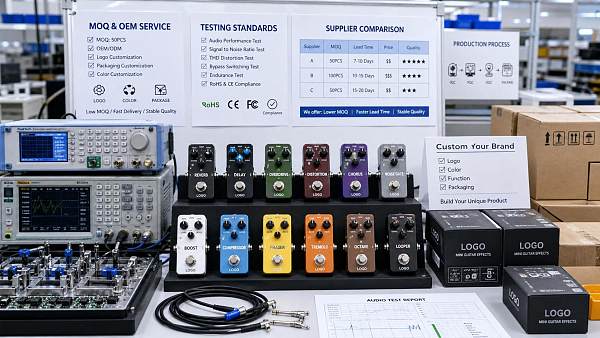
 Jul 12, 2026Mini Effect Pedals Wholesale: MOQ, OEM Options, Testing, and Supplier ComparisonMini effect pedals wholesale guide covering MOQ, OEM options, testing standards, and supplier comparison to help buyers reduce risk, improve margins, and choose reliable partners.● Pro Audio Engineer
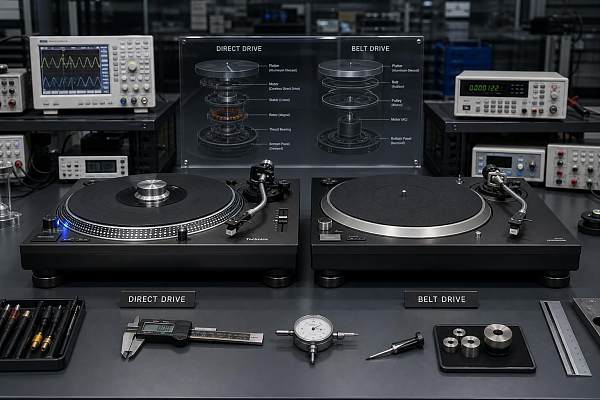
 Jul 11, 2026DJ Turntables OEM Guide: Key Torque, Drive, and Build Specs to CompareDJ turntables OEM guide covering torque, drive type, speed stability, platter build, and manufacturing consistency. Compare the specs that impact performance, reliability, and sourcing confidence.● Pro Audio Engineer
 Jul 08, 2026Guitar Capos Wholesale: What Materials, Clamp Types, and MOQ Terms Should You Compare?Guitar capos wholesale buying starts with more than price. Compare materials, clamp types, quality checks, and MOQ terms to reduce returns, protect margins, and choose a supplier with confidence.● Pro Audio Engineer
 Jul 07, 2026Birch Drum Kits Manufacturer Comparison: Shell Construction, Hardware Quality, and OEM OptionsBirch drum kits manufacturer comparison covering shell construction, hardware quality, and OEM options to help buyers reduce sourcing risk and choose reliable suppliers.● Pro Audio Engineer
 Jul 06, 2026Spruce Top Acoustic Guitars Explained: Tone, Wood Grades, and Who They Suit BestSpruce top acoustic guitars explained: compare tone, wood grades, and build quality to find the best fit for players, retailers, and commercial buyers.● Pro Audio Engineer
 Jun 30, 2026Xylophones and Glockenspiels: Key Differences in Range, Tone, and Classroom UseXylophones and glockenspiels compared: discover key differences in range, tone, durability, and classroom use to choose the right instrument for teaching, buying, or school programs.● Pro Audio Engineer
 Jun 25, 2026Musical Instrument Industry Report: Key Market Segments, Demand Drivers, and Price TrendsMusical instrument industry report covering key market segments, demand drivers, and price trends. Explore sourcing risks, premium growth, and where buyer demand is shifting next.● Pro Audio Engineer
 Jun 23, 2026Metronomes and Tuners Explained: Types, Key Features, and Who Needs BothMetronomes and tuners explained: compare types, key features, and who needs both. Learn how to choose the right tool for better timing, pitch, and practical daily use.● Pro Audio Engineer
 Jun 22, 2026How the Musical Instrument Industry Supply Chain Affects Lead Times, Cost, and QualityMusical instrument industry supply chain trends now shape lead times, cost, and quality. Discover how smarter sourcing and supplier transparency reduce risk and improve buying outcomes.● Pro Audio Engineer
 Jun 20, 2026DJ Headphones Wholesale Buying Guide: OEM Options, MOQ, and Audio Specs to CompareDJ headphones wholesale guide covering OEM options, MOQ strategy, and key audio specs. Compare build quality, compliance, and total cost to source smarter and reduce returns.● Pro Audio Engineer
 Jun 19, 2026Acoustic Guitars Wholesale: 7 Specs Buyers Should Compare Before Placing an OrderAcoustic guitars wholesale buyers can compare 7 key specs before ordering, from tonewoods and playability to OEM, packaging, and QC, to reduce risk and protect margins.● Pro Audio Engineer
 Jun 15, 2026Tambourines Bulk Buying Guide: Materials, Sound Quality, and Pack Size DifferencesTambourines bulk buying guide covering material choices, sound consistency, and pack size differences. Compare suppliers smarter, reduce risk, and choose the best fit for schools, retail, and events.● Pro Audio Engineer
 Jun 14, 2026Professional Musical Instruments Explained: Types, Skill Levels, and Buying CriteriaProfessional musical instruments explained: discover key types, ideal skill levels, and practical buying criteria to choose reliable, high-performance instruments with confidence.● Pro Audio Engineer
 Jun 10, 2026Drum Kits Manufacturer Comparison: What to Check Before OEM or Bulk OrdersDrum kits manufacturer comparison guide for OEM and bulk buyers: check quality, compliance, lead times, packaging, and true cost before placing large orders.● Pro Audio Engineer