GCC Enforces Mandatory Conformity Marking for Musical Instruments Imports
On 14 May 2026, the Gulf Cooperation Council (GCC) Standardization Organization issued an enforcement notice mandating conformity marking for musical instruments imported into the six GCC member states — Saudi Arabia, United Arab Emirates, Kuwait, Qatar, Bahrain, and Oman. The new requirement directly impacts China’s musical instrument export sector, which accounts for over 60% of GCC imports in this category, and signals a tightening of regulatory alignment with international electromagnetic compatibility (EMC), electrical safety (LVD), and hazardous substances (RoHS) standards.
Event Overview
The GCC Standardization Organization announced on 14 May 2026 that, effective from Q3 2026, all imported musical instruments — including electronic keyboards, electric guitars, and professional audio interfaces — must bear the official GCC Conformity Marking. Importers must also submit a single integrated test report covering EMC, LVD, and RoHS, issued by a GCC-recognized laboratory. Chinese exporters are required to complete label redesign and documentation upgrades by end-June 2026; non-compliant shipments will face port rejection or return.
Industries Affected
Direct trading enterprises: Export-oriented distributors and brand owners face immediate operational risk — label non-compliance triggers customs refusal, delaying revenue recognition and increasing demurrage and rework costs. Since most GCC-bound consignments clear through Jebel Ali (UAE) or King Abdulaziz Port (Saudi Arabia), lack of pre-clearance verification may cause cascading delays across shipment cycles.
Raw material procurement enterprises: Suppliers of PCBs, power supplies, shielding components, and plating materials used in instrument manufacturing must now ensure traceability and compliance documentation aligns with RoHS/EMC thresholds. For instance, lead-free solder specifications or ferrite core certifications may need third-party validation — adding lead time and audit burden for upstream vendors.
Manufacturing enterprises: OEM/ODM factories producing for global brands must revise product labeling workflows, integrate conformity marking into final assembly lines, and retain updated test reports per model variant. Unlike CE marking, GCC Conformity Marking requires product-specific approval — meaning minor hardware revisions (e.g., changed power adapter) may trigger retesting and re-registration.
Supply chain service enterprises: Customs brokers, certification consultants, and logistics providers specializing in GCC markets must expand service scope to include pre-submission review of test reports, GCC Notified Body coordination, and bilingual (Arabic–English) label verification. Demand for ‘GCC compliance readiness audits’ is expected to rise sharply among mid-tier exporters lacking in-house regulatory staff.
Key Focus Areas and Recommended Actions
Verify laboratory accreditation status
Confirm that your testing lab is listed on the GCC Central Organization for Standardization’s (GSO) official register of recognized bodies. GSO does not accept CB Scheme reports alone — full EMC+LVD+RoHS testing must be conducted under GCC-specific test protocols (e.g., GSO IEC 60065:2023 for LVD).
Update labeling assets before end-June 2026
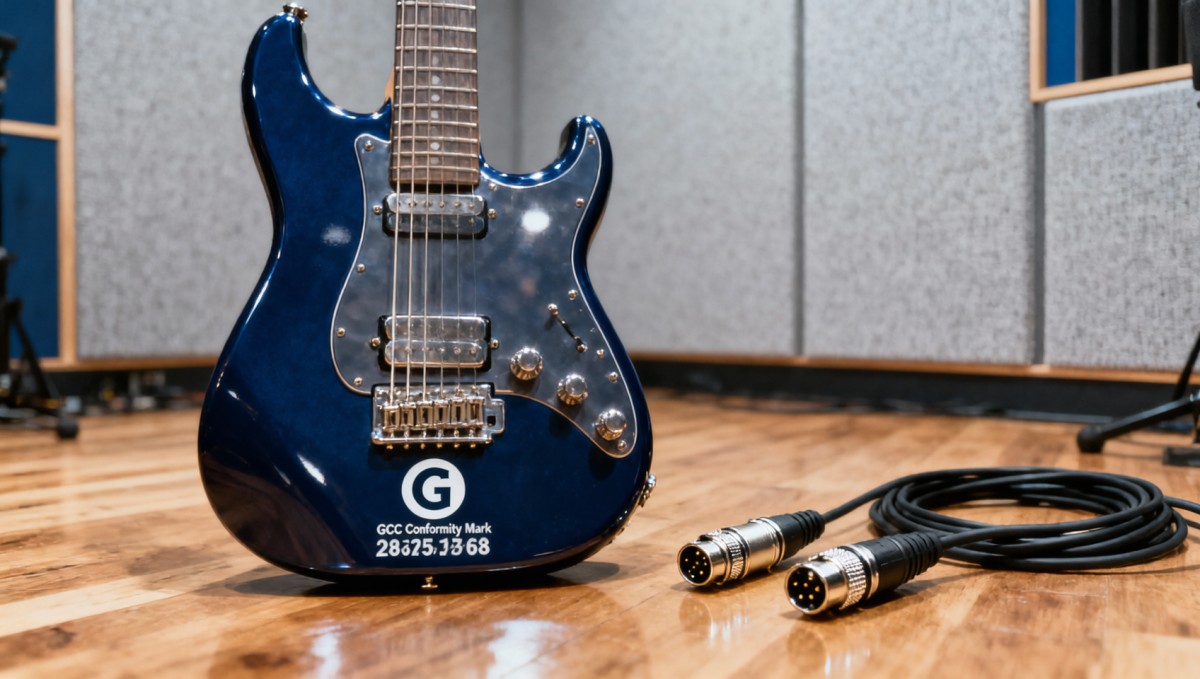
Reproduce packaging, user manuals, and product nameplates to include the mandatory GCC Conformity Mark (a stylized ‘G’ inside a circle, accompanied by the Notified Body number). Digital assets — e-commerce listings, spec sheets, and B2B portals — must reflect the updated marking and certification status.
Map model-level compliance requirements
Group products by electrical architecture (e.g., Class I vs. Class II insulation, battery-powered vs. mains-powered), not just SKU. One guitar amplifier series may require separate reports for analog and digital variants due to differing EMC emission profiles — generic ‘family approvals’ are not accepted under the new regime.
Editorial Perspective / Industry Observation
Observably, this regulation is less about market access restriction and more about harmonizing technical oversight across GCC economies — especially as Saudi Arabia and UAE accelerate localization agendas under Vision 2030 and UAE Industrial Strategy 2031. Analysis shows the timing coincides with pending updates to GSO’s Product Safety Law, suggesting future expansion to accessories (e.g., cables, pedals) and software-enabled instruments (e.g., MIDI controllers with firmware update capability). From an industry perspective, the three-in-one reporting requirement reflects a deliberate move away from fragmented assessments — but it also consolidates gatekeeping power with fewer, larger accredited labs, potentially raising testing costs by 18–25% for SME exporters.
Conclusion
This policy shift marks a structural inflection point: GCC is transitioning from a destination that accepts widely recognized certifications (e.g., CE, FCC) to one enforcing sovereign conformity infrastructure. For Chinese manufacturers, compliance is no longer optional due diligence — it is a prerequisite for shelf presence. A rational reading suggests early adopters who invest in internal regulatory capacity (e.g., dedicated GSO liaison roles, modular test planning) will gain measurable advantage in lead time, cost predictability, and channel trust.
Source Attribution
Official notice issued by the Gulf Standardization Organization (GSO), Ref. No. GSO/NOT/2026/05/14, published 14 May 2026 on www.gso.org.sa. Implementation timeline, list of recognized laboratories, and template labeling guidelines remain subject to revision; stakeholders are advised to monitor GSO’s ‘Conformity Assessment Portal’ for real-time updates.
Search News
Hot Articles
- Restaurant FurnitureFast-Casual Restaurant Interiors: Design Choices That Improve Speed and Guest FlowOct 04, 2026
- Outdoor RidesHow to Select Leisure Park Equipment for Safe, High-Throughput Visitor AreasOct 03, 2026
- Fashion & Gem JewelryDiamond Tester Wholesale: How to Vet Accuracy, Calibration, and MOQ Before OrderingOct 02, 2026
Popular Tags
Need ExpertConsultation?
Connect with our specialized leisureengineering team for procurementstrategies.
Recommended News
 Sep 11, 2026How to Choose Touring Instrument Cases for Flights, Trucks, and Daily Load-InsInstrument cases for touring: learn how to balance flight protection, truck durability, weight, fit, and serviceable hardware for safer, faster load-ins.● Pro Audio Engineer
 Sep 07, 2026How to Choose Wood Frame Tambourines for Sound Quality and Long-Term UseWood frame tambourines: learn how to compare frame construction, jingle tone, head options, durability, and supplier quality for reliable long-term performance.● Pro Audio Engineer
 Sep 05, 2026How Often Should Music Education Equipment Be Serviced?How often should music education equipment be serviced? Explore practical schedules, maintenance tips, and lifecycle planning to keep instruments and audio systems reliable.● Pro Audio Engineer
 Aug 21, 2026How to Choose Marching Band Drums for Sound Projection, Weight, and DurabilityMarching band drums buying guide: learn how to balance sound projection, weight, and durability for better field performance, easier carrying, and longer-lasting value.● Pro Audio Engineer
 Aug 09, 2026How to Evaluate a MIDI Cable Manufacturer for Audio Quality and OEM ReliabilityMIDI cable manufacturer evaluation guide: learn how to assess signal stability, connector quality, OEM process control, and batch consistency to reduce failures and source with confidence.● Pro Audio Engineer
 Aug 08, 2026How to Evaluate a Trumpets OEM Manufacturer for Quality, MOQ, and Custom DesignTrumpets OEM manufacturer selection starts with quality, MOQ, and custom design control. Learn how to compare suppliers, reduce sourcing risk, and choose a reliable long-term factory partner.● Pro Audio Engineer
 Jul 27, 2026How to Source Conga Drums in Bulk for Schools, Bands, and Event ProgramsConga drums bulk sourcing for schools, bands, and event programs made easier. Learn how to compare quality, durability, compliance, and total cost before you place a large order.● Pro Audio Engineer
 Jul 24, 2026How to Choose Low Dust Violin Rosin for Cleaner Practice and Better Bow ControlLow dust violin rosin buying guide: learn how to compare formula, climate fit, grip, and string compatibility for cleaner practice, better bow control, and smarter purchase decisions.● Pro Audio Engineer
 Jul 15, 2026Plastic Tambourines Bulk Buying Guide: Sizes, Materials, and MOQ QuestionsPlastic tambourines bulk buying guide covering sizes, ABS vs PP materials, sound consistency, customization, and MOQ questions to help buyers cut risk and choose the right supplier.● Pro Audio Engineer
 Jul 13, 2026Acoustic Guitars Wholesale China: How to Evaluate Build Quality and OEM OptionsAcoustic guitars wholesale China guide: learn how to assess build quality, factory consistency, and OEM options to choose reliable suppliers and reduce sourcing risk.● Pro Audio Engineer
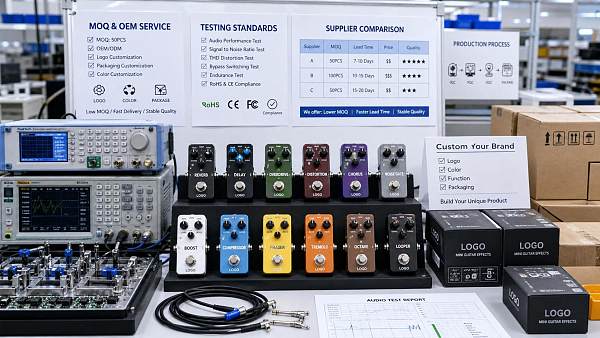
 Jul 12, 2026Mini Effect Pedals Wholesale: MOQ, OEM Options, Testing, and Supplier ComparisonMini effect pedals wholesale guide covering MOQ, OEM options, testing standards, and supplier comparison to help buyers reduce risk, improve margins, and choose reliable partners.● Pro Audio Engineer
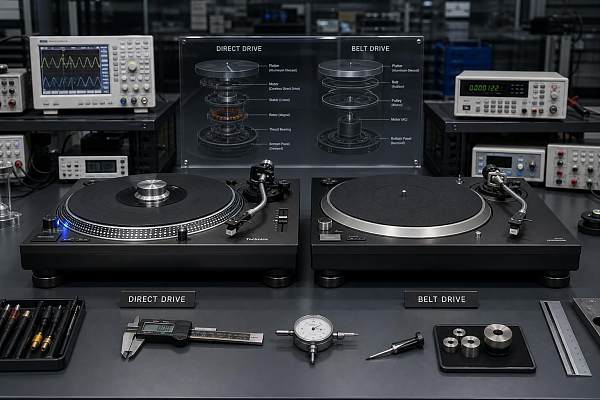
 Jul 11, 2026DJ Turntables OEM Guide: Key Torque, Drive, and Build Specs to CompareDJ turntables OEM guide covering torque, drive type, speed stability, platter build, and manufacturing consistency. Compare the specs that impact performance, reliability, and sourcing confidence.● Pro Audio Engineer
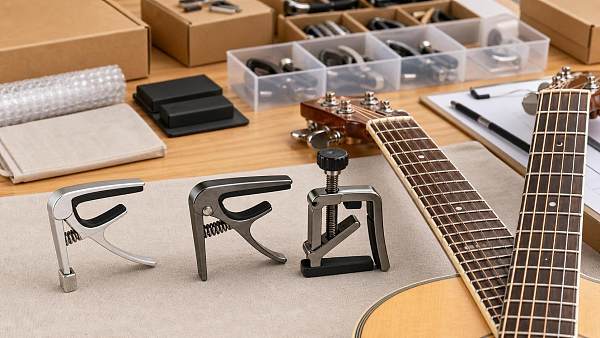
 Jul 08, 2026Guitar Capos Wholesale: What Materials, Clamp Types, and MOQ Terms Should You Compare?Guitar capos wholesale buying starts with more than price. Compare materials, clamp types, quality checks, and MOQ terms to reduce returns, protect margins, and choose a supplier with confidence.● Pro Audio Engineer
 Jul 07, 2026Birch Drum Kits Manufacturer Comparison: Shell Construction, Hardware Quality, and OEM OptionsBirch drum kits manufacturer comparison covering shell construction, hardware quality, and OEM options to help buyers reduce sourcing risk and choose reliable suppliers.● Pro Audio Engineer
 Jul 06, 2026Spruce Top Acoustic Guitars Explained: Tone, Wood Grades, and Who They Suit BestSpruce top acoustic guitars explained: compare tone, wood grades, and build quality to find the best fit for players, retailers, and commercial buyers.● Pro Audio Engineer
 Jun 30, 2026Xylophones and Glockenspiels: Key Differences in Range, Tone, and Classroom UseXylophones and glockenspiels compared: discover key differences in range, tone, durability, and classroom use to choose the right instrument for teaching, buying, or school programs.● Pro Audio Engineer
 Jun 25, 2026Musical Instrument Industry Report: Key Market Segments, Demand Drivers, and Price TrendsMusical instrument industry report covering key market segments, demand drivers, and price trends. Explore sourcing risks, premium growth, and where buyer demand is shifting next.● Pro Audio Engineer
 Jun 23, 2026Metronomes and Tuners Explained: Types, Key Features, and Who Needs BothMetronomes and tuners explained: compare types, key features, and who needs both. Learn how to choose the right tool for better timing, pitch, and practical daily use.● Pro Audio Engineer
 Jun 22, 2026How the Musical Instrument Industry Supply Chain Affects Lead Times, Cost, and QualityMusical instrument industry supply chain trends now shape lead times, cost, and quality. Discover how smarter sourcing and supplier transparency reduce risk and improve buying outcomes.● Pro Audio Engineer
 Jun 20, 2026DJ Headphones Wholesale Buying Guide: OEM Options, MOQ, and Audio Specs to CompareDJ headphones wholesale guide covering OEM options, MOQ strategy, and key audio specs. Compare build quality, compliance, and total cost to source smarter and reduce returns.● Pro Audio Engineer
 Jun 19, 2026Acoustic Guitars Wholesale: 7 Specs Buyers Should Compare Before Placing an OrderAcoustic guitars wholesale buyers can compare 7 key specs before ordering, from tonewoods and playability to OEM, packaging, and QC, to reduce risk and protect margins.● Pro Audio Engineer
 Jun 15, 2026Tambourines Bulk Buying Guide: Materials, Sound Quality, and Pack Size DifferencesTambourines bulk buying guide covering material choices, sound consistency, and pack size differences. Compare suppliers smarter, reduce risk, and choose the best fit for schools, retail, and events.● Pro Audio Engineer
 Jun 14, 2026Professional Musical Instruments Explained: Types, Skill Levels, and Buying CriteriaProfessional musical instruments explained: discover key types, ideal skill levels, and practical buying criteria to choose reliable, high-performance instruments with confidence.● Pro Audio Engineer
 Jun 10, 2026Drum Kits Manufacturer Comparison: What to Check Before OEM or Bulk OrdersDrum kits manufacturer comparison guide for OEM and bulk buyers: check quality, compliance, lead times, packaging, and true cost before placing large orders.● Pro Audio Engineer