What Often Delays Custom Trumpets OEM Production?
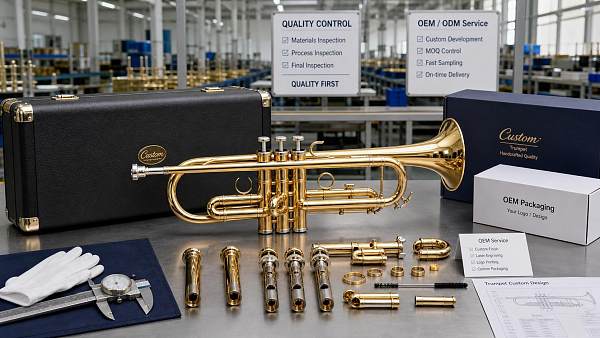
Custom trumpet manufacturing often appears simple, yet trumpets OEM production is frequently slowed by hidden technical and commercial variables.
Delays rarely come from one issue alone. They usually result from design changes, metal sourcing, tooling tolerances, finish approval, packaging revisions, and export coordination happening at the same time.
In cross-border sourcing, even a small shift in bore size, valve feel, lacquer tone, or branding position can move a confirmed timeline.
Understanding which scenario creates which delay helps reduce risk, improve forecast accuracy, and protect quality in trumpets OEM programs.
When Development Projects Cause the First trumpets oem Delay
The earliest bottleneck usually appears before mass production starts. Many custom programs begin with incomplete technical alignment.
A trumpet is not only a brass shell. It combines acoustics, ergonomics, finishing consistency, and assembly precision.
If drawings define branding but not tone expectations, the supplier must pause development to confirm the target performance standard.
Scenario: New Design, No Reference Sample
A fully original model takes longer than a private-label adaptation. Tube routing, bell flare geometry, leadpipe response, and valve balance all need trial verification.
This is a common trumpets oem issue when a project starts from concept sketches rather than a proven instrument benchmark.
Scenario: Repeated Cosmetic Revisions
Finish changes often look minor. In practice, brushed brass, silver plating, gold tone accents, or custom engraving may require separate process planning.
Every extra approval loop increases lead time and may delay the next factory stage.
When Material Sourcing Disrupts trumpets oem Schedules
Material availability is one of the most underestimated causes of trumpets OEM delay.
Custom trumpets require stable brass composition, precise tubing dimensions, quality valve casings, felts, springs, water keys, and protective cases.
Scenario: Special Alloy or Premium Finish Requirement
Yellow brass may be readily available, but rose brass or special alloy preferences can narrow sourcing options.
The same applies to premium plating chemicals and polishing materials. If one input is delayed, assembly planning stops.
Scenario: Low Volume, High Customization Order
Small custom runs may not receive immediate raw material allocation. Suppliers often consolidate purchases across several orders to control costs.
That makes trumpets OEM timing less predictable for niche designs or boutique editions.
When Tooling and Precision Standards Slow Production
Trumpets are sensitive to dimensional accuracy. Small deviations can affect response, intonation, and player comfort.
In trumpets OEM work, tooling errors are especially costly because rework may require disassembly or complete part replacement.
Scenario: Custom Engraving, Badging, or Mold Updates
Brand-specific logos, valve button shapes, finger hook designs, and case inserts can require new jigs or modified fixtures.
If these changes are approved late, production cannot move smoothly into full assembly.
Scenario: Tight Acoustic Consistency Targets
Some projects demand near-identical resistance and tone across every unit. That raises inspection time and rejects more parts.
Higher QC intensity supports quality, but it can extend a trumpets OEM schedule significantly.
How Finishing and Approval Cycles Change the Delivery Date
Finishing is often where custom brass projects lose the most time after production begins.
Surface treatment affects aesthetics, corrosion resistance, and perceived value. It also creates approval risk because appearance is judged subjectively.
Scenario: Multiple Finish Benchmarks
One team may prefer bright lacquer, another may want a warmer vintage look. If expectations are not visualized early, samples get rejected repeatedly.
That pattern is common in trumpets OEM projects tied to branded collections or promotional launches.
Scenario: Packaging Added Too Late
Retail-ready cartons, molded interiors, manuals, and compliance labels are part of delivery readiness.
A finished trumpet cannot ship if packaging dimensions fail drop-test expectations or barcode placement is still under review.
Where Logistics and Compliance Create Hidden trumpets oem Delays
Even when factory work is complete, shipment readiness may still be blocked.
Trumpets OEM programs serving global channels must align documentation, labeling, testing records, and customs details.
Scenario: Different Destination Market Requirements
One market may require stricter packaging marks, another may focus on material declarations or accessory safety statements.
A missing document can hold cargo even if the instruments are ready.
Scenario: Consolidated Shipping With Other Products
In broader commercial trade, custom instruments may move together with stands, cases, or audio accessories.
If one item misses inspection, the entire booking may slip, delaying the trumpets OEM delivery window.
How Common Scenarios Differ in Risk and Lead Time
The table below shows how different custom scenarios affect trumpets OEM timing and control points.
Practical Ways to Adapt trumpets oem Planning to Each Scenario
Different project types need different control methods. A standard lead-time promise is rarely enough.
- For original models, freeze acoustic specifications before cosmetic discussions expand.
- For plated or lacquered editions, approve physical finish samples, not only digital mockups.
- For low-volume trumpets OEM runs, verify minimum material commitments at quotation stage.
- For retail programs, align manuals, labels, cartons, and case inserts before final assembly.
- For global delivery, prepare market-specific documents with the production file, not after packing.
Frequent Misjudgments That Extend trumpets oem Timelines
Several mistakes appear repeatedly in custom brass sourcing.
One common error is treating cosmetic customization as separate from engineering. In reality, engraving depth, plating thickness, and accessory fit can affect process order.
Another mistake is assuming sample approval guarantees mass production speed. Pilot units often receive extra manual attention that is harder to replicate at scale.
A third issue is overlooking communication lag across time zones. A single unanswered question on finish tolerance or case layout can pause a full production line.
In many trumpets OEM projects, the delay is not technical failure. It is decision latency.
What to Do Next for Faster and More Reliable trumpets oem Execution
A stronger process starts with clearer scenario definition. Confirm whether the project is a standard private-label order, a tuned custom model, or a premium finish collection.
Then build one approval path covering design, material, finish, packaging, compliance, and shipping milestones.
For complex trumpets OEM programs, request a production roadmap with prototype checkpoints, sourcing confirmations, QC gates, and export document deadlines.
This approach reduces surprises, improves coordination, and creates more dependable delivery outcomes for custom brass instrument sourcing.
When timing matters as much as quality, early technical alignment is the most effective way to keep trumpets OEM production on track.
Search News
Hot Articles
- Restaurant FurnitureFast-Casual Restaurant Interiors: Design Choices That Improve Speed and Guest FlowOct 04, 2026
- Outdoor RidesHow to Select Leisure Park Equipment for Safe, High-Throughput Visitor AreasOct 03, 2026
- Fashion & Gem JewelryDiamond Tester Wholesale: How to Vet Accuracy, Calibration, and MOQ Before OrderingOct 02, 2026
Popular Tags
Need ExpertConsultation?
Connect with our specialized leisureengineering team for procurementstrategies.
Recommended News
 Sep 11, 2026How to Choose Touring Instrument Cases for Flights, Trucks, and Daily Load-InsInstrument cases for touring: learn how to balance flight protection, truck durability, weight, fit, and serviceable hardware for safer, faster load-ins.● Pro Audio Engineer
 Sep 07, 2026How to Choose Wood Frame Tambourines for Sound Quality and Long-Term UseWood frame tambourines: learn how to compare frame construction, jingle tone, head options, durability, and supplier quality for reliable long-term performance.● Pro Audio Engineer
 Sep 05, 2026How Often Should Music Education Equipment Be Serviced?How often should music education equipment be serviced? Explore practical schedules, maintenance tips, and lifecycle planning to keep instruments and audio systems reliable.● Pro Audio Engineer
 Aug 21, 2026How to Choose Marching Band Drums for Sound Projection, Weight, and DurabilityMarching band drums buying guide: learn how to balance sound projection, weight, and durability for better field performance, easier carrying, and longer-lasting value.● Pro Audio Engineer
 Aug 09, 2026How to Evaluate a MIDI Cable Manufacturer for Audio Quality and OEM ReliabilityMIDI cable manufacturer evaluation guide: learn how to assess signal stability, connector quality, OEM process control, and batch consistency to reduce failures and source with confidence.● Pro Audio Engineer
 Aug 08, 2026How to Evaluate a Trumpets OEM Manufacturer for Quality, MOQ, and Custom DesignTrumpets OEM manufacturer selection starts with quality, MOQ, and custom design control. Learn how to compare suppliers, reduce sourcing risk, and choose a reliable long-term factory partner.● Pro Audio Engineer
 Jul 27, 2026How to Source Conga Drums in Bulk for Schools, Bands, and Event ProgramsConga drums bulk sourcing for schools, bands, and event programs made easier. Learn how to compare quality, durability, compliance, and total cost before you place a large order.● Pro Audio Engineer
 Jul 24, 2026How to Choose Low Dust Violin Rosin for Cleaner Practice and Better Bow ControlLow dust violin rosin buying guide: learn how to compare formula, climate fit, grip, and string compatibility for cleaner practice, better bow control, and smarter purchase decisions.● Pro Audio Engineer
 Jul 15, 2026Plastic Tambourines Bulk Buying Guide: Sizes, Materials, and MOQ QuestionsPlastic tambourines bulk buying guide covering sizes, ABS vs PP materials, sound consistency, customization, and MOQ questions to help buyers cut risk and choose the right supplier.● Pro Audio Engineer
 Jul 13, 2026Acoustic Guitars Wholesale China: How to Evaluate Build Quality and OEM OptionsAcoustic guitars wholesale China guide: learn how to assess build quality, factory consistency, and OEM options to choose reliable suppliers and reduce sourcing risk.● Pro Audio Engineer
 Jul 12, 2026Mini Effect Pedals Wholesale: MOQ, OEM Options, Testing, and Supplier ComparisonMini effect pedals wholesale guide covering MOQ, OEM options, testing standards, and supplier comparison to help buyers reduce risk, improve margins, and choose reliable partners.● Pro Audio Engineer
 Jul 11, 2026DJ Turntables OEM Guide: Key Torque, Drive, and Build Specs to CompareDJ turntables OEM guide covering torque, drive type, speed stability, platter build, and manufacturing consistency. Compare the specs that impact performance, reliability, and sourcing confidence.● Pro Audio Engineer
 Jul 08, 2026Guitar Capos Wholesale: What Materials, Clamp Types, and MOQ Terms Should You Compare?Guitar capos wholesale buying starts with more than price. Compare materials, clamp types, quality checks, and MOQ terms to reduce returns, protect margins, and choose a supplier with confidence.● Pro Audio Engineer
 Jul 07, 2026Birch Drum Kits Manufacturer Comparison: Shell Construction, Hardware Quality, and OEM OptionsBirch drum kits manufacturer comparison covering shell construction, hardware quality, and OEM options to help buyers reduce sourcing risk and choose reliable suppliers.● Pro Audio Engineer
 Jul 06, 2026Spruce Top Acoustic Guitars Explained: Tone, Wood Grades, and Who They Suit BestSpruce top acoustic guitars explained: compare tone, wood grades, and build quality to find the best fit for players, retailers, and commercial buyers.● Pro Audio Engineer
 Jun 30, 2026Xylophones and Glockenspiels: Key Differences in Range, Tone, and Classroom UseXylophones and glockenspiels compared: discover key differences in range, tone, durability, and classroom use to choose the right instrument for teaching, buying, or school programs.● Pro Audio Engineer
 Jun 25, 2026Musical Instrument Industry Report: Key Market Segments, Demand Drivers, and Price TrendsMusical instrument industry report covering key market segments, demand drivers, and price trends. Explore sourcing risks, premium growth, and where buyer demand is shifting next.● Pro Audio Engineer
 Jun 23, 2026Metronomes and Tuners Explained: Types, Key Features, and Who Needs BothMetronomes and tuners explained: compare types, key features, and who needs both. Learn how to choose the right tool for better timing, pitch, and practical daily use.● Pro Audio Engineer
 Jun 22, 2026How the Musical Instrument Industry Supply Chain Affects Lead Times, Cost, and QualityMusical instrument industry supply chain trends now shape lead times, cost, and quality. Discover how smarter sourcing and supplier transparency reduce risk and improve buying outcomes.● Pro Audio Engineer
 Jun 20, 2026DJ Headphones Wholesale Buying Guide: OEM Options, MOQ, and Audio Specs to CompareDJ headphones wholesale guide covering OEM options, MOQ strategy, and key audio specs. Compare build quality, compliance, and total cost to source smarter and reduce returns.● Pro Audio Engineer
 Jun 19, 2026Acoustic Guitars Wholesale: 7 Specs Buyers Should Compare Before Placing an OrderAcoustic guitars wholesale buyers can compare 7 key specs before ordering, from tonewoods and playability to OEM, packaging, and QC, to reduce risk and protect margins.● Pro Audio Engineer
 Jun 15, 2026Tambourines Bulk Buying Guide: Materials, Sound Quality, and Pack Size DifferencesTambourines bulk buying guide covering material choices, sound consistency, and pack size differences. Compare suppliers smarter, reduce risk, and choose the best fit for schools, retail, and events.● Pro Audio Engineer
 Jun 14, 2026Professional Musical Instruments Explained: Types, Skill Levels, and Buying CriteriaProfessional musical instruments explained: discover key types, ideal skill levels, and practical buying criteria to choose reliable, high-performance instruments with confidence.● Pro Audio Engineer
 Jun 10, 2026Drum Kits Manufacturer Comparison: What to Check Before OEM or Bulk OrdersDrum kits manufacturer comparison guide for OEM and bulk buyers: check quality, compliance, lead times, packaging, and true cost before placing large orders.● Pro Audio Engineer