Acoustic Guitars Wholesale Prices Look Similar, So What Changes the Margin?
At first glance, acoustic guitars wholesale prices often look nearly identical across suppliers, yet profit margins can vary dramatically. For commercial sourcing, the gap rarely comes from the headline quote alone.
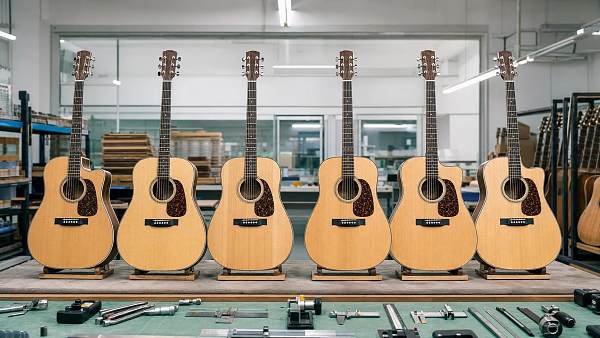
In acoustic guitars wholesale deals, margin is shaped by wood grading, factory consistency, finish quality, setup standards, compliance, packaging, logistics, and defect control. Small upstream differences can create major downstream cost changes.
This guide breaks the topic into practical questions. It explains how to compare offers, identify hidden cost drivers, and protect margin without chasing the lowest visible price.
Why do acoustic guitars wholesale quotes look similar in the first place?
Many suppliers benchmark against the same market reference points. Popular body sizes, entry specifications, and standard export packaging often lead to very similar first-round quotations.
Another reason is strategic quoting. Some factories keep acoustic guitars wholesale prices attractive at the inquiry stage, then recover profit through upgrades, accessories, logo work, or relaxed quality control.
Currency trends and shared component ecosystems also compress visible price gaps. Tuners, strings, truss rods, and common cases may come from overlapping regional suppliers.
So, similar quotes do not mean identical value. They often reflect similar assumptions, not similar execution.
What is usually excluded from the initial quote?
- Material grade upgrades for top, back, and sides
- Neck adjustment and factory setup labor
- Humidity control in storage and shipment
- Drop-test packaging or retail-ready presentation
- Compliance documents and testing fees
- Spare parts support and warranty response
Which product factors change margin the most in acoustic guitars wholesale?
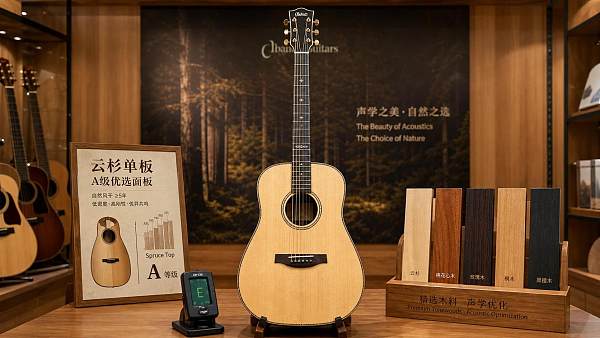
Wood is the first major variable. Spruce, mahogany, nato, sapele, laminated basswood, and engineered alternatives perform differently in tone, appearance, and stability.
The next factor is solid versus laminated construction. A quote for a “solid top” instrument may still hide wide variation in grain match, drying control, and cosmetic acceptance.
Neck geometry matters more than many expect. Poor fretwork or unstable neck alignment creates returns, complaints, and post-delivery labor that quickly erode acoustic guitars wholesale margin.
Finish quality is another silent driver. A thinner, cleaner finish can increase appeal, but poor curing raises scratch risk, odor complaints, and transit damage exposure.
Why does consistency matter more than a low sample price?
A polished sample can be hand-selected. Real profitability depends on whether carton 2 and carton 200 match the same standard.
In acoustic guitars wholesale programs, consistency reduces inspection costs, accelerates receiving, and protects brand positioning across multiple sales channels.
When consistency fails, hidden costs appear fast. These include rework, markdowns, delayed launches, customer service overhead, and extra logistics.
How do OEM and ODM options affect acoustic guitars wholesale profitability?
OEM and ODM flexibility can lift margin when product differentiation supports stronger resale pricing. However, customization also adds tooling, sampling rounds, artwork control, and longer approval cycles.
A standard catalog guitar may offer faster turnover. A custom acoustic guitars wholesale order may deliver better margin if the specification is disciplined and market fit is proven.
Which custom elements usually increase value?
- Headstock branding with stable finish adhesion
- Fingerboard markers suited to target aesthetics
- EQ or pickup choices for performance channels
- Retail packaging aligned with premium positioning
- Accessory bundles that raise average order value
Where do custom projects lose margin?
Too many variations can fragment production. Small color changes, mixed body shapes, and unstable forecasts may raise defect risk and reduce factory efficiency.
Customization without clear channel logic also hurts. If the market does not reward the difference, acoustic guitars wholesale costs rise faster than selling price.
What hidden supply chain costs reduce acoustic guitars wholesale margin?
Freight is only one part of landed cost. Moisture exposure, carton compression, warehouse handling, and customs delays can all damage profitability.
Packaging quality deserves close attention. A cheaper carton may look acceptable in a quote, but transit dents and bridge pressure damage create expensive claims later.
Inspection timing matters too. Pre-shipment checks are cheaper than destination sorting, especially in acoustic guitars wholesale batches with mixed SKUs and finish-sensitive surfaces.
How do compliance and documentation affect commercial value?
For broad international trade, compliance supports smoother customs clearance and stronger buyer confidence. Material declarations, packaging standards, and chemical safety records can prevent avoidable disruption.
Where children, schools, or institutional environments are involved, documentation may carry even more weight than a small price advantage.
How should suppliers be compared when acoustic guitars wholesale prices are close?
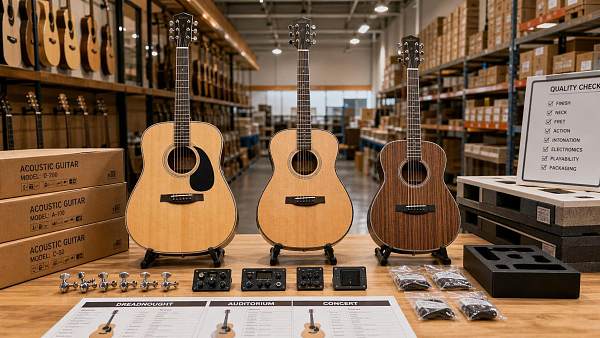
Start with a normalized comparison sheet. Align body shape, tonewood structure, scale length, finish type, hardware level, packaging, accessories, and inspection rules.
Then evaluate production discipline. Ask about moisture control, in-line QC, neck angle inspection, fret end finishing, glue standards, and final setup tolerances.
Lead time reliability should also be scored. A slightly higher acoustic guitars wholesale price can still produce better margin if delivery stability supports faster market turnover.
A practical comparison checklist
- Confirm whether materials are solid, laminated, or mixed.
- Request acceptable defect standards in writing.
- Review neck straightness and fretwork tolerances.
- Match packaging specification to shipping distance.
- Check documentation readiness for destination markets.
- Clarify spare parts and after-sales response commitments.
What common mistakes distort margin calculations in acoustic guitars wholesale?
The first mistake is comparing sample quality instead of batch quality. One attractive instrument does not prove repeatable output.
The second mistake is ignoring post-arrival cost. Restringing, setup labor, cosmetic sorting, and carton replacement all reduce apparent savings.
Another frequent error is chasing excessive specification at the wrong market level. Premium detail without matching demand weakens acoustic guitars wholesale sell-through.
Finally, some evaluations overlook communication quality. Slow technical clarification often causes avoidable delays, wrong packaging, and revision loops.
So how can acoustic guitars wholesale deals protect margin more effectively?
Treat acoustic guitars wholesale sourcing as a total-value decision, not a unit-price contest. Margin improves when quality consistency, packaging, compliance, and service are engineered from the start.
A disciplined sourcing process usually includes specification alignment, batch-level QC standards, packaging validation, and realistic lead-time planning. These steps reduce margin leakage better than aggressive price compression alone.
Where quotations look close, the better partner is often the one with clearer technical detail, stronger process control, and fewer downstream surprises.
The next step is simple: compare acoustic guitars wholesale offers using landed cost, defect risk, compliance readiness, and customization discipline in one sheet. That approach reveals the real margin story quickly.
Search News
Hot Articles
- Restaurant FurnitureFast-Casual Restaurant Interiors: Design Choices That Improve Speed and Guest FlowOct 04, 2026
- Outdoor RidesHow to Select Leisure Park Equipment for Safe, High-Throughput Visitor AreasOct 03, 2026
- Fashion & Gem JewelryDiamond Tester Wholesale: How to Vet Accuracy, Calibration, and MOQ Before OrderingOct 02, 2026
Popular Tags
Need ExpertConsultation?
Connect with our specialized leisureengineering team for procurementstrategies.
Recommended News
 Sep 11, 2026How to Choose Touring Instrument Cases for Flights, Trucks, and Daily Load-InsInstrument cases for touring: learn how to balance flight protection, truck durability, weight, fit, and serviceable hardware for safer, faster load-ins.● Pro Audio Engineer
 Sep 07, 2026How to Choose Wood Frame Tambourines for Sound Quality and Long-Term UseWood frame tambourines: learn how to compare frame construction, jingle tone, head options, durability, and supplier quality for reliable long-term performance.● Pro Audio Engineer
 Sep 05, 2026How Often Should Music Education Equipment Be Serviced?How often should music education equipment be serviced? Explore practical schedules, maintenance tips, and lifecycle planning to keep instruments and audio systems reliable.● Pro Audio Engineer
 Aug 21, 2026How to Choose Marching Band Drums for Sound Projection, Weight, and DurabilityMarching band drums buying guide: learn how to balance sound projection, weight, and durability for better field performance, easier carrying, and longer-lasting value.● Pro Audio Engineer
 Aug 09, 2026How to Evaluate a MIDI Cable Manufacturer for Audio Quality and OEM ReliabilityMIDI cable manufacturer evaluation guide: learn how to assess signal stability, connector quality, OEM process control, and batch consistency to reduce failures and source with confidence.● Pro Audio Engineer
 Aug 08, 2026How to Evaluate a Trumpets OEM Manufacturer for Quality, MOQ, and Custom DesignTrumpets OEM manufacturer selection starts with quality, MOQ, and custom design control. Learn how to compare suppliers, reduce sourcing risk, and choose a reliable long-term factory partner.● Pro Audio Engineer
 Jul 27, 2026How to Source Conga Drums in Bulk for Schools, Bands, and Event ProgramsConga drums bulk sourcing for schools, bands, and event programs made easier. Learn how to compare quality, durability, compliance, and total cost before you place a large order.● Pro Audio Engineer
 Jul 24, 2026How to Choose Low Dust Violin Rosin for Cleaner Practice and Better Bow ControlLow dust violin rosin buying guide: learn how to compare formula, climate fit, grip, and string compatibility for cleaner practice, better bow control, and smarter purchase decisions.● Pro Audio Engineer
 Jul 15, 2026Plastic Tambourines Bulk Buying Guide: Sizes, Materials, and MOQ QuestionsPlastic tambourines bulk buying guide covering sizes, ABS vs PP materials, sound consistency, customization, and MOQ questions to help buyers cut risk and choose the right supplier.● Pro Audio Engineer
 Jul 13, 2026Acoustic Guitars Wholesale China: How to Evaluate Build Quality and OEM OptionsAcoustic guitars wholesale China guide: learn how to assess build quality, factory consistency, and OEM options to choose reliable suppliers and reduce sourcing risk.● Pro Audio Engineer
 Jul 12, 2026Mini Effect Pedals Wholesale: MOQ, OEM Options, Testing, and Supplier ComparisonMini effect pedals wholesale guide covering MOQ, OEM options, testing standards, and supplier comparison to help buyers reduce risk, improve margins, and choose reliable partners.● Pro Audio Engineer
 Jul 11, 2026DJ Turntables OEM Guide: Key Torque, Drive, and Build Specs to CompareDJ turntables OEM guide covering torque, drive type, speed stability, platter build, and manufacturing consistency. Compare the specs that impact performance, reliability, and sourcing confidence.● Pro Audio Engineer
 Jul 08, 2026Guitar Capos Wholesale: What Materials, Clamp Types, and MOQ Terms Should You Compare?Guitar capos wholesale buying starts with more than price. Compare materials, clamp types, quality checks, and MOQ terms to reduce returns, protect margins, and choose a supplier with confidence.● Pro Audio Engineer
 Jul 07, 2026Birch Drum Kits Manufacturer Comparison: Shell Construction, Hardware Quality, and OEM OptionsBirch drum kits manufacturer comparison covering shell construction, hardware quality, and OEM options to help buyers reduce sourcing risk and choose reliable suppliers.● Pro Audio Engineer
 Jul 06, 2026Spruce Top Acoustic Guitars Explained: Tone, Wood Grades, and Who They Suit BestSpruce top acoustic guitars explained: compare tone, wood grades, and build quality to find the best fit for players, retailers, and commercial buyers.● Pro Audio Engineer
 Jun 30, 2026Xylophones and Glockenspiels: Key Differences in Range, Tone, and Classroom UseXylophones and glockenspiels compared: discover key differences in range, tone, durability, and classroom use to choose the right instrument for teaching, buying, or school programs.● Pro Audio Engineer
 Jun 25, 2026Musical Instrument Industry Report: Key Market Segments, Demand Drivers, and Price TrendsMusical instrument industry report covering key market segments, demand drivers, and price trends. Explore sourcing risks, premium growth, and where buyer demand is shifting next.● Pro Audio Engineer
 Jun 23, 2026Metronomes and Tuners Explained: Types, Key Features, and Who Needs BothMetronomes and tuners explained: compare types, key features, and who needs both. Learn how to choose the right tool for better timing, pitch, and practical daily use.● Pro Audio Engineer
 Jun 22, 2026How the Musical Instrument Industry Supply Chain Affects Lead Times, Cost, and QualityMusical instrument industry supply chain trends now shape lead times, cost, and quality. Discover how smarter sourcing and supplier transparency reduce risk and improve buying outcomes.● Pro Audio Engineer
 Jun 20, 2026DJ Headphones Wholesale Buying Guide: OEM Options, MOQ, and Audio Specs to CompareDJ headphones wholesale guide covering OEM options, MOQ strategy, and key audio specs. Compare build quality, compliance, and total cost to source smarter and reduce returns.● Pro Audio Engineer
 Jun 19, 2026Acoustic Guitars Wholesale: 7 Specs Buyers Should Compare Before Placing an OrderAcoustic guitars wholesale buyers can compare 7 key specs before ordering, from tonewoods and playability to OEM, packaging, and QC, to reduce risk and protect margins.● Pro Audio Engineer
 Jun 15, 2026Tambourines Bulk Buying Guide: Materials, Sound Quality, and Pack Size DifferencesTambourines bulk buying guide covering material choices, sound consistency, and pack size differences. Compare suppliers smarter, reduce risk, and choose the best fit for schools, retail, and events.● Pro Audio Engineer
 Jun 14, 2026Professional Musical Instruments Explained: Types, Skill Levels, and Buying CriteriaProfessional musical instruments explained: discover key types, ideal skill levels, and practical buying criteria to choose reliable, high-performance instruments with confidence.● Pro Audio Engineer
 Jun 10, 2026Drum Kits Manufacturer Comparison: What to Check Before OEM or Bulk OrdersDrum kits manufacturer comparison guide for OEM and bulk buyers: check quality, compliance, lead times, packaging, and true cost before placing large orders.● Pro Audio Engineer