What to check before choosing dj turntables oem production
Choosing the right partner for dj turntables oem production can determine product quality, delivery stability, and long-term project success. For project planning, the decision goes far beyond unit cost. It requires a close review of engineering depth, process control, compliance readiness, customization options, and supplier resilience. In the pro audio and musical instruments sector, these checkpoints directly affect brand reputation, after-sales risk, and market competitiveness.
Understanding the scope of dj turntables oem production
Before comparing factories, define what dj turntables oem actually includes. Some suppliers only assemble standard platforms with logo changes. Others support full mechanical, electrical, and acoustic customization.
A complete dj turntables oem project may cover chassis design, tonearm selection, motor tuning, PCB integration, firmware support, packaging, and retail documentation. The supplier’s real capability often becomes clear at this stage.
It is also useful to distinguish OEM from ODM. OEM usually follows a buyer-defined specification. ODM usually starts from the factory’s existing platform and allows selected modifications.
That distinction matters because tooling ownership, intellectual property control, and testing depth can differ significantly. A project may appear flexible at first, yet become constrained later by platform limits.
Core elements typically included
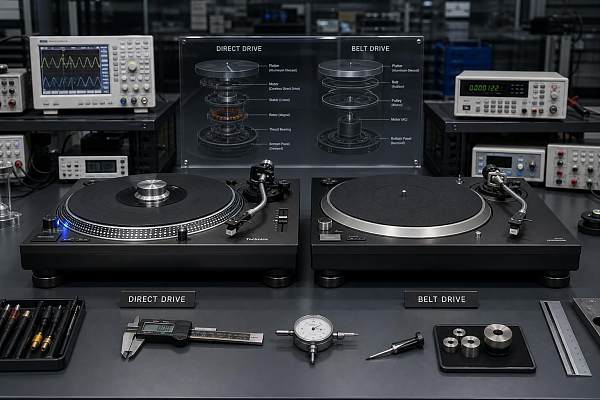
- Drive system selection, such as direct drive or belt drive
- Motor torque, start-up speed, and speed stability targets
- Tonearm geometry, anti-skate function, and cartridge compatibility
- Platter material, damping structure, and vibration isolation
- Phono preamp, USB output, Bluetooth, or digital control options
- Branding, cosmetic finishing, and packaging adaptation
Current market signals in the pro audio supply chain
The dj turntables oem market is shaped by changing user expectations and stricter commercial standards. Buyers now look for reliability, premium finish quality, and wider feature integration across performance and retail channels.
Factories serving global trade must also handle compliance, documentation, and shipment consistency. In many cases, sourcing risk is no longer driven by one component alone, but by multi-tier coordination.
Manufacturing capability and engineering depth
The first major checkpoint is whether the factory can build your product architecture, not just quote it. dj turntables oem production depends on precision in mechanics, electronics, and final calibration.
Ask whether key processes are handled in-house. These may include injection molding, metal processing, PCB assembly, motor tuning, silk printing, and final performance testing. Heavy outsourcing can weaken consistency.
Review engineering resources in practical terms. A capable team should provide drawings, tolerances, BOM optimization, prototype feedback, and failure analysis. Strong suppliers document each design change clearly.
Technical points worth checking
- Motor performance data, including wow and flutter results
- Tonearm bearing quality and calibration method
- Resonance and vibration control design
- Grounding strategy and shielding for low-noise output
- Prototype lead time and revision turnaround
If the project requires custom tooling, ask who owns the molds and whether maintenance costs are included. This point often affects future negotiation power in dj turntables oem programs.
Quality control, testing discipline, and traceability
A promising sample does not guarantee stable mass production. Reliable dj turntables oem production requires a repeatable quality system from incoming materials to final shipment inspection.
Check whether the supplier has written IQC, IPQC, and OQC procedures. Good factories measure platter balance, rotation stability, switch durability, audio noise, cosmetic defects, and carton drop resistance.
Traceability is equally important. Serial control, batch records, and component lot mapping help isolate failures faster. This becomes essential when products serve retail chains, distributors, or commercial installation projects.
Useful quality questions
- What defect rate is accepted during pilot and mass production?
- How are cosmetic standards approved and documented?
- What reliability tests are performed before shipment?
- How quickly is root cause analysis issued after a complaint?
- Can inspection reports be shared by production lot?
Compliance, certification, and export readiness
For international distribution, compliance cannot be treated as a late-stage task. In dj turntables oem sourcing, electrical safety, EMC, environmental requirements, and labeling rules should be reviewed early.
A supplier should know which standards apply to the target market. Test reports must match the actual final configuration, not an unrelated reference model with different boards or power systems.
If custom adapters, wireless modules, or USB functions are included, certification scope may expand. That is why compliance review should be linked directly to the engineering change process.
Customization flexibility and commercial fit
Not every factory that offers dj turntables oem can support meaningful customization. Some can change color and logo only. Others can adapt motor behavior, interface layout, preamp design, and packaging structure.
Customization should also be judged by commercial practicality. A technically possible feature may require large MOQ, special tooling, or a difficult approval cycle. Early cost mapping prevents late surprises.
It helps to request a formal customization matrix. This should separate standard options, semi-custom modifications, and full custom development. Such clarity improves scheduling and protects launch targets.
Common customization areas
- Brand logo, panel finish, and product color
- Plinth materials and anti-vibration feet
- USB recording, Bluetooth, or built-in preamp options
- Retail carton, manual, inserts, and accessories
Supply chain reliability and delivery performance
A supplier may have strong engineering, yet still fail on delivery. dj turntables oem programs often rely on specialized motors, chips, bearings, power components, and packaging materials from multiple vendors.
Review lead times at component level, not only finished-goods level. Long-tail items can delay the line even when final assembly capacity looks sufficient on paper.
Ask whether the factory has approved alternatives for critical parts. Also confirm how they handle shortages, engineering substitutions, and last-minute logistics changes. Delivery stability should be supported by process, not promises.
Typical sourcing scenarios and evaluation priorities
Different dj turntables oem projects require different emphasis. A retail entry model, a premium audiophile line, and a club-oriented product may share components, yet their risk priorities differ.
Practical review steps before commitment
To reduce risk in dj turntables oem sourcing, use a staged review process. This helps compare suppliers fairly and keeps technical, commercial, and compliance issues visible from the start.
- Define the target specification, market, and compliance scope clearly.
- Request capability evidence, not only a quotation sheet.
- Audit sample quality, engineering response, and test records.
- Review tooling, BOM risk, and change management controls.
- Validate pilot production before approving full launch.
A disciplined review often reveals whether a supplier is suitable for long-term cooperation. In dj turntables oem, early transparency usually predicts later delivery and warranty performance.
Next-step framework for supplier selection
A final decision should balance product ambition with operational reality. The best dj turntables oem partner is not always the cheapest or the largest. It is the one that can repeatedly deliver your specification with evidence.
Build a comparison sheet that scores engineering ability, quality control, compliance readiness, customization depth, supply chain resilience, and communication speed. Then confirm those scores through samples, documentation, and pilot output.
When these checkpoints are reviewed carefully, dj turntables oem production becomes easier to manage, scale, and improve. That approach supports stronger product launches, lower defect risk, and a more dependable global sourcing strategy.
Search News
Hot Articles
- Restaurant FurnitureFast-Casual Restaurant Interiors: Design Choices That Improve Speed and Guest FlowOct 04, 2026
- Outdoor RidesHow to Select Leisure Park Equipment for Safe, High-Throughput Visitor AreasOct 03, 2026
- Fashion & Gem JewelryDiamond Tester Wholesale: How to Vet Accuracy, Calibration, and MOQ Before OrderingOct 02, 2026
Popular Tags
Need ExpertConsultation?
Connect with our specialized leisureengineering team for procurementstrategies.
Recommended News
 Sep 11, 2026How to Choose Touring Instrument Cases for Flights, Trucks, and Daily Load-InsInstrument cases for touring: learn how to balance flight protection, truck durability, weight, fit, and serviceable hardware for safer, faster load-ins.● Pro Audio Engineer
 Sep 07, 2026How to Choose Wood Frame Tambourines for Sound Quality and Long-Term UseWood frame tambourines: learn how to compare frame construction, jingle tone, head options, durability, and supplier quality for reliable long-term performance.● Pro Audio Engineer
 Sep 05, 2026How Often Should Music Education Equipment Be Serviced?How often should music education equipment be serviced? Explore practical schedules, maintenance tips, and lifecycle planning to keep instruments and audio systems reliable.● Pro Audio Engineer
 Aug 21, 2026How to Choose Marching Band Drums for Sound Projection, Weight, and DurabilityMarching band drums buying guide: learn how to balance sound projection, weight, and durability for better field performance, easier carrying, and longer-lasting value.● Pro Audio Engineer
 Aug 09, 2026How to Evaluate a MIDI Cable Manufacturer for Audio Quality and OEM ReliabilityMIDI cable manufacturer evaluation guide: learn how to assess signal stability, connector quality, OEM process control, and batch consistency to reduce failures and source with confidence.● Pro Audio Engineer
 Aug 08, 2026How to Evaluate a Trumpets OEM Manufacturer for Quality, MOQ, and Custom DesignTrumpets OEM manufacturer selection starts with quality, MOQ, and custom design control. Learn how to compare suppliers, reduce sourcing risk, and choose a reliable long-term factory partner.● Pro Audio Engineer
 Jul 27, 2026How to Source Conga Drums in Bulk for Schools, Bands, and Event ProgramsConga drums bulk sourcing for schools, bands, and event programs made easier. Learn how to compare quality, durability, compliance, and total cost before you place a large order.● Pro Audio Engineer
 Jul 24, 2026How to Choose Low Dust Violin Rosin for Cleaner Practice and Better Bow ControlLow dust violin rosin buying guide: learn how to compare formula, climate fit, grip, and string compatibility for cleaner practice, better bow control, and smarter purchase decisions.● Pro Audio Engineer
 Jul 15, 2026Plastic Tambourines Bulk Buying Guide: Sizes, Materials, and MOQ QuestionsPlastic tambourines bulk buying guide covering sizes, ABS vs PP materials, sound consistency, customization, and MOQ questions to help buyers cut risk and choose the right supplier.● Pro Audio Engineer
 Jul 13, 2026Acoustic Guitars Wholesale China: How to Evaluate Build Quality and OEM OptionsAcoustic guitars wholesale China guide: learn how to assess build quality, factory consistency, and OEM options to choose reliable suppliers and reduce sourcing risk.● Pro Audio Engineer
 Jul 12, 2026Mini Effect Pedals Wholesale: MOQ, OEM Options, Testing, and Supplier ComparisonMini effect pedals wholesale guide covering MOQ, OEM options, testing standards, and supplier comparison to help buyers reduce risk, improve margins, and choose reliable partners.● Pro Audio Engineer
 Jul 11, 2026DJ Turntables OEM Guide: Key Torque, Drive, and Build Specs to CompareDJ turntables OEM guide covering torque, drive type, speed stability, platter build, and manufacturing consistency. Compare the specs that impact performance, reliability, and sourcing confidence.● Pro Audio Engineer
 Jul 08, 2026Guitar Capos Wholesale: What Materials, Clamp Types, and MOQ Terms Should You Compare?Guitar capos wholesale buying starts with more than price. Compare materials, clamp types, quality checks, and MOQ terms to reduce returns, protect margins, and choose a supplier with confidence.● Pro Audio Engineer
 Jul 07, 2026Birch Drum Kits Manufacturer Comparison: Shell Construction, Hardware Quality, and OEM OptionsBirch drum kits manufacturer comparison covering shell construction, hardware quality, and OEM options to help buyers reduce sourcing risk and choose reliable suppliers.● Pro Audio Engineer
 Jul 06, 2026Spruce Top Acoustic Guitars Explained: Tone, Wood Grades, and Who They Suit BestSpruce top acoustic guitars explained: compare tone, wood grades, and build quality to find the best fit for players, retailers, and commercial buyers.● Pro Audio Engineer
 Jun 30, 2026Xylophones and Glockenspiels: Key Differences in Range, Tone, and Classroom UseXylophones and glockenspiels compared: discover key differences in range, tone, durability, and classroom use to choose the right instrument for teaching, buying, or school programs.● Pro Audio Engineer
 Jun 25, 2026Musical Instrument Industry Report: Key Market Segments, Demand Drivers, and Price TrendsMusical instrument industry report covering key market segments, demand drivers, and price trends. Explore sourcing risks, premium growth, and where buyer demand is shifting next.● Pro Audio Engineer
 Jun 23, 2026Metronomes and Tuners Explained: Types, Key Features, and Who Needs BothMetronomes and tuners explained: compare types, key features, and who needs both. Learn how to choose the right tool for better timing, pitch, and practical daily use.● Pro Audio Engineer
 Jun 22, 2026How the Musical Instrument Industry Supply Chain Affects Lead Times, Cost, and QualityMusical instrument industry supply chain trends now shape lead times, cost, and quality. Discover how smarter sourcing and supplier transparency reduce risk and improve buying outcomes.● Pro Audio Engineer
 Jun 20, 2026DJ Headphones Wholesale Buying Guide: OEM Options, MOQ, and Audio Specs to CompareDJ headphones wholesale guide covering OEM options, MOQ strategy, and key audio specs. Compare build quality, compliance, and total cost to source smarter and reduce returns.● Pro Audio Engineer
 Jun 19, 2026Acoustic Guitars Wholesale: 7 Specs Buyers Should Compare Before Placing an OrderAcoustic guitars wholesale buyers can compare 7 key specs before ordering, from tonewoods and playability to OEM, packaging, and QC, to reduce risk and protect margins.● Pro Audio Engineer
 Jun 15, 2026Tambourines Bulk Buying Guide: Materials, Sound Quality, and Pack Size DifferencesTambourines bulk buying guide covering material choices, sound consistency, and pack size differences. Compare suppliers smarter, reduce risk, and choose the best fit for schools, retail, and events.● Pro Audio Engineer
 Jun 14, 2026Professional Musical Instruments Explained: Types, Skill Levels, and Buying CriteriaProfessional musical instruments explained: discover key types, ideal skill levels, and practical buying criteria to choose reliable, high-performance instruments with confidence.● Pro Audio Engineer
 Jun 10, 2026Drum Kits Manufacturer Comparison: What to Check Before OEM or Bulk OrdersDrum kits manufacturer comparison guide for OEM and bulk buyers: check quality, compliance, lead times, packaging, and true cost before placing large orders.● Pro Audio Engineer