How to Evaluate a MIDI Cable Manufacturer for Audio Quality and OEM Reliability
Short-term unit cost means very little if a MIDI cable starts failing after repeated patching, arrives with inconsistent pin wiring, or creates support issues in an OEM program. The practical evaluation starts with two linked questions: whether the cable can preserve stable MIDI signal transmission in real use, and whether the factory can reproduce that result across multiple batches without creating avoidable delays, rework, or compatibility disputes.
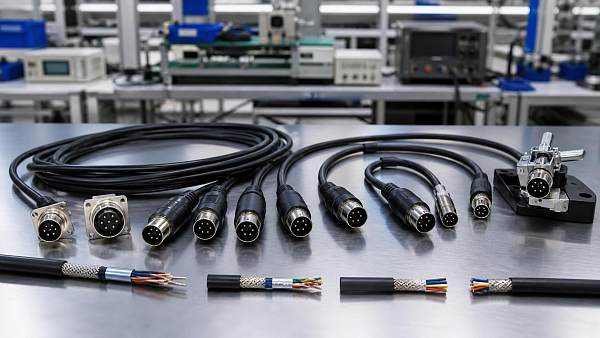
A MIDI cable manufacturer should be examined first at the product construction level, not at the catalog level. Many listings can look interchangeable because the basic format appears simple: a 5-pin DIN connector on each end and standard cable lengths. In production reality, audio quality and reliability are affected by conductor quality, soldering consistency, shielding design, strain relief, connector shell fit, and dimensional control of the DIN pins. A cable that passes a basic continuity test may still create intermittent triggering, dropped note messages, unstable clock transmission, or physical loosening after routine use.
Signal integrity begins with ordinary physical details
MIDI is not an analog audio cable, so evaluation should not drift into vague claims about “warmer sound” or “premium tone.” The relevant issue is whether the cable supports clean and stable transmission of digital control data between devices. If the cable introduces intermittent contact, poor shielding, or unstable resistance because of weak internal connections, the audible result can still be serious: timing errors, stuck notes, patch change failures, or unreliable synchronization between controllers, sound modules, mixers, lighting gear, or show-control systems.
Ask for the actual cable build specification. Useful details include conductor material, conductor strand count, wire gauge, insulation material, shield type, outer jacket compound, connector plating, and strain relief structure. A manufacturer that can only provide marketing language but not a build sheet may be difficult to qualify for repeat orders. Oxygen-free copper may be offered, but the more important question is whether the conductor quality and cross-section are appropriate for stable data transmission and mechanical durability over the intended length range.
Shielding deserves closer attention than many sourcing discussions give it. In electrically noisy environments such as stage racks, classrooms, houses of worship, hotel event spaces, or integrated AV installations, shielding quality may affect reliability more than decorative connector finishes. Braided shielding generally offers better mechanical robustness, while spiral or served shielding may provide flexibility advantages but can behave differently under repeated bending. Foil shielding might appear in some constructions, though its durability under constant handling should be reviewed carefully. The correct choice depends on installation conditions rather than on a blanket ranking of one method over another.
Connector quality is where many low-cost programs fail
The connector assembly often separates a dependable MIDI cable manufacturer from a trading source that is simply relabeling commodity stock. The 5-pin DIN format requires accurate pin spacing, secure alignment, and consistent insertion force. Pins that are slightly out of tolerance can create difficult mating, weak contact pressure, or long-term wear on the equipment socket. Thin shell metal, loose backshell threading, and weak cable clamping are common warning signs because they affect field life even when initial testing appears acceptable.
Soldering quality inside the connector should be discussed directly. Cold joints, excess solder, poor wetting, or inadequate insulation between terminals can produce faults that only appear after vibration or repeated use. If the manufacturer overmolds the connector, ask whether the soldered joints are supported internally before molding. Overmolding can improve strain protection, but it can also hide poor workmanship if process control is weak.
Plating claims should be treated cautiously. Gold-plated contacts are often presented as a premium feature, yet plating thickness, substrate quality, and connector fit matter more than the word “gold” alone. If the contact system is poorly manufactured, decorative plating does not solve intermittent connection problems. Nickel-plated or other standard finishes may perform adequately in many applications when the mechanical tolerances are sound.
OEM reliability is visible in process discipline
When evaluating OEM supply, the factory’s internal controls matter as much as the cable itself. A capable MIDI cable manufacturer should be able to explain how it controls incoming materials, connector assembly, soldering temperature, continuity testing, pin assignment verification, pull-force checks, and final visual inspection. The answer does not need to be elaborate, but it should be specific. Vague references to “strict quality control” without any process detail usually indicate limited transparency.
Batch consistency is especially important for private-label or project-based supply. One sample that performs well is useful, but it does not confirm that the tenth production batch will match it. Ask whether the manufacturer keeps a controlled bill of materials for each approved version, including connector type, cable source, jacket color, packaging format, and any custom marking. Without this discipline, substitutions can enter later shipments quietly and create mixed quality in the field.
For OEM work, version control should also cover artwork, barcode placement, carton labeling, and region-specific compliance marks if they apply. Many supply problems are not caused by the cable core itself but by packaging errors, wrong SKU labels, unapproved length substitutions, or mixed batches loaded into one export carton. A factory with mature document control will usually answer these points clearly and without improvisation.
Samples should be tested as installed, not just unboxed
A sample review should go beyond basic continuity confirmation. The practical test is to use the cable with the kinds of devices and routing conditions expected in service. That may include repeated insertion cycles, coiling and uncoiling, rack-to-rack runs, floor use in event spaces, or dense equipment setups with power cables nearby. If the intended application involves MIDI clock, time code conversion, or show-control triggering, those functions should be exercised specifically rather than assuming that simple note-on and note-off transmission is enough.
Testing should include several lengths if the manufacturer offers a range. A 1-meter sample may perform acceptably while longer lengths from the same source reveal shielding weakness, jacket memory problems, or inconsistent signal behavior. The cable’s flexibility also matters during installation. A very stiff outer jacket can put stress on equipment ports, especially where rear-panel spacing is tight or devices are mounted in shallow racks.
It is also sensible to inspect how the cable behaves after handling stress. Bend the cable near each connector, rotate the plug lightly after insertion, and repeat normal movement patterns that occur during setup and teardown. Intermittent faults often appear at the strain relief transition rather than along the main cable body.
Customization capability should be verified in manufacturing terms
Custom length, jacket color, logo marking, packaging, and connector finish are common OEM requests, but each customization introduces process risk. A manufacturer that accepts every request immediately without discussing tooling, minimum order structure, approval samples, or lead-time impact may not be managing the program carefully.
If a custom MIDI cable manufacturer offers molded branding, special colors, or nonstandard packaging, ask what parts of the product are produced in-house and what parts are outsourced. The answer matters because subcontracted overmolding, printing, or blister packaging can extend lead time and increase variation between shipments. It can also affect corrective action when defects are found. Responsibility becomes less clear when multiple small suppliers are involved.
Private-label work often requires attention to minor but commercially important details such as retail-ready coiling, tamper-evident bags, carton drop resistance, and scannable label placement. These details are easy to overlook during sample approval because the discussion stays centered on the cable itself. They become expensive when goods are already in transit or at destination warehouses.
Compliance questions should stay close to the actual product
Compliance review is often handled poorly because discussions become generic. Instead of asking only whether the factory is “certified,” request documentation relevant to the cable materials and destination requirements. For a MIDI cable, this may involve material declarations, restricted substance compliance where applicable, flammability considerations for certain installations, and packaging-related requirements depending on the market. The exact documents needed can vary, so assumptions should be avoided.
It is also worth confirming whether the manufacturer maintains traceability for raw materials and finished lots. If a jacket compound changes, a plating supplier changes, or a nonconforming batch is identified after shipment, traceability determines whether the issue can be isolated or whether the entire shipment becomes suspect.
Freight and packaging affect landed cost more than expected
A low quoted unit price can become less attractive once packing density, carton design, damage rate, and reinspection effort are considered. MIDI cables are not usually fragile in the same way as display screens or instruments, but poor packaging still creates problems: crushed connector shells, bent pins, scuffed private-label printing, mixed lengths inside cartons, or moisture exposure in long transit cycles.
Ask how the cables are packed at both inner and master carton level. Bulk-packed OEM programs may reduce cost, but they need clean length separation and clear labeling. Individually bagged cables can improve warehouse handling but increase packing labor and carton volume. For retail channels, the package must survive shelf handling; for project supply, speed of identification during installation may matter more than presentation.
Transit method should also influence supplier selection. If replenishment depends on ocean freight, scheduling discipline and carton uniformity become more important. If urgent top-up orders may move by air, compact packaging and stable export documentation help control cost and customs delay. A factory that treats logistics as an afterthought may still produce an acceptable cable while creating avoidable landed-cost volatility.
Warning signs during quotation and sample stage
Several patterns tend to indicate higher supply risk. One is unexplained variation between sample sets, such as different jacket feel, slightly different connector shells, or inconsistent printing even when the reference item number is the same. Another is reluctance to confirm pin wiring and test procedures in writing. Since MIDI cable assemblies look simple from the outside, some suppliers assume specification discipline is unnecessary. That assumption usually causes problems later.
- A quotation that groups multiple lengths under one generic description can hide construction differences between SKUs.
- Connector photos that do not match the sample delivered may suggest frequent source substitution.
- Very broad lead-time promises without mention of material availability often indicate that production slots are not actually reserved.
- Sample approval based only on appearance, with no retained reference sample or signed specification, leaves too much room for drift.
Another common misjudgment is assuming that any factory producing audio cables can handle MIDI cable manufacturing with the same consistency. The product family is adjacent, but the use case is different. Speaker cables, patch cables, microphone cables, USB cables, and MIDI cables may share some production assets, yet the connector formats, conductor layouts, shielding priorities, and testing routines are not identical. A supplier with broad cable experience is useful only if it can demonstrate control over this specific assembly type.
Factory communication often predicts post-order performance
The speed of reply matters less than the precision of reply. If technical questions receive general sales language instead of direct answers, that communication pattern usually continues after order placement. The same issue applies to drawing approval, pre-production confirmation, and defect handling. Reliable OEM cooperation typically shows up early in the form of clear spec sheets, marked sample revisions, carton dimension confirmation, and written acknowledgment of approved materials.
Corrective action capability should be discussed before there is a problem. Ask how nonconforming goods are identified, whether replacement production can be traced to a specific lot, and how root-cause analysis is documented when a fault is reported. A manufacturer that cannot describe this process may still be acceptable for low-risk spot buys, but it is a weak fit for recurring OEM programs where product identity and field reliability have to remain stable over time.
Cost comparison should include failure cost, not only piece price
When comparing one MIDI cable manufacturer against another, the cheapest line item may be the most expensive option after returns, delayed installations, repacking, relabeling, and technical complaints are counted. This is especially relevant when cables are bundled with larger equipment packages or installed in environments where access is difficult after deployment. Replacing a faulty cable in a rack, podium, stage box, or built-in control location can consume far more value than the original unit savings.
A more useful comparison combines construction quality, sample consistency, documentation quality, packaging suitability, and lead-time realism. If two suppliers are close in price, the one with clearer process control and tighter sample-to-production discipline usually carries lower commercial risk. If one offer is substantially lower, the burden of proof should become stricter rather than lighter.
A dependable MIDI cable manufacturer is rarely identified by one claim or one attractive sample. The safer choice is the source that can show stable product construction, clear technical documentation, disciplined OEM control, and packaging and logistics that fit the actual route to installation. That combination usually does more to protect cost than aggressive pricing alone.
Search News
Hot Articles
- Commercial KitchenHow Restaurant Buyers Can Source Hospitality Supplies Without OverorderingSep 23, 2026
- Commercial KitchenCommercial Kitchen Design Price: Budgeting by Layout, Equipment, and MEP ScopeSep 22, 2026
- Stationery & UniformsHow Schools Can Cut Printing Costs When Buying Ink Cartridges in BulkSep 21, 2026
Popular Tags
Need ExpertConsultation?
Connect with our specialized leisureengineering team for procurementstrategies.
Recommended News
 Sep 11, 2026How to Choose Touring Instrument Cases for Flights, Trucks, and Daily Load-InsInstrument cases for touring: learn how to balance flight protection, truck durability, weight, fit, and serviceable hardware for safer, faster load-ins.● Pro Audio Engineer
 Sep 07, 2026How to Choose Wood Frame Tambourines for Sound Quality and Long-Term UseWood frame tambourines: learn how to compare frame construction, jingle tone, head options, durability, and supplier quality for reliable long-term performance.● Pro Audio Engineer
 Sep 05, 2026How Often Should Music Education Equipment Be Serviced?How often should music education equipment be serviced? Explore practical schedules, maintenance tips, and lifecycle planning to keep instruments and audio systems reliable.● Pro Audio Engineer
 Aug 21, 2026How to Choose Marching Band Drums for Sound Projection, Weight, and DurabilityMarching band drums buying guide: learn how to balance sound projection, weight, and durability for better field performance, easier carrying, and longer-lasting value.● Pro Audio Engineer
 Aug 09, 2026How to Evaluate a MIDI Cable Manufacturer for Audio Quality and OEM ReliabilityMIDI cable manufacturer evaluation guide: learn how to assess signal stability, connector quality, OEM process control, and batch consistency to reduce failures and source with confidence.● Pro Audio Engineer
 Aug 08, 2026How to Evaluate a Trumpets OEM Manufacturer for Quality, MOQ, and Custom DesignTrumpets OEM manufacturer selection starts with quality, MOQ, and custom design control. Learn how to compare suppliers, reduce sourcing risk, and choose a reliable long-term factory partner.● Pro Audio Engineer
 Jul 27, 2026How to Source Conga Drums in Bulk for Schools, Bands, and Event ProgramsConga drums bulk sourcing for schools, bands, and event programs made easier. Learn how to compare quality, durability, compliance, and total cost before you place a large order.● Pro Audio Engineer
 Jul 24, 2026How to Choose Low Dust Violin Rosin for Cleaner Practice and Better Bow ControlLow dust violin rosin buying guide: learn how to compare formula, climate fit, grip, and string compatibility for cleaner practice, better bow control, and smarter purchase decisions.● Pro Audio Engineer
 Jul 15, 2026Plastic Tambourines Bulk Buying Guide: Sizes, Materials, and MOQ QuestionsPlastic tambourines bulk buying guide covering sizes, ABS vs PP materials, sound consistency, customization, and MOQ questions to help buyers cut risk and choose the right supplier.● Pro Audio Engineer
 Jul 13, 2026Acoustic Guitars Wholesale China: How to Evaluate Build Quality and OEM OptionsAcoustic guitars wholesale China guide: learn how to assess build quality, factory consistency, and OEM options to choose reliable suppliers and reduce sourcing risk.● Pro Audio Engineer
 Jul 12, 2026Mini Effect Pedals Wholesale: MOQ, OEM Options, Testing, and Supplier ComparisonMini effect pedals wholesale guide covering MOQ, OEM options, testing standards, and supplier comparison to help buyers reduce risk, improve margins, and choose reliable partners.● Pro Audio Engineer
 Jul 11, 2026DJ Turntables OEM Guide: Key Torque, Drive, and Build Specs to CompareDJ turntables OEM guide covering torque, drive type, speed stability, platter build, and manufacturing consistency. Compare the specs that impact performance, reliability, and sourcing confidence.● Pro Audio Engineer
 Jul 08, 2026Guitar Capos Wholesale: What Materials, Clamp Types, and MOQ Terms Should You Compare?Guitar capos wholesale buying starts with more than price. Compare materials, clamp types, quality checks, and MOQ terms to reduce returns, protect margins, and choose a supplier with confidence.● Pro Audio Engineer
 Jul 07, 2026Birch Drum Kits Manufacturer Comparison: Shell Construction, Hardware Quality, and OEM OptionsBirch drum kits manufacturer comparison covering shell construction, hardware quality, and OEM options to help buyers reduce sourcing risk and choose reliable suppliers.● Pro Audio Engineer
 Jul 06, 2026Spruce Top Acoustic Guitars Explained: Tone, Wood Grades, and Who They Suit BestSpruce top acoustic guitars explained: compare tone, wood grades, and build quality to find the best fit for players, retailers, and commercial buyers.● Pro Audio Engineer
 Jun 30, 2026Xylophones and Glockenspiels: Key Differences in Range, Tone, and Classroom UseXylophones and glockenspiels compared: discover key differences in range, tone, durability, and classroom use to choose the right instrument for teaching, buying, or school programs.● Pro Audio Engineer
 Jun 25, 2026Musical Instrument Industry Report: Key Market Segments, Demand Drivers, and Price TrendsMusical instrument industry report covering key market segments, demand drivers, and price trends. Explore sourcing risks, premium growth, and where buyer demand is shifting next.● Pro Audio Engineer
 Jun 23, 2026Metronomes and Tuners Explained: Types, Key Features, and Who Needs BothMetronomes and tuners explained: compare types, key features, and who needs both. Learn how to choose the right tool for better timing, pitch, and practical daily use.● Pro Audio Engineer
 Jun 22, 2026How the Musical Instrument Industry Supply Chain Affects Lead Times, Cost, and QualityMusical instrument industry supply chain trends now shape lead times, cost, and quality. Discover how smarter sourcing and supplier transparency reduce risk and improve buying outcomes.● Pro Audio Engineer
 Jun 20, 2026DJ Headphones Wholesale Buying Guide: OEM Options, MOQ, and Audio Specs to CompareDJ headphones wholesale guide covering OEM options, MOQ strategy, and key audio specs. Compare build quality, compliance, and total cost to source smarter and reduce returns.● Pro Audio Engineer
 Jun 19, 2026Acoustic Guitars Wholesale: 7 Specs Buyers Should Compare Before Placing an OrderAcoustic guitars wholesale buyers can compare 7 key specs before ordering, from tonewoods and playability to OEM, packaging, and QC, to reduce risk and protect margins.● Pro Audio Engineer
 Jun 15, 2026Tambourines Bulk Buying Guide: Materials, Sound Quality, and Pack Size DifferencesTambourines bulk buying guide covering material choices, sound consistency, and pack size differences. Compare suppliers smarter, reduce risk, and choose the best fit for schools, retail, and events.● Pro Audio Engineer
 Jun 14, 2026Professional Musical Instruments Explained: Types, Skill Levels, and Buying CriteriaProfessional musical instruments explained: discover key types, ideal skill levels, and practical buying criteria to choose reliable, high-performance instruments with confidence.● Pro Audio Engineer
 Jun 10, 2026Drum Kits Manufacturer Comparison: What to Check Before OEM or Bulk OrdersDrum kits manufacturer comparison guide for OEM and bulk buyers: check quality, compliance, lead times, packaging, and true cost before placing large orders.● Pro Audio Engineer