How to Choose Wood Frame Tambourines for Sound Quality and Long-Term Use
How to Choose Wood Frame Tambourines for Sound Quality and Long-Term Use
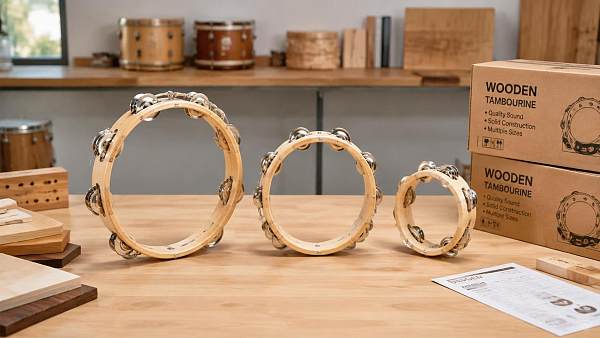
For procurement teams sourcing reliable percussion instruments, choosing wood frame tambourines requires more than comparing prices and finishes. Frame material, shell construction, jingles, head options, and supplier quality control all influence sound clarity, player comfort, and long-term durability.
This guide explains the specifications and sourcing checks that help buyers select tambourines for schools, hospitality venues, retail programs, music education, and professional performance environments.
Start With the Intended Use, Not the Lowest Unit Price
The best wood frame tambourines are not universally identical. A model suited to early-learning classrooms may fail under frequent ensemble use, while a professional model can exceed a basic education budget.
Procurement decisions should begin with usage frequency, player skill level, acoustic expectations, cleaning requirements, and replacement-cycle targets. These factors define which technical specifications genuinely matter.
For schools and community programs, prioritize safe edges, stable tuning, moderate volume, easy handling, and predictable replacement availability. These requirements often outweigh premium visual detailing or specialist jingle configurations.
Hospitality venues, cultural attractions, and entertainment operators may need instruments that support guest participation while remaining visually appropriate for branded events, workshops, or family-focused programming.
Retail buyers should evaluate how the tambourine performs on display as well as in use. Packaging, finish consistency, product storytelling, and accessible price architecture affect sell-through.
Professional users usually prioritize projection, articulation, responsive dynamics, and dependable construction. They may accept higher prices when a tambourine maintains performance during rehearsals, touring, recording, and repeated stage use.
Before requesting quotations, define whether the instrument will be used for educational rhythm practice, acoustic accompaniment, worship music, retail sales, studio recording, or high-volume live performance.
Assess Wood Frame Construction Before Comparing Surface Appearance
The frame is the structural foundation of a tambourine. Its wood species, thickness, shaping method, finish, and joint quality determine durability, balance, resonance, and resistance to environmental changes.
Common frame materials include beech, maple, birch, hardwood composites, and laminated wood. Each material can perform well when manufacturing quality matches the intended application and price category.
Solid hardwood frames often provide appealing resonance and premium appearance. However, wood selection alone does not guarantee quality, because poorly dried or poorly finished timber can still warp or crack.
Laminated wood frames can offer excellent dimensional stability when properly engineered. For buyers managing humid climates, frequent transport, or high-volume institutional use, stable lamination may reduce maintenance risk.
Ask suppliers about wood moisture control, kiln-drying processes, adhesive systems, and finishing procedures. These details provide more meaningful evidence than broad claims such as “premium natural wood.”
Frame thickness affects both strength and response. A thinner shell may feel lighter and resonate freely, while a thicker shell can withstand repeated handling and support a stronger overall structure.
Check whether the frame is smoothly sanded inside and outside. Rough internal surfaces, exposed staples, splinters, or poorly sealed edges create safety concerns and indicate weak manufacturing discipline.
Rounded edges improve player comfort, especially for children and casual participants. A comfortable grip also reduces accidental drops, which can lower replacement costs in shared-use environments.
For long-term procurement programs, request samples from multiple production batches. A single attractive sample cannot prove that frame dimensions, staining, sanding, and finishing remain consistent at scale.
Choose Jingles Based on Tone, Projection, and Application
Jingles create much of a tambourine’s recognizable character. Their material, thickness, shape, spacing, and mounting method influence brightness, sustain, volume, and control during performance.
Steel jingles commonly deliver a bright, cutting sound with strong projection. They are suitable for energetic classroom use, amplified bands, outdoor events, and settings where rhythm must remain clearly audible.
Brass jingles generally produce warmer, fuller overtones. They are often preferred for acoustic music, studio work, folk performance, and premium retail products where tonal nuance is important.
Nickel silver or mixed-metal jingle sets can offer balanced articulation and durability. Buyers should request exact material descriptions instead of accepting vague references to “metal cymbals” or “alloy jingles.”
Single-row designs are usually lighter and easier to control. Double-row wood frame tambourines typically produce more volume and density, making them appropriate for larger spaces or ensemble settings.
More jingles do not automatically mean better sound. Overcrowded slots can create excessive wash, reduce definition, and make subtle rhythmic patterns harder for beginners or professional performers to articulate.
Inspect jingle movement carefully. They should swing freely without striking the frame excessively, catching on hardware, or producing unwanted rattles when the instrument is held still.
Mounting hardware matters as much as jingle material. Loose pins, weak staples, thin retaining rings, or inconsistent slot placement can lead to premature failure after repeated shaking and striking.
Ask suppliers to state jingle diameter, thickness, metal composition, and row count on specification sheets. Comparable technical data makes supplier evaluation more reliable than subjective sound descriptions.
Decide Whether a Headed or Headless Tambourine Fits the Program
Wood frame tambourines are available with natural skin heads, synthetic heads, or no head. The choice changes playing technique, maintenance requirements, sound profile, and buyer responsibility.
Headless tambourines are often the most practical option for schools, events, and recreational programs. They are lightweight, straightforward to play, and less vulnerable to humidity-related tuning issues.
A headless design allows players to grip the frame or use hand techniques without managing head tension. It is particularly useful where users have varied skill levels and limited supervision.
Natural skin heads offer a traditional warm response and visual authenticity. They can be valuable for folk, orchestral, historical, or specialist music settings where tonal character justifies additional care.
However, natural skin reacts strongly to humidity and temperature. Buyers should expect seasonal tension changes, possible stretching, and higher maintenance exposure during transportation or storage in uncontrolled environments.
Synthetic heads provide greater climate stability and predictable performance. They are suitable for institutions, touring organizations, and distributors seeking lower environmental sensitivity without sacrificing a headed playing surface.
When purchasing headed models, confirm whether tension is fixed or adjustable. Adjustable tuning hardware adds versatility but also introduces more components that require inspection, service, and replacement planning.
For commercial buyers, the most suitable head option is usually the one that matches actual operating conditions. Traditional appearance should not override durability requirements or user capability.
Check Sound Quality Through Repeatable Evaluation Criteria
Sound quality can feel subjective, but procurement teams can make evaluation more consistent by using repeatable listening tests. Compare samples in the same room, with the same player and technique.
Begin with a light shake. Listen for even jingle response across the frame, controlled sustain, and an absence of isolated metallic noises that suggest loose hardware or uneven mounting.
Next, test stronger shaking and accented strikes. A quality tambourine should project clearly without collapsing into harsh noise, uncontrolled buzzing, or excessive vibration from the wooden shell.
Evaluate dynamic range by playing softly, moderately, and loudly. Good instruments respond across different levels, allowing users to create both subtle rhythmic texture and audible accents.
For headed models, test finger rolls, thumb rolls, and light strikes. The head should respond evenly, without dead areas, uneven tension, excessive slap, or distracting rattles from the jingle assembly.
Record samples when comparing multiple suppliers. Short audio files can help internal stakeholders review tonal differences later and reduce decisions driven solely by memory or first impressions.
Request a defined acceptance sample before issuing a large purchase order. This sample should establish the expected sound, visual quality, dimensions, packaging, and allowable production tolerances.
Evaluate Durability as a Total Cost of Ownership Question
Long-term value depends on usable lifespan, not just purchase price. A cheaper tambourine becomes expensive when jingle failures, frame cracks, finish damage, or replacement demand occur frequently.
For institutional purchasing, ask suppliers how they test drop resistance, hardware retention, finish adhesion, and frame stability. Even basic test protocols reveal whether quality control is documented.
Inspect all joins and hardware points. Pin holes should be clean, jingle supports should sit securely, and wooden sections should show no gaps, splitting, glue residue, or uneven alignment.
Finish quality affects both appearance and service life. A properly applied finish helps protect the wood against skin oils, light moisture, dirt, and routine handling in shared environments.
For children’s products, confirm that coatings, inks, adhesives, and accessible components meet relevant safety requirements for the destination market. Documentation should match the exact supplied product.
Durability also includes packaging performance. Bulk-packed instruments can suffer avoidable dents, scratches, and loose jingles if carton design does not control movement during international transit.
Specify inner packing, master-carton quantity, moisture protection, labeling, and pallet requirements early. These details are especially important for importers and distributors managing long shipping routes.
Consider spare-part access when purchasing adjustable headed tambourines or specialized professional models. Replaceable heads, tuning parts, and compatible jingle hardware can extend product lifecycle significantly.
Verify Supplier Capability, Compliance, and Batch Consistency
A capable supplier should provide clear product specifications, production lead times, inspection processes, packaging details, compliance documents, and evidence of experience serving comparable commercial customers.
Ask whether the supplier manufactures the frames, assembles components internally, or relies on subcontractors. Integrated control can simplify accountability, but documented quality management remains essential in every model.
For private-label programs, verify OEM or ODM capability separately from standard product availability. Custom logos, stains, packaging, and jingle configurations can affect minimum order quantities and lead times.
Request pre-shipment inspection criteria that cover frame diameter, jingle count, visible defects, hardware security, finish consistency, head condition, labeling, and packaging integrity.
Define acceptable quality limits before production begins. Without agreed standards, suppliers and buyers may interpret terms such as “minor scratch” or “sound variation” very differently.
Compliance needs vary by market and customer segment. Buyers may need documentation related to chemical safety, toy regulations, packaging requirements, origin marking, or restricted substances.
Do not assume a certificate applies automatically to every product variation. Confirm that model numbers, materials, finishes, and production sites correspond to the wood frame tambourines being ordered.
Supplier communication is also a practical quality indicator. Fast, precise answers about materials, dimensions, tolerances, and testing are usually more valuable than polished marketing language alone.
Build a Practical Tambourine Sourcing Specification
A concise specification sheet helps procurement teams compare suppliers fairly and avoid missing critical details. It also reduces revision cycles during sampling, production approval, and final inspection.
Include the intended user group, use environment, frame diameter, frame depth, wood material, finish type, head option, jingle material, row count, and target unit weight.
State acceptable cosmetic criteria clearly. Define standards for wood grain variation, stain consistency, logo placement, minor marks, metal discoloration, and packaging presentation.
Include sound expectations in practical language. For example, specify bright projection for group rhythm sessions, controlled sustain for classroom use, or warm articulation for acoustic performance.
For headed tambourines, document head material, tension method, tuning requirements, and climatic storage expectations. This protects both the buyer and supplier from avoidable performance disputes.
Include commercial requirements such as minimum order quantity, target price range, sampling cost, lead time, payment terms, carton dimensions, barcode needs, and destination-market compliance obligations.
When possible, rank requirements by priority. Separate non-negotiable safety and durability standards from preferred aesthetic features, allowing suppliers to propose realistic alternatives without weakening essential quality.
A structured specification also improves internal approval. Music educators, operations managers, quality teams, and commercial stakeholders can evaluate the same criteria rather than relying on isolated opinions.
Final Purchasing Recommendation
Choosing wood frame tambourines for sound quality and long-term use requires buyers to evaluate construction, jingle design, head configuration, durability, and supplier control as connected factors.
For most institutional and commercial programs, the strongest value comes from a smoothly finished, dimensionally stable wood frame with secure jingles, documented quality checks, and fit-for-purpose sound characteristics.
Buyers should avoid selecting solely by decorative appearance, broad material claims, or the lowest quotation. A clear specification, evaluated sample, and batch-level inspection plan provide better protection.
When the instrument matches its real use case, wood frame tambourines can deliver reliable rhythm, visual appeal, and repeatable performance across education, hospitality, retail, and professional music applications.
Search News
Hot Articles
- Pro Stage AudioAudio Production for Streaming: How to Build a Dedicated Live Event MixOct 22, 2026
- Outdoor RidesIAAPA Launches Insurance Solution for North American Attractions IndustryOct 21, 2026
- Watch OEM & SmartwatchesWatch Movement Parts: How to Check Compatibility With a Specific CaliberOct 21, 2026
Popular Tags
Need ExpertConsultation?
Connect with our specialized leisureengineering team for procurementstrategies.
Recommended News
 Oct 20, 2026Choosing a Classical Guitar Manufacturer in China: Quality Checks Before OrderingSearching for “classical guitars manufacturer China”? Discover essential checks for materials, playability, and factory quality control to reduce costly returns and order with confidence.● Pro Audio Engineer
 Oct 17, 2026Professional String Instruments: How to Evaluate Tone, Response, and ProjectionCompare professional string instruments with expert tips on tone, response, and projection. Learn practical tests to choose the right instrument for your performance needs.● Pro Audio Engineer
 Oct 21, 2026How Do You Assess a Musical Instrument Manufacturer’s Export Capability?Learn how to assess a musical instrument manufacturer export capability. Discover six key checks for quality, compliance, shipping, and support to reduce risks and source confidently.● Pro Audio Engineer
 Oct 15, 2026How Do You Choose Music Education Equipment for a New Campus?Learn how to choose music education equipment for a new campus with practical tips on curriculum fit, acoustics, suppliers, and ownership costs. Equip classrooms confidently and avoid costly mistakes.● Pro Audio Engineer
 Oct 10, 2026A Practical Guide to Identifying Wooden Orchestral Instruments by Family and ToneWooden orchestral instruments made simple: identify strings, flutes, clarinets, oboes, and bassoons by sound source, design, and tone.● Pro Audio Engineer
 Sep 11, 2026How to Choose Touring Instrument Cases for Flights, Trucks, and Daily Load-InsInstrument cases for touring: learn how to balance flight protection, truck durability, weight, fit, and serviceable hardware for safer, faster load-ins.● Pro Audio Engineer
 Sep 07, 2026How to Choose Wood Frame Tambourines for Sound Quality and Long-Term UseWood frame tambourines: learn how to compare frame construction, jingle tone, head options, durability, and supplier quality for reliable long-term performance.● Pro Audio Engineer
 Sep 05, 2026How Often Should Music Education Equipment Be Serviced?How often should music education equipment be serviced? Explore practical schedules, maintenance tips, and lifecycle planning to keep instruments and audio systems reliable.● Pro Audio Engineer
 Aug 21, 2026How to Choose Marching Band Drums for Sound Projection, Weight, and DurabilityMarching band drums buying guide: learn how to balance sound projection, weight, and durability for better field performance, easier carrying, and longer-lasting value.● Pro Audio Engineer
 Aug 09, 2026How to Evaluate a MIDI Cable Manufacturer for Audio Quality and OEM ReliabilityMIDI cable manufacturer evaluation guide: learn how to assess signal stability, connector quality, OEM process control, and batch consistency to reduce failures and source with confidence.● Pro Audio Engineer
 Aug 08, 2026How to Evaluate a Trumpets OEM Manufacturer for Quality, MOQ, and Custom DesignTrumpets OEM manufacturer selection starts with quality, MOQ, and custom design control. Learn how to compare suppliers, reduce sourcing risk, and choose a reliable long-term factory partner.● Pro Audio Engineer
 Jul 27, 2026How to Source Conga Drums in Bulk for Schools, Bands, and Event ProgramsConga drums bulk sourcing for schools, bands, and event programs made easier. Learn how to compare quality, durability, compliance, and total cost before you place a large order.● Pro Audio Engineer
 Jul 24, 2026How to Choose Low Dust Violin Rosin for Cleaner Practice and Better Bow ControlLow dust violin rosin buying guide: learn how to compare formula, climate fit, grip, and string compatibility for cleaner practice, better bow control, and smarter purchase decisions.● Pro Audio Engineer
 Jul 15, 2026Plastic Tambourines Bulk Buying Guide: Sizes, Materials, and MOQ QuestionsPlastic tambourines bulk buying guide covering sizes, ABS vs PP materials, sound consistency, customization, and MOQ questions to help buyers cut risk and choose the right supplier.● Pro Audio Engineer
 Jul 13, 2026Acoustic Guitars Wholesale China: How to Evaluate Build Quality and OEM OptionsAcoustic guitars wholesale China guide: learn how to assess build quality, factory consistency, and OEM options to choose reliable suppliers and reduce sourcing risk.● Pro Audio Engineer
 Jul 12, 2026Mini Effect Pedals Wholesale: MOQ, OEM Options, Testing, and Supplier ComparisonMini effect pedals wholesale guide covering MOQ, OEM options, testing standards, and supplier comparison to help buyers reduce risk, improve margins, and choose reliable partners.● Pro Audio Engineer
 Jul 11, 2026DJ Turntables OEM Guide: Key Torque, Drive, and Build Specs to CompareDJ turntables OEM guide covering torque, drive type, speed stability, platter build, and manufacturing consistency. Compare the specs that impact performance, reliability, and sourcing confidence.● Pro Audio Engineer
 Jul 08, 2026Guitar Capos Wholesale: What Materials, Clamp Types, and MOQ Terms Should You Compare?Guitar capos wholesale buying starts with more than price. Compare materials, clamp types, quality checks, and MOQ terms to reduce returns, protect margins, and choose a supplier with confidence.● Pro Audio Engineer
 Jul 07, 2026Birch Drum Kits Manufacturer Comparison: Shell Construction, Hardware Quality, and OEM OptionsBirch drum kits manufacturer comparison covering shell construction, hardware quality, and OEM options to help buyers reduce sourcing risk and choose reliable suppliers.● Pro Audio Engineer
 Jul 06, 2026Spruce Top Acoustic Guitars Explained: Tone, Wood Grades, and Who They Suit BestSpruce top acoustic guitars explained: compare tone, wood grades, and build quality to find the best fit for players, retailers, and commercial buyers.● Pro Audio Engineer
 Jun 30, 2026Xylophones and Glockenspiels: Key Differences in Range, Tone, and Classroom UseXylophones and glockenspiels compared: discover key differences in range, tone, durability, and classroom use to choose the right instrument for teaching, buying, or school programs.● Pro Audio Engineer
 Jun 25, 2026Musical Instrument Industry Report: Key Market Segments, Demand Drivers, and Price TrendsMusical instrument industry report covering key market segments, demand drivers, and price trends. Explore sourcing risks, premium growth, and where buyer demand is shifting next.● Pro Audio Engineer
 Jun 23, 2026Metronomes and Tuners Explained: Types, Key Features, and Who Needs BothMetronomes and tuners explained: compare types, key features, and who needs both. Learn how to choose the right tool for better timing, pitch, and practical daily use.● Pro Audio Engineer
 Jun 22, 2026How the Musical Instrument Industry Supply Chain Affects Lead Times, Cost, and QualityMusical instrument industry supply chain trends now shape lead times, cost, and quality. Discover how smarter sourcing and supplier transparency reduce risk and improve buying outcomes.● Pro Audio Engineer