Metronomes and Tuners Explained: Types, Key Features, and Who Needs Both
Why do metronomes and tuners matter more than many players expect?
Metronomes and tuners seem simple, yet they shape two foundations of music: time and pitch.
If rhythm drifts, even expressive playing feels unstable. If pitch is off, tone quality and ensemble balance suffer quickly.
That is why metronomes and tuners remain relevant in practice rooms, teaching studios, rehearsal spaces, and retail assortments.
They are not only student accessories. They also support consistent setup standards in schools, live venues, and commercial music environments.
In practical terms, a metronome trains pulse, subdivision, and tempo control. A tuner checks whether notes match the intended pitch center.
When people search for metronomes and tuners, they usually want more than definitions. They want to know what each tool really solves.
That question also matters in broader sourcing decisions. A smart campus music lab or hospitality performance space needs dependable, easy-to-use equipment.
Seen through that lens, metronomes and tuners are small tools with outsized impact on learning outcomes and professional presentation.
What is the real difference between a metronome and a tuner?
The short answer is clear: one manages timing, the other verifies pitch.
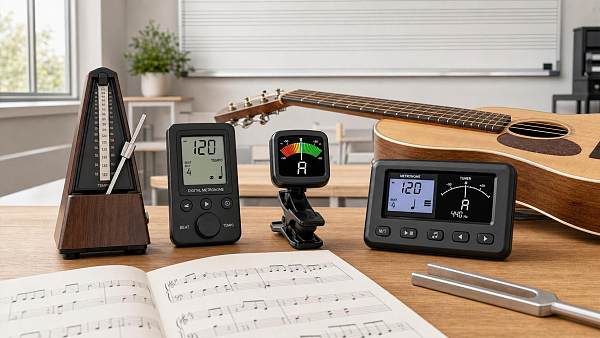
A metronome produces a steady beat. It helps players keep a chosen tempo and avoid rushing or dragging.
A tuner listens to a note and compares it to a reference pitch, usually showing whether the note is sharp, flat, or in tune.
That sounds straightforward, but confusion happens because many modern devices combine both functions.
A clip-on tuner may only handle pitch. A digital practice unit may offer tempo, tuning, tone generation, and even rhythm patterns.
More commonly, the best way to compare metronomes and tuners is by the skill they develop, not only by product category.
This distinction matters because buying the wrong tool does not solve the actual problem.
Someone struggling with unstable tempo needs rhythmic discipline, not just more accurate tuning feedback.
Likewise, an instrument with drifting pitch will not improve simply by practicing with a click.
Are analog and digital options equally useful?
They can be, but they serve different habits and expectations.
Analog metronomes appeal to people who like visual movement and a traditional feel. They do not require menus or app navigation.
Their limitation is flexibility. Tempo ranges, subdivisions, and silent visual cues are usually more restricted.
Digital metronomes are more common because they offer precise BPM settings, accent patterns, memory functions, and headphone compatibility.
The same pattern appears with tuners. Analog-style needle displays can feel intuitive, while digital screens give faster numerical feedback.
Clip-on tuners work well in noisy spaces because they read vibration. Microphone-based tuners are convenient in quieter settings.
In actual use, digital options usually fit modern commercial environments better, especially where portability and standardization matter.
Still, analog tools remain valid where simplicity, durability, and familiar operation are more important than expanded features.
Which features deserve attention first?
For metronomes and tuners, useful features depend on setting, not marketing language.
- Tempo range and subdivisions help with beginner drills and advanced rhythmic work.
- Visual flash and headphone output support quiet classrooms or shared practice areas.
- Tuning calibration matters when ensembles do not use standard A=440.
- Display readability becomes important under stage lighting or quick lesson turnover.
- Battery life and build quality matter more than expected in institutional use.
A long feature list is not automatically better. Ease of use often determines whether the tool is used consistently.
Who actually needs both metronomes and tuners?
Many players do, especially when they are still building technique or switching between solo and ensemble work.
A pianist may focus more on timing practice, because pitch is fixed. A violinist or vocalist often needs both timing and pitch support daily.
Guitarists often use a tuner constantly, then add metronome practice to improve groove and recording consistency.
Wind players benefit from both because breath support, articulation, intonation, and tempo all interact.
In education, having both tools available reduces guesswork. Learners can separate pitch problems from timing problems more quickly.
In performance settings, metronomes and tuners support preparation rather than replace musicianship. That distinction is worth keeping in mind.
For music retail and facility planning, combo demand is especially strong where users want simple, compact, multi-function devices.
That aligns with the kind of practical sourcing logic often seen in GCT coverage of pro audio and musical instruments.
The focus is rarely on novelty alone. It is usually on usability, reliability, and fit for a real operating environment.
What mistakes do people make when choosing metronomes and tuners?
One common mistake is buying by price alone.
An inexpensive device may be fine for occasional use, but weak sensors or poor displays create frustration over time.
Another mistake is ignoring the environment where the tool will be used.
A microphone-based tuner can struggle in noisy rehearsal rooms. A quiet click may be useless in busy shared spaces.
Some users also overestimate app convenience. Phone apps are helpful, but notifications, battery drain, and inconsistent audio output can interfere.
There is also a training mistake: relying on the device without building internal hearing and pulse.
The better approach is to use metronomes and tuners as feedback tools, then gradually test accuracy without constant assistance.
A quick decision guide
This kind of simple comparison often prevents overbuying and underperforming at the same time.
How should you evaluate metronomes and tuners for real-world use?
Start with the intended setting, because the right answer changes by context.
For home practice, compactness and intuitive controls may matter most. For classrooms, durability and easy standardization are more important.
For retail selection, it helps to cover clear tiers: entry-level, mid-range, and feature-rich combo units.
For hospitality lounges, entertainment venues, or music corners in premium spaces, quiet operation and clean design can influence the final choice.
That broader view fits GCT’s commercial perspective, where sourcing decisions connect product function with user experience and operational reliability.
A useful evaluation checklist usually includes:
- Accuracy of tempo or pitch detection
- Ease of reading and control layout
- Power options and expected maintenance
- Suitability for noise level and room type
- Consistency across multiple units if scaling is needed
If the goal is smarter comparison, do not ask only whether a device works. Ask whether it works well in the exact setting you have.
That is often the difference between a good purchase and a useful long-term tool.
So, do you need both?
If timing and pitch both affect the result, then yes, having both is usually the smarter choice.
Metronomes and tuners address separate weaknesses, and many musical situations expose both.
If only one issue matters right now, start there. Then expand once the next limitation becomes obvious.
The most practical next step is to define the environment, the skill goal, and the level of convenience needed.
After that, compare analog, digital, and combo options against actual use conditions, not just specifications.
That approach makes metronomes and tuners easier to understand, easier to select, and far more valuable in daily use.
Search News
Hot Articles
- Stationery & UniformsHow Schools Can Cut Printing Costs When Buying Ink Cartridges in BulkSep 21, 2026
- Jewelry Packaging & DisplayHow to Evaluate a Luxury Retail Packaging Supplier for Premium Brand ConsistencySep 20, 2026
- Commercial KitchenHow to Select a Spiral Dough Mixer for Bakery Batch Size and Dough HydrationSep 19, 2026
Popular Tags
Need ExpertConsultation?
Connect with our specialized leisureengineering team for procurementstrategies.
Recommended News
 Sep 11, 2026How to Choose Touring Instrument Cases for Flights, Trucks, and Daily Load-InsInstrument cases for touring: learn how to balance flight protection, truck durability, weight, fit, and serviceable hardware for safer, faster load-ins.● Pro Audio Engineer
 Sep 07, 2026How to Choose Wood Frame Tambourines for Sound Quality and Long-Term UseWood frame tambourines: learn how to compare frame construction, jingle tone, head options, durability, and supplier quality for reliable long-term performance.● Pro Audio Engineer
 Sep 05, 2026How Often Should Music Education Equipment Be Serviced?How often should music education equipment be serviced? Explore practical schedules, maintenance tips, and lifecycle planning to keep instruments and audio systems reliable.● Pro Audio Engineer
 Aug 21, 2026How to Choose Marching Band Drums for Sound Projection, Weight, and DurabilityMarching band drums buying guide: learn how to balance sound projection, weight, and durability for better field performance, easier carrying, and longer-lasting value.● Pro Audio Engineer
 Aug 09, 2026How to Evaluate a MIDI Cable Manufacturer for Audio Quality and OEM ReliabilityMIDI cable manufacturer evaluation guide: learn how to assess signal stability, connector quality, OEM process control, and batch consistency to reduce failures and source with confidence.● Pro Audio Engineer
 Aug 08, 2026How to Evaluate a Trumpets OEM Manufacturer for Quality, MOQ, and Custom DesignTrumpets OEM manufacturer selection starts with quality, MOQ, and custom design control. Learn how to compare suppliers, reduce sourcing risk, and choose a reliable long-term factory partner.● Pro Audio Engineer
 Jul 27, 2026How to Source Conga Drums in Bulk for Schools, Bands, and Event ProgramsConga drums bulk sourcing for schools, bands, and event programs made easier. Learn how to compare quality, durability, compliance, and total cost before you place a large order.● Pro Audio Engineer
 Jul 24, 2026How to Choose Low Dust Violin Rosin for Cleaner Practice and Better Bow ControlLow dust violin rosin buying guide: learn how to compare formula, climate fit, grip, and string compatibility for cleaner practice, better bow control, and smarter purchase decisions.● Pro Audio Engineer
 Jul 15, 2026Plastic Tambourines Bulk Buying Guide: Sizes, Materials, and MOQ QuestionsPlastic tambourines bulk buying guide covering sizes, ABS vs PP materials, sound consistency, customization, and MOQ questions to help buyers cut risk and choose the right supplier.● Pro Audio Engineer
 Jul 13, 2026Acoustic Guitars Wholesale China: How to Evaluate Build Quality and OEM OptionsAcoustic guitars wholesale China guide: learn how to assess build quality, factory consistency, and OEM options to choose reliable suppliers and reduce sourcing risk.● Pro Audio Engineer
 Jul 12, 2026Mini Effect Pedals Wholesale: MOQ, OEM Options, Testing, and Supplier ComparisonMini effect pedals wholesale guide covering MOQ, OEM options, testing standards, and supplier comparison to help buyers reduce risk, improve margins, and choose reliable partners.● Pro Audio Engineer
 Jul 11, 2026DJ Turntables OEM Guide: Key Torque, Drive, and Build Specs to CompareDJ turntables OEM guide covering torque, drive type, speed stability, platter build, and manufacturing consistency. Compare the specs that impact performance, reliability, and sourcing confidence.● Pro Audio Engineer
 Jul 08, 2026Guitar Capos Wholesale: What Materials, Clamp Types, and MOQ Terms Should You Compare?Guitar capos wholesale buying starts with more than price. Compare materials, clamp types, quality checks, and MOQ terms to reduce returns, protect margins, and choose a supplier with confidence.● Pro Audio Engineer
 Jul 07, 2026Birch Drum Kits Manufacturer Comparison: Shell Construction, Hardware Quality, and OEM OptionsBirch drum kits manufacturer comparison covering shell construction, hardware quality, and OEM options to help buyers reduce sourcing risk and choose reliable suppliers.● Pro Audio Engineer
 Jul 06, 2026Spruce Top Acoustic Guitars Explained: Tone, Wood Grades, and Who They Suit BestSpruce top acoustic guitars explained: compare tone, wood grades, and build quality to find the best fit for players, retailers, and commercial buyers.● Pro Audio Engineer
 Jun 30, 2026Xylophones and Glockenspiels: Key Differences in Range, Tone, and Classroom UseXylophones and glockenspiels compared: discover key differences in range, tone, durability, and classroom use to choose the right instrument for teaching, buying, or school programs.● Pro Audio Engineer
 Jun 25, 2026Musical Instrument Industry Report: Key Market Segments, Demand Drivers, and Price TrendsMusical instrument industry report covering key market segments, demand drivers, and price trends. Explore sourcing risks, premium growth, and where buyer demand is shifting next.● Pro Audio Engineer
 Jun 23, 2026Metronomes and Tuners Explained: Types, Key Features, and Who Needs BothMetronomes and tuners explained: compare types, key features, and who needs both. Learn how to choose the right tool for better timing, pitch, and practical daily use.● Pro Audio Engineer
 Jun 22, 2026How the Musical Instrument Industry Supply Chain Affects Lead Times, Cost, and QualityMusical instrument industry supply chain trends now shape lead times, cost, and quality. Discover how smarter sourcing and supplier transparency reduce risk and improve buying outcomes.● Pro Audio Engineer
 Jun 20, 2026DJ Headphones Wholesale Buying Guide: OEM Options, MOQ, and Audio Specs to CompareDJ headphones wholesale guide covering OEM options, MOQ strategy, and key audio specs. Compare build quality, compliance, and total cost to source smarter and reduce returns.● Pro Audio Engineer
 Jun 19, 2026Acoustic Guitars Wholesale: 7 Specs Buyers Should Compare Before Placing an OrderAcoustic guitars wholesale buyers can compare 7 key specs before ordering, from tonewoods and playability to OEM, packaging, and QC, to reduce risk and protect margins.● Pro Audio Engineer
 Jun 15, 2026Tambourines Bulk Buying Guide: Materials, Sound Quality, and Pack Size DifferencesTambourines bulk buying guide covering material choices, sound consistency, and pack size differences. Compare suppliers smarter, reduce risk, and choose the best fit for schools, retail, and events.● Pro Audio Engineer
 Jun 14, 2026Professional Musical Instruments Explained: Types, Skill Levels, and Buying CriteriaProfessional musical instruments explained: discover key types, ideal skill levels, and practical buying criteria to choose reliable, high-performance instruments with confidence.● Pro Audio Engineer
 Jun 10, 2026Drum Kits Manufacturer Comparison: What to Check Before OEM or Bulk OrdersDrum kits manufacturer comparison guide for OEM and bulk buyers: check quality, compliance, lead times, packaging, and true cost before placing large orders.● Pro Audio Engineer