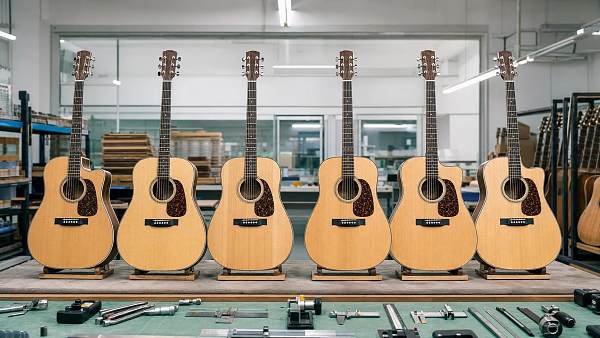
Acoustic Guitars Wholesale: 7 Specs Buyers Should Compare Before Placing an Order
Acoustic Guitars Wholesale: 7 Specs Buyers Should Compare Before Placing an Order
In acoustic guitars wholesale, a low unit price rarely tells the full sourcing story.
The real cost sits in consistency, returns, freight efficiency, and after-sales stability.
That is why experienced buyers compare specifications before they compare quotations.
For teams handling acoustic guitars wholesale, the right checklist reduces quality disputes and protects margin.
From tonewood choices to OEM options, the seven points below shape cost, performance, and supply reliability.
1. Top, Back, and Side Materials
Material selection is usually the first pricing lever in acoustic guitars wholesale.
It also affects tone, durability, appearance, and claim rates after delivery.
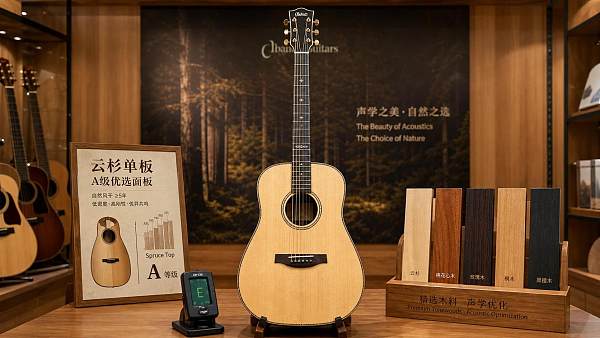
Solid spruce tops often deliver stronger projection and better perceived value.
Laminated tops usually lower cost and improve stability in changing climates.
Back and side combinations matter too.
Mahogany, sapele, basswood, and rosewood-style alternatives produce different looks and market positions.
- Ask whether the top is solid, laminated, or veneer-faced.
- Request species declarations for top, back, side, neck, and fingerboard.
- Confirm moisture content targets before production and packing.
- Check legality and sustainability documentation for restricted woods.
In practical sourcing, this is where many misunderstandings begin.
A supplier may quote “spruce guitar,” while the construction grade remains unclear.
For acoustic guitars wholesale, precise material wording prevents later disputes.
2. Body Shape and Size Range
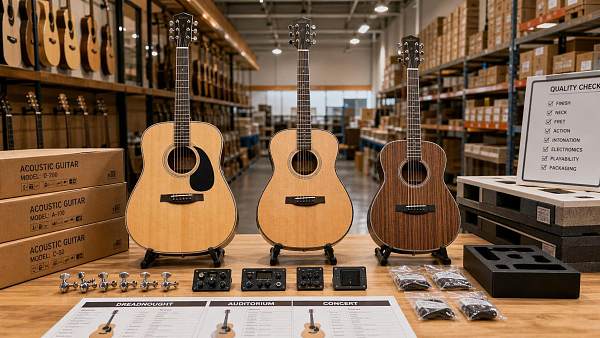
Body shape influences target customers, carton efficiency, and expected sound profile.
Dreadnought models remain common in acoustic guitars wholesale because demand is broad and predictable.
But grand auditorium, concert, jumbo, and travel sizes can improve category coverage.
This also affects channel fit.
Entry-level retail may need compact sizes, while music schools may prefer standard shapes for training.
- Compare outer dimensions, scale length, and nut width.
- Match body types to local player preferences and sales channels.
- Review carton loading ratios for each size category.
- Check whether one factory line supports multiple body molds.
A broader body portfolio can improve sourcing flexibility.
Still, too many shapes in one order can complicate QC and packaging.
The better approach is to balance assortment with production simplicity.
3. Neck Profile, Fingerboard, and Playability Setup
One overlooked risk in acoustic guitars wholesale is poor out-of-box playability.
The guitar may look fine, yet still create returns because the action feels too high.
Buyers should compare setup specifications, not only cosmetic details.
Key points include neck profile, truss rod type, fret finishing, nut width, and fingerboard radius.
These details shape comfort for beginners and intermediate players.
They also influence how much adjustment is required after arrival.
- Set target action height at the 12th fret.
- Confirm fret edge smoothness and leveling standard.
- Review neck relief tolerance and truss rod access.
- Specify string gauge used during final inspection.
In acoustic guitars wholesale, small setup errors become large after thousands of units.
That is why measurable setup standards belong in the purchase order.
4. Finish Type and Cosmetic Tolerance
Finish quality affects first impressions more than most spec sheets admit.
Gloss, satin, open-pore, and matte finishes each carry different cost and defect risks.
A high-gloss finish can look premium, but it may reveal sanding marks more easily.
Satin may reduce rework while still meeting mid-market expectations.
This is especially relevant in acoustic guitars wholesale for chain retail and e-commerce channels.
Visual inconsistency often drives complaints faster than tonal differences.
- Define acceptable color variation between batches.
- Set standards for binding gaps, glue marks, and orange peel.
- Request approved reference samples before mass production.
- Align inspection lighting conditions with final QC.
A clear cosmetic standard keeps factory, inspector, and buyer aligned.
Without it, acoustic guitars wholesale projects can stall over subjective appearance claims.
5. Hardware, Electronics, and Accessory Configuration
Not every acoustic guitars wholesale order needs electronics, but the option matters.
Pickup systems, tuners, nuts, saddles, and strings all shape landed cost and customer satisfaction.
Even a minor hardware upgrade can lift sell-through if the market values tuning stability.
Compare whether the guitar includes die-cast tuners, bone-style components, EQ preamp modules, or bundled gig bags.
These options should be priced line by line.
This comparison helps separate real value from cosmetic upselling.
For acoustic guitars wholesale, every add-on should support channel strategy or margin improvement.
6. OEM, Branding, and Packaging Requirements
Customization is often where acoustic guitars wholesale becomes commercially attractive.
But OEM flexibility varies widely between factories.
Some suppliers can only change logos.
Others can adjust shape, rosette, inlay, headstock, carton graphics, and manual inserts.
Here, the key question is not “Can you customize?”
The better question is “What is your minimum order for each customization layer?”
- Confirm logo methods, including decal, laser, or inlay.
- Ask for packaging drop-test standards and carton specifications.
- Review barcode, label, and manual placement requirements.
- Check sample lead times for private-label confirmation.
In actual business, packaging mistakes can delay customs clearance or store receiving.
So in acoustic guitars wholesale, packaging is not an afterthought.
It is part of the product specification.
7. Inspection Standards, Compliance, and Supply Stability
The last comparison point often decides whether an order succeeds at scale.
Acoustic guitars wholesale needs repeatability, not just one good pre-production sample.
Review the supplier’s inspection system, repair workflow, and batch traceability.
Then check compliance documents relevant to finishes, packaging, wood legality, and destination markets.
A factory with stable procurement channels also handles demand swings better.
- Request AQL standards for appearance and function checks.
- Ask how humidity and neck movement are monitored.
- Confirm production capacity during peak season.
- Review claim handling time and spare-part support.
This is also where sourcing teams should compare communication discipline.
Fast replies mean little if specifications are not documented correctly.
For acoustic guitars wholesale, stable process control usually beats the cheapest quote.
A Practical Comparison Framework Before Ordering
When several suppliers look similar, use a weighted scorecard.
Rate material quality, setup consistency, OEM flexibility, compliance readiness, and delivered cost.
That makes acoustic guitars wholesale decisions more objective and easier to defend internally.
- Start with one reference model and fixed specifications.
- Collect side-by-side samples from shortlisted factories.
- Run inspection against measurable tolerances, not opinions.
- Compare landed cost, not factory price alone.
- Lock approved samples before deposit payment.
A disciplined process usually saves more than aggressive price negotiation.
That is the more reliable way to improve acoustic guitars wholesale performance over time.
Closing Takeaway
A successful acoustic guitars wholesale order is built on specification clarity, not guesswork.
If the seven areas above are compared carefully, cost control becomes much more predictable.
The next step is simple.
Turn these points into a supplier checklist, sample evaluation form, and purchase specification sheet.
That approach makes acoustic guitars wholesale more consistent, more scalable, and far less risky.
Search News
Hot Articles
- Outdoor RidesWhat Drives Animatronic Dinosaur Manufacturer Prices for Theme Park Projects?Sep 18, 2026
- Stationery & UniformsHow to Source Wholesale Packing Tape Without Compromising Carton Seal StrengthSep 17, 2026
- Smart Campus TechHow to Source Educational Furniture Worldwide for Safe, Flexible Learning SpacesSep 16, 2026
Popular Tags
Need ExpertConsultation?
Connect with our specialized leisureengineering team for procurementstrategies.
Recommended News
 Sep 11, 2026How to Choose Touring Instrument Cases for Flights, Trucks, and Daily Load-InsInstrument cases for touring: learn how to balance flight protection, truck durability, weight, fit, and serviceable hardware for safer, faster load-ins.● Pro Audio Engineer
 Sep 07, 2026How to Choose Wood Frame Tambourines for Sound Quality and Long-Term UseWood frame tambourines: learn how to compare frame construction, jingle tone, head options, durability, and supplier quality for reliable long-term performance.● Pro Audio Engineer
 Sep 05, 2026How Often Should Music Education Equipment Be Serviced?How often should music education equipment be serviced? Explore practical schedules, maintenance tips, and lifecycle planning to keep instruments and audio systems reliable.● Pro Audio Engineer
 Aug 21, 2026How to Choose Marching Band Drums for Sound Projection, Weight, and DurabilityMarching band drums buying guide: learn how to balance sound projection, weight, and durability for better field performance, easier carrying, and longer-lasting value.● Pro Audio Engineer
 Aug 09, 2026How to Evaluate a MIDI Cable Manufacturer for Audio Quality and OEM ReliabilityMIDI cable manufacturer evaluation guide: learn how to assess signal stability, connector quality, OEM process control, and batch consistency to reduce failures and source with confidence.● Pro Audio Engineer
 Aug 08, 2026How to Evaluate a Trumpets OEM Manufacturer for Quality, MOQ, and Custom DesignTrumpets OEM manufacturer selection starts with quality, MOQ, and custom design control. Learn how to compare suppliers, reduce sourcing risk, and choose a reliable long-term factory partner.● Pro Audio Engineer
 Jul 27, 2026How to Source Conga Drums in Bulk for Schools, Bands, and Event ProgramsConga drums bulk sourcing for schools, bands, and event programs made easier. Learn how to compare quality, durability, compliance, and total cost before you place a large order.● Pro Audio Engineer
 Jul 24, 2026How to Choose Low Dust Violin Rosin for Cleaner Practice and Better Bow ControlLow dust violin rosin buying guide: learn how to compare formula, climate fit, grip, and string compatibility for cleaner practice, better bow control, and smarter purchase decisions.● Pro Audio Engineer
 Jul 15, 2026Plastic Tambourines Bulk Buying Guide: Sizes, Materials, and MOQ QuestionsPlastic tambourines bulk buying guide covering sizes, ABS vs PP materials, sound consistency, customization, and MOQ questions to help buyers cut risk and choose the right supplier.● Pro Audio Engineer
 Jul 13, 2026Acoustic Guitars Wholesale China: How to Evaluate Build Quality and OEM OptionsAcoustic guitars wholesale China guide: learn how to assess build quality, factory consistency, and OEM options to choose reliable suppliers and reduce sourcing risk.● Pro Audio Engineer
 Jul 12, 2026Mini Effect Pedals Wholesale: MOQ, OEM Options, Testing, and Supplier ComparisonMini effect pedals wholesale guide covering MOQ, OEM options, testing standards, and supplier comparison to help buyers reduce risk, improve margins, and choose reliable partners.● Pro Audio Engineer
 Jul 11, 2026DJ Turntables OEM Guide: Key Torque, Drive, and Build Specs to CompareDJ turntables OEM guide covering torque, drive type, speed stability, platter build, and manufacturing consistency. Compare the specs that impact performance, reliability, and sourcing confidence.● Pro Audio Engineer
 Jul 08, 2026Guitar Capos Wholesale: What Materials, Clamp Types, and MOQ Terms Should You Compare?Guitar capos wholesale buying starts with more than price. Compare materials, clamp types, quality checks, and MOQ terms to reduce returns, protect margins, and choose a supplier with confidence.● Pro Audio Engineer
 Jul 07, 2026Birch Drum Kits Manufacturer Comparison: Shell Construction, Hardware Quality, and OEM OptionsBirch drum kits manufacturer comparison covering shell construction, hardware quality, and OEM options to help buyers reduce sourcing risk and choose reliable suppliers.● Pro Audio Engineer
 Jul 06, 2026Spruce Top Acoustic Guitars Explained: Tone, Wood Grades, and Who They Suit BestSpruce top acoustic guitars explained: compare tone, wood grades, and build quality to find the best fit for players, retailers, and commercial buyers.● Pro Audio Engineer
 Jun 30, 2026Xylophones and Glockenspiels: Key Differences in Range, Tone, and Classroom UseXylophones and glockenspiels compared: discover key differences in range, tone, durability, and classroom use to choose the right instrument for teaching, buying, or school programs.● Pro Audio Engineer
 Jun 25, 2026Musical Instrument Industry Report: Key Market Segments, Demand Drivers, and Price TrendsMusical instrument industry report covering key market segments, demand drivers, and price trends. Explore sourcing risks, premium growth, and where buyer demand is shifting next.● Pro Audio Engineer
 Jun 23, 2026Metronomes and Tuners Explained: Types, Key Features, and Who Needs BothMetronomes and tuners explained: compare types, key features, and who needs both. Learn how to choose the right tool for better timing, pitch, and practical daily use.● Pro Audio Engineer
 Jun 22, 2026How the Musical Instrument Industry Supply Chain Affects Lead Times, Cost, and QualityMusical instrument industry supply chain trends now shape lead times, cost, and quality. Discover how smarter sourcing and supplier transparency reduce risk and improve buying outcomes.● Pro Audio Engineer
 Jun 20, 2026DJ Headphones Wholesale Buying Guide: OEM Options, MOQ, and Audio Specs to CompareDJ headphones wholesale guide covering OEM options, MOQ strategy, and key audio specs. Compare build quality, compliance, and total cost to source smarter and reduce returns.● Pro Audio Engineer
 Jun 19, 2026Acoustic Guitars Wholesale: 7 Specs Buyers Should Compare Before Placing an OrderAcoustic guitars wholesale buyers can compare 7 key specs before ordering, from tonewoods and playability to OEM, packaging, and QC, to reduce risk and protect margins.● Pro Audio Engineer
 Jun 15, 2026Tambourines Bulk Buying Guide: Materials, Sound Quality, and Pack Size DifferencesTambourines bulk buying guide covering material choices, sound consistency, and pack size differences. Compare suppliers smarter, reduce risk, and choose the best fit for schools, retail, and events.● Pro Audio Engineer
 Jun 14, 2026Professional Musical Instruments Explained: Types, Skill Levels, and Buying CriteriaProfessional musical instruments explained: discover key types, ideal skill levels, and practical buying criteria to choose reliable, high-performance instruments with confidence.● Pro Audio Engineer
 Jun 10, 2026Drum Kits Manufacturer Comparison: What to Check Before OEM or Bulk OrdersDrum kits manufacturer comparison guide for OEM and bulk buyers: check quality, compliance, lead times, packaging, and true cost before placing large orders.● Pro Audio Engineer