Educational Furniture for Universities: What to Compare Before Buying for Labs and Lecture Rooms
Choosing educational furniture for universities is rarely a routine purchase, especially when laboratories and lecture rooms must perform under constant use, changing teaching formats, and strict compliance demands. In practice, the best comparison is not only about upfront cost. Educational furniture for universities has to be assessed as part of a wider commercial environment where safety, durability, ergonomics, cleaning cycles, and supplier consistency all affect long-term value. That is why this topic matters across today’s institutional and sourcing landscape, including the data-driven approach promoted by Global Commercial Trade for complex commercial spaces.
Why university furniture now demands closer technical comparison
University spaces no longer serve one fixed purpose.
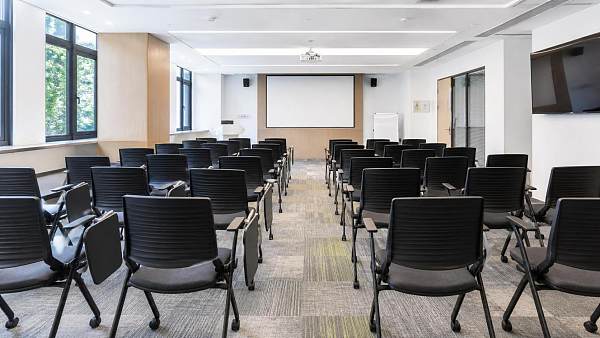
A lecture room may host formal teaching in the morning, group discussion in the afternoon, and external events in the evening.
Labs face even more pressure.
They must support chemical resistance, equipment integration, safe circulation, and repeated maintenance without disrupting academic schedules.
This is where educational furniture for universities becomes a strategic asset rather than a background purchase.
Across the broader commercial industry, buyers are placing more value on lifecycle performance and dependable sourcing. That shift mirrors what GCT emphasizes across hospitality, office, and educational supply chains: procurement decisions shape user experience, compliance risk, and operational resilience at the same time.
What falls under educational furniture for universities
The category is wider than desks and chairs.
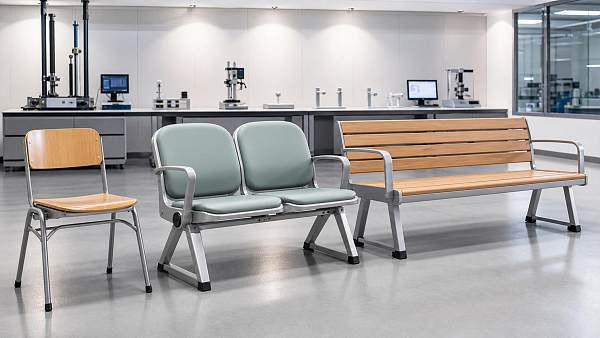
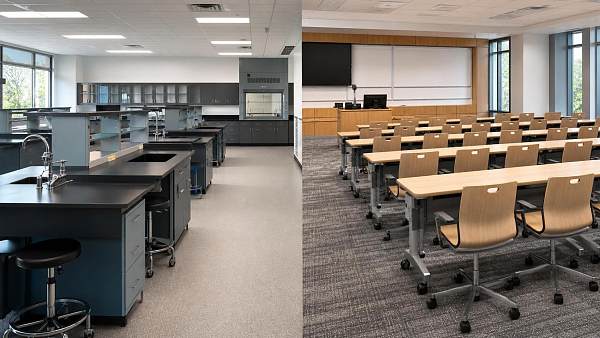
For lecture rooms, it often includes seating systems, writing tablets, lecterns, instructor stations, storage, and mobile tables.
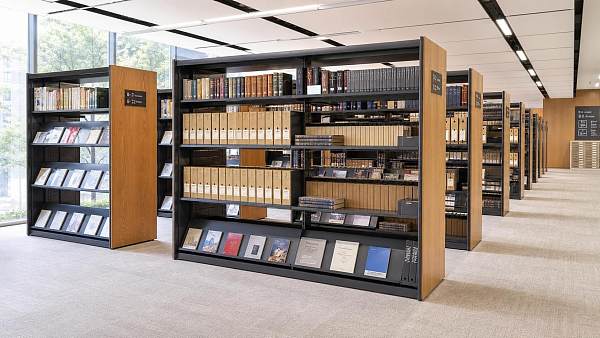
For laboratories, it extends to workbenches, reagent shelving, stools, sink units, fume-related support furniture, and service-integrated casework.
Some furniture is fixed to support density and wiring control.
Other pieces are mobile to support reconfiguration and mixed-use teaching.
The key point is that educational furniture for universities should be evaluated according to room function, user movement, technical load, and cleaning regime, not by catalog appearance alone.
The comparison factors that matter before buying
A useful evaluation framework compares performance in real operating conditions.
Material performance and surface durability
In lecture rooms, abrasion resistance and impact strength matter more than decorative finish alone.
In labs, surfaces should be reviewed for chemical resistance, moisture tolerance, edge sealing quality, and heat performance.
High-pressure laminate, epoxy resin, phenolic resin, and powder-coated steel each behave differently under daily use.
The right choice depends on exposure, not trend.
Structural integrity and load capacity
Frame construction, joint design, and load testing should be reviewed early.
Weak connectors often fail before main surfaces do.
For labs, vibration stability may also matter when benches support analytical devices or repeated instrument placement.
Ergonomics and user endurance
Long sessions create strain if seating angles, desk heights, and leg clearance are poorly matched.
Adjustability is often worth comparing where rooms serve mixed disciplines or varied body types.
Educational furniture for universities should support comfort without sacrificing density or circulation.
Compliance and safety standards
Safety claims should be verified, not assumed.
Depending on the market, relevant checks may include fire behavior, emissions, anti-tip performance, electrical integration safety, and laboratory-specific resistance standards.
Documentation quality often reveals supplier maturity.
Layout flexibility is not the same in labs and lecture rooms
Flexibility sounds attractive, but it must be defined carefully.
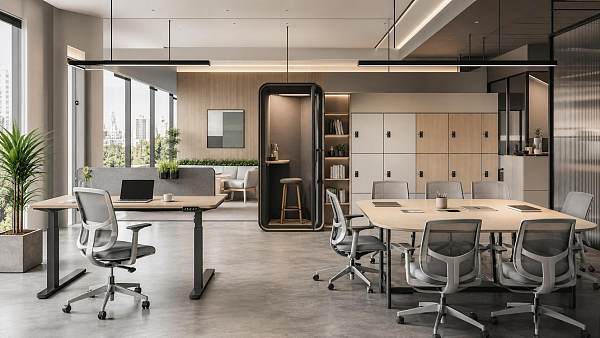
In lecture spaces, flexibility often means stackable seating, foldable tables, caster-based movement, and quick transitions between presentation and collaboration modes.
In labs, flexibility is more technical.
It may involve modular benching, accessible service panels, removable storage, and room for future equipment upgrades.
Educational furniture for universities should therefore be compared against likely changes over five to ten years, not only current occupancy plans.
Maintenance, replacement, and total cost over time
A lower purchase price can hide higher operational cost.
That usually appears in damaged edges, unstable hardware, discontinued parts, or finishes that show wear too quickly.
It is often more useful to compare serviceability than discount levels.
- Check whether seat pads, glides, hinges, and worktops can be replaced individually.
- Review cleaning compatibility with campus maintenance chemicals.
- Confirm spare part lead times and model continuity.
- Ask how warranty terms differ between intensive academic use and light commercial use.
This lifecycle view is central when educational furniture for universities is procured at scale. It also aligns with the sourcing logic seen across GCT’s commercial coverage, where long-term reliability outweighs short-term pricing optics.
Supplier capability often decides project success
The product specification matters, but supplier execution matters just as much.
A strong supplier can provide consistent production quality, validated test data, installation coordination, and realistic delivery schedules.
A weak supplier may still present an attractive sample.
Useful questions include whether the supplier has completed similar university projects, how change requests are handled, and what evidence exists for OEM or ODM control when custom layouts are required.
This is especially relevant in cross-border sourcing, where communication speed, documentation accuracy, and packaging standards can affect installation outcomes as much as the furniture itself.
A practical way to compare options before approval
A side-by-side matrix usually leads to clearer decisions than brochure review.
Each option can be scored against core conditions rather than general impressions.
Educational furniture for universities should then be shortlisted based on fit with room type, operational risk, and future adaptability.
Where to focus next
The most effective next step is to convert broad requirements into room-specific criteria.
Separate lecture rooms from labs, rank non-negotiable performance needs, and request technical evidence before comparing commercial terms.
When educational furniture for universities is reviewed through lifecycle cost, compliance exposure, and supplier capability, the decision becomes more stable and easier to defend.
For institutions navigating global sourcing options, the strongest results usually come from combining detailed specification review with broader market intelligence, especially in the kind of commercial ecosystem that GCT tracks across educational and other high-performance project sectors.
Search News
Hot Articles
- Commercial KitchenCommercial Kitchen Design Price: Budgeting by Layout, Equipment, and MEP ScopeSep 22, 2026
- Stationery & UniformsHow Schools Can Cut Printing Costs When Buying Ink Cartridges in BulkSep 21, 2026
- Jewelry Packaging & DisplayHow to Evaluate a Luxury Retail Packaging Supplier for Premium Brand ConsistencySep 20, 2026
Popular Tags
Need ExpertConsultation?
Connect with our specialized leisureengineering team for procurementstrategies.
Recommended News
 Sep 02, 2026How to Choose a Glass Acoustic Office Pod for Open-Plan Workplace PrivacyGlass acoustic pod office buying guide: compare privacy, ventilation, safety glass, power, site fit, and supplier support to choose a productive open-plan workspace solution.● Institutional Buyer
 Sep 01, 2026Is CE Marking Enough for Commercial Products Sold in the US?Is CE marking enough for commercial products sold in the US? Learn the key US safety, FCC, listing, and inspection requirements before you buy.● Institutional Buyer
 Sep 04, 2026B2B Office Supplies Procurement: Building a Cost-Controlled Replenishment ProgramB2B office supplies procurement made smarter: build a cost-controlled replenishment program that reduces spend, prevents stockouts, and improves supplier performance.● Institutional Buyer
 Aug 26, 2026How to Choose Automatic Office Coffee Machines for Team Size, Usage, and MaintenanceAutomatic office coffee machines: learn how to choose the right model for team size, daily demand, drink preferences, and maintenance needs to reduce downtime and improve workplace satisfaction.● Institutional Buyer
 Aug 13, 2026What to Look for When Choosing a Wood Executive Office Desk for Daily UseWood executive office desks should do more than look premium. Learn how to compare durability, ergonomics, cable management, and finish quality before you buy.● Institutional Buyer
 Jul 31, 2026How to Choose Institutional Storage Furniture for Schools, Offices, and Public FacilitiesInstitutional storage furniture buying guide for schools, offices, and public facilities—learn how to assess safety, durability, cleaning, locks, and lifecycle cost before you buy.● Institutional Buyer
 Jul 14, 2026Commercial Carpet Tile Price Guide: Cost Factors, Wear Ratings, and Installation ScopeCommercial carpet tile price explained: compare cost factors, wear ratings, and installation scope to choose durable, budget-smart flooring for offices, schools, hotels, and retail.● Institutional Buyer
 Jul 11, 2026How to Compare Motorized, Fixed Frame, and Portable Wholesale Projector ScreensWholesale projector screens compared: discover how motorized, fixed frame, and portable options differ in image quality, flexibility, and sourcing value for commercial projects.● Institutional Buyer
 Jul 10, 2026Desktop Hole Punches Wholesale: What Buyers Should Check Before Placing a Bulk OrderDesktop hole punches wholesale buyers should check quality, accuracy, compliance, total cost, and supplier reliability before placing a bulk order. Read the key checkpoints now.● Institutional Buyer
 Jul 09, 2026Library Bookshelves Wholesale Buying Guide: Materials, Load Capacity, and Layout CostsLibrary bookshelves wholesale guide covering materials, load capacity, and layout costs. Compare options, reduce procurement risk, and choose durable shelving for long-term value.● Institutional Buyer
 Jul 08, 2026Height Adjustable Desks Bulk: Key Specs to Compare for Office Fit-Out ProjectsHeight adjustable desks bulk: compare load, range, stability, noise, compliance, and rollout factors to choose reliable desks for office fit-out projects with less risk.● Institutional Buyer
 Jul 06, 2026FBX Drops 18% as Asia-Europe Furniture Rates FallFBX drops 18% as Asia-Europe furniture rates fall to $1,186/FEU, reshaping office furniture import margins, restocking timing, and shipping plans. See what buyers and exporters should do next.● Institutional Buyer
 Jul 06, 2026Training Chairs With Writing Tablet: What to Check for Classroom Layout and DurabilityTraining chairs with writing tablet: learn how to compare classroom layout, tablet size, frame durability, and maintenance needs to choose smarter, longer-lasting seating.● Institutional Buyer
 Jul 05, 2026Indonesia Tightens Wood Proof for Office Furniture ImportsIndonesia tightens wood proof for office furniture imports from July 3, 2026. Learn FLEGT, certification, customs risks, and how exporters can avoid delays and extra fees.● Institutional Buyer
 Jul 04, 2026How to Choose Educational Furniture for Schools by Age Group, Layout, and DurabilityEducational furniture for schools should match age groups, room layouts, and durability needs. Discover practical buying tips to improve safety, flexibility, and long-term value.● Institutional Buyer
 Jul 03, 2026Europe 40HQ Rates Climb to $6,920 for Large Furniture ShipmentsEurope 40HQ rates climb to $6,920, reshaping large furniture shipments with 9–12 week delays and higher consolidation costs. See what exporters and buyers should do now.● Institutional Buyer
 Jul 03, 2026Adjustable Library Shelves: Load Capacity, Material, and Layout Tips for Smarter Space PlanningAdjustable library shelves: learn how to compare load capacity, materials, and layout options to create safer, more flexible spaces with lower long-term costs.● Institutional Buyer
 Jul 02, 2026Vietnam Tightens Proof Rules for Wood Office FurnitureVietnam tightens proof rules for wood office furniture from July 1, 2026. Learn how FSC-CoC, VPA-FLEGT, and customs delays could impact exporters, sourcing, and delivery plans.● Institutional Buyer
 Jun 29, 2026Workspace Furniture for Offices: What to Compare Before Planning a Hybrid LayoutWorkspace furniture for offices should be compared by flexibility, comfort, space efficiency, and procurement value before planning a hybrid layout. Learn what to review for smarter office decisions.● Institutional Buyer
 Jun 28, 2026How to Evaluate an Institutional Furniture Manufacturer for Schools, Hospitals, and Public SpacesInstitutional furniture manufacturer evaluation guide for schools, hospitals, and public spaces. Learn how to compare compliance, durability, customization, and supply reliability.● Institutional Buyer
 Jun 23, 2026Educational Furniture for Universities: What to Compare Before Buying for Labs and Lecture RoomsEducational furniture for universities: compare lab and lecture room safety, durability, flexibility, and lifecycle cost before buying. Make smarter campus sourcing decisions.● Institutional Buyer
 Jun 22, 2026How to Choose Educational Furniture for Libraries by Age Group, Layout, and UseEducational furniture for libraries should match age groups, layout, and daily use. Discover practical tips to choose safer, flexible, durable solutions that improve learning spaces.● Institutional Buyer
 Jun 18, 2026Wholesale Projector Screens: How to Choose Size, Gain, and Mounting for Each SpaceWholesale projector screens guide: learn how to choose the right size, gain, and mounting for classrooms, boardrooms, hotels, and event spaces for clearer images and smarter sourcing.● Institutional Buyer
 Jun 17, 2026Mobile Pedestals Wholesale Buying Guide: Locking Systems, Sizes, and Bulk PricingMobile pedestals wholesale guide covering locking systems, size options, durability, and bulk pricing to help buyers compare suppliers, cut risk, and secure better-value orders.● Institutional Buyer