FIFA Grants CCTV 2026 World Cup Media Rights, Opens IP Path for Chinese Arcade/VR Firms
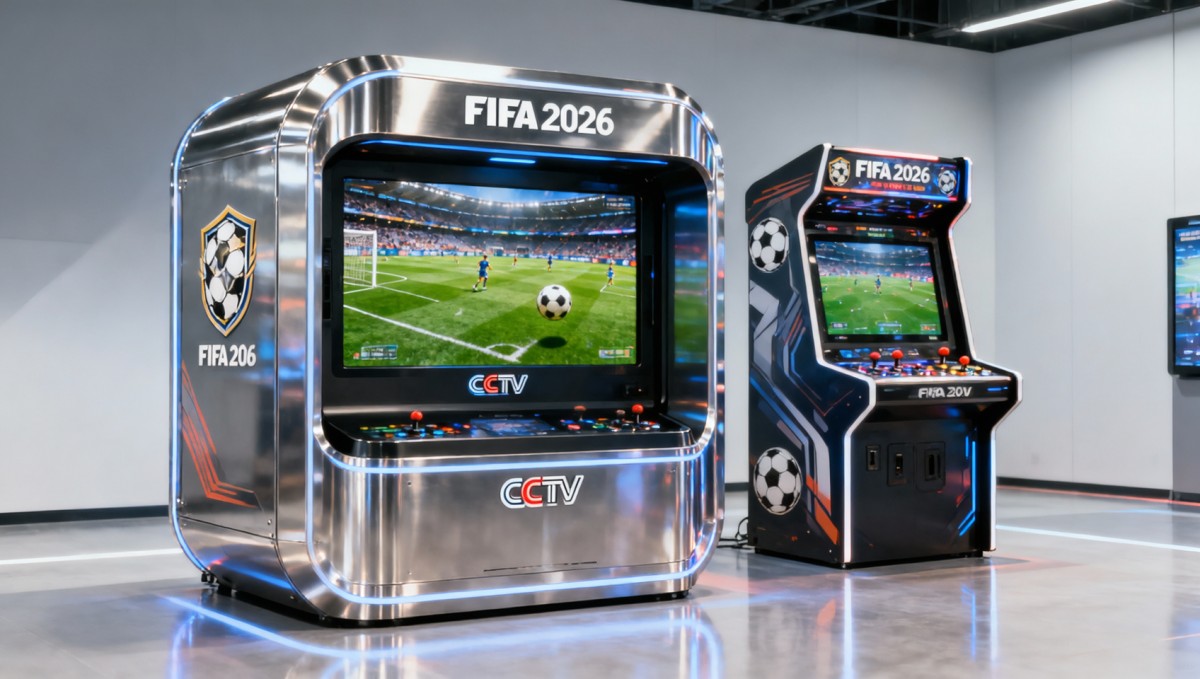
FIFA’s May 16, 2026 announcement granting China Central Television (CCTV) exclusive mainland China multimedia broadcast rights for the FIFA World Cup 2026 marks a pivotal policy inflection point for interactive entertainment hardware providers. Unlike prior tournaments, this rights package includes an unprecedented official licensing pathway for arcade and VR equipment manufacturers — enabling authorized, location-based, FIFA-branded immersive experiences across theme parks, amusement centers, and VR venues in China. The shift signals formal institutional recognition of experiential media as complementary to linear broadcast, thereby reshaping commercial opportunity structures for domestic hardware vendors.
Event Overview
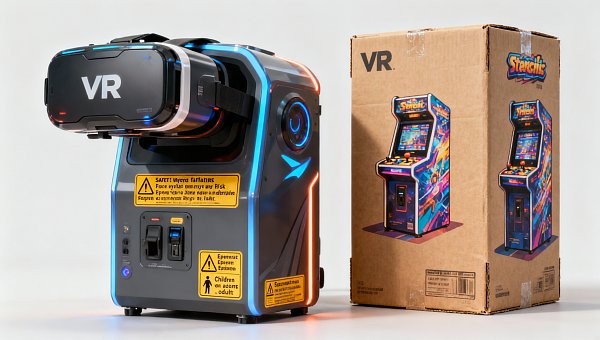
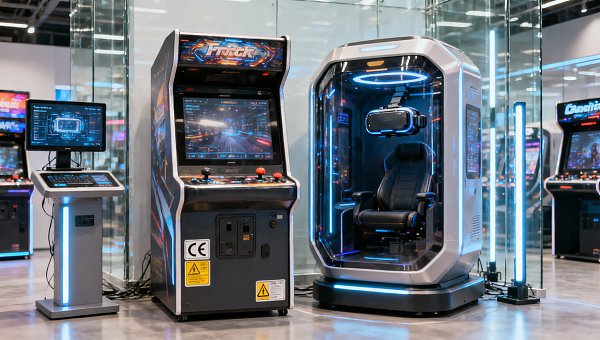
On May 16, 2026, FIFA officially confirmed that China Central Television holds the exclusive multimedia broadcasting rights for the 2026 FIFA World Cup in mainland China. Concurrently, FIFA released updated licensing guidelines permitting manufacturers holding official FIFA IP authorization to deploy World Cup-themed content on arcade cabinets and VR systems within licensed physical venues—including theme parks, video game arcades, and VR experience centers—across mainland China. Chinese arcade and VR device manufacturers are now actively engaging FIFA’s appointed regional licensing agents; initial custom football-themed VR interaction kits are projected to enter mass production and delivery starting in Q3 2026.
Industries Affected
Direct trade enterprises: Export-oriented arcade cabinet distributors and VR platform resellers face new channel-specific demand. Their role shifts from generic hardware distribution to certified solution integration — requiring compliance documentation, venue-level deployment support, and co-branded marketing alignment with FIFA and CCTV. Revenue potential increases, but margin pressure rises due to certification costs and tighter contractual obligations.
Raw material procurement enterprises: Suppliers of motion-tracking sensors, haptic feedback modules, and high-refresh-rate display panels see revised forecast signals. Demand is no longer driven solely by consumer headset sales cycles, but by time-bound, event-linked B2B project pipelines tied to venue rollout deadlines (e.g., pre-tournament installations at top-tier theme parks). Procurement planning must now accommodate shorter lead times and batch-specific validation requirements.
Contract manufacturing enterprises: ODM/OEM firms producing VR headsets or arcade cabinets must adapt production lines for FIFA-compliant firmware, logo placement standards, and embedded content security protocols. This introduces new engineering change orders, firmware certification steps, and audit-ready documentation — increasing per-unit compliance overhead without commensurate pricing uplift unless bundled into turnkey solutions.
Supply chain service enterprises: Logistics providers specializing in cross-border equipment certification (e.g., CCC, SRRC, FIFA IP clearance coordination) and venue-ready installation services gain differentiated demand. However, their capacity is constrained by the narrow window between licensing approval and Q3 delivery targets — making scalability and regulatory agility decisive competitive factors.
Key Considerations and Recommended Actions
Verify official licensing agent credentials before engagement
FIFA has designated specific regional representatives for IP licensing in Greater China. Companies must confirm accreditation status directly via FIFA’s official licensing portal — not through third-party brokers — to avoid invalid agreements or retroactive termination risk.
Prioritize firmware and content security architecture early
FIFA’s licensing terms mandate secure content delivery mechanisms and tamper-resistant firmware. Manufacturers should initiate architecture review with trusted cybersecurity partners no later than June 2026 to align with Q3 delivery timelines.
Align venue partner onboarding with CCTV’s promotional calendar
CCTV’s broadcast schedule includes phased thematic campaigns (e.g., ‘National Team Journey’, ‘Host City Spotlight’). Arcade/VR content updates must synchronize with those phases to maximize cross-platform visibility — requiring joint planning with venue operators well ahead of launch.
Editorial Perspective / Industry Observation
Observably, this development reflects FIFA’s strategic pivot toward diversified rights monetization beyond traditional TV — treating immersive venues not as ancillary, but as first-tier experiential touchpoints. Analysis shows that such IP licensing windows rarely exceed 18 months post-announcement before competitive saturation occurs; current momentum favors early-mover firms with existing venue relationships and modular hardware platforms. From an industry perspective, the policy does not signal broad deregulation — rather, it establishes a tightly governed, high-trust corridor for select hardware vendors. It is better understood as a controlled expansion of the broadcast ecosystem, not a de facto open market.
Conclusion
This authorization represents more than a licensing milestone: it institutionalizes a new commercial interface between global sports IP and localized interactive hardware infrastructure. For China’s arcade and VR sector, it validates hardware-as-experience — but only when anchored to verifiable IP legitimacy, technical compliance, and synchronized programming. The long-term significance lies less in immediate revenue and more in precedent-setting: future major sporting events may adopt similar dual-channel (broadcast + experiential) rights frameworks, raising the bar for both technical readiness and ecosystem coordination.
Source Attribution
Official announcement issued by FIFA via fifa.com on May 16, 2026; supplementary licensing guidance published by FIFA Licensing Division (Ref: LIC-2026-CN-01). Note: Final list of authorized licensing agents and technical compliance specifications remain pending publication — ongoing monitoring advised.
Search News
Hot Articles
- Restaurant FurnitureFast-Casual Restaurant Interiors: Design Choices That Improve Speed and Guest FlowOct 04, 2026
- Outdoor RidesHow to Select Leisure Park Equipment for Safe, High-Throughput Visitor AreasOct 03, 2026
- Fashion & Gem JewelryDiamond Tester Wholesale: How to Vet Accuracy, Calibration, and MOQ Before OrderingOct 02, 2026
Popular Tags
Need ExpertConsultation?
Connect with our specialized leisureengineering team for procurementstrategies.
Recommended News
 Sep 15, 2026How to Choose Coin-Operated Pool Tables for Bars, Hotels, and Arcade VenuesCoin operated pool tables for bars, hotels, and arcades: compare sizes, payment systems, durability, service access, and revenue potential.● Theme Park Strategist
 Sep 08, 2026What to Look for in a Flight Simulator Chair Manufacturer for Commercial VR CentersChoose a flight simulator chair manufacturer that delivers durable, safe, customizable seating for commercial VR centers. Explore key sourcing criteria now.● Theme Park Strategist
 Aug 25, 2026What to Evaluate Before Buying Commercial Self Service Photo Booths for VenuesCommercial self service photo booths for venues: learn how to evaluate durability, software stability, branding flexibility, support, and total ROI before you buy.● Theme Park Strategist
 Aug 23, 2026How to Evaluate Wholesale Vending Machines for Multi-Location Business DeploymentWholesale vending machines for multi-location deployment require more than low unit cost. Learn how to compare reliability, payments, telemetry, and supplier support to scale smarter.● Theme Park Strategist
 Aug 17, 2026U.S. CPSC Urges Bilingual Warnings for Arcade and VR MachinesU.S. CPSC urges bilingual safety warnings for Arcade & VR Machines—learn what exporters, importers, and distributors must do now to avoid delays and returns.● Theme Park Strategist
 Aug 16, 2026EU Enforces EN IEC 62368-1:2026 Certification for Arcade and VR MachinesEU Enforces EN IEC 62368-1:2026 certification for arcade and VR machines, reshaping EU market access, customs clearance, and compliance planning for exporters and distributors.● Theme Park Strategist
 Aug 13, 2026UFLPA’s new guidelines take effect: Exports of Arcade and VR equipment face full-link labor compliance requirementsUFLPA’s new guide takes effect: Arcade and VR machine exports to the U.S. now face full-chain labor compliance checks. Discover key risks and action steps.● Theme Park Strategist
 Aug 12, 2026EU PPWR takes effect, Arcade and VR packaging incorporate heavy metal and PFAS restrictionsEU PPWR now applies to Arcade and VR packaging, tightening heavy metal and PFAS compliance. Learn how exporters can avoid delays, fines, and customs risks.● Theme Park Strategist
 Aug 11, 2026CPSC Sets Bilingual Labels for Arcade and VR ImportsCPSC bilingual labels for arcade and VR imports become mandatory on October 1, 2026. Learn the new English-Spanish warning rules, customs risks, and key compliance steps now.● Theme Park Strategist
 Aug 10, 2026EU Rule Takes Effect for Arcade & VR Machine ClearanceArcade & VR Machine clearance in the EU now depends on EN IEC 62368-1:2026+A11:2026 compliance. Learn what changed, who is affected, and how to avoid customs delays.● Theme Park Strategist
 Aug 09, 2026CPSC Requires New Labels for Arcade and VR ImportsCPSC requires new labels for Arcade and VR imports starting Oct 1, 2026. Learn the multilingual warning rules, compliance risks, and key steps exporters and buyers must take now.● Theme Park Strategist
 Aug 08, 2026EU Entry Rule Tightens for Arcade & VR MachinesArcade & VR Machines entering the EU now face stricter CE compliance under EN IEC 62368-1:2026+A11:2026. Learn the new rule, risks, and what exporters must do now.● Theme Park Strategist
 Aug 07, 2026CPSC Notice Tightens U.S. Entry Rules for Arcade and VR MachinesCPSC Notice Tightens U.S. Entry Rules for Arcade and VR Machines: learn the new labeling, FCC, UN38.3, and compliance document requirements before October 1, 2026.● Theme Park Strategist
 Aug 06, 2026EU Rule Takes Effect for CE-UKCA Labels on Arcade & VR MachinesArcade & VR Machines face new CE-UKCA label and ECPD filing rules in the EU and UK. Learn what manufacturers, importers, and distributors must do now to avoid delays.● Theme Park Strategist
 Aug 05, 2026CPSC Recalls Arcade and VR Machines Over UL 62368-1CPSC recalls arcade and VR machines over UL 62368-1 non-compliance. Learn how this 2026 safety action may affect imports, distribution, customs clearance, and market access.● Theme Park Strategist
 Aug 02, 2026EU Sets New Certification Rule for Arcade and VR MachinesArcade and VR Machines face a new EU certification rule from Oct 1, 2026. Learn how EN IEC 62368-1:2026+A11:2026 affects CE marking, customs clearance, and market access.● Theme Park Strategist
 Aug 01, 2026CPSC Moves to Require Bilingual Warnings on Arcade and VR MachinesCPSC bilingual warnings for Arcade and VR Machines may reshape U.S. import compliance. Learn how English-Spanish labels affect packaging, customs risk, and shipment readiness.● Theme Park Strategist
 Jul 31, 2026EU Sets EN IEC 62368-1:2025 Rule for Arcade and VR MachinesEU Sets EN IEC 62368-1:2025 Rule for Arcade and VR Machines. Learn the new EU compliance deadlines, safety updates, and key actions for manufacturers, OEMs, and distributors.● Theme Park Strategist
 Jul 30, 2026CPSC Sets New Warning Label Rule for Arcade & VR MachinesCPSC sets a new warning label rule for Arcade & VR Machines effective August 15, 2026. Learn key compliance risks, multilingual label requirements, and shipment actions now.● Theme Park Strategist
 Jul 29, 2026EU Enforces New Safety Standard for Arcade and VR MachinesEU Enforces New Safety Standard for Arcade and VR Machines: learn how EN IEC 62368-1 affects CE compliance, customs clearance, and EU market access for exporters and buyers.● Theme Park Strategist
 Jul 28, 2026CPSC Sets ASTM F3472-26 Rule for Arcade & VR ImportsCPSC ASTM F3472-26 rule reshapes Arcade & VR imports to the U.S. Learn key compliance deadlines, certification risks, and what exporters, OEM/ODM suppliers, and buyers should do now.● Theme Park Strategist
 Jul 27, 2026EU Rule Takes Effect for Arcade & VR Machine CybersecurityEU Rule Takes Effect for Arcade & VR Machine Cybersecurity: learn how EN IEC 62443-3-3:2025 affects compliance, customs clearance, sales continuity, and supplier planning in the EU market.● Theme Park Strategist
 Jul 25, 2026CPSC Sets Bilingual Warning Rule for Arcade and VR ImportsCPSC bilingual warning rule for arcade and VR imports takes effect August 1, 2026. Learn how OEM/ODM exporters can avoid CBP delays, relabel shipments, and protect U.S. delivery timelines.● Theme Park Strategist
 Jul 24, 2026EU Enforces New Safety Standard for Arcade and VR MachinesEU Enforces New Safety Standard for Arcade and VR Machines: learn how EN IEC 62368-1:2026+A11:2026 reshapes EU compliance, CE documentation, testing timelines, and export readiness.● Theme Park Strategist