SteamVR Opens China OEM Direct Certification
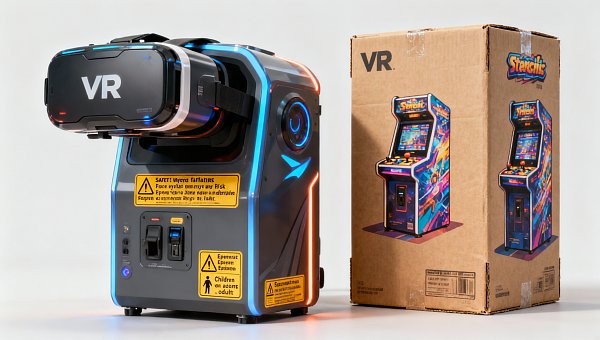
Valve has launched a dedicated certification portal for Chinese arcade equipment manufacturers, significantly streamlining VR hardware deployment for global commercial venues. Announced on May 16, 2026, the initiative targets ISO 13485-certified OEMs in China and directly addresses longstanding bottlenecks in SteamVR Runtime integration for location-based entertainment (LBE) systems.
Event Overview
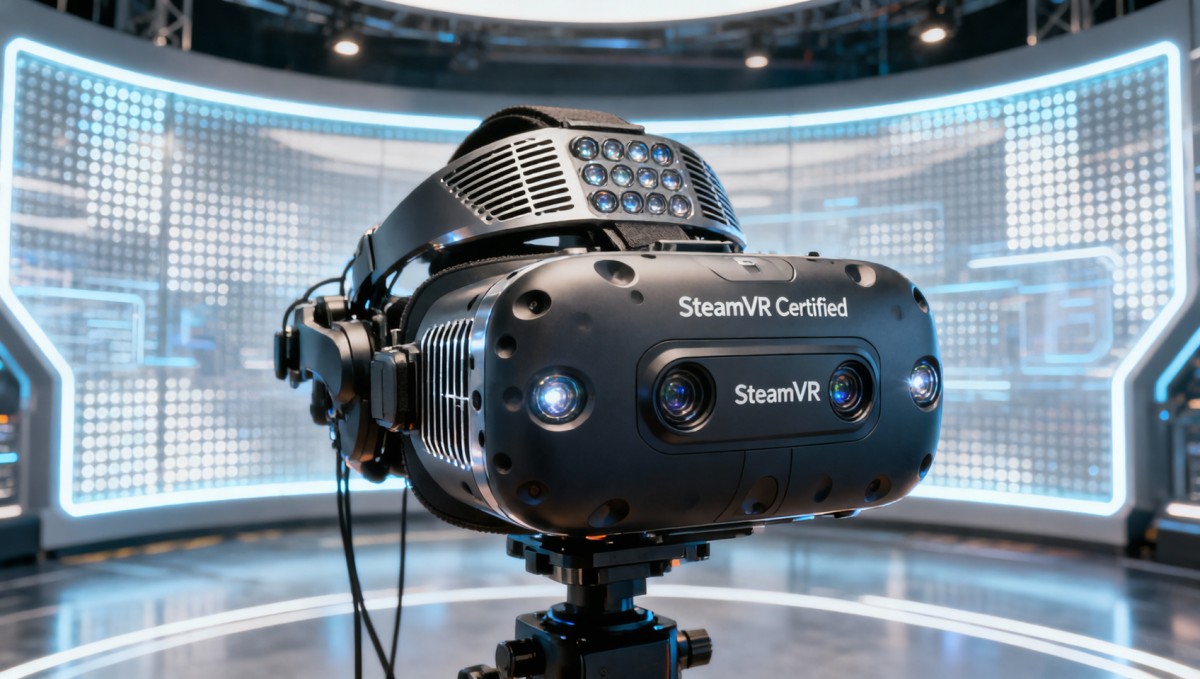
On May 16, 2026, Valve officially launched the ‘China OEM Direct Certification Portal’, enabling Chinese arcade device manufacturers holding ISO 13485 certification to apply for embedded SteamVR Runtime certification without intermediary validation layers. The average certification cycle has been reduced from 22 days to ≤9 business days. Submissions—including technical documentation, firmware test reports, and compliance checklists—may be made in Chinese. The portal is operational and accessible via Valve’s developer dashboard.
Industries Impacted
Direct Trade Enterprises
Export-oriented arcade equipment vendors—particularly those supplying North American theme parks, Middle Eastern shopping malls, and Southeast Asian chain arcades—are now able to accelerate time-to-market for SteamVR-enabled products. Faster certification reduces pre-launch lead times and lowers risk of contract delays tied to runtime approval. However, this benefit applies only to firms already certified to ISO 13485; non-compliant exporters gain no procedural advantage.
Raw Material Procurement Enterprises
Suppliers of certified components—such as motion-tracking sensors, haptic feedback modules, and certified power management ICs—face increased demand visibility. Because the new portal mandates traceable component-level compliance documentation (e.g., RoHS/REACH declarations with batch-level verification), procurement teams must now ensure upstream suppliers provide bilingual (Chinese–English) compliance records. Absence of such records may delay OEM submissions at the documentation review stage.
Contract Manufacturing & Assembly Firms
OEMs relying on third-party EMS providers must now enforce tighter firmware-handling protocols. The certification requires signed attestations that SteamVR Runtime binaries are integrated without modification and that secure boot chains remain intact. This elevates audit requirements for manufacturing partners—especially those handling firmware flashing or bootloader configuration—and may trigger renegotiation of IP ownership clauses in OEM-EMS contracts.
Supply Chain Service Providers
Certification consultants, localization agencies, and regulatory liaison firms specializing in LBE hardware now face shifting service demands. Demand is rising for bilingual technical documentation review (not just translation), SteamVR Runtime integration testing support, and ISO 13485 gap analysis tailored to VR system architecture—not medical devices. Conversely, generic CE/FCC certification brokers without VR-specific expertise are seeing reduced engagement from high-potential clients.
Key Considerations and Recommended Actions
Verify ISO 13485 Scope Alignment
ISO 13485 certification must explicitly cover ‘design and manufacture of immersive entertainment hardware’—not just general electronics assembly. Firms with outdated scopes covering only ‘consumer audiovisual equipment’ must initiate scope extension audits before applying.
Prepare Bilingual Technical Artifacts
Submit firmware architecture diagrams, secure boot flowcharts, and USB device descriptor tables in both Chinese and English. Valve’s portal accepts Chinese uploads but cross-references them against English metadata fields; mismatched terminology (e.g., inconsistent naming of HID endpoints) triggers manual review and adds ≥2 working days.
Engage Early with Valve’s LBE Partner Program
While the portal enables direct submission, priority queue access and pre-submission technical triage are reserved for members of Valve’s official Location-Based Entertainment Partner Program. Enrollment requires demonstration of ≥3 shipped commercial VR venue deployments in the past 18 months.
Editorial Perspective / Industry Observation
Analysis shows this move is less about broadening SteamVR’s ecosystem reach and more about hardening supply chain control for high-value commercial deployments. Valve’s decision to anchor eligibility to ISO 13485—a standard rooted in medical device quality management—signals an intentional shift toward treating arcade-grade VR systems as mission-critical infrastructure, not consumer peripherals. Observably, this raises the bar for firmware security, failure mode documentation, and lifecycle traceability. It does not lower entry barriers for startups; rather, it rewards vertically integrated OEMs with mature QA systems. From an industry perspective, this reflects growing convergence between entertainment hardware and industrial-grade reliability expectations—particularly where revenue depends on uptime in unattended public venues.
Conclusion
This certification channel represents a targeted efficiency upgrade—not a market-opening policy. Its real-world impact will be measured not in total certified units, but in the reduction of field-deployment failures across international LBE venues. A rational observation is that it consolidates advantage among established Chinese OEMs while increasing due diligence burdens further down the supply chain. For the broader VR industry, it signals maturation: runtime certification is evolving from a software compatibility check into a verifiable quality gate.
Source Attribution
Official announcement: Valve Developer Portal (https://partner.steamgames.com/china-oem-cert), accessed May 16, 2026. Supporting detail confirmed via ISO 13485 audit report templates published by SGS China and TÜV Rheinland Shanghai (Q2 2026 updates). Note: Valve has not disclosed volume thresholds, renewal frequency, or potential expansion to non-arcade form factors (e.g., VR fitness or training rigs); these remain under observation.
Search News
Hot Articles
- Restaurant FurnitureFast-Casual Restaurant Interiors: Design Choices That Improve Speed and Guest FlowOct 04, 2026
- Outdoor RidesHow to Select Leisure Park Equipment for Safe, High-Throughput Visitor AreasOct 03, 2026
- Fashion & Gem JewelryDiamond Tester Wholesale: How to Vet Accuracy, Calibration, and MOQ Before OrderingOct 02, 2026
Popular Tags
Need ExpertConsultation?
Connect with our specialized leisureengineering team for procurementstrategies.
Recommended News
 Sep 15, 2026How to Choose Coin-Operated Pool Tables for Bars, Hotels, and Arcade VenuesCoin operated pool tables for bars, hotels, and arcades: compare sizes, payment systems, durability, service access, and revenue potential.● Theme Park Strategist
 Sep 08, 2026What to Look for in a Flight Simulator Chair Manufacturer for Commercial VR CentersChoose a flight simulator chair manufacturer that delivers durable, safe, customizable seating for commercial VR centers. Explore key sourcing criteria now.● Theme Park Strategist
 Aug 25, 2026What to Evaluate Before Buying Commercial Self Service Photo Booths for VenuesCommercial self service photo booths for venues: learn how to evaluate durability, software stability, branding flexibility, support, and total ROI before you buy.● Theme Park Strategist
 Aug 23, 2026How to Evaluate Wholesale Vending Machines for Multi-Location Business DeploymentWholesale vending machines for multi-location deployment require more than low unit cost. Learn how to compare reliability, payments, telemetry, and supplier support to scale smarter.● Theme Park Strategist
 Aug 17, 2026U.S. CPSC Urges Bilingual Warnings for Arcade and VR MachinesU.S. CPSC urges bilingual safety warnings for Arcade & VR Machines—learn what exporters, importers, and distributors must do now to avoid delays and returns.● Theme Park Strategist
 Aug 16, 2026EU Enforces EN IEC 62368-1:2026 Certification for Arcade and VR MachinesEU Enforces EN IEC 62368-1:2026 certification for arcade and VR machines, reshaping EU market access, customs clearance, and compliance planning for exporters and distributors.● Theme Park Strategist
 Aug 13, 2026UFLPA’s new guidelines take effect: Exports of Arcade and VR equipment face full-link labor compliance requirementsUFLPA’s new guide takes effect: Arcade and VR machine exports to the U.S. now face full-chain labor compliance checks. Discover key risks and action steps.● Theme Park Strategist
 Aug 12, 2026EU PPWR takes effect, Arcade and VR packaging incorporate heavy metal and PFAS restrictionsEU PPWR now applies to Arcade and VR packaging, tightening heavy metal and PFAS compliance. Learn how exporters can avoid delays, fines, and customs risks.● Theme Park Strategist
 Aug 11, 2026CPSC Sets Bilingual Labels for Arcade and VR ImportsCPSC bilingual labels for arcade and VR imports become mandatory on October 1, 2026. Learn the new English-Spanish warning rules, customs risks, and key compliance steps now.● Theme Park Strategist
 Aug 10, 2026EU Rule Takes Effect for Arcade & VR Machine ClearanceArcade & VR Machine clearance in the EU now depends on EN IEC 62368-1:2026+A11:2026 compliance. Learn what changed, who is affected, and how to avoid customs delays.● Theme Park Strategist
 Aug 09, 2026CPSC Requires New Labels for Arcade and VR ImportsCPSC requires new labels for Arcade and VR imports starting Oct 1, 2026. Learn the multilingual warning rules, compliance risks, and key steps exporters and buyers must take now.● Theme Park Strategist
 Aug 08, 2026EU Entry Rule Tightens for Arcade & VR MachinesArcade & VR Machines entering the EU now face stricter CE compliance under EN IEC 62368-1:2026+A11:2026. Learn the new rule, risks, and what exporters must do now.● Theme Park Strategist
 Aug 07, 2026CPSC Notice Tightens U.S. Entry Rules for Arcade and VR MachinesCPSC Notice Tightens U.S. Entry Rules for Arcade and VR Machines: learn the new labeling, FCC, UN38.3, and compliance document requirements before October 1, 2026.● Theme Park Strategist
 Aug 06, 2026EU Rule Takes Effect for CE-UKCA Labels on Arcade & VR MachinesArcade & VR Machines face new CE-UKCA label and ECPD filing rules in the EU and UK. Learn what manufacturers, importers, and distributors must do now to avoid delays.● Theme Park Strategist
 Aug 05, 2026CPSC Recalls Arcade and VR Machines Over UL 62368-1CPSC recalls arcade and VR machines over UL 62368-1 non-compliance. Learn how this 2026 safety action may affect imports, distribution, customs clearance, and market access.● Theme Park Strategist
 Aug 02, 2026EU Sets New Certification Rule for Arcade and VR MachinesArcade and VR Machines face a new EU certification rule from Oct 1, 2026. Learn how EN IEC 62368-1:2026+A11:2026 affects CE marking, customs clearance, and market access.● Theme Park Strategist
 Aug 01, 2026CPSC Moves to Require Bilingual Warnings on Arcade and VR MachinesCPSC bilingual warnings for Arcade and VR Machines may reshape U.S. import compliance. Learn how English-Spanish labels affect packaging, customs risk, and shipment readiness.● Theme Park Strategist
 Jul 31, 2026EU Sets EN IEC 62368-1:2025 Rule for Arcade and VR MachinesEU Sets EN IEC 62368-1:2025 Rule for Arcade and VR Machines. Learn the new EU compliance deadlines, safety updates, and key actions for manufacturers, OEMs, and distributors.● Theme Park Strategist
 Jul 30, 2026CPSC Sets New Warning Label Rule for Arcade & VR MachinesCPSC sets a new warning label rule for Arcade & VR Machines effective August 15, 2026. Learn key compliance risks, multilingual label requirements, and shipment actions now.● Theme Park Strategist
 Jul 29, 2026EU Enforces New Safety Standard for Arcade and VR MachinesEU Enforces New Safety Standard for Arcade and VR Machines: learn how EN IEC 62368-1 affects CE compliance, customs clearance, and EU market access for exporters and buyers.● Theme Park Strategist
 Jul 28, 2026CPSC Sets ASTM F3472-26 Rule for Arcade & VR ImportsCPSC ASTM F3472-26 rule reshapes Arcade & VR imports to the U.S. Learn key compliance deadlines, certification risks, and what exporters, OEM/ODM suppliers, and buyers should do now.● Theme Park Strategist
 Jul 27, 2026EU Rule Takes Effect for Arcade & VR Machine CybersecurityEU Rule Takes Effect for Arcade & VR Machine Cybersecurity: learn how EN IEC 62443-3-3:2025 affects compliance, customs clearance, sales continuity, and supplier planning in the EU market.● Theme Park Strategist
 Jul 25, 2026CPSC Sets Bilingual Warning Rule for Arcade and VR ImportsCPSC bilingual warning rule for arcade and VR imports takes effect August 1, 2026. Learn how OEM/ODM exporters can avoid CBP delays, relabel shipments, and protect U.S. delivery timelines.● Theme Park Strategist
 Jul 24, 2026EU Enforces New Safety Standard for Arcade and VR MachinesEU Enforces New Safety Standard for Arcade and VR Machines: learn how EN IEC 62368-1:2026+A11:2026 reshapes EU compliance, CE documentation, testing timelines, and export readiness.● Theme Park Strategist