Southeast Asia's 5-Nation EPR Platform Launches
On May 17, 2026, a joint Extended Producer Responsibility (EPR) regulatory platform officially entered trial operation across Indonesia, Thailand, Vietnam, Malaysia, and the Philippines. The initiative marks the first regionally coordinated EPR enforcement mechanism targeting electronic entertainment equipment in Southeast Asia — with immediate implications for exporters, manufacturers, and logistics providers handling arcade devices.

Event Overview
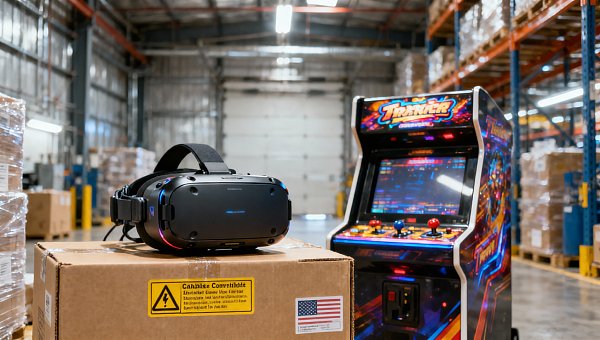
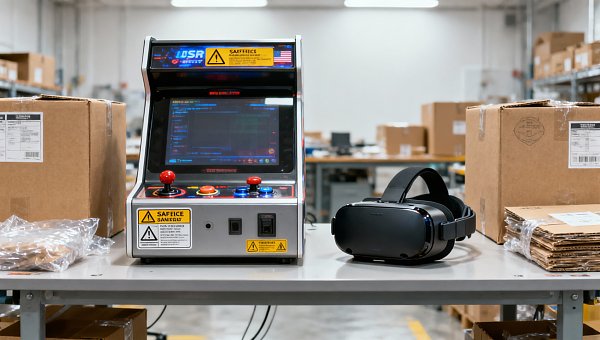
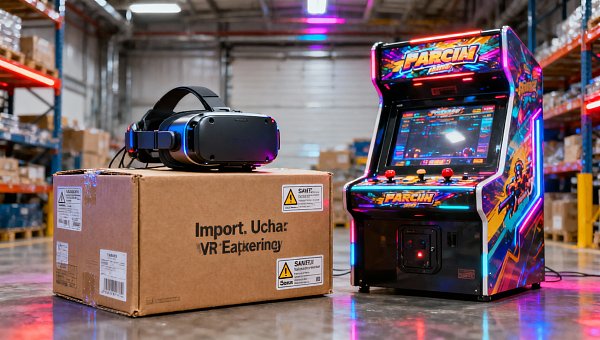
The five-nation EPR platform launched on May 17, 2026. All manufacturers of arcade devices—including coin-operated gaming machines, karaoke systems, and VR-based interactive fitness or entertainment units—must complete EPR registration within 72 hours of the first import into any of the five countries. Registration includes submission of producer identification, product categorization, and payment of an annual recycling fee. Unregistered products will be flagged on customs high-risk monitoring lists, potentially triggering shipment delays, inspection holds, or import rejection.
Industries Affected
Direct Trading Enterprises: Exporters and brand owners selling arcade devices into Southeast Asia face new time-bound compliance obligations. The 72-hour registration window applies per country and per product batch, meaning parallel submissions across five jurisdictions may strain internal compliance capacity. Impact manifests in increased pre-shipment administrative load, potential customs clearance delays, and exposure to financial penalties for late registration.
Raw Material Procurement Enterprises: Suppliers of key components—such as PCBs, display modules, coin mechanisms, and haptic feedback hardware—are indirectly affected. While not directly liable under EPR, their downstream customers (OEM/ODM manufacturers) are now requiring formal supplier declarations of material composition and recyclability data to support EPR reporting. This may trigger requests for updated RoHS/REACH documentation, substance declarations, and traceability records.
Contract Manufacturing & OEM Enterprises: Factories producing arcade devices for global brands must now assume dual accountability: as producers under local EPR law (if they appear as the importer of record or brand holder on customs documents), and as contract service providers subject to upstream audit requirements. Some manufacturers may need to restructure export invoicing or labeling practices to clarify legal producer status — especially where branding and import responsibilities are split between client and factory.
Supply Chain Service Providers: Freight forwarders, customs brokers, and third-party logistics firms must adapt operational workflows to verify EPR registration status before release. Several regional customs authorities have indicated that EPR confirmation numbers will soon be mandatory fields in electronic import declarations. Service providers lacking integration with national EPR portals may face reduced competitiveness or liability exposure if shipments stall due to non-compliance.
Key Focus Areas & Recommended Actions
Verify Producer Status Per Jurisdiction
Companies must determine whether they qualify as the ‘producer’ under each country’s definition — which varies by import entity, brand ownership, and contractual arrangement. Relying on a single regional registration is insufficient; five separate registrations (with localized contact persons and banking details) are required.
Implement Pre-Import Compliance Triggers
Integrate EPR registration into existing shipment planning: treat the 72-hour deadline as a hard gate before vessel departure or air freight consolidation. Assign dedicated staff or use automated alerts to initiate registration upon confirmed arrival date — not upon customs entry.
Secure Documentation for Recycling Fee Calculation
Annual recycling fees are calculated based on device weight, material composition, and projected sales volume. Companies should begin collecting unit-level BOM (bill of materials) data and historical import volumes per country — as retroactive fee adjustments may apply during audits.
Monitor Platform Updates & Local Translation Requirements
Although the platform is unified in governance, interface languages, form fields, and supporting document formats differ across national portals. For example, Indonesia requires Bahasa Indonesia–translated technical manuals; Thailand mandates Thai-language user guides for consumer-facing devices. Localization readiness affects registration success rate.
Editorial Perspective / Industry Observation
Observably, this rollout reflects a broader shift from voluntary EPR schemes toward legally binding, cross-border harmonized enforcement — but with notable fragmentation beneath the surface. Analysis shows the five-nation framework does not standardize fee structures, reporting frequency, or audit protocols; instead, it creates a shared digital infrastructure while preserving national sovereignty over implementation rules. From an industry perspective, this is better understood as interoperable national systems rather than a true regional regime. Current early-stage challenges — including inconsistent API access for bulk registration, limited English support on national portals, and unclear guidance on multi-brand OEM arrangements — suggest near-term friction will outweigh efficiency gains.
Conclusion
This initiative signals Southeast Asia’s growing emphasis on circular economy accountability — particularly for electronics categories historically overlooked in regional environmental policy. While compliance adds cost and complexity, it also incentivizes modular design, material transparency, and localized take-back infrastructure development. A rational interpretation is that the policy’s long-term effect will be market consolidation: smaller exporters lacking EPR-capable operations may retreat, while larger players gain leverage through compliance scalability and data-driven reverse logistics planning.
Source Attribution
Official announcements issued jointly by the Ministry of Environment and Forestry of Indonesia, Department of Environmental Quality Promotion (Thailand), Ministry of Natural Resources and Environment (Vietnam), Department of Environment (Malaysia), and Environmental Management Bureau (Philippines), published May 17, 2026. Platform technical specifications and registration guidelines remain accessible via the ASEAN EPR Portal (asean-epr.org). Note: Fee schedules, audit timelines, and enforcement thresholds are pending final publication and subject to revision through Q3 2026 — ongoing monitoring is advised.
Search News
Hot Articles
- Restaurant FurnitureFast-Casual Restaurant Interiors: Design Choices That Improve Speed and Guest FlowOct 04, 2026
- Outdoor RidesHow to Select Leisure Park Equipment for Safe, High-Throughput Visitor AreasOct 03, 2026
- Fashion & Gem JewelryDiamond Tester Wholesale: How to Vet Accuracy, Calibration, and MOQ Before OrderingOct 02, 2026
Popular Tags
Need ExpertConsultation?
Connect with our specialized leisureengineering team for procurementstrategies.
Recommended News
 Sep 15, 2026How to Choose Coin-Operated Pool Tables for Bars, Hotels, and Arcade VenuesCoin operated pool tables for bars, hotels, and arcades: compare sizes, payment systems, durability, service access, and revenue potential.● Theme Park Strategist
 Sep 08, 2026What to Look for in a Flight Simulator Chair Manufacturer for Commercial VR CentersChoose a flight simulator chair manufacturer that delivers durable, safe, customizable seating for commercial VR centers. Explore key sourcing criteria now.● Theme Park Strategist
 Aug 25, 2026What to Evaluate Before Buying Commercial Self Service Photo Booths for VenuesCommercial self service photo booths for venues: learn how to evaluate durability, software stability, branding flexibility, support, and total ROI before you buy.● Theme Park Strategist
 Aug 23, 2026How to Evaluate Wholesale Vending Machines for Multi-Location Business DeploymentWholesale vending machines for multi-location deployment require more than low unit cost. Learn how to compare reliability, payments, telemetry, and supplier support to scale smarter.● Theme Park Strategist
 Aug 17, 2026U.S. CPSC Urges Bilingual Warnings for Arcade and VR MachinesU.S. CPSC urges bilingual safety warnings for Arcade & VR Machines—learn what exporters, importers, and distributors must do now to avoid delays and returns.● Theme Park Strategist
 Aug 16, 2026EU Enforces EN IEC 62368-1:2026 Certification for Arcade and VR MachinesEU Enforces EN IEC 62368-1:2026 certification for arcade and VR machines, reshaping EU market access, customs clearance, and compliance planning for exporters and distributors.● Theme Park Strategist
 Aug 13, 2026UFLPA’s new guidelines take effect: Exports of Arcade and VR equipment face full-link labor compliance requirementsUFLPA’s new guide takes effect: Arcade and VR machine exports to the U.S. now face full-chain labor compliance checks. Discover key risks and action steps.● Theme Park Strategist
 Aug 12, 2026EU PPWR takes effect, Arcade and VR packaging incorporate heavy metal and PFAS restrictionsEU PPWR now applies to Arcade and VR packaging, tightening heavy metal and PFAS compliance. Learn how exporters can avoid delays, fines, and customs risks.● Theme Park Strategist
 Aug 11, 2026CPSC Sets Bilingual Labels for Arcade and VR ImportsCPSC bilingual labels for arcade and VR imports become mandatory on October 1, 2026. Learn the new English-Spanish warning rules, customs risks, and key compliance steps now.● Theme Park Strategist
 Aug 10, 2026EU Rule Takes Effect for Arcade & VR Machine ClearanceArcade & VR Machine clearance in the EU now depends on EN IEC 62368-1:2026+A11:2026 compliance. Learn what changed, who is affected, and how to avoid customs delays.● Theme Park Strategist
 Aug 09, 2026CPSC Requires New Labels for Arcade and VR ImportsCPSC requires new labels for Arcade and VR imports starting Oct 1, 2026. Learn the multilingual warning rules, compliance risks, and key steps exporters and buyers must take now.● Theme Park Strategist
 Aug 08, 2026EU Entry Rule Tightens for Arcade & VR MachinesArcade & VR Machines entering the EU now face stricter CE compliance under EN IEC 62368-1:2026+A11:2026. Learn the new rule, risks, and what exporters must do now.● Theme Park Strategist
 Aug 07, 2026CPSC Notice Tightens U.S. Entry Rules for Arcade and VR MachinesCPSC Notice Tightens U.S. Entry Rules for Arcade and VR Machines: learn the new labeling, FCC, UN38.3, and compliance document requirements before October 1, 2026.● Theme Park Strategist
 Aug 06, 2026EU Rule Takes Effect for CE-UKCA Labels on Arcade & VR MachinesArcade & VR Machines face new CE-UKCA label and ECPD filing rules in the EU and UK. Learn what manufacturers, importers, and distributors must do now to avoid delays.● Theme Park Strategist
 Aug 05, 2026CPSC Recalls Arcade and VR Machines Over UL 62368-1CPSC recalls arcade and VR machines over UL 62368-1 non-compliance. Learn how this 2026 safety action may affect imports, distribution, customs clearance, and market access.● Theme Park Strategist
 Aug 02, 2026EU Sets New Certification Rule for Arcade and VR MachinesArcade and VR Machines face a new EU certification rule from Oct 1, 2026. Learn how EN IEC 62368-1:2026+A11:2026 affects CE marking, customs clearance, and market access.● Theme Park Strategist
 Aug 01, 2026CPSC Moves to Require Bilingual Warnings on Arcade and VR MachinesCPSC bilingual warnings for Arcade and VR Machines may reshape U.S. import compliance. Learn how English-Spanish labels affect packaging, customs risk, and shipment readiness.● Theme Park Strategist
 Jul 31, 2026EU Sets EN IEC 62368-1:2025 Rule for Arcade and VR MachinesEU Sets EN IEC 62368-1:2025 Rule for Arcade and VR Machines. Learn the new EU compliance deadlines, safety updates, and key actions for manufacturers, OEMs, and distributors.● Theme Park Strategist
 Jul 30, 2026CPSC Sets New Warning Label Rule for Arcade & VR MachinesCPSC sets a new warning label rule for Arcade & VR Machines effective August 15, 2026. Learn key compliance risks, multilingual label requirements, and shipment actions now.● Theme Park Strategist
 Jul 29, 2026EU Enforces New Safety Standard for Arcade and VR MachinesEU Enforces New Safety Standard for Arcade and VR Machines: learn how EN IEC 62368-1 affects CE compliance, customs clearance, and EU market access for exporters and buyers.● Theme Park Strategist
 Jul 28, 2026CPSC Sets ASTM F3472-26 Rule for Arcade & VR ImportsCPSC ASTM F3472-26 rule reshapes Arcade & VR imports to the U.S. Learn key compliance deadlines, certification risks, and what exporters, OEM/ODM suppliers, and buyers should do now.● Theme Park Strategist
 Jul 27, 2026EU Rule Takes Effect for Arcade & VR Machine CybersecurityEU Rule Takes Effect for Arcade & VR Machine Cybersecurity: learn how EN IEC 62443-3-3:2025 affects compliance, customs clearance, sales continuity, and supplier planning in the EU market.● Theme Park Strategist
 Jul 25, 2026CPSC Sets Bilingual Warning Rule for Arcade and VR ImportsCPSC bilingual warning rule for arcade and VR imports takes effect August 1, 2026. Learn how OEM/ODM exporters can avoid CBP delays, relabel shipments, and protect U.S. delivery timelines.● Theme Park Strategist
 Jul 24, 2026EU Enforces New Safety Standard for Arcade and VR MachinesEU Enforces New Safety Standard for Arcade and VR Machines: learn how EN IEC 62368-1:2026+A11:2026 reshapes EU compliance, CE documentation, testing timelines, and export readiness.● Theme Park Strategist