Southeast Asia's 5-Nation EPR Platform Launches First Reporting Countdown
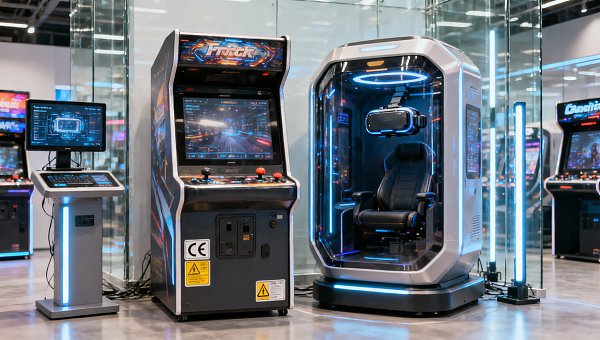
On May 18, 2026, a joint Extended Producer Responsibility (EPR) regulatory platform launched by Indonesia, Thailand, Vietnam, Malaysia, and the Philippines opened its first reporting portal. This development directly affects manufacturers exporting arcade machines, VR terminals, and related accessories into the region — requiring producer registration within 72 hours prior to first shipment. Industry stakeholders in consumer electronics export, cross-border e-commerce fulfillment, and regional compliance services should monitor this closely, as non-compliance triggers immediate visibility impacts on procurement decisions.
Event Overview
The unified EPR platform for Indonesia, Thailand, Vietnam, Malaysia, and the Philippines became operational on May 18, 2026, with its initial reporting interface activated. All manufacturers exporting arcade devices, VR terminals, and associated accessories to these five countries must complete producer registration and pay the annual eco-processing fee — set at 0.8%–1.2% of declared shipment value — no later than 72 hours before their first consignment departs. Entities failing to register by that deadline will be flagged as 'Non-Compliant Suppliers' on the platform.
Industries Affected by Segment
Direct Exporters of Arcade and VR Hardware
These companies face immediate operational impact: registration is mandatory pre-shipment, not post-import or post-sale. Delays risk shipment holds, customs clearance rejection, or loss of shelf space with regional distributors who rely on platform compliance status when selecting suppliers.
Contract Manufacturers and OEMs Producing Under Brand Owner Labels
Even if not named on commercial invoices, contract manufacturers may be required to submit production data or attest to material composition under the brand owner’s registered profile. Their role shifts from purely operational to partially regulatory — especially where brand owners delegate EPR obligations downstream.
Distribution and Channel Partners in Southeast Asia
Importers, authorized resellers, and e-marketplace sellers must verify supplier registration status before listing or purchasing inventory. The platform’s ‘Non-Compliant Supplier’ label is publicly visible and may influence B2B procurement workflows, particularly for large retailers subject to internal ESG audits.
Logistics and Compliance Support Providers
Firms offering customs brokerage, regulatory filing, or sustainability reporting services now need to integrate platform-specific registration steps into standard export onboarding. Unlike national-level EPR schemes, this is a harmonized multi-country process — meaning one registration covers all five jurisdictions, but requires unified documentation and fee calculation across varying local currency and valuation rules.
Key Points for Enterprises and Practitioners to Monitor and Act On
Track official guidance updates from the platform operator
The platform’s current interface and supporting documentation are newly live. Analysis shows that clarification on acceptable proof of manufacturing origin, definition of ‘accessories’, and fee calculation methodology (e.g., whether based on FOB, CIF, or landed value) remains pending. Stakeholders should subscribe to official notifications rather than rely on third-party summaries.
Verify eligibility and scope for specific product categories
While arcade devices and VR terminals are explicitly named, it is not yet confirmed whether standalone controllers, charging docks, or replacement lenses fall under the same obligation. From industry perspective, classification hinges on whether items are classified as ‘integral components’ or ‘consumables’ — a distinction likely to evolve through early platform rulings.
Distinguish between registration requirement and enforcement timeline
The 72-hour rule applies only to shipments occurring on or after May 18, 2026. Observably, there is no retroactive application to goods already in transit or cleared prior to that date. However, any re-export or secondary distribution from a regional hub post-May 18 may trigger new registration obligations depending on local customs treatment.
Prepare documentation and internal coordination workflows now
Registration requires company legal name, tax ID, product category codes, annual volume estimates, and bank details for fee payment. Current best practice is to designate an internal EPR coordinator and align finance, logistics, and product compliance teams — as delays often stem from interdepartmental handoffs, not platform usability.
Editorial Perspective / Industry Observation
This initiative is better understood as a coordinated policy signal than an immediately enforceable regime. While the platform is live, full integration with national customs systems and audit protocols remains in progress. Analysis shows that enforcement capacity — particularly cross-border data sharing and penalty mechanisms — will take months to mature. That said, the visibility effect on procurement behavior is real and near-term: channel partners are already adjusting sourcing criteria ahead of formal audits. Continued observation is warranted on how national authorities interpret ‘first shipment’ (e.g., trial samples vs. commercial batches) and whether fee rates remain fixed or tiered by environmental impact metrics in future phases.
As of May 2026, this EPR platform marks the first multilateral regulatory alignment for electronic entertainment hardware in Southeast Asia. It does not replace existing national WEEE or packaging laws but adds a parallel, product-specific compliance layer. For exporters, it signals growing convergence in regional sustainability expectations — yet implementation remains procedural, not punitive, at this stage.
Information Source: Official announcement from the ASEAN EPR Coordination Secretariat (as published on the joint platform portal, effective May 18, 2026). Pending clarification includes detailed product classification guidelines and fee remittance procedures across local currencies — these elements remain under active review and are subject to update.
Search News
Hot Articles
- Restaurant FurnitureFast-Casual Restaurant Interiors: Design Choices That Improve Speed and Guest FlowOct 04, 2026
- Outdoor RidesHow to Select Leisure Park Equipment for Safe, High-Throughput Visitor AreasOct 03, 2026
- Fashion & Gem JewelryDiamond Tester Wholesale: How to Vet Accuracy, Calibration, and MOQ Before OrderingOct 02, 2026
Popular Tags
Need ExpertConsultation?
Connect with our specialized leisureengineering team for procurementstrategies.
Recommended News
 Sep 15, 2026How to Choose Coin-Operated Pool Tables for Bars, Hotels, and Arcade VenuesCoin operated pool tables for bars, hotels, and arcades: compare sizes, payment systems, durability, service access, and revenue potential.● Theme Park Strategist
 Sep 08, 2026What to Look for in a Flight Simulator Chair Manufacturer for Commercial VR CentersChoose a flight simulator chair manufacturer that delivers durable, safe, customizable seating for commercial VR centers. Explore key sourcing criteria now.● Theme Park Strategist
 Aug 25, 2026What to Evaluate Before Buying Commercial Self Service Photo Booths for VenuesCommercial self service photo booths for venues: learn how to evaluate durability, software stability, branding flexibility, support, and total ROI before you buy.● Theme Park Strategist
 Aug 23, 2026How to Evaluate Wholesale Vending Machines for Multi-Location Business DeploymentWholesale vending machines for multi-location deployment require more than low unit cost. Learn how to compare reliability, payments, telemetry, and supplier support to scale smarter.● Theme Park Strategist
 Aug 17, 2026U.S. CPSC Urges Bilingual Warnings for Arcade and VR MachinesU.S. CPSC urges bilingual safety warnings for Arcade & VR Machines—learn what exporters, importers, and distributors must do now to avoid delays and returns.● Theme Park Strategist
 Aug 16, 2026EU Enforces EN IEC 62368-1:2026 Certification for Arcade and VR MachinesEU Enforces EN IEC 62368-1:2026 certification for arcade and VR machines, reshaping EU market access, customs clearance, and compliance planning for exporters and distributors.● Theme Park Strategist
 Aug 13, 2026UFLPA’s new guidelines take effect: Exports of Arcade and VR equipment face full-link labor compliance requirementsUFLPA’s new guide takes effect: Arcade and VR machine exports to the U.S. now face full-chain labor compliance checks. Discover key risks and action steps.● Theme Park Strategist
 Aug 12, 2026EU PPWR takes effect, Arcade and VR packaging incorporate heavy metal and PFAS restrictionsEU PPWR now applies to Arcade and VR packaging, tightening heavy metal and PFAS compliance. Learn how exporters can avoid delays, fines, and customs risks.● Theme Park Strategist
 Aug 11, 2026CPSC Sets Bilingual Labels for Arcade and VR ImportsCPSC bilingual labels for arcade and VR imports become mandatory on October 1, 2026. Learn the new English-Spanish warning rules, customs risks, and key compliance steps now.● Theme Park Strategist
 Aug 10, 2026EU Rule Takes Effect for Arcade & VR Machine ClearanceArcade & VR Machine clearance in the EU now depends on EN IEC 62368-1:2026+A11:2026 compliance. Learn what changed, who is affected, and how to avoid customs delays.● Theme Park Strategist
 Aug 09, 2026CPSC Requires New Labels for Arcade and VR ImportsCPSC requires new labels for Arcade and VR imports starting Oct 1, 2026. Learn the multilingual warning rules, compliance risks, and key steps exporters and buyers must take now.● Theme Park Strategist
 Aug 08, 2026EU Entry Rule Tightens for Arcade & VR MachinesArcade & VR Machines entering the EU now face stricter CE compliance under EN IEC 62368-1:2026+A11:2026. Learn the new rule, risks, and what exporters must do now.● Theme Park Strategist
 Aug 07, 2026CPSC Notice Tightens U.S. Entry Rules for Arcade and VR MachinesCPSC Notice Tightens U.S. Entry Rules for Arcade and VR Machines: learn the new labeling, FCC, UN38.3, and compliance document requirements before October 1, 2026.● Theme Park Strategist
 Aug 06, 2026EU Rule Takes Effect for CE-UKCA Labels on Arcade & VR MachinesArcade & VR Machines face new CE-UKCA label and ECPD filing rules in the EU and UK. Learn what manufacturers, importers, and distributors must do now to avoid delays.● Theme Park Strategist
 Aug 05, 2026CPSC Recalls Arcade and VR Machines Over UL 62368-1CPSC recalls arcade and VR machines over UL 62368-1 non-compliance. Learn how this 2026 safety action may affect imports, distribution, customs clearance, and market access.● Theme Park Strategist
 Aug 02, 2026EU Sets New Certification Rule for Arcade and VR MachinesArcade and VR Machines face a new EU certification rule from Oct 1, 2026. Learn how EN IEC 62368-1:2026+A11:2026 affects CE marking, customs clearance, and market access.● Theme Park Strategist
 Aug 01, 2026CPSC Moves to Require Bilingual Warnings on Arcade and VR MachinesCPSC bilingual warnings for Arcade and VR Machines may reshape U.S. import compliance. Learn how English-Spanish labels affect packaging, customs risk, and shipment readiness.● Theme Park Strategist
 Jul 31, 2026EU Sets EN IEC 62368-1:2025 Rule for Arcade and VR MachinesEU Sets EN IEC 62368-1:2025 Rule for Arcade and VR Machines. Learn the new EU compliance deadlines, safety updates, and key actions for manufacturers, OEMs, and distributors.● Theme Park Strategist
 Jul 30, 2026CPSC Sets New Warning Label Rule for Arcade & VR MachinesCPSC sets a new warning label rule for Arcade & VR Machines effective August 15, 2026. Learn key compliance risks, multilingual label requirements, and shipment actions now.● Theme Park Strategist
 Jul 29, 2026EU Enforces New Safety Standard for Arcade and VR MachinesEU Enforces New Safety Standard for Arcade and VR Machines: learn how EN IEC 62368-1 affects CE compliance, customs clearance, and EU market access for exporters and buyers.● Theme Park Strategist
 Jul 28, 2026CPSC Sets ASTM F3472-26 Rule for Arcade & VR ImportsCPSC ASTM F3472-26 rule reshapes Arcade & VR imports to the U.S. Learn key compliance deadlines, certification risks, and what exporters, OEM/ODM suppliers, and buyers should do now.● Theme Park Strategist
 Jul 27, 2026EU Rule Takes Effect for Arcade & VR Machine CybersecurityEU Rule Takes Effect for Arcade & VR Machine Cybersecurity: learn how EN IEC 62443-3-3:2025 affects compliance, customs clearance, sales continuity, and supplier planning in the EU market.● Theme Park Strategist
 Jul 25, 2026CPSC Sets Bilingual Warning Rule for Arcade and VR ImportsCPSC bilingual warning rule for arcade and VR imports takes effect August 1, 2026. Learn how OEM/ODM exporters can avoid CBP delays, relabel shipments, and protect U.S. delivery timelines.● Theme Park Strategist
 Jul 24, 2026EU Enforces New Safety Standard for Arcade and VR MachinesEU Enforces New Safety Standard for Arcade and VR Machines: learn how EN IEC 62368-1:2026+A11:2026 reshapes EU compliance, CE documentation, testing timelines, and export readiness.● Theme Park Strategist