EN 1176-1:2026 Enforced for Outdoor Rides in EU
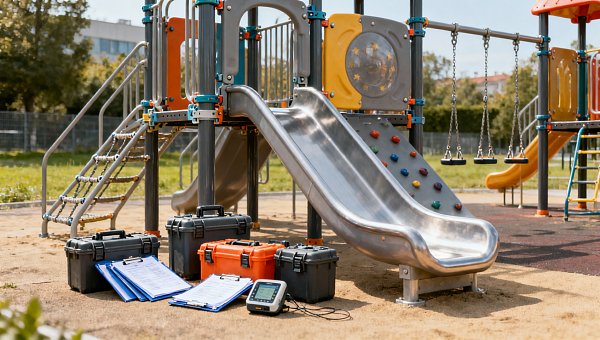
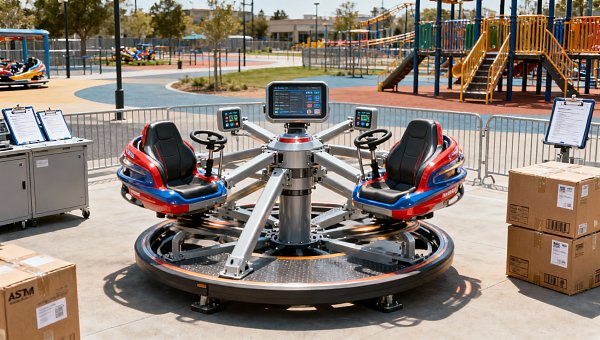
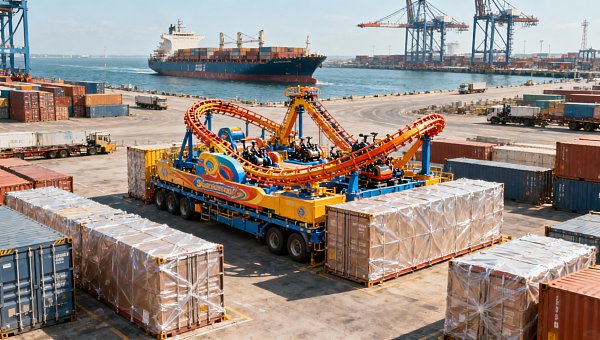
Effective 00:00 CET on 18 May 2026, the revised European standard EN 1176-1:2026 — Playground equipment — Part 1: General safety requirements and test methods — becomes fully mandatory for all outdoor rides placed on the EU market. This update introduces new technical obligations with immediate customs and compliance implications for exporters, particularly those based in China supplying to EU distributors, importers, and public procurement entities.
Event Overview
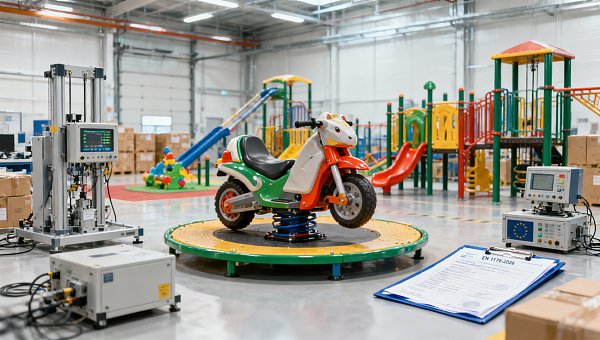
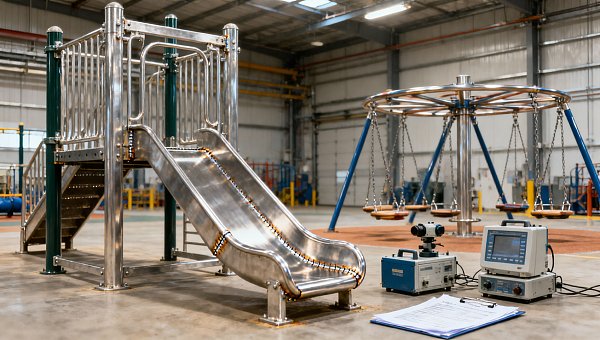
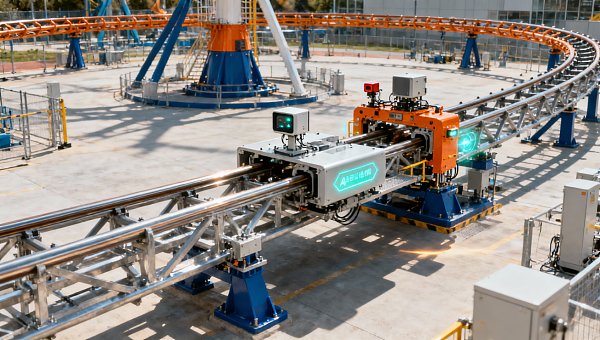
The European Committee for Standardization (CEN) confirmed that EN 1176-1:2026 enters into force as a harmonized standard under Regulation (EU) No 305/2011 on 18 May 2026. Three new mandatory requirements take effect immediately: (1) dynamic load simulation testing under variable operational conditions; (2) infrared scanning verification of pinch-point mitigation across moving components; and (3) full traceability declarations for all recycled materials used in structural or load-bearing parts. Exporters must obtain a CE certificate issued by a Notified Body accredited under UKAS or DAkkS before shipment; non-compliant consignments face port detention upon EU entry.
Industries Affected
Direct trading enterprises — Including export-oriented trading companies and EU-based importers — are impacted at the point of customs clearance. Non-compliance triggers automatic detention, extended demurrage, rework delays, and potential contractual penalties. Since CE certification now requires physical test reports tied to specific batch IDs, pre-shipment coordination windows have shrunk significantly.
Raw material procurement enterprises — Especially suppliers of recycled steel, HDPE composites, and coated aluminum — must now provide certified material passports, including origin documentation, recycling stream validation, and chemical composition logs. Absence of auditable traceability records breaks the upstream compliance chain, rendering downstream certification impossible.
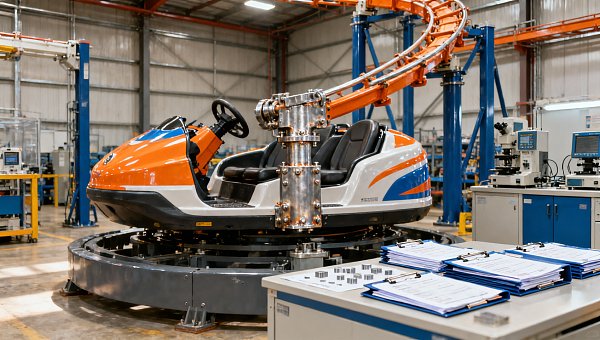
Manufacturing enterprises — Focused on outdoor ride assembly (e.g., swing sets, climbing towers, rotating platforms) — face revised design validation protocols. Dynamic load simulation requires updated FEA modeling and third-party witnessed runtime testing; infrared pinch-point scans demand precision tolerancing during final assembly and post-weld inspection — both adding 7–12 working days to certification lead time.
Supply chain service providers — Such as conformity assessment consultants, lab testing intermediaries, and freight-forwarding compliance desks — experience surging demand for expedited UKAS/DAkkS-aligned test scheduling and certificate issuance. The 72-hour certification turnaround window specified for outdoor ride exports intensifies pressure on documentation accuracy and test report interoperability between labs and Notified Bodies.
Key Focus Areas and Response Measures
Prioritize batch-specific test planning
Manufacturers must align production batches with scheduled dynamic load and infrared scan tests — not treat testing as a post-production step. Retrospective certification is no longer accepted; test reports must reference serial numbers, weld logs, and material lot codes traceable to the shipped unit.
Verify Notified Body accreditation scope
Not all UKAS/DAkkS-accredited bodies cover EN 1176-1:2026’s new clauses. Enterprises must confirm the body’s listed scope includes ‘dynamic operational simulation’ and ‘infrared-based mechanical hazard mapping’ — not just static load or corrosion testing.
Implement dual-track material documentation
Procurement teams must maintain parallel records: (a) supplier-provided recycled material declarations compliant with EN ISO 14021:2023, and (b) internal audit trails linking each declared input to finished component IDs. Regulators may request this during market surveillance audits.
Reassess shipping lead times and Incoterms
With CE certification now required prior to vessel loading — and 72-hour issuance windows applying only after complete test data submission — FOB terms require renegotiation. CFR or DAP arrangements better allocate compliance risk and timing control to the exporter.
Editorial Perspective / Industry Observation
Analysis shows this enforcement reflects a broader regulatory shift: from prescriptive compliance (‘pass the test’) toward systemic accountability (‘prove every input, validate every interface’). Observably, the 72-hour certificate window is less about speed than about tightening the feedback loop between factory floor execution and regulatory evidence generation. From an industry perspective, the infrared pinch-point requirement signals growing emphasis on AI-augmented physical safety verification — a trend likely to extend to other EN standards in coming years. Current more critical concern is not capacity shortage among Notified Bodies, but fragmentation in how labs interpret ‘dynamic load simulation’ across varying ride categories (e.g., passive vs. motorized units).
Conclusion
This enforcement marks a definitive transition from legacy conformity practices to real-time, traceable safety assurance in outdoor play equipment trade. It does not merely raise technical bars — it redefines responsibility across the value chain, making material provenance, test repeatability, and digital documentation interoperability non-negotiable pillars of market access. A rational observation is that adaptability — not just compliance — will distinguish competitive exporters in the next compliance cycle.
Source Attribution
Official text published by CEN (Ref: CEN/TC 136 N2341, 18 May 2026); EU Commission’s Official Journal notice L 132/2026 (to be issued 20 May 2026); Guidance Note CNB-EN1176-2026-01 issued by the UK Accreditation Service (UKAS), effective 1 April 2026. Note: Interpretation of ‘dynamic load simulation thresholds’ for low-speed rotational rides remains under consultation — subject to CEN clarification by Q3 2026.
Search News
Hot Articles
- Hotel Room AmenitiesHow to Select Hotel Hair Dryers That Balance Guest Safety, Durability, and CostOct 05, 2026
- Restaurant FurnitureFast-Casual Restaurant Interiors: Design Choices That Improve Speed and Guest FlowOct 04, 2026
- Outdoor RidesHow to Select Leisure Park Equipment for Safe, High-Throughput Visitor AreasOct 03, 2026
Popular Tags
Need ExpertConsultation?
Connect with our specialized leisureengineering team for procurementstrategies.
Recommended News
 Oct 03, 2026How to Select Leisure Park Equipment for Safe, High-Throughput Visitor AreasLeisure park equipment selection guide for safe, high-throughput venues—explore capacity, supervision, durability, accessibility, and supplier criteria.● Theme Park Strategist
 Sep 18, 2026What Drives Animatronic Dinosaur Manufacturer Prices for Theme Park Projects?Animatronic dinosaurs manufacturer price guide: compare motion, materials, controls, installation, and lifecycle costs to plan a durable theme park attraction.● Theme Park Strategist
 Sep 06, 2026Do Amusement Ride Safety Compliance Requirements Change Every Year?Do amusement safety compliance requirements change annually? Learn what really changes, from standards and inspections to permits, upgrades, and local approvals.● Theme Park Strategist
 Sep 02, 2026How Long Does It Take to Receive Full Safety Documents From an OEM?How long does it take to get full safety documentation from OEM partners? Discover realistic timelines, common delays, and practical steps to secure compliant files faster.● Theme Park Strategist
 Sep 03, 2026Designing Adventure Park Safety Systems for Zip Lines, Ropes Courses, and Daily InspectionsAdventure park safety systems: learn how to design safer zip lines and ropes courses with daily inspections, defect controls, rescue readiness, and staff training.● Theme Park Strategist
 Aug 22, 2026What to Look for When Choosing Three Seat Jet Skis for Rental or Resort UseThree seat jet skis for rental or resort use should balance stability, safety, maintenance, and guest comfort. Learn how to choose models that boost uptime and guest satisfaction.● Theme Park Strategist
 Aug 17, 2026What Parts Matter Most in a Roller Coaster and How Do They Affect Ride Safety?Roller coaster parts determine ride safety more than most riders realize. Explore how tracks, restraints, brakes, wheels, and control systems work together to protect every ride.● Theme Park Strategist
 Aug 15, 20262026 China Sports Expo Sees 45.74% More Overseas Pre-registered Buyers as POB Expands Procurement Matching2026 China Sports Expo boosts overseas pre-registered buyers by 45.74% as POB expands procurement matching for fitness, outdoor, and venue suppliers.● Theme Park Strategist
 Aug 14, 2026What Should Buyers Check Before Choosing a Flying Chair Ride Exporter?Flying chair ride exporter buyers should check safety, structure, export support, and spare parts before purchase to reduce risk and choose a reliable supplier.● Theme Park Strategist
 Aug 04, 2026EU Issues EN 1176-1:2026 for Playground SafetyEU Issues EN 1176-1:2026 for Playground Safety: learn how the new standard impacts Outdoor Rides, CE certification, inventory checks, and EU compliance before March 2027.● Theme Park Strategist
 Aug 03, 2026CPSC Adopts ASTM F1487-26 for Imported Outdoor RidesOutdoor Rides face a major U.S. compliance shift as CPSC adopts ASTM F1487-26. Learn the new certification, testing, and customs risks before November 1, 2026.● Theme Park Strategist
 Jul 26, 2026Revised EN 1176:2026 Triggers Re-Certification for Outdoor RidesOutdoor Rides face immediate EN 1176:2026 re-certification for new CE applications. Learn how testing, documentation, and EU market access rules now affect exports and delivery plans.● Theme Park Strategist
 Jul 21, 2026CPSC Recall Flags Structural Risk in Outdoor RidesCPSC recall flags structural risk in outdoor rides: learn how ASTM F1487-23 failures affect importers, distributors, and compliance teams across the U.S., Canada, and Australia.● Theme Park Strategist
 Jul 19, 2026How to Choose Outdoor Fitness Equipment for Parks Based on Users, Space, and BudgetOutdoor fitness equipment for parks: learn how to choose the right mix based on users, space, and budget to improve safety, usage, and long-term value.● Theme Park Strategist
 Jul 15, 2026Ocean Freight Spike Pressures Outdoor Rides ExportsOcean Freight Spike Pressures Outdoor Rides Exports as Shanghai-Rotterdam rates surge 42%. See how rising freight costs, delays, and rerouting risks could reshape Europe-bound delivery plans.● Theme Park Strategist
 Jul 14, 2026EN 1176 Revision Takes Effect for Outdoor Ride Weld TestingEN 1176 revision takes effect for outdoor ride weld testing from Sept 1, 2026. Learn ISO 5817 level B, third-party NDT report rules, and key EU compliance steps.● Theme Park Strategist
 Jul 12, 2026Vietnam Requires AI Anti-Collision Systems for Imported Outdoor RidesVietnam Requires AI Anti-Collision Systems for Imported Outdoor Rides from Sept. 15, 2026. Learn compliance rules, VAST certification needs, and how importers can avoid delays.● Theme Park Strategist
 Jul 11, 2026Vietnam Tightens Rules for Imported Outdoor RidesVietnam Tightens Rules for Imported Outdoor Rides: learn how Vietnam’s 2026 compliance update adds AI anti-collision, Vietnamese logs, and local maintenance duties for importers and manufacturers.● Theme Park Strategist
 Jul 09, 2026How to Evaluate a Lazy River Equipment Supplier for Safety, Flow Design, and MaintenanceLazy river equipment supplier selection affects safety, flow design, and maintenance costs. Learn what to compare, what to ask, and how to choose a reliable partner.● Theme Park Strategist
 Jul 08, 2026RCEP Update Cuts ASEAN Tariffs to Zero for Outdoor RidesRCEP update cuts ASEAN tariffs to zero for outdoor rides from China. Learn how FSC-CoC, PEFC traceability, and e-CO compliance affect exports, sourcing, and buyer decisions.● Theme Park Strategist
 Jul 07, 2026RCEP Guide Adds Dual Wood Traceability for Outdoor RidesOutdoor Rides exporters face a new RCEP traceability rule: dual FSC-CoC and PEFC-STS 2023 codes for wood components. See what changes before Oct. 1, 2026.● Theme Park Strategist
 Jul 06, 2026Vietnam Tightens RCEP Rules for Wooden Ride PartsVietnam Tightens RCEP Rules for Wooden Ride Parts: learn how FSC Chain-of-Custody and QR code requirements now affect outdoor rides, RCEP imports, and shipment compliance.● Theme Park Strategist
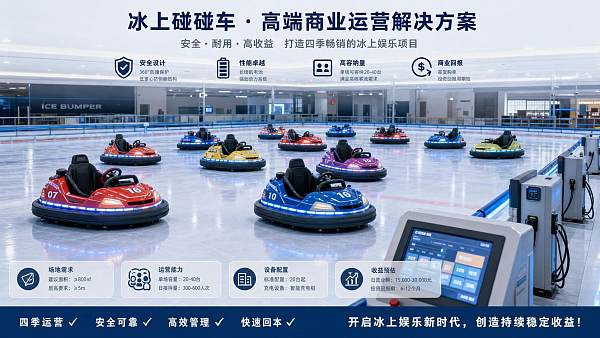
 Jul 06, 2026How to Evaluate a Bumper Cars on Ice Manufacturer for Safety, Capacity, and ROIBumper cars on ice manufacturer selection starts with safety, capacity, and ROI. Learn how to compare suppliers, reduce risk, and choose a partner built for long-term commercial success.● Theme Park Strategist
 Jul 04, 2026Electric Drift Bumper Cars vs Traditional Bumper Cars: Which Fits Your Venue Better?Electric drift bumper cars or traditional bumper cars? Compare installation, safety, maintenance, guest appeal, and ROI to choose the best fit for your venue.● Theme Park Strategist